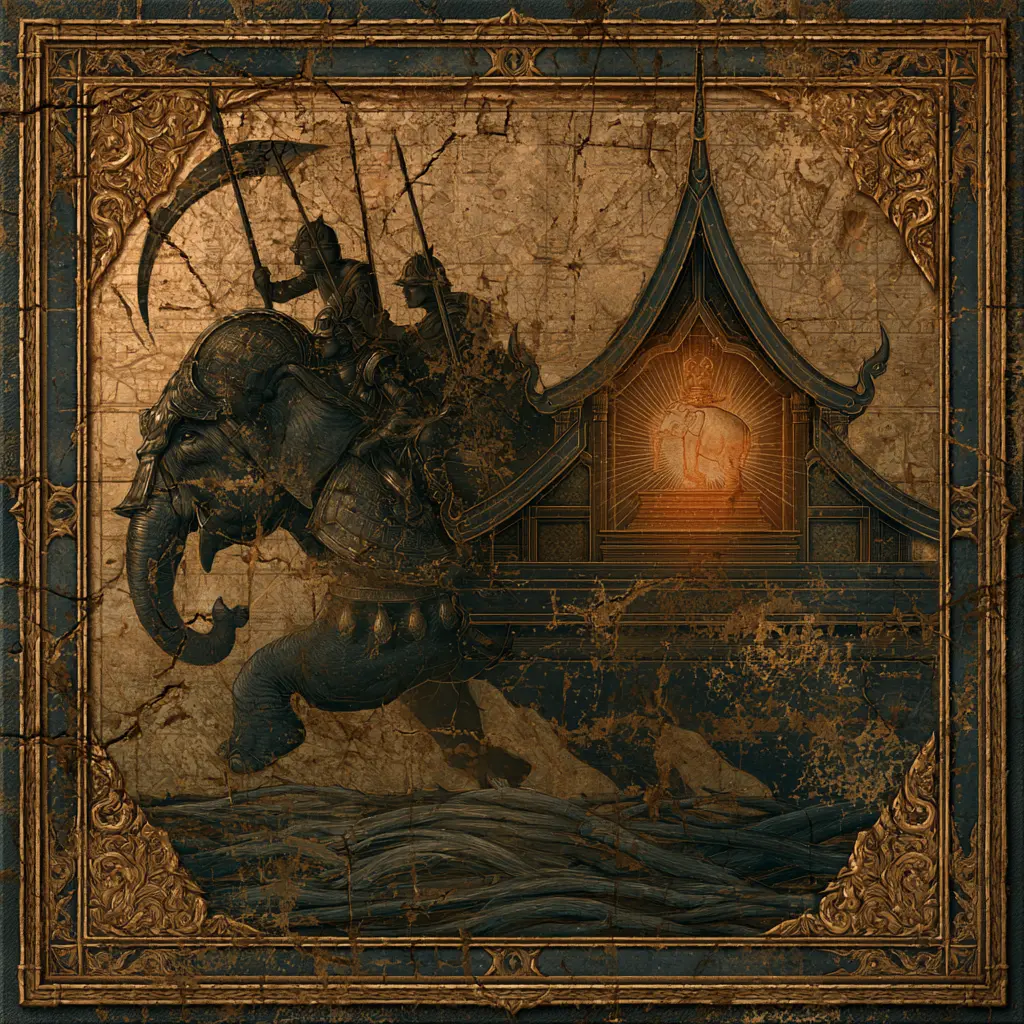

Key Insights
Moving beyond the generic mascot trope, the history of the elephant in Thailand is a complex saga of cosmic statecraft, military terror, and industrial labour.
Once serving as living talismans of royal legitimacy and heavy armour on Ayutthaya battlefields, these titans later powered British teak extraction, fostering a deep animistic bond with their handlers that modern heritage tourism must work to protect.
Mahout: A highly skilled, often lifelong elephant handler and caretaker who builds a deep bond of mutual trust with their animal through voice commands, body language, and specialised whistles.
Howdah: An elaborately decorated wooden platform or covered seat mounted on an elephant’s back, historically used as a mobile vantage point for warriors in battle or as regal transport for monarchs during grand royal processions.
Phra Phikhanes (พระพิฆเนศ): The Thai name for Ganesha, the elephant-headed deity widely revered in Thailand as the patron of the arts and a symbol of intelligence, strength, wisdom, and the removal of obstacles.
Caltrop: A sharp, spiked military device scattered on ancient battlefields by opposing forces to injure an elephant’s highly sensitive feet and panic the animals.
Chang Phueak (White Elephant): A rare, sacred elephant viewed as a divine gift and the exclusive property of the king, symbolising royal authority, moral merit, prosperity, and divine favour.
Tukang: A highly skilled regional master craftsman or carpenter possessing ancestral knowledge of architecture and woodcarving, responsible for creating elite structural works and intricate regional artistry.
The Western travel narrative reduces Thailand’s elephants to passive cultural mascots, eco-tourism props, or postcard novelties. However, Siamese socio-political and architectural history paints a far more formidable picture. The elephant was the literal gauge of a monarch’s cosmic legitimacy.
Under Southeast Asian concepts of kingship, bloodlines alone did not grant the spiritual right to command. Instead, the natural and supernatural worlds continuously arbitrated a ruler’s authority.
To understand the elephant’s true history, we must move past sanitised modern brochures. We must confront a legacy defined by raw military power, celestial statecraft, and industrial extraction.
The Sovereign Talisman: Cosmic Law and Royal Legitimacy
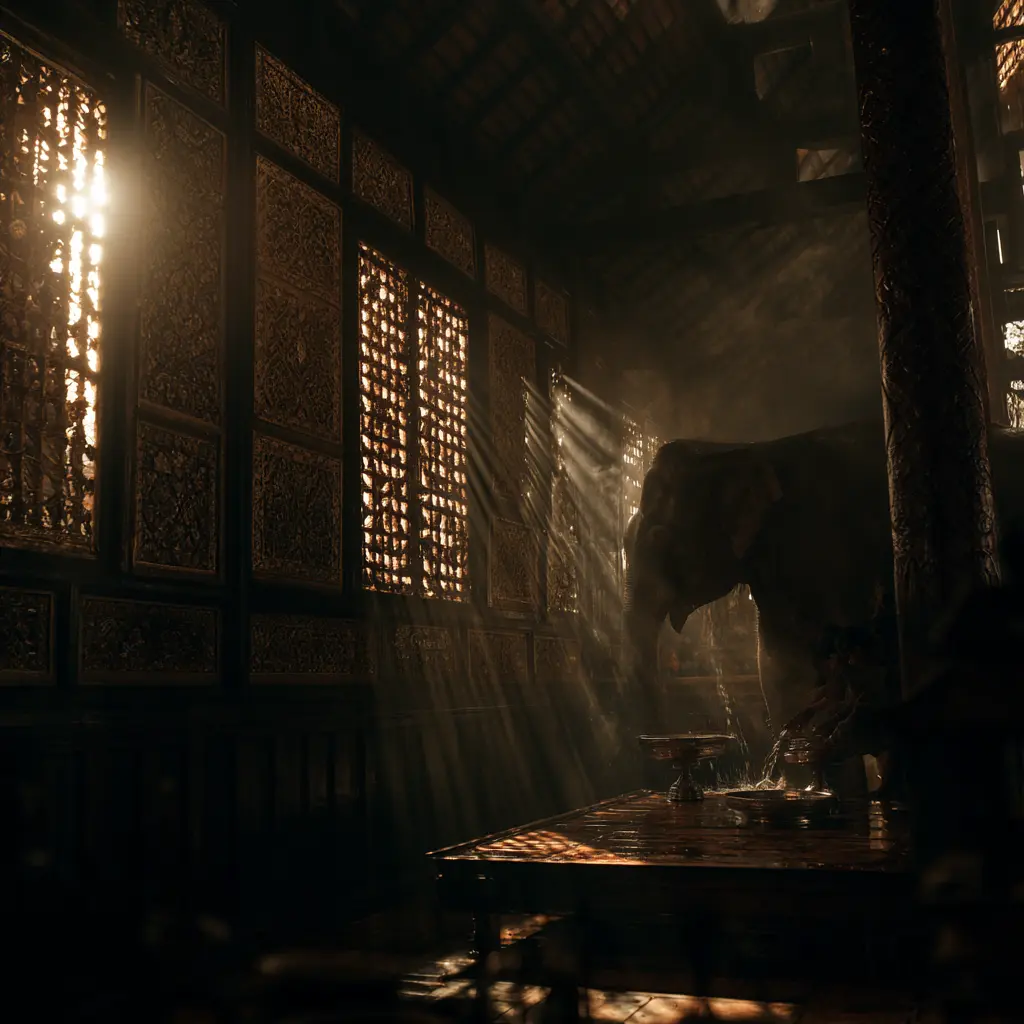
The foundation of the human-elephant dynamic in Siam rests upon Hindu-Buddhist cosmology. In classical texts like the Traiphum Phra Ruang, a Chang Phueak signifies a righteous, universal wheel-turning monarch. These animals are not albino anomalies displayed as zoological curiosities. They are sacred entities whose bodies manifest cosmic order.
Royal experts classified these beasts based on rigid treatises detailing seven auspicious physical traits. These included eye pigmentation, palate skin, tail hair alignment, and cuticle tone. A king securing multiple white elephants possessed immense cosmic merit. Conversely, a reign seeing none was viewed as spiritually bankrupt. This left the state vulnerable to coups or foreign invasion.
Securing these animals was an act of high-stakes imperial theatre. When scouts spotted a potential Chang Phueak in the deep wild, the court instantly suspended ordinary hunting protocols. The royal court dispatched specialised expeditions into the dense jungles of central and northern Siam.
The capture was a meticulous, non-lethal entrapment using trained decoy elephants (Chang To). Bringing the sacred beast back to the capital was an empire-wide event. Roads were cleared, and temporary river pavilions were erected. The king himself travelled upstream to receive the animal.
Upon arrival at the court in Ayutthaya or later Bangkok, the elephant underwent a formal baptismal ceremony. It received a grand noble title inscribed on a golden plaque (Suphannabhat), such as Phra Savet Adulyadej.
These animals did not live in ordinary stables. They resided in elevated royal pavilions (Prasat) and were fed from silver platters. They drank jasmine-scented water and had dedicated retinues of noble keepers, musicians, and court doctors. As sovereign political entities, they lived as talismans of the state’s survival.
The Heavy Armour of Ayutthaya: The Mechanics of Yuddhahatthi
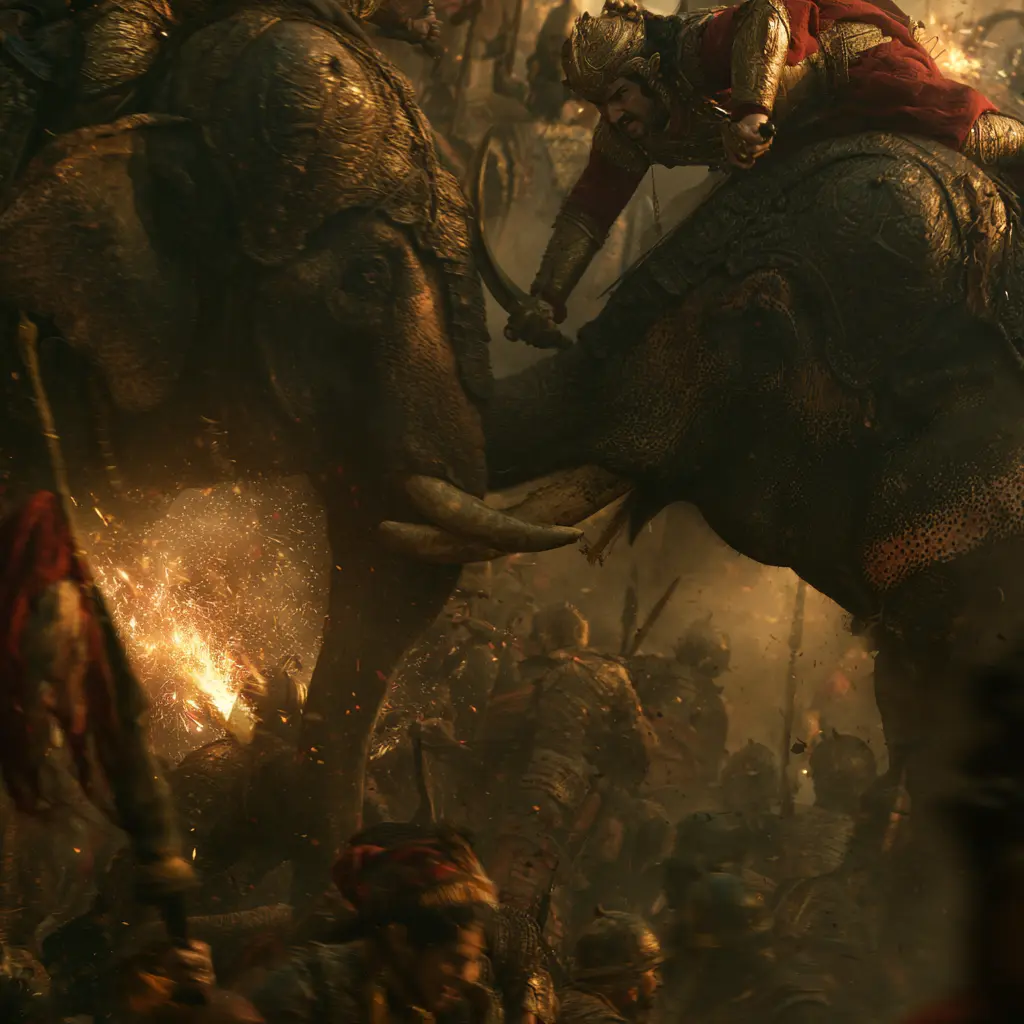
Before gunpowder reshaped Southeast Asian battlefields, the war elephant (Chang Suek) functioned as the ancient world’s ultimate weapon. They provided psychological and physical shock tactics. As the heavy armour of the Ayutthaya Kingdom, they shattered infantry formations, broke enemy cavalry, and breached fortified wooden palisades.
Not every elephant could withstand the chaos of the frontline. Military commanders selected only the most aggressive bulls with massive, upward-curving tusks. Years of conditioning taught them to ignore blinding smoke, deafening bronze gongs, and chaotic hand-to-hand combat. Before marching into battle, handlers prepared these titans like warships.
Handlers sharpened the bulls’ tusks and tipped them with serrated steel extensions or heavy iron caps designed to puncture armour.
Thick leather padding and chainmail protected their foreheads and flanks. To induce a state of hyper-aggressive frenzy akin to a berserker rage, handlers frequently fed the bulls fermented grain mashes or rice wine mixed with herbal stimulants right before the lines clashed.
On the field, a war elephant operated as a highly organised combat platform, requiring seamless coordination between a three-man tactical crew positioned along the animal’s spine:
The clash reached its zenith in the Yuddhahatthi—the royal elephant duel. When two opposing kings met on the battlefield, the ground troops would step back, creating a deadly arena. The duel was entirely dependent on the positioning of the elephants.
The drivers would maneuver the bulls to lock tusks, trying to gain the leverage needed to push the opponent backward or turn their flank. The moment one elephant slipped, the opposing commander would lean down from his platform, swinging his Ngao with terrifying force to strike the exposed neck or chest of the rival leader.
The most famous of these encounters occurred in 1593 at the Battle of Nong Sarai, where King Naresuan of Ayutthaya defeated the Burmese Crown Prince in a single, decisive elephant duel, securing Siamese independence for generations.
The Industrial Beast: British Capital and the Teak Extraction Empire
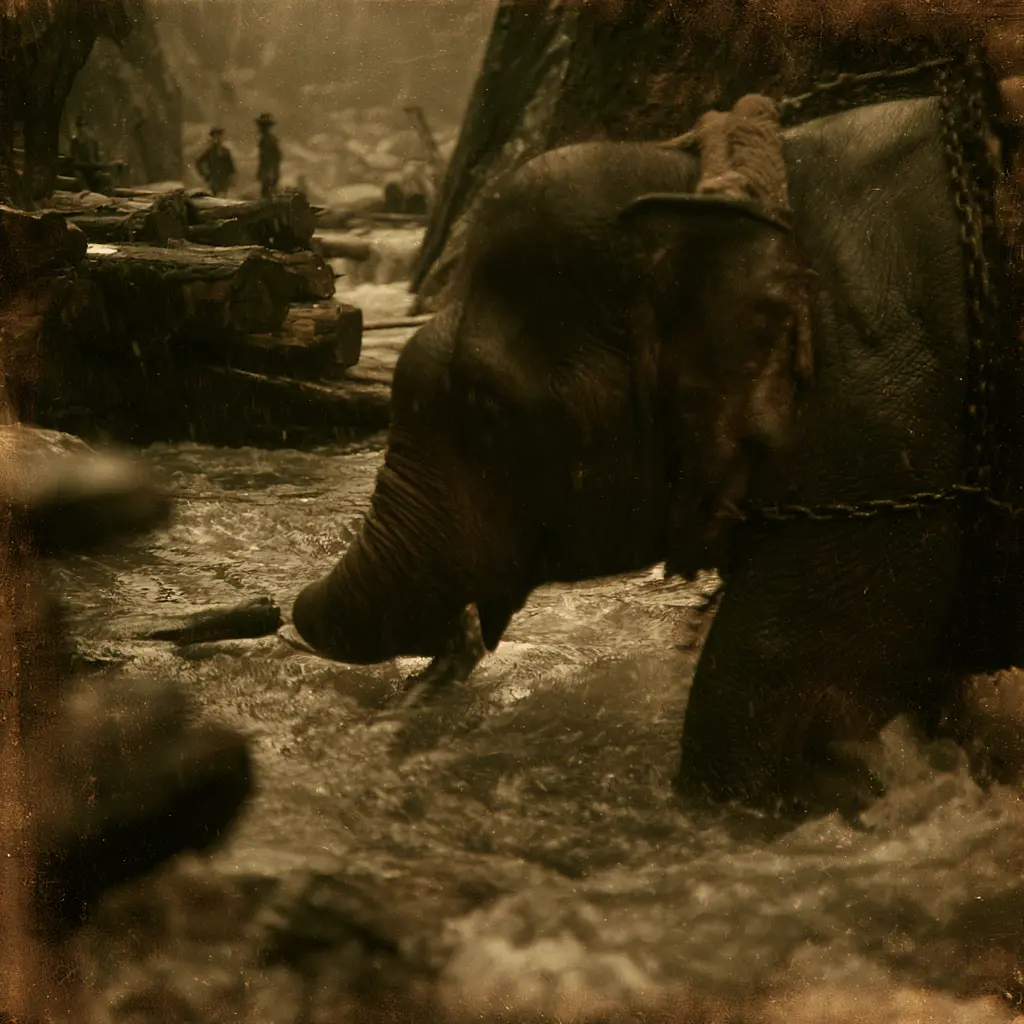
As the martial utility of the elephant waned with the arrival of modern artillery, its role underwent a radical, industrial transformation in the late 19th century. The dense, mountainous jungles of the Lanna region (modern-day Chiang Mai, Lampang, Phrae, and Mae Hong Son) held one of the world’s most valuable commodities: old-growth teak (Tectona grandis).
Highly sought after by Western empires for shipbuilding and luxury construction, this timber attracted massive British colonial syndicates, most notably the Borneo Company Limited and the Bombay Burmah Trading Corporation.
The geography of Northern Thailand presented a logistical nightmare: vertical mountain ridges, dense subtropical undergrowth, and rocky ravines entirely impassable to wheeled vehicles or steam traction engines. The entire British extraction empire became utterly dependent on the physical mechanics of the elephant.
The elephants used in the teak trade were highly trained specialists whose education began at the age of five and lasted for a decade. A prime working logging elephant (Chang Ngarn) understood dozens of distinct verbal commands and mechanical principles.
In the drag (Lak), bark rope harnesses attached to a wooden collar let the elephant lean its entire weight forward. It used its low centre of gravity to pull multi-ton logs down to ravine floors. In the push (Darn), they used their foreheads or trunk bases to maneuver massive logs over ridges. This steered them into dry creek beds.
Clearing the Jam
The most dangerous work occurred during the monsoons: clearing the jam (Sork). During the dry season, timber workers stacked logs by the thousands in dry riverbeds, waiting for the rains to float them down toward the Ping or Wang rivers.
These logs frequently created massive, structural logjams in narrow rocky gorges. Guided by a senior handler, a single master logging elephant would wade into the raging torrent. It identified the single “key log” holding back the entire jam. Using its tusks and feet, the animal dislodged it. The elephant stepped back into safety seconds before thousands of tons of timber crashed down.
This industrial partnership turned Bangkok into a global timber hub and enriched both British shareholders and the Siamese state. However, it created a stark environmental paradox. The hyper-efficiency of elephant labour allowed humans to penetrate deep into virgin valleys that geography should have naturally protected.
By the mid-20th century, the canopy of Northern Thailand was systematically thinned. This altered local river systems and rapidly diminished the very jungles that sustained wild elephant populations.
This aggressive exploitation set the ecological stage for the catastrophic 1988 mudslides. Consequently, the Thai government issued a total, nationwide ban on commercial logging in January 1989.
The Animistic Bond: The Vanishing World of the Kuan Chang
The 1989 logging ban did not just halt an industry. It instantly severed a centuries-old economic and cultural ecosystem. This plunged the human-elephant dynamic into a profound existential crisis.
To avoid superficial tourist tropes in this modern reality, look past the corporate term “mahout.” Instead, understand the ancient, deeply spiritual world of the Kuan Chang.
The historical backbone of elephant handling in Thailand belongs largely to the Kui (or Suin) people, an indigenous ethnic group concentrated in the northeastern province of Surin and parts of Cambodia. The Kui were never mere livestock handlers; they were the legendary master elephant-catchers of the Khmer and Siamese empires. Their relationship with the animal was defined by a complex, animistic spiritual system.
At the centre of traditional Kui culture is the Prakam. This sacred lasso made from dried buffalo hide captured wild elephants. The rope houses ancestral spirits, kept in a dedicated village shrine. Before any elephant interaction, a Kuan Chang performs elaborate propitiation ceremonies. They offer rice wine, betel nut, and pork to ancestors to ask for protection and permission.
A Spiritual Framework Dictated Strict Ethical Boundaries:
An elephant was considered a sentient clan member, sharing the family home.
The bond between a Kuan Chang and his beast was lifelong. A young boy would be paired with a young calf, and they would grow, work, and age together, communicating through an unspoken vocabulary of subtle shifts in body weight, heel pressure behind the ears, and quiet vocal clicks.
Abusing an elephant or treating it purely as an inanimate tool was believed to bring severe spiritual retribution (Phit Phi) upon the handler’s entire family line.
When the government instituted the logging ban overnight, the policy suddenly stripped nearly 4,000 domesticated elephants and their handlers of their livelihood. A mature elephant requires roughly 200–300 kilograms of fresh vegetation and hundreds of litres of clean water every single day.
Without the steady income of the timber firms, families faced a stark, brutal choice: starvation, or illegal logging along the treacherous, landmine-strewn borders of Myanmar.
This economic desperation gave rise to the tragic phenomenon of urban begging in the 1990s and early 2000s. Exhausted, heavy concrete streets forced Kuan Chang to walk their elephants through Bangkok and Chiang Mai, selling bags of bananas to tourists just to feed the animals.
The sacred throne guardian and Lanna forest artisan became an urban panhandler. This profound cultural dislocation was born directly from well-intentioned environmental policies. However, those policies completely ignored the human-elephant survival calculus.
The Heritage Shift: The Future of Preservation
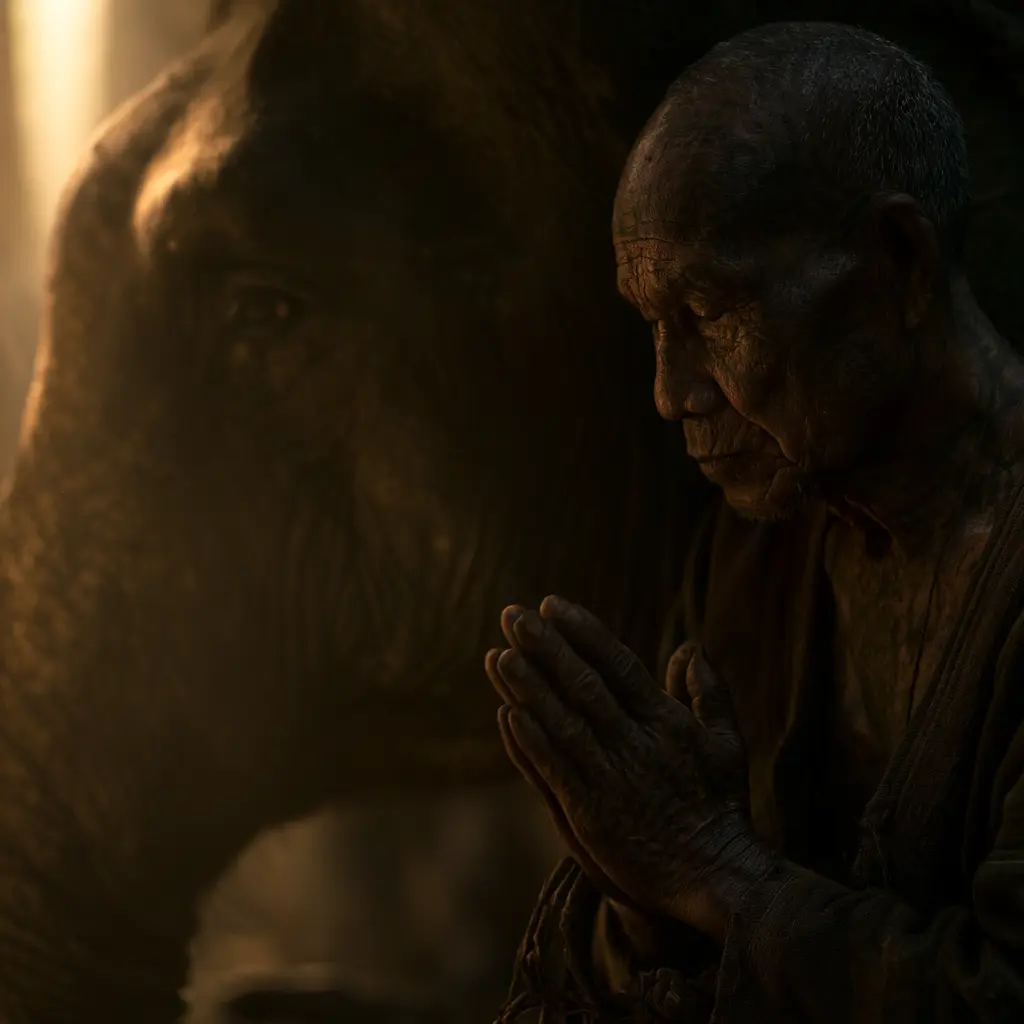
The eradication of urban begging laid the foundation for the modern elephant tourism industry. Yet, today’s heritage travellers face a landscape dominated by a new kind of generic writing. This sterile corporate boilerplate relies on oversimplified Western sentimentality and binary “good vs. bad” labels.
True conservation and cultural preservation demand far more nuance than a standard travel brochure can provide.
An elephant cannot simply be “released back into the wild.” Thailand’s remaining natural national parks are fragmented and heavily encroached upon by agriculture. They cannot absorb thousands of large, human-habituated mammals. Doing so would spark immediate, fatal conflicts with local farmers.
Domesticated elephants require intensive, highly specialised veterinary care. Treatments for foot rot, gastrointestinal issues, and old age cost thousands of dollars annually per animal.
Authentic luxury heritage travel must reject models that treat the elephant handler as a low-wage, background labourer. True preservation means recognising the endangered nature of Kuan Chang intangible cultural heritage. Their ethno-veterinary knowledge, linguistic commands, and spiritual lineages face the same threats as the animals themselves.
When a heritage destination pays a living wage honouring this lineage, the multi-generational bond survives with dignity. This transforms tourism from an extractive gimmick into active historical and ecological stewardship.
By replacing lifestyle travel clichés with the raw truths of Siamese history, the elephant’s narrative is reclaimed from Banalistan. It is restored to its proper place of historical gravity.