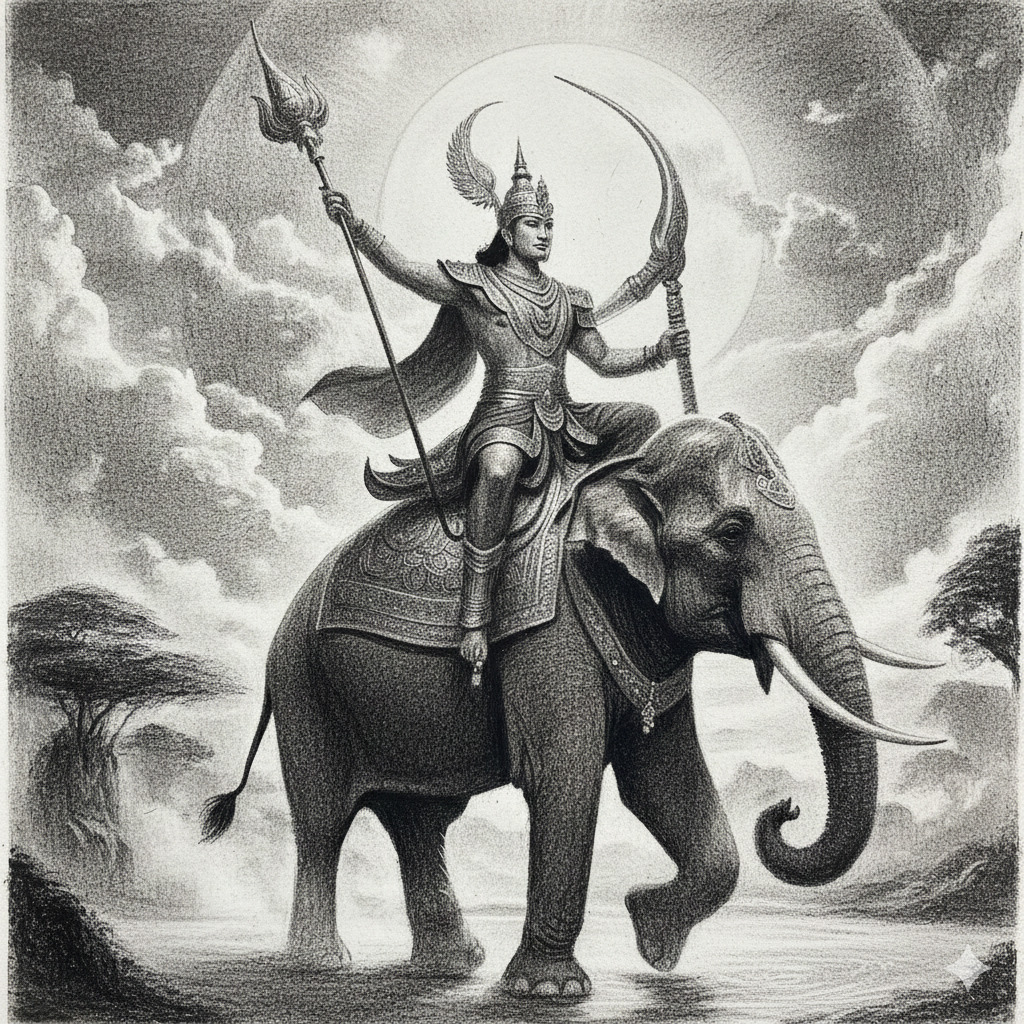

The history of elephants in Thailand is closely intertwined with Thailand itself. These wonderful creatures have shaped the course of wars and earned a place in Thai culture, religion, and art. The Thai people consider a single white elephant a divine gift. It could elevate a king’s status and bring immense prestige to his reign. And so, the history of elephants in Thailand is a tale of power, reverence, and the human-animal bond.
Archaeological evidence tells us that humans and elephants have coexisted in this part of the world since people painted on cave walls. Ancient artifacts hint at early human interactions and show us the awe, fear, and interdependence these four-legged creatures instilled.
As powerful kingdoms emerged, the Thai elephant became a symbol of power and military might. The Dvaravati and Sukhothai kingdoms recognised the advantage of these colossal creatures.
Imagine war elephants, adorned with heavy armour and bearing armed warriors, charging into battle. Picture them charging directly at you.
The Elephant in the Room
The phrase “elephant in the room” is a modern-day phrase. It means a subtle yet potent acknowledgment of the awkward silences that permeate our conversations.
It describes an obvious, uncomfortable truth that people deliberately ignore or avoid. Imagine a colossal pachyderm occupying the centre stage while everyone refuses to speak of it.
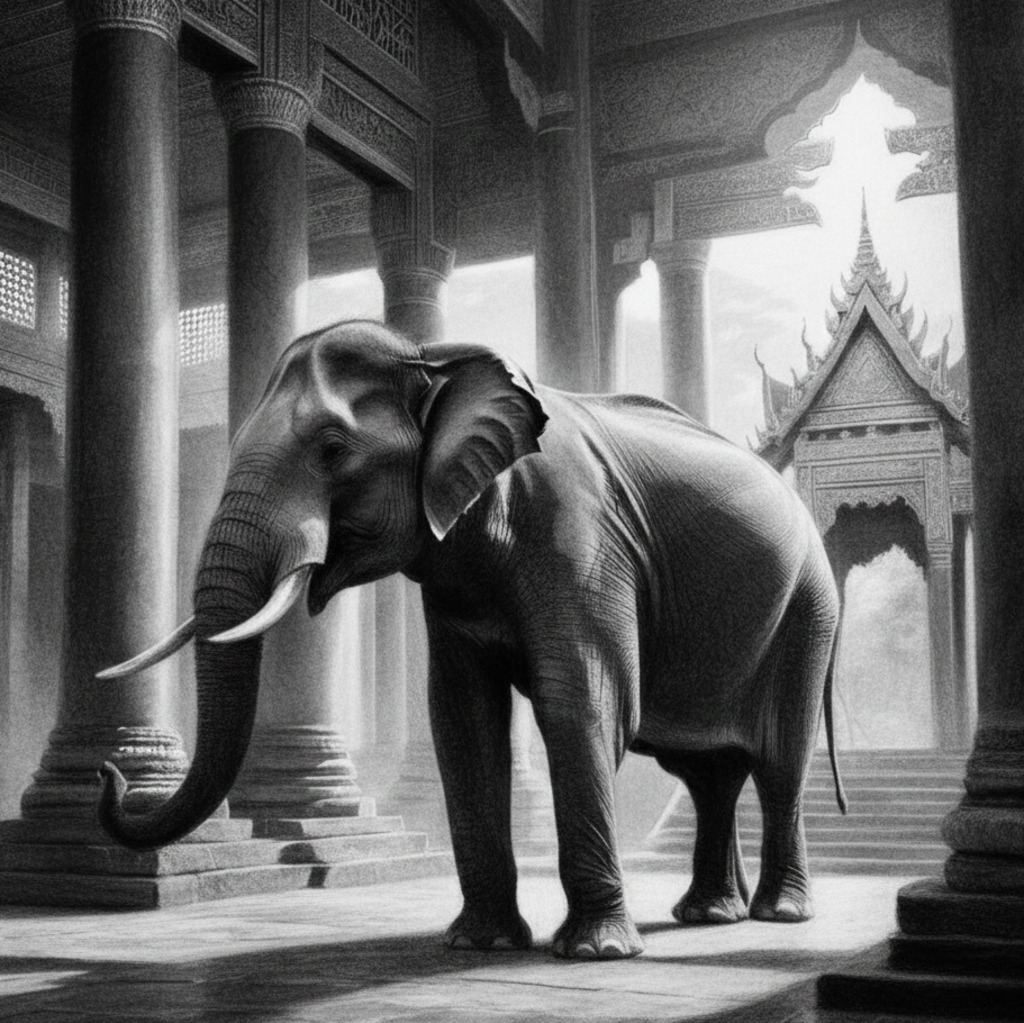
Ancient anecdotes and literary works provide roots for the concept of deliberately overlooking obvious truths. In opulent Thai courts, royalty brought an elephant into the audience chamber as a subtle power display. Its presence was undeniable, yet guests rarely addressed it directly. This unspoken acknowledgment mirrors the modern “elephant in the room” scenario. The phrase actually originates from this specific cultural practice.
In today’s world, the “elephant in the room” manifests in countless social and professional settings. Political debates often skirt around pressing issues, while workplace conflicts fester due to unspoken grievances. Even in intimate relationships, difficult conversations can be avoided, leading to simmering resentments.
History of Elephants in Thailand in Battle
People widely consider the Indian subcontinent the birthplace of war elephants. Epic tales such as the Mahabharata depicted their presence on the battlefield. As Indian empires expanded, so too did the use of war elephants, spreading westward through the Persian Empire and eastward to Asia.
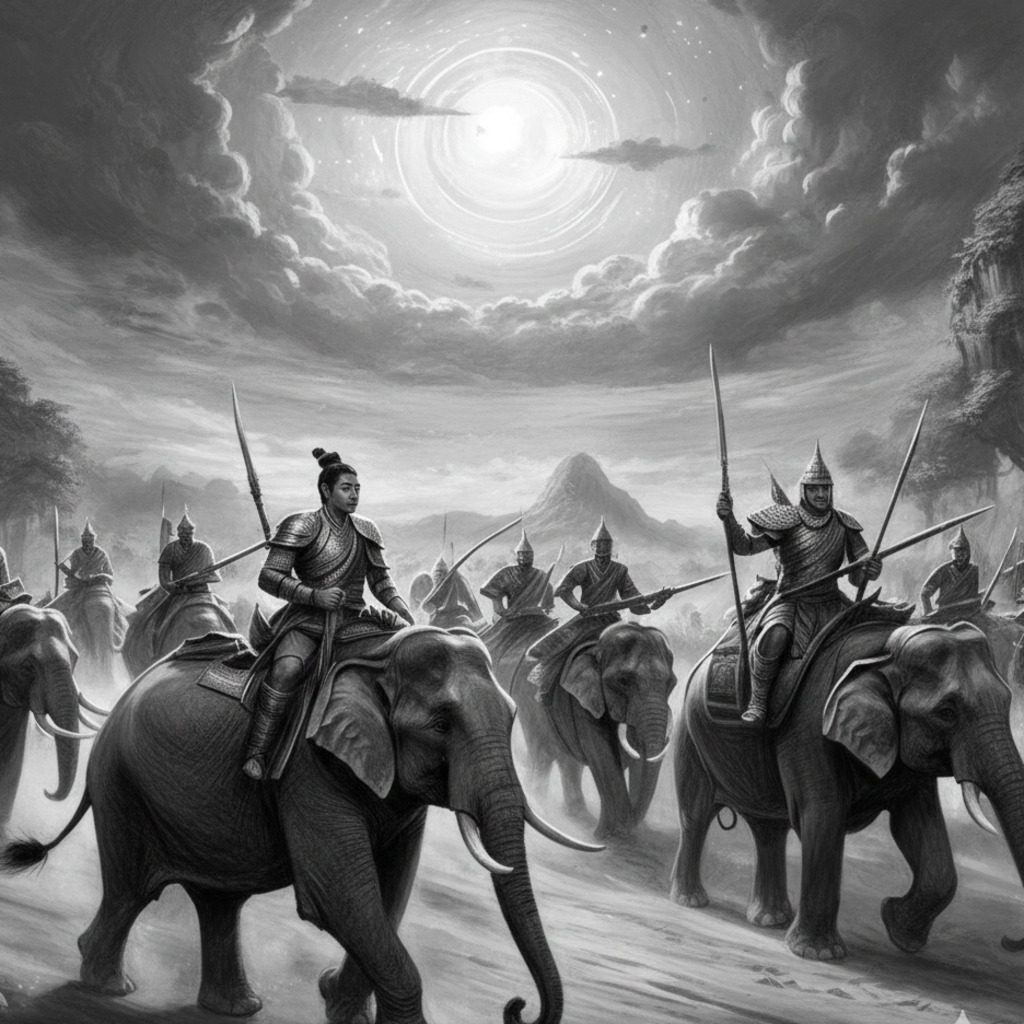
With heavy Indian influences in earlier Indianised Kingdoms such as Dvararati and Srivijaya, the influence of the war elephant in battle grew. The Siamese considered elephants sophisticated instruments of war, superbly trained and integrated into military strategies.
Adorned with ornate howdahs and ridden by skilled warriors, they would have instilled terror into anyone who saw them.
Training a War Elephant
Training a war elephant was a demanding process requiring years of patience. People selected young elephants and rigorously conditioned them to withstand battle noise. They accustomed the animals to the sights and sounds of warfare. Trainers desensitised them to smoke and fire. Finally, they taught the elephants to remain calm under immense pressure.
On the battlefield, war elephants were deployed with strategic precision. Their primary role was to shatter enemy formations with thunderous charges, their sheer size and strength capable of trampling infantry and cavalry alike. People mounted elaborately decorated platforms, called howdahs, upon their backs. These platforms provided vantage points for archers, javelin throwers, and even commanders to survey the battlefield and direct troops.
Fire and smoke easily panicked elephants. Caltrops—sharp, spiked devices scattered on the ground—could injure their sensitive feet. Enemy forces devised tactics, including deep pits to ensnare elephants. Specialised units used long spears and grappling hooks to attack the giants.
In Southeast Asia, war elephants continued to play a significant role in conflicts between rival kingdoms, particularly between the Burmese and Siamese empires. Their use persisted well into the 18th century, adding a formidable dimension to regional warfare.
The advent of firearms with their devastating range eventually rendered war elephants obsolete. Yet, their legacy endures. They remain a potent symbol of military might and the ingenuity of early Thai civilisations in harnessing the power of nature for warfare.
History of Elephants in Thailand: King Naresuan Vs Mingye Swa
The Burmese court held young Prince Naresuan as a hostage to ensure his father’s loyalty. There, he endured rigorous warfare training alongside the Burmese crown prince, Mingyi Swa. This shared education later cast an ironic twist on their destinies.
Like all Thai people, King Naresuan felt an ever-present need to be free. His reign marked a never-ending pursuit of independence.
He challenged Burmese overlordship and led numerous campaigns to reclaim lost territories. He asserted Ayutthaya’s sovereignty through these actions. His stunning military acumen earned him the respect of enemies and the adoration of his people.
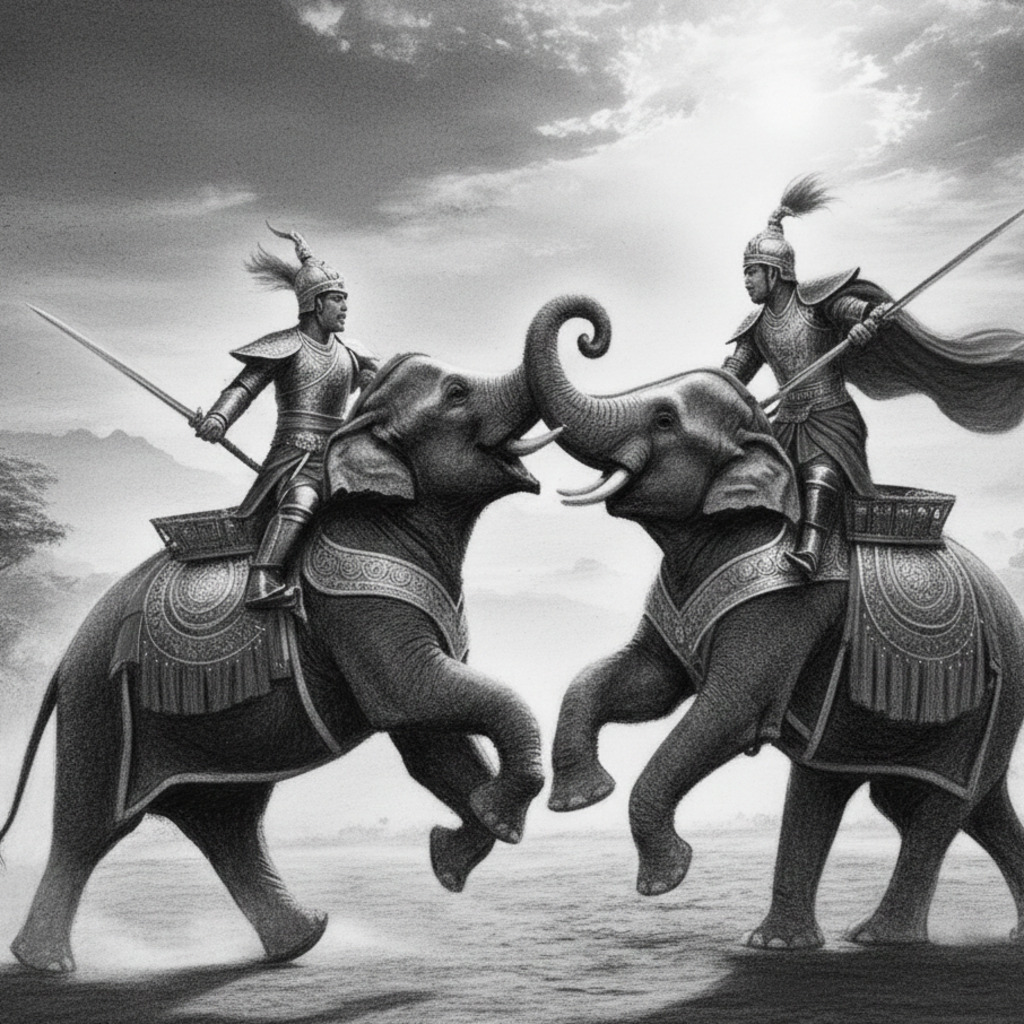
The year was 1593, and the battlefield of Nong Sarai witnessed a clash of titans. Atop their war elephants, these two formidable warriors engaged in a battle for supremacy. With a swift and decisive thrust of his lance, King Naresuan delivered the fatal blow, marking a turning point in the war that ultimately led to Ayutthaya’s victory.
The Nong Sarai elephant duel was more than a clash; it was a symbolic act of defiance. By challenging the Burmese prince to combat, Naresuan claimed superiority and resolved to break free from foreign rule. This dramatic image remains a powerful symbol of Thai resistance and national pride today.
Depicted in countless murals and statues across Thailand, the legendary duel between King Naresuan and Burmese Crown Prince Mingyi Swa played a pivotal role in liberating Ayutthaya from Burmese rule.
History of Elephants in Thailand Royal Ceremonies
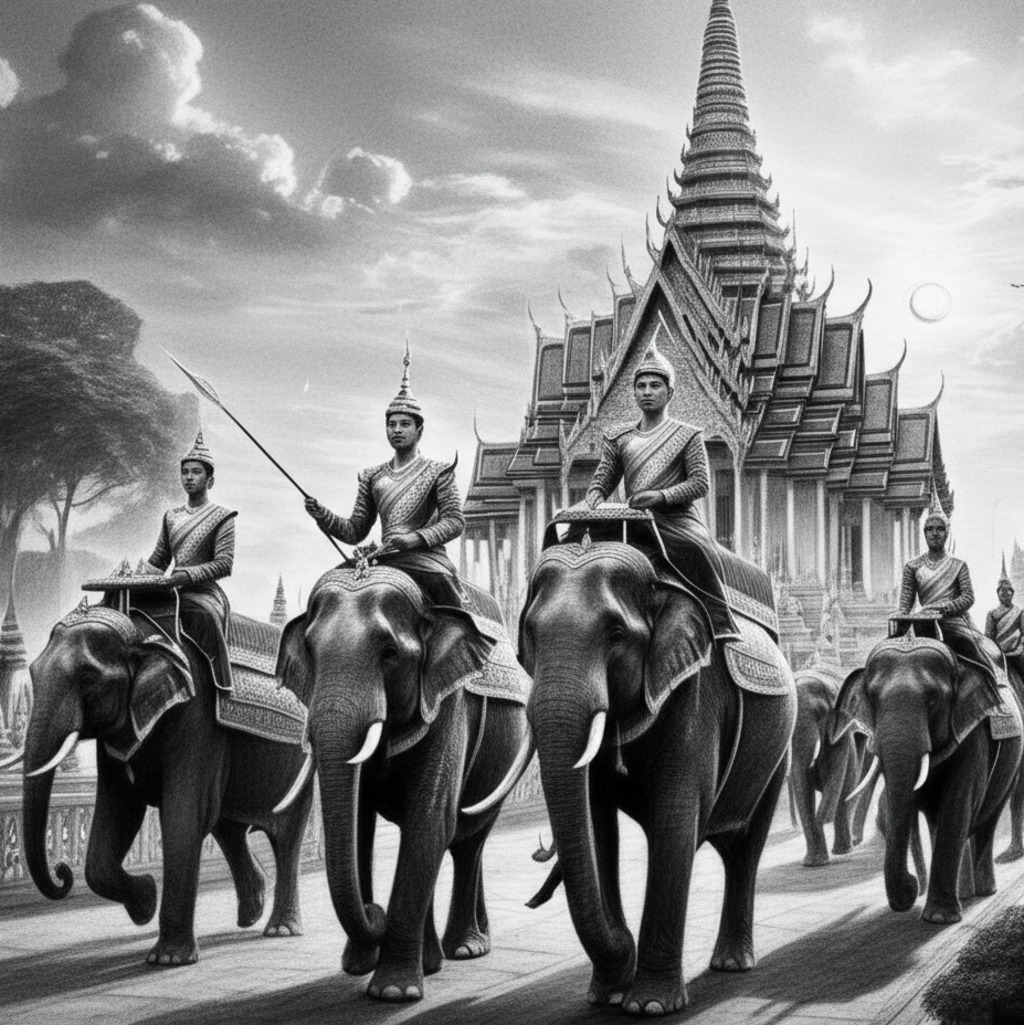
Beyond their military prowess, elephants symbolised royal authority and divine connection.
People revered rare white elephants as sacred embodiments of good fortune and prosperity. Kings bestowed titles and lavish gifts upon mahouts who cared for these amazing creatures.
In the opulence of Thai royal ceremonies, their presence transformed ordinary processions into extraordinary spectacles. The possession of a large number of elephants was a mark of a powerful and prosperous kingdom, reflecting the monarch’s strength and dominion.
Elephants were integral to elaborate royal processions, carrying kings and queens in ornate howdahs (covered seats) while displaying the kingdom’s wealth and power. The sight of a monarch atop an elephant, adorned in regal finery, was a breathtaking spectacle indeed. Grand processions featuring elephants marked royal coronation ceremonies, showcasing the king’s power and prestige.
The association of white elephants is particularly significant. Believed to be sacred and imbued with divine power, these rare elephants were the exclusive property of the king. The possession of a white elephant was seen as a sign of divine favour and further enhanced the monarch’s prestige.
King Rama V, known for his progressive reforms, was particularly fond of elephants. He established a royal elephant stable and rode elephants on ceremonial occasions, showcasing his connection to the nation’s heritage. His passion for these animals helped preserve their cultural significance and inspired interest in their welfare.
Ganesha, The Elephant-Headed God
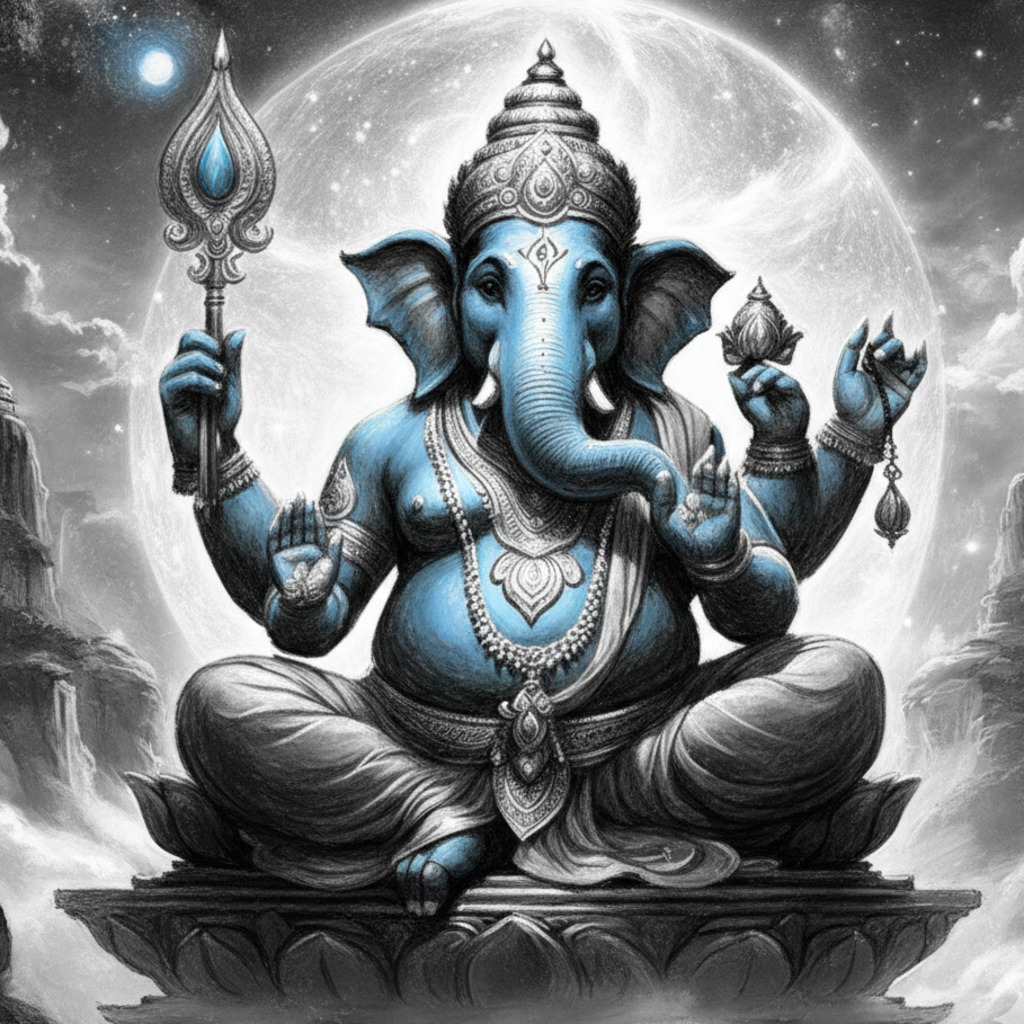
Wherever you go in Thailand, you’ll not be far from a statue or portrait of the elephant-headed god Ganesha. Or, as they say in Thai, Phra phiḳhneṣ̄ (พระพิฆเนศ).
In Hindu mythology, Ganesha is a playful figure and the son of Lord Shiva. With his elephant head, potbelly, and four arms, Ganesha is instantly recognisable.
Ganesha’s elephant head is rooted deep in symbolism. The elephant represents intelligence, strength, wisdom, and compassion. Just as an elephant moves with purpose, Ganesha guides his devotees on their spiritual journeys. He clears obstacles and bestows blessings upon his followers.
Ganesha is also revered as the patron of the arts. His creativity is reflected in his love for learning, music and literature. Legends tell of Ganesha composing the epic Hindu poem, the Mahabharata, showcasing his literary skills. Ganesha has a playful demeanour, adding a touch of whimsy to his beloved character. His love for sweets is legendary, as are his mischievous pranks.
To the Thai people, Ganesha continues to inspire and uplift. His image adorns many homes, temples, and businesses within the country. It serves as a reminder of the importance of wisdom, perseverance, and the power of overcoming obstacles to millions of Thai citizens.
Work Elephants & Mahouts
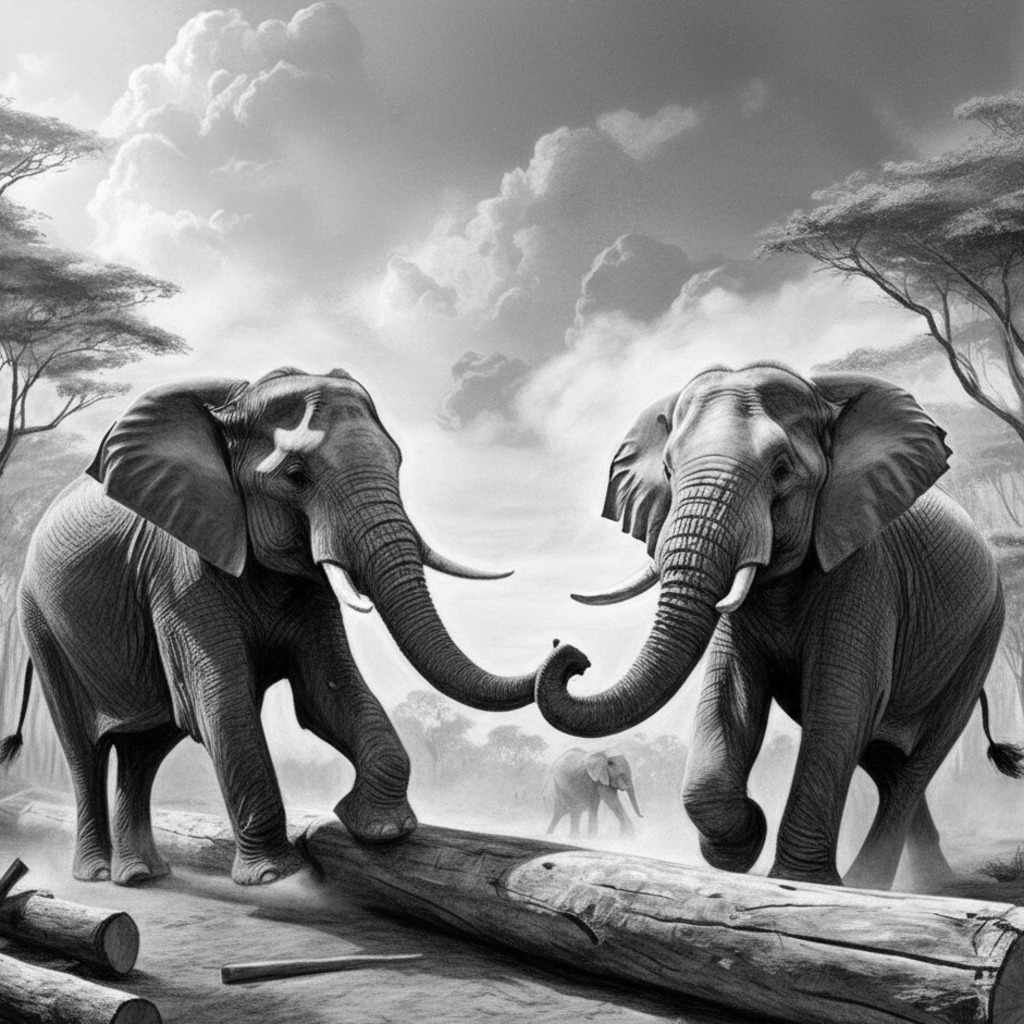
The Ayutthaya era witnessed the expansion of elephants’ roles beyond warfare. They became integral to the kingdom’s economy, serving as beasts of burden for transportation and logging. Their strength and endurance proved invaluable in moving heavy timber. Mahouts, the skilled handlers of elephants, are also an integral part of the history of elephants in Thailand.
Elephants and their mahouts carried goods and people across rugged terrain. In the fertile plains of Siam, they helped cultivate the land. Their strength is unmatched in ploughing fields and clearing dense forests. Their immense power made them ideally suited for hauling massive teak logs through dense jungles, a task that would’ve been impossible for humans or even oxen.
Mahouts, often from expert families, dedicated their lives to caring for and training these gentle giants. They used voice commands, body language, and specialised whistles to guide elephants through difficult terrain. This bond grew through years of shared labour and deep mutual trust.
Becoming a mahout was a lifelong commitment. From a young age, trainee mahouts learned the art of elephant care and communication. They studied the nuances of elephant behaviour, mastering the subtle cues of the elephant. Mahouts were not simply handlers; they were caretakers, trainers, and companions. They were responsible for every aspect of an elephant’s well-being, from feeding and bathing to medical care and training.
Thai Elephant Characteristics
The Thai elephant isn’t merely an Asian elephant; it has its own characteristics distinguishing them as a distinct subspecies. With their gentle temperaments, they have stolen the hearts of many locals and visiting tourists.
Physically, Thai elephants tend to be smaller than the Indian elephant, with a stockier build and shorter legs. Not all possess tusks. Those that do often exhibit smaller ones than their Indian brethren. Thai elephants are renowned for their gentle nature. As well as their deep-rooted bond with their mahouts. Centuries of close interaction have created a unique understanding between mahout and elephant. Their adaptability and problem-solving abilities are legendary, making them invaluable partners in various aspects of Thai life throughout history.
Responsible Elephant Tourism
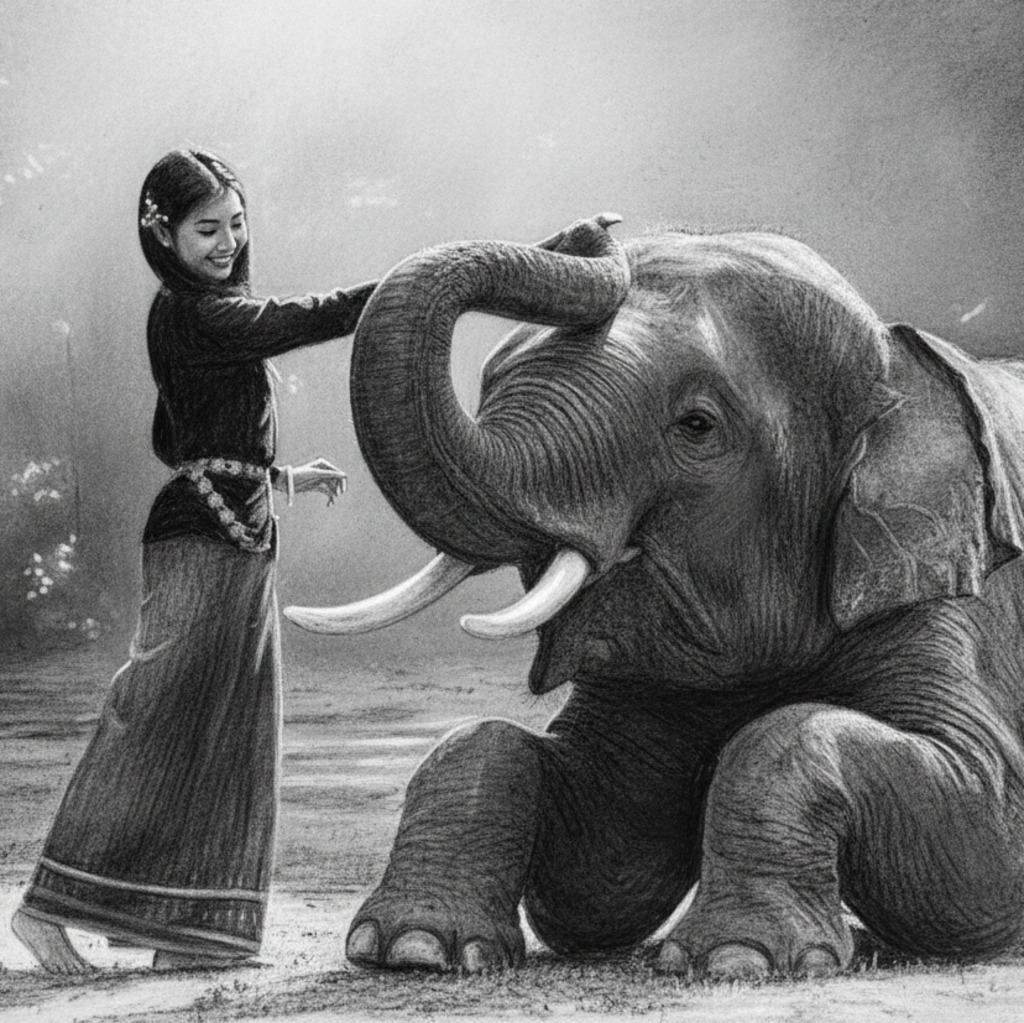
The rise of tourism, while bringing economic benefits, also raises concerns about animal welfare. Recognising ethical concerns surrounding elephant tourism, owners of elephant camps have transitioned their business model. Choosing to focus on enriching the environment for rescued elephants. They offer a chance to observe these larger-than-life creatures in their natural habitat.
As tourists, we play a crucial role in supporting ethical elephant tourism. By prioritising animal welfare and educating ourselves about responsible practices, tourists contribute to the conservation of Thailand’s iconic elephant. The history of elephants in Thailand has gone from a war machine to a working elephant. These magnificent creatures can now finally enjoy resting at one of many elephant sanctuaries throughout Northern Thailand and the rest of the country.
History of Elephants in Thailand FAQs
What is the historical and cultural significance of elephants in Thailand?
Elephants have been a central part of Thai history and culture for centuries. They are a national symbol, revered for their strength and intelligence, and are deeply intertwined with the monarchy, religion, and the arts. Their presence represents power and prestige, and they have been integral to major events and traditions throughout the nation’s history.
What is the special importance of “white elephants”?
White elephants (chang pueak) are considered sacred and are highly auspicious symbols of royal power and divine favour. According to an ancient text, a true white elephant possesses at least three of seven special physical characteristics. Historically, all white elephants found in the kingdom were declared the property of the king, and their possession was seen as a sign of the king’s righteousness and the kingdom’s prosperity.
What was the role of elephants in Thai warfare, and why did it end?
Elephants were a powerful military asset in ancient Thailand, used as living “tanks” in battle to break enemy lines and carry high-ranking warriors. The most famous example is the legendary elephant duel between King Naresuan of Ayutthaya and the Burmese Crown Prince in 1593. However, the practice of using elephants in combat largely disappeared after the 16th century with the introduction of firearms and other modern weapons, which made the elephants and their riders easy targets.
What was the economic role of elephants, and what caused this to change?
For centuries, domesticated elephants were essential for heavy labour, particularly in the logging industry. Their strength and ability to navigate rough terrain made them invaluable for hauling massive logs. This all changed in 1989 when the government implemented a nationwide ban on commercial logging due to environmental concerns, leaving thousands of elephants and their mahouts unemployed and without a purpose.
What is the current status of elephants in Thailand, and what are modern conservation efforts?
Thailand’s elephant population includes wild and domesticated animals. Most domesticated elephants work in the tourism industry.
Growing awareness of animal welfare has sparked a shift toward ethical sanctuaries. These centres rescue elephants from abusive situations. They provide a natural habitat, veterinary care, and freedom from forced labour.