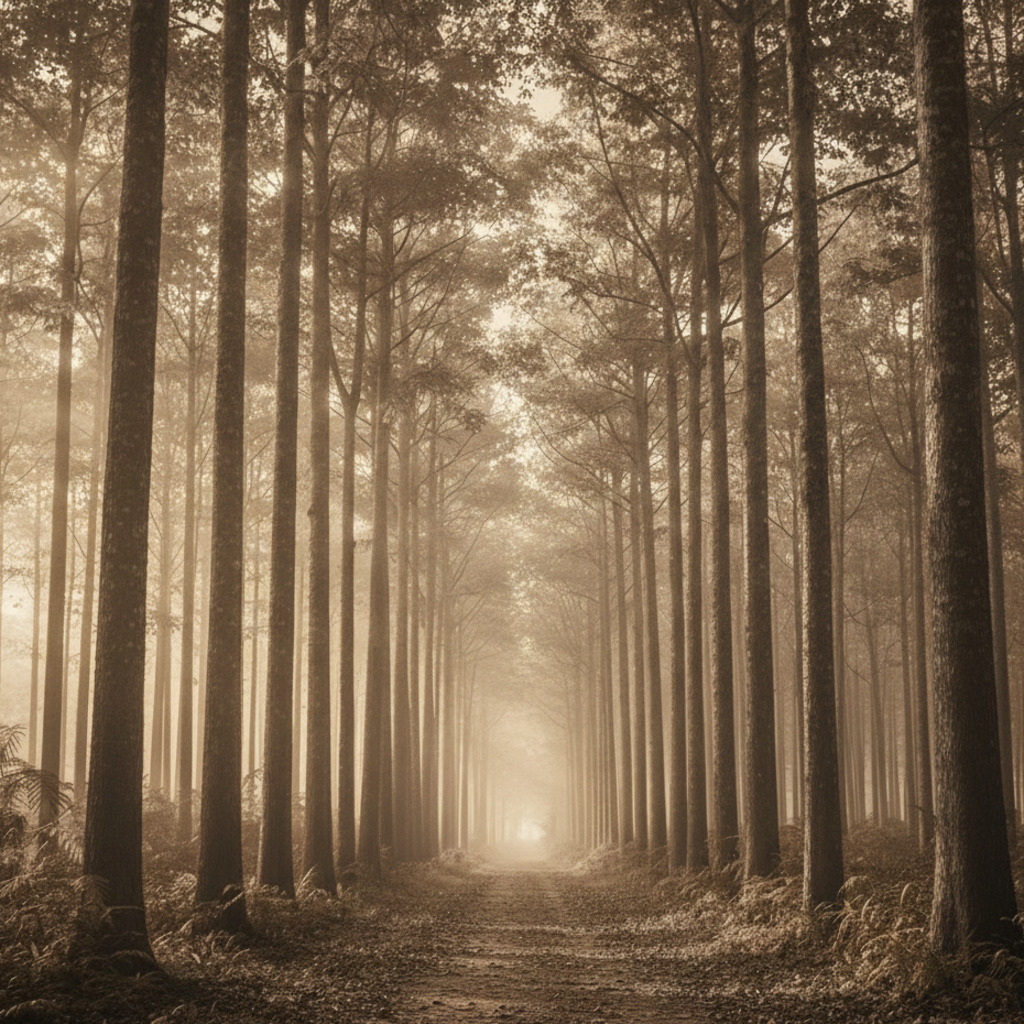

To step off Chiang Mai’s sun-bleached pavement and into a century-old timber manor is a sensory jolt. The air cools and thickens, carrying the scent of the tropics: damp earth, monsoon rain, and the leathery musk of aged Tectona grandis.
This is the scent of The Great Teak. In the 19th century, this wood wasn’t just a building material—it was a global currency and a diplomatic lever that shaped Northern Thailand’s history.
Modern travellers see teak suites as a luxury of texture. But to find the soul of these Vernacular Mansions of Southeast Asia, you must look beyond the polish. Trace the grain back to the northern forests—a journey of gravity, muscle, and “elephant engineering” that turned living giants into architectural icons.
The Source: The Lanna Highlands and the “Spirit of the Tree”
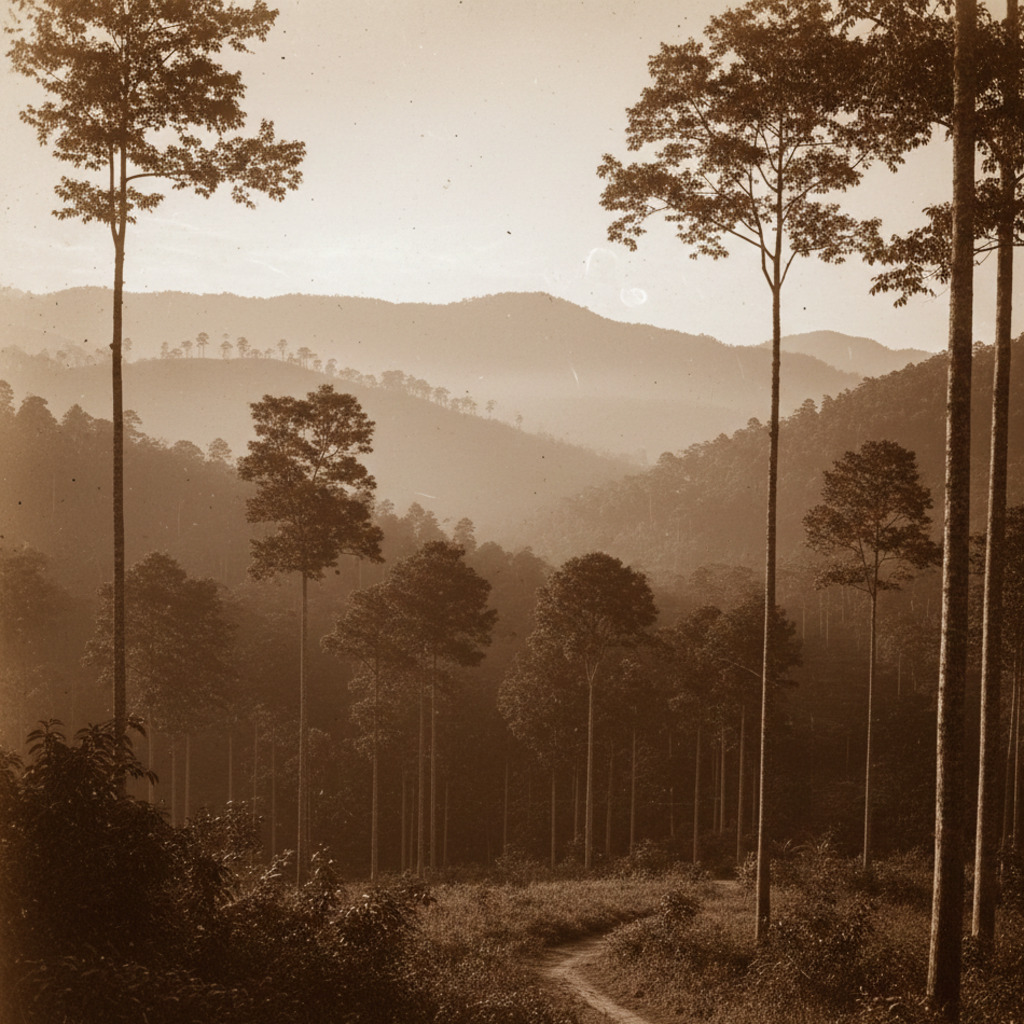
The “Logic of the Soil” dictates that a tree is only as good as the terrain that challenges it. Lanna highland teak is considered the world’s finest due to the region’s distinct seasonal rhythm. The long, harsh dry season forces trees into a dormant state. This dormancy concentrates the tree’s natural oils and silica. Meanwhile, violent monsoon rains constantly test the wood’s structural integrity.
In traditional Lanna culture, felling a Great Teak was never a purely industrial act; it was a spiritual negotiation. Tradition holds that the Chao Pa (Forest Spirits) and Phra Phum (Guardian Spirits) rule the forests. Before delivering a single axe-stroke, loggers performed rituals to ask for permission. They placed offerings of tobacco, rice, and spirit-money at the roots. These offerings ensured the “soul” of the timber—its Semangat—remained unoffended.
Spiritual reverence ensured people treated the wood with a care that modern industrial forestry cannot replicate. Loggers did not merely “harvest” a tree; they “invited” it to join a human home. Before felling a tree, rituals protected its soul, or Semangat, from offence. People placed offerings of tobacco, rice, and spirit money at the roots to conduct a spiritual negotiation.
The Players: The “Teak Wallahs” and the Colonial Giants
By the mid-1800s, the “Living Forest” had caught the attention of the British Empire. The Royal Navy required rot-resistant timber for its massive fleet. Meanwhile, growing southern cities needed the North’s immense structural strength. This demand created the era of the “Teak Wallahs”. These men were European agents representing powerful trading firms.
Major companies included the British Borneo Company and the Bombay Burmah Trading Corporation.
These men lived lives of extreme contrast. By day, they were “Jungle Managers,” trekking through malarial forests to oversee thousands of logs. By night, they retreated to “Jungle Bungalows”—elevated teak structures that served as fortified outposts of European domesticity.
The relationship between these “Wallahs” and the Northern Thai royalty (Chao) was a complex dance of commerce and feudalism. The Chao owned the forests; the British owned the logistics. Together, they transformed Chiang Mai from a sleepy riverside town into a global timber hub. The wealth from these timber deals funded more than just hotels. It built the schools, clinics, and infrastructure that defined Northern Thailand’s 20th-century transition. Historic “Black House” structures served as literal boardrooms for these global transactions. Walking through them, you see where people signed deals in ink and sealed them in wood.
The Engine: Elephant Engineering & The Mahout Legacy
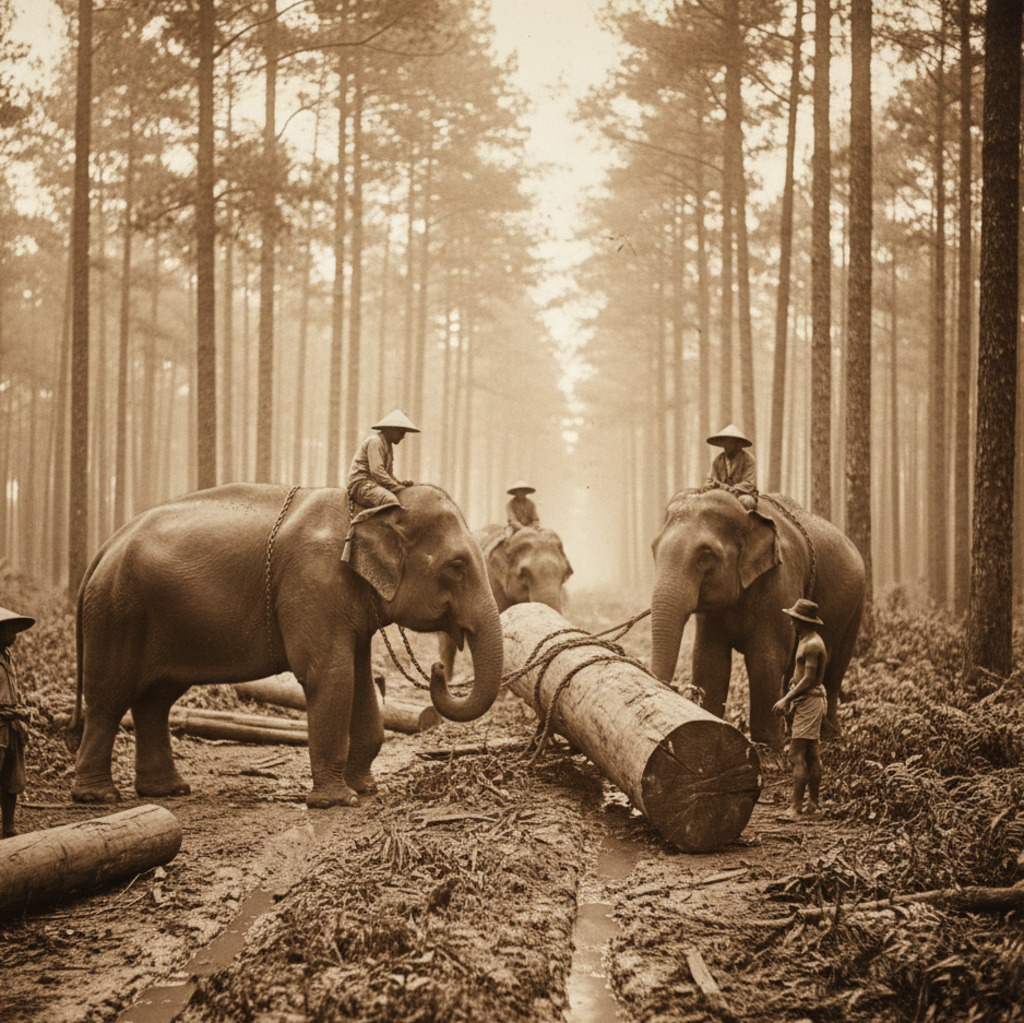
If the Teak Wallahs were the architects of the trade, the elephants were its literal engine. No machine ever invented could replace the four-ton “organic machinery” of a timber elephant. In the rugged ravines of the North, where the terrain is too steep for carts and the mud too deep for trucks, the elephant was—and is—the only viable technology.
These were not merely pack animals; they were highly trained specialists. A timber elephant’s education began at age five in “forest schools”. There, they learned the complex physics of moving massive logs. They were taught to use their trunks for precision placement. Their tusks served as crowbars to pry timber from the mud. Finally, they used their massive foreheads to nudge rafts into the river current.
The bond between the elephant and its mahout (handler) was a lifelong partnership, often spanning three or four decades. The most dangerous work occurred during the “Spate”—the sudden surge of water following a monsoon downpour. The elephants were driven into the churning, muddy rivers to break “log jams.” A single misplaced log could act as a trigger, releasing thousands of tons of timber in a violent rush.
Anorak Note: This partnership shaped the very identity of Northern Thailand. For a deeper look into how these majestic creatures transitioned from the battlefield to the timber forests, see our History of the Elephant in Thailand.
The Transit: The 1,000km Riverine Silk Road
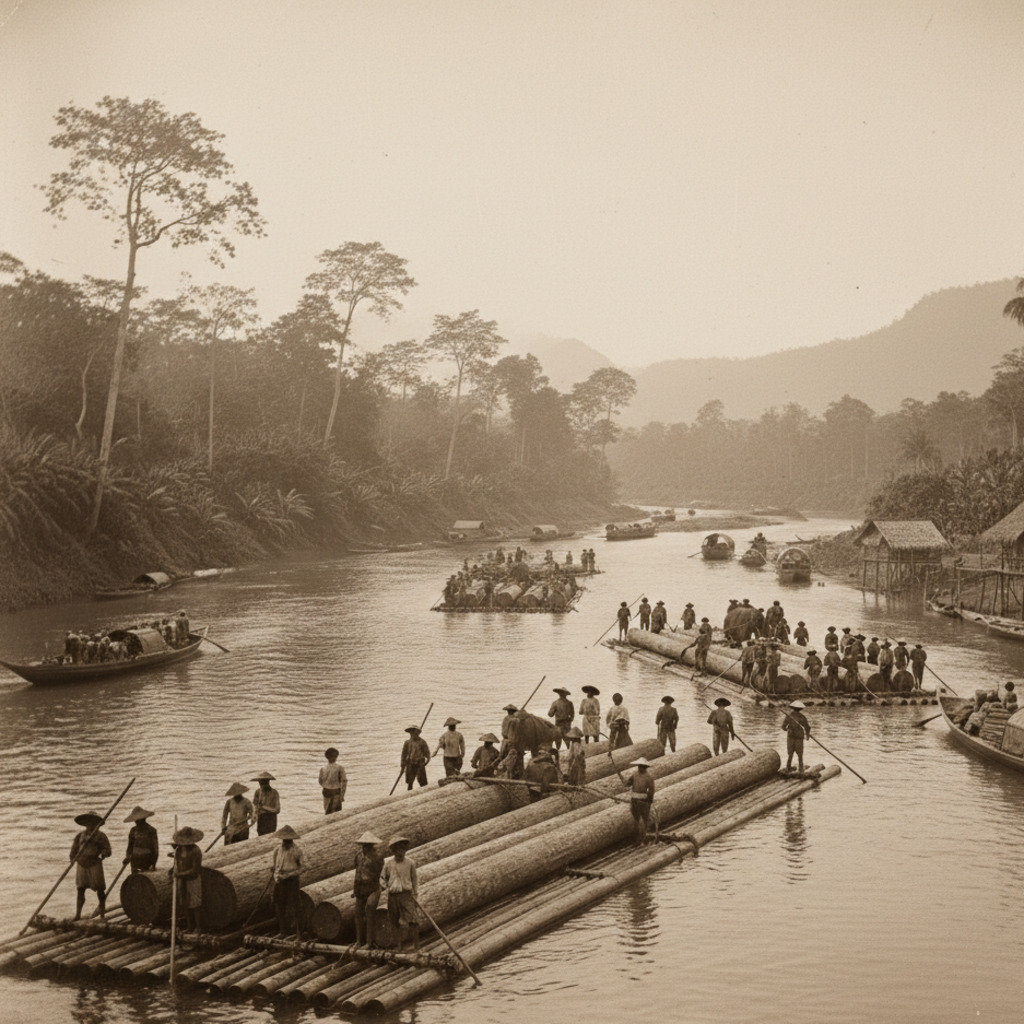
Once the elephants had nudged the logs into the mountain creeks of the Lanna highlands, the “Trail” shifted from a story of muscle to a story of fluid dynamics. This was the most precarious phase of the journey: the transition from the chaotic, flash-flood “spates” of the North to the slow, steady currents of the South.
Workers rounded up individual logs at the confluence of the Ping, Wang, Yom, and Nan rivers in Nakhon Sawan. There, they formed “Raft Villages”. While these appeared as mere wood piles to casual observers, they functioned as sophisticated floating ecosystems. Crews bound up to 200 logs together with twisted rattan and bamboo to create rafts hundreds of feet long.
On top of these rafts, the crew built temporary bamboo huts, complete with cooking fires and vegetable gardens in clay pots. Entire families lived on these timber islands for six to eight months as they drifted toward the sawmills of Bangkok. They navigated through whirlpools and sandbars, living a life that was half-aquatic and half-terrestrial. For the “Heritasian” traveller, understanding this journey adds a layer of weight to every teak floorboard; that plank didn’t just arrive at a construction site—it survived a 1,000-kilometre odyssey through the heart of old Siam.
The “Anorak” Detail: The Science of the “Standing Death”
Why go through this Herculean effort for one specific species of tree? To understand the obsession with teak, we have to look at its cellular biology. In the “Heritasian” worldview, the best materials are those that solve tropical problems without the need for chemicals.
The secret lies in the Girdling Process. In the 19th century, loggers never cut down a “green” tree. They cut a deep ring into the bark to sever the sap-carrying vessels. They then left the tree to die while it stood upright for two full years.
The Branding: A Ledger Written in Wood
In an era before digital tracking, how did the British Borneo Company ensure their logs weren’t “borrowed” by rivals downstream? The answer was the Log Brand. Every company had a signature “hammer mark”—a series of symbols struck into the ends of the logs with heavy iron mallets. These brands are the “DNA” of the teak trade.
Look closely at the ends of the original foundation pillars in Chiang Mai’s oldest structures. You can still occasionally find these distinct ghost marks. These marks tell the story of the log’s specific provenance. They reveal which forest it came from and which company owned it. They even indicate the year the timber began its long journey.
From Timber Raft to Vernacular Mansion: The Architecture of Success
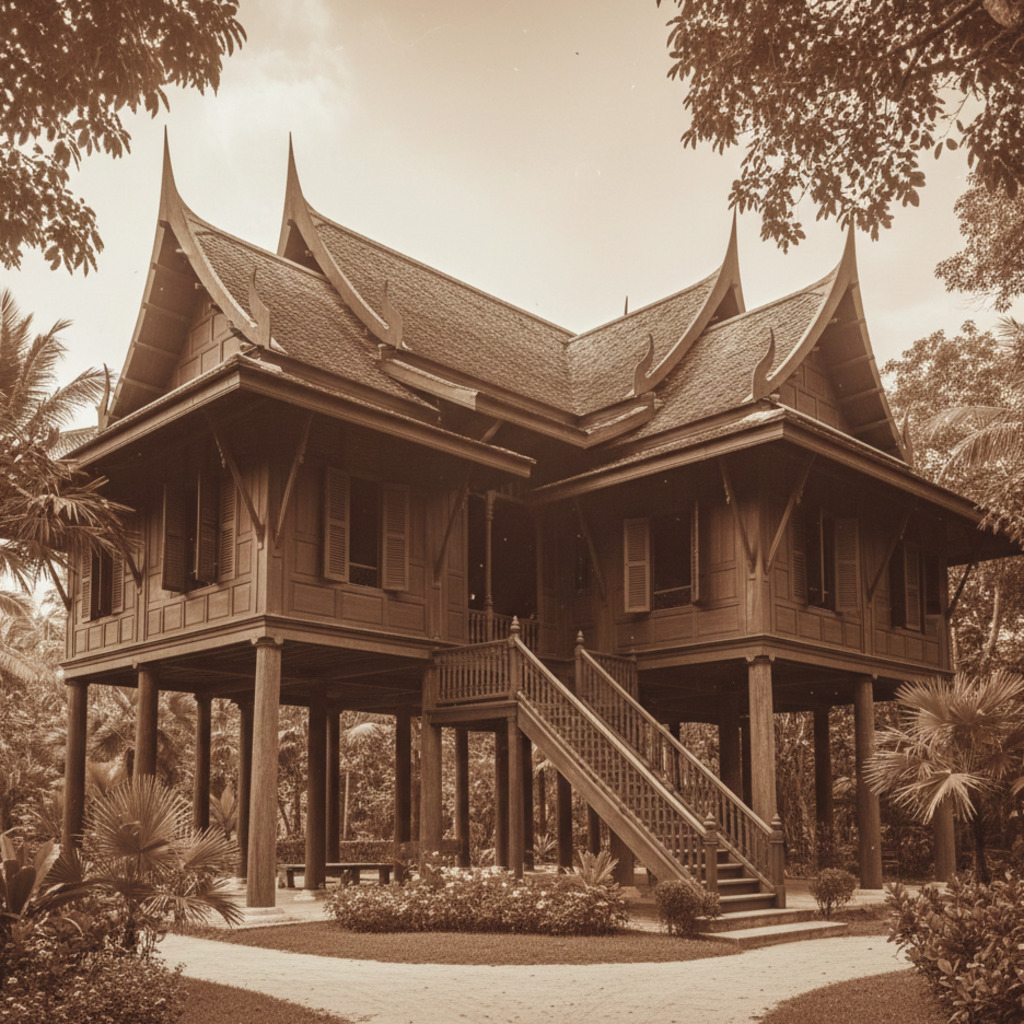
When the rafts finally reached the South, the timber was no longer just a raw material; it was an asset of immense prestige. In the “Logic of the Soil,” the transition from a bamboo-thatch hut to a teak-walled mansion was the ultimate signal of a family’s arrival.
Unlike the heavy Chengal used in the Malay Peninsula, Teak was prized for its modularity. Because teak is stable and easy to carve once seasoned, it allowed for the creation of the Ruean Thai (Thai House) style: prefabricated wall panels that could be dismantled and moved. A teak house was not a static monument; it was a mobile asset, a dowry, and a legacy that could be packed up and reassembled as the family’s fortunes shifted.
The Ethical Echo: Reclaimed Luxury in the 21st Century
Today, the “Teak Trail” has reached its natural conclusion. The vast old-growth forests that once fed the global trade are now protected treasures. The era of the “Great Companies” has passed, replaced by a new philosophy: The Luxury of the Reclaimed.
Most properties built today do not plant new trees. Instead, they act as curators of “Upcycled Heritage.” The teak you touch in a modern luxury villa likely had a previous life—perhaps as a railway sleeper, a rural bridge, or a rice granary. This reclaimed timber is actually superior to new wood; it has been seasoned by the sun and wind for decades, reaching a level of stability that even the 19th-century “standing death” process couldn’t achieve.
Conclusion: Listening to the Wood
The Teak Trail is a masterclass in how humanity once negotiated with the tropics. It begins with spirit offerings and ends in the quiet elegance of a heritage suite.
When you next find yourself in a timber manor, take a moment to look at the grain. Look for the faint scars of the rattan bindings or the ghost-mark of a company brand. When you walk across those floors, remember that you are walking on the endpoint of a 150-year-old journey. You are part of the legacy of elephants, Wallahs, and carvers. In Southeast Asia, true luxury is found in wood that has learned how to breathe.
Northern Thailand Teak History FAQs
What exactly was the “Teak Trail”?
The Teak Trail refers to the 1,000-kilometre journey teak logs took from the Lanna highlands of Northern Thailand down to the sawmills and ports of Bangkok. This route combined rugged overland transport by elephants with a complex riverine network, moving timber that served as a global currency in the 19th century.
Why was Northern Thai teak considered the best in the world?
The region’s distinct seasonal rhythm—harsh dry seasons followed by violent monsoons—challenged the trees, leading to a high concentration of natural oils and silica. This “logic of the soil” created timber with superior structural integrity and natural resistance to decay.
Who were the “Teak Wallahs”?
The Teak Wallahs were European agents working for major trading firms like the British Borneo Company. They managed vast forest tracts and oversaw the logistics of the trade, often living in elevated teak “jungle bungalows” while negotiating deals with Northern Thai royalty.
How were logs tracked before digital technology?
Companies used iron mallets to strike unique “hammer marks” or log brands into the ends of each timber piece. These marks acted as the “DNA” of the trade, identifying the log’s origin, the owning company, and the year its journey began.
What role did elephants play in the timber industry?
Elephants were the “organic machinery” of the trade, capable of navigating terrain where no machine could function. Handlers trained elephants from a young age to use their trunks and tusks for precision logging. These elephants performed the essential task of breaking dangerous log jams during the monsoon “spates”.