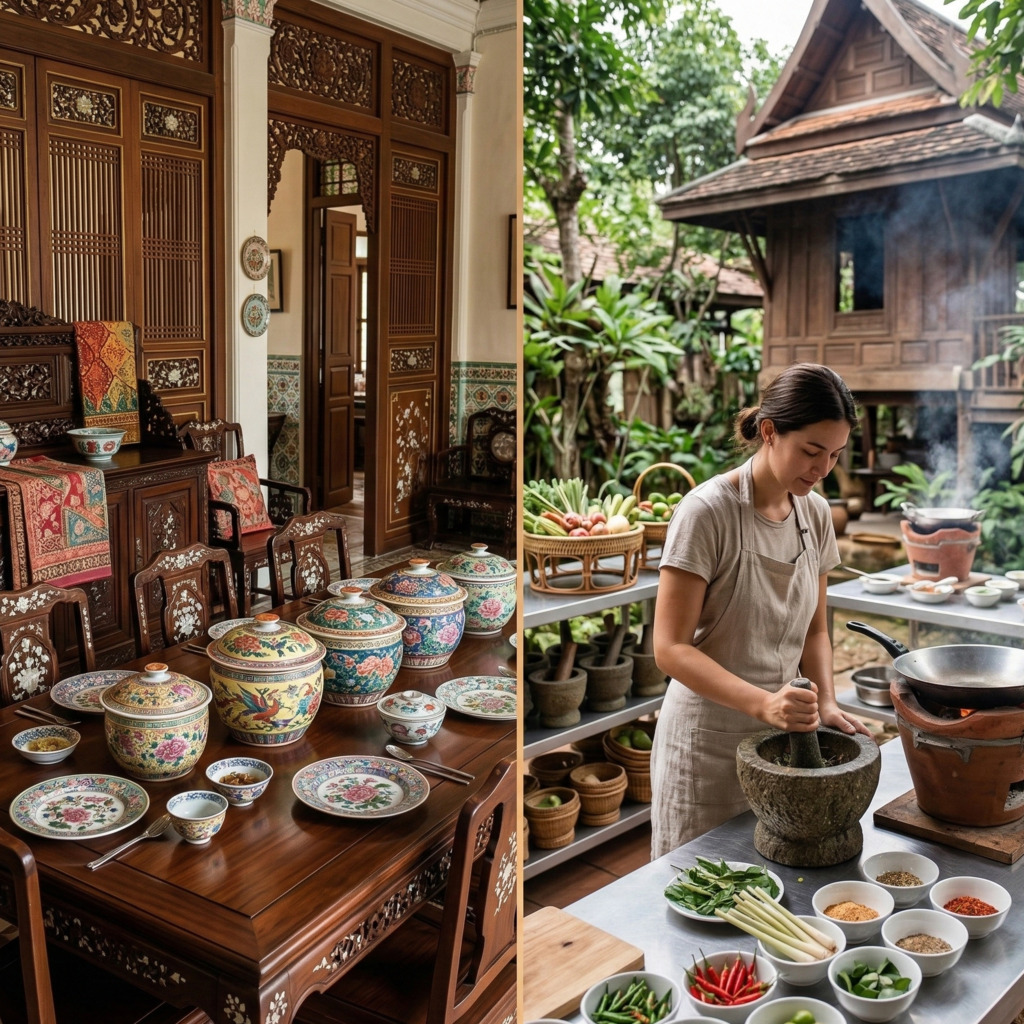

In the Western world, the dining table is often a theatre of the individual – a space where each guest commands their own plate, selects their own vintage, and maintains a distinct boundary around their meal. However, once you cross the threshold into the heritage cultures of Thailand, Malaysia, and Indonesia, the table undergoes a profound transformation. It ceases to be a platform for personal consumption and becomes a microcosm of the community itself. In these lands, the table is a living map of history, social hierarchy, and ancient hospitality, where every gesture – no matter how small – carries the weight of centuries.
The Soul of the Table: A Shared Spirit of “Sudah Makan”
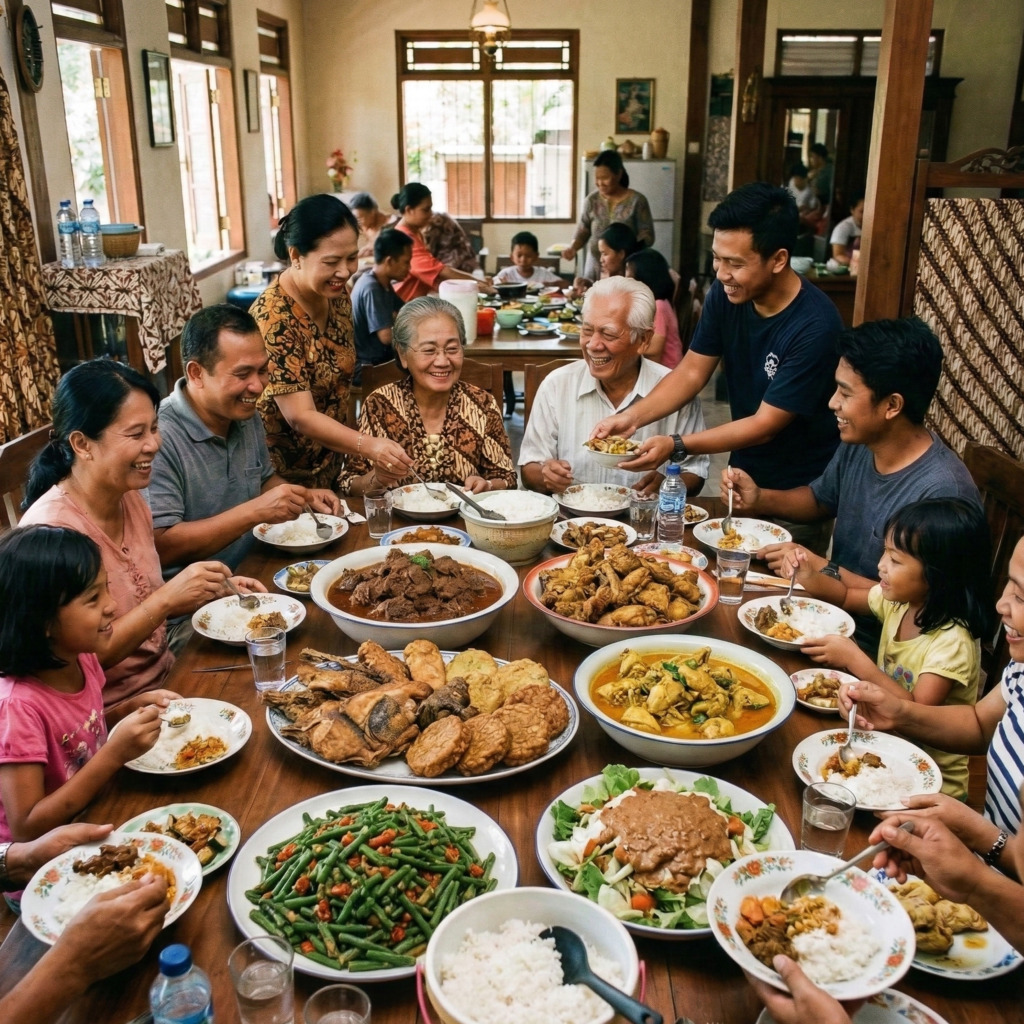
One cannot truly understand the heart of Southeast Asia without first understanding its primary greeting. Whether you wander through the shophouses of George Town or navigate the high-society circles of Bangkok, you rarely hear “How are you?” instead you hear “Sudah makan?” in Malaysia and Indonesia, or “Kin khao rue yang?” in Thailand. These words, which translate simply to “Have you eaten yet?”, serve as the ultimate social lubricant. They inquire into your well-being, offer a gesture of care, and extend a standing invitation to the communal hearth.
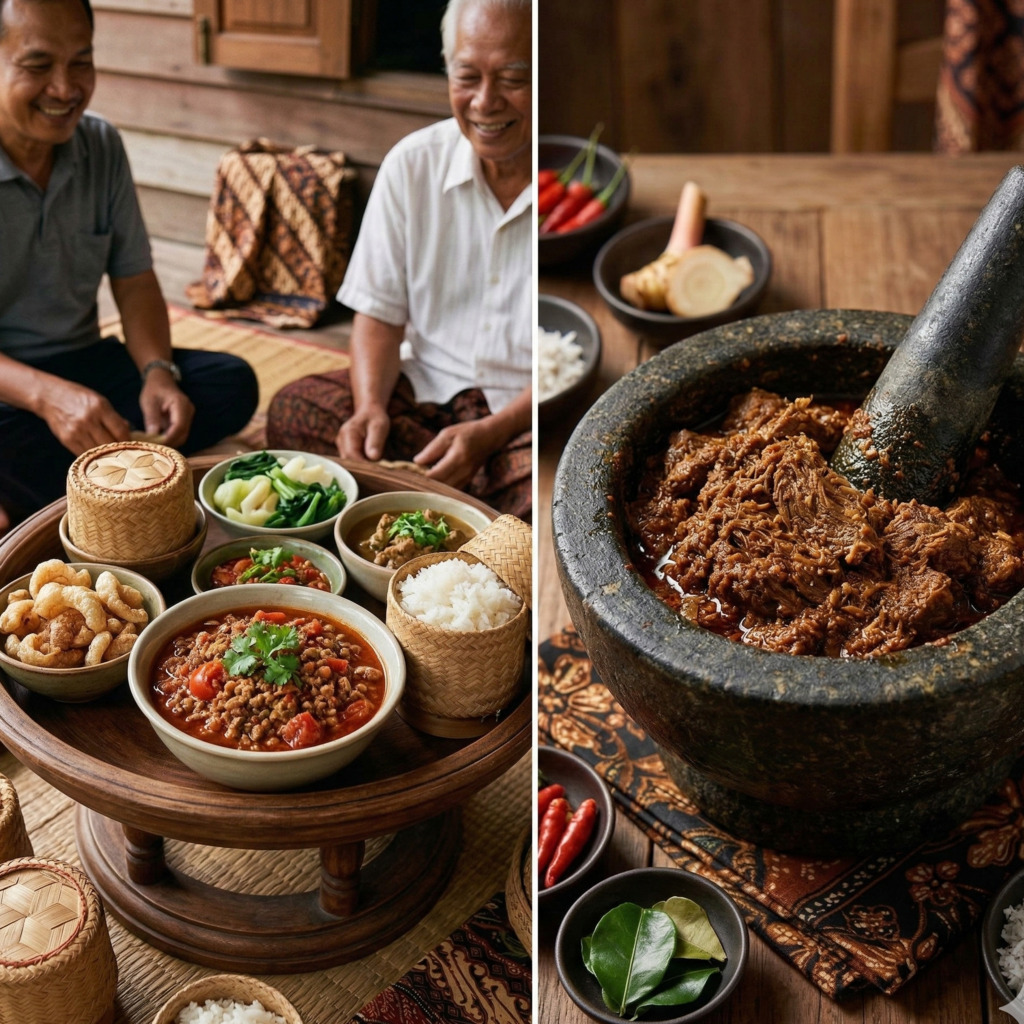
In these cultures, food isn’t merely sustenance; it is a love language. In a traditional Malaysian household, a mother may not always say “I love you” to her children in so many words, but she’ll spend six hours over a heavy stone mortar, rhythmically pounding the perfect rempah (spice paste) for a beef rendang. To eat that meal is to receive her affection. This emotional weight is why “getting it right” at the table matters. When you sit at a heritage table, you’re sitting within the host’s heart.
The philosophy of Gotong Royong – a concept of communal help and shared responsibility – roots this spirit and defines the Malay and Indonesian archipelago. At the table, this spirit manifests as an absolute rejection of the individual portion. Instead, hosts serve meals in a sprawling spread designed for sharing.
This communal approach requires a constant, selfless awareness of one’s neighbours. In Thailand, the delicate art of Kreng Jai – the desire to avoid imposing on others – balances this social dynamic. At a heritage table, Kreng Jai becomes a silent dance; you don’t reach for the last piece of fish because the harmony of the group matters more than the morsel itself.
The Sacred Grain: Rice Culture in the Tropics
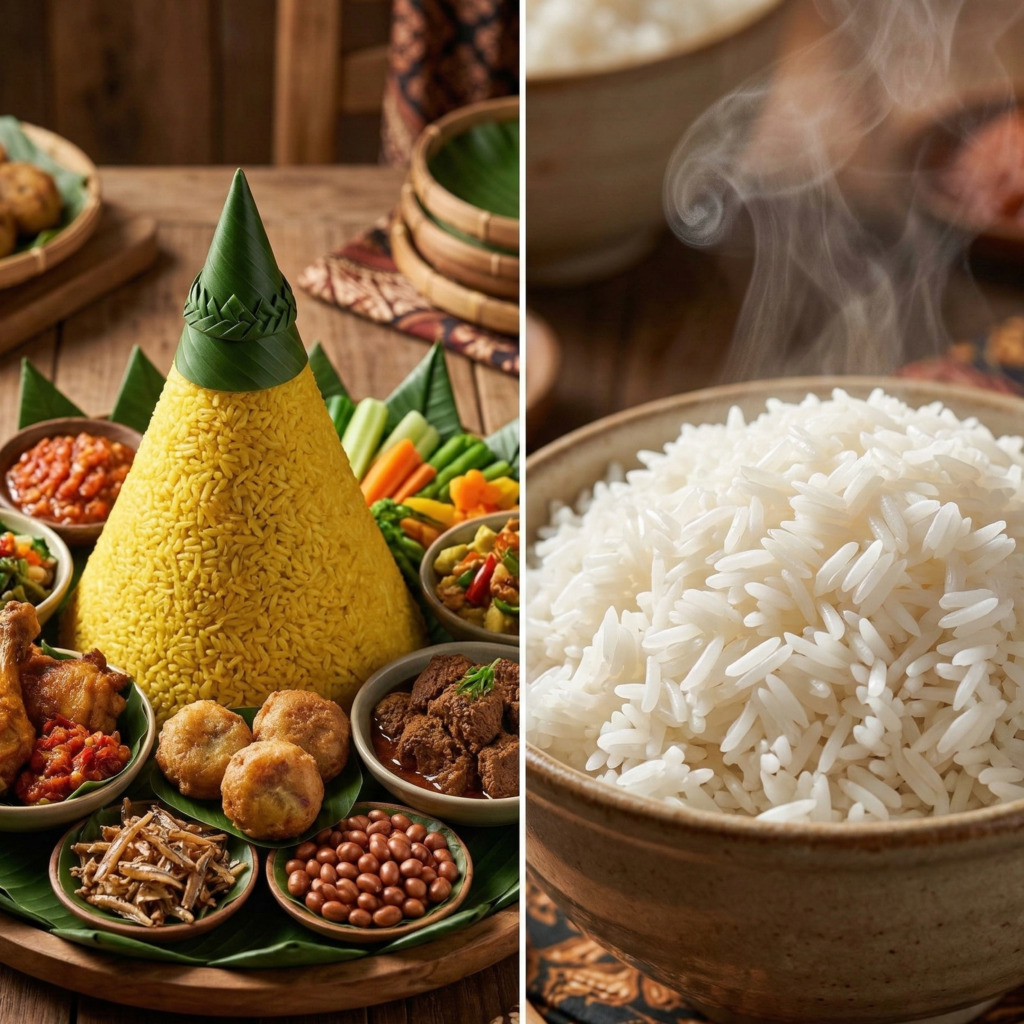
Across these three nations, rice is the spiritual anchor of the entire culinary experience. In most local dialects, the literal translation for “to eat” is “to eat rice.” Historically, providing rice was the ultimate sign of a stable and thriving civilisation. This reverence remains visible today even in the most opulent grand dame hotels.
The reverence for rice extends into the very language of the region. In Indonesia, the word Padi refers to the rice in the field, Beras to the harvested grain, and Nasi to the cooked rice on your plate. This linguistic precision reflects a culture that monitors every stage of the grain’s life. In Thailand, the crown jewel is Khao Hom Mali, the fragrant Jasmine rice of the Central Plains.
In Indonesia, rice takes on a ceremonial geometry with the Tumpeng. This striking cone of yellow turmeric rice represents the sacred volcanic peaks of Java. Eating Tumpeng is a ritual of gratitude for all participants. The tip of the cone is traditionally offered to the most senior guest.
This “Sacred Grain” philosophy demands a specific etiquette: you never waste a single grain. Historically, people believed rice possessed Semangat Padi – a rice soul – and felt that leaving a bowl unfinished invited misfortune. Even in a luxury heritage setting, guests show a deep understanding of this agrarian respect by being mindful of their portions, even if they don’t scrape the plate clean.
The Northern Thai Khantoke: A Ritual of the Lanna Kingdom
As you move north into the mist-covered mountains of Chiang Mai, the dining etiquette shifts into the realm of the Khantoke. This isn’t merely a dinner; it is a portal into the ancient Lanna Kingdom. The word Khantoke refers to the small, circular pedestal tray – traditionally made of wood, rattan, or lacquer – that serves as the table itself.
Diners sit on the floor around this tray to level the social field with strict decorum. Unlike Central Plains jasmine rice, the star of the Khantoke is sticky rice. The etiquette of sticky rice is uniquely tactile and communal. You don’t use a spoon for this traditional northern staple. Instead, reach into a small wicker basket to pinch a small amount of rice. Knead it with your right hand into a small, firm ball. This ball becomes a vessel for dipping into pork and tomato chilli dip. Alternatively, use it to scoop up rich and flavorful pork curry.
Traditional Khantoke meals are often accompanied by beautiful traditional dance and music. The experience is a sensory immersion of teakwood scents and traditional fiddle sounds. Sticky and spicy textures define the food for every heritage traveller. For these visitors, the Khantoke represents the peak of Northern Thai Food hospitality. It’s a slow and deliberate affair that honours Lanna traditions. To rush through a Khantoke is to insult the graceful Lanna spirit. One must linger and talk to appreciate the “cool heart” of the Northern people.
The Evolution of the Tool: From Royal Decree to Finger-Tips
The tools found at a Southeast Asian table are fascinating artifacts of cultural evolution, reflecting centuries of trade and colonial resistance. Perhaps the most misunderstood of these is the Thai spoon and fork. Unlike in the West, where the fork is the primary delivery system, in Thailand, the spoon is the undisputed king.
The history of this pairing was a deliberate choice by King Rama V in the late nineteenth century. He adopted the fork and spoon to position Thailand as a modern peer to European powers. However, the King gave these Western tools a uniquely Thai logic. The fork is held in the left hand and acts only as an assistant. Its sole purpose is to nudge food onto the spoon held in the right hand. The spoon is the only tool allowed to enter the mouth. Spearing meat with a fork is a jarring class faux pas in high-society Bangkok.
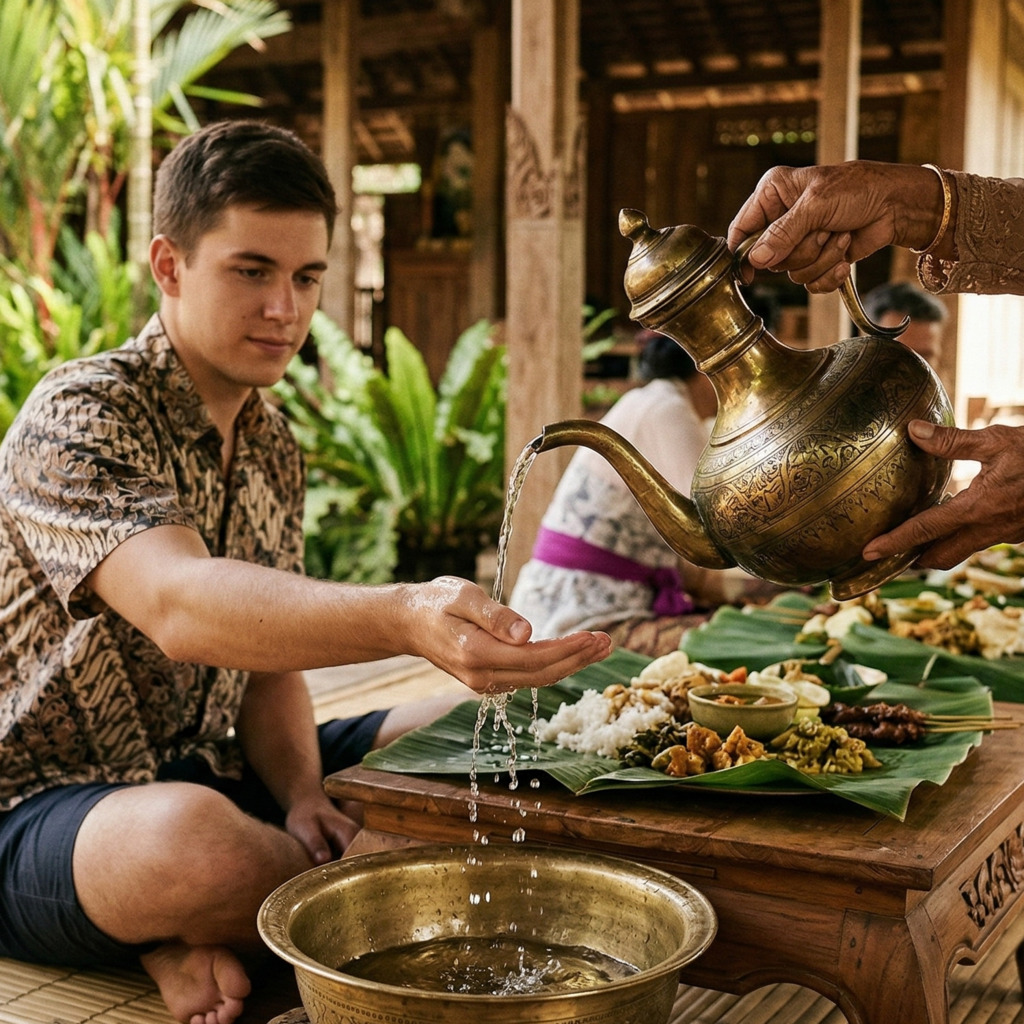
In contrast, the heritage of Malaysia and Indonesia often returns to the most ancient tool of all: the right hand. Traditional Malay and Javanese homes consider eating with the hand the most intimate way to enjoy food, though this requires mastering a highly technical skill. Before the meal begins, a server brings a Kendi – a traditional water pitcher – so guests may wash their right hand. Guests keep their left hand strictly in their lap, ensuring it never touches the communal spread. You use your fingertips to gather a small amount of rice and gravy, compressing the mixture into a small ball. Finally, you use your thumb to “flick” the morsel into your mouth to complete the traditional dining etiquette.
The Hierarchy of Honour: The “First Bite” Rule
The social architecture of a Southeast Asian meal begins long before the first dish is served. It begins with the seating arrangement, a silent language of power and respect. In these cultures, the oldest person at the table is the gatekeeper of the meal.
I recall a dinner in a heritage house in Penang where the table was set for twelve. The food was steaming, the aromas were intoxicating, and yet, for ten minutes, twelve people sat in absolute silence. Why? Because the grandmother of the house was finishing a phone call in the other room. No one so much as adjusted their napkin. When she finally sat and took a single spoonful of soup, the room erupted into conversation. This is the “First Bite” rule in action. It’s not about the food being hot; it is about the hierarchy being respected.
The Subtle Art of “Face” and the Ritual of the Check
As the meal concludes, a new set of invisible rules takes over – the nuanced world of Face. In Southeast Asian heritage, your behaviour at the table reflects not just on you, but on your entire lineage. This is most visible during the “Check Dance.”
In the West, “splitting the bill” is a common end to an evening. In Thailand, Malaysia, and Indonesia, it is traditionally non-existent in social settings. The person who invited the group, or the most senior person present, is expected to pay for everyone. As a guest, you must make a sincere effort to pay; this shows that you are not a “freeloader.” However, you must eventually “lose” this fight. To insist too much causes the host to “lose face,” implying they are incapable of providing for their circle.
The “Polite Refusal” is another area where Westerners frequently stumble. In a Javanese home, saying “No, thank you” often results in more rice on your plate. This is known as the “Third Offer Rule” in local dining culture. You must refuse twice out of politeness and only accept on the third offer. If you are truly full, you must offer an elaborate and respectful excuse. Claiming your heart wants more while your stomach is full saves face for everyone. This “face-saving” refusal is far better than a blunt “I’m done.”
The Culinary Pilgrimage: From Dining to Doing
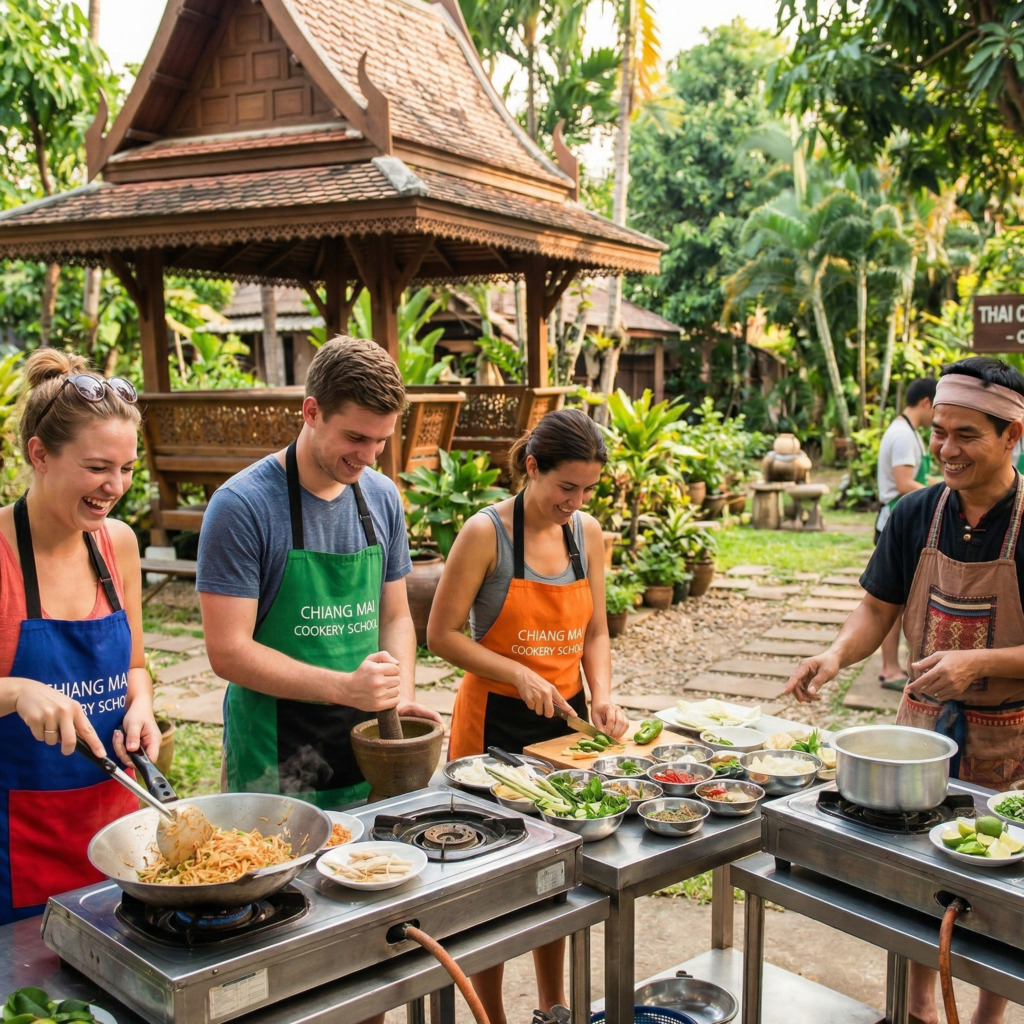
The relationship between Western travellers and Southeast Asian food has shifted from passive consumption to active apprenticeship. We are seeing the Rise of the Foodie Traveller across the region. Travellers are no longer content to eat at the E&O in Penang simply. They want to know the exact ratio of tamarind to galangal in their Asam Laksa.
World-class cookery schools have become essential stops on any heritage itinerary. Schools in Chiang Mai teach the specific nuances of the traditional Lanna kitchen. In George Town, the secrets of Peranakan “Agak-Agak” are passed down to foreign visitors. These schools represent the ultimate way to monetise culture for a heritage brand. Working over a charcoal stove gives travellers a visceral respect for heritage cuisine. Students learn that table etiquette truly begins with respect for ingredients in the kitchen. The patience required for a slow simmer teaches deep respect for the culinary process.
Conclusion: A Legacy of Intent over Perfection
Dining in Thailand, Malaysia, and Indonesia is an exercise in “Active Respect.” Moving through a meal with awareness of history and hierarchy transforms your dining experience. Understanding the northern Khantoke and southern Kendi traditions stops you from being a ghost in the tourism industry. Respecting the “First Bite” of the family elders signals that you are part of the local culture.
You don’t need to be perfect. The local people are famously forgiving of outsiders.
Using your spoon correctly and washing with the Kendi shows you are a respectful participant in the culture. Signalling respect through these actions proves you are not merely a consumer of local traditions. Waiting for the eldest to eat demonstrates deep honour for the heritage of Malaysia and Thailand. These gestures transform you from a simple tourist into a truly welcomed guest. In the Southeast Asian “Golden Triangle,” this transition represents the greatest luxury of all.
Southeast Asia Heritage Dining FAQs
What defines “Heritage Dining” in Southeast Asia?
Heritage dining focuses on the revival of traditional recipes, local markets, and family secrets. Unlike traditional fine dining that often prioritises European luxury ingredients like caviar or foie gras, heritage dining elevates native ingredients—such as wild mushrooms, local grains, and “forgotten” herbs—using modern culinary techniques to showcase the region’s history and terroir.
What is the meaning behind the greeting “Sudah makan?”
In Malaysia and Indonesia (and “Kin khao rue yang?” in Thailand), this translates to “Have you eaten yet?” It is the primary social greeting, serving as a gesture of care and a standing invitation to the communal hearth, emphasising that food is the region’s “love language.”
What is the “First Bite” rule in Southeast Asian dining?
This is a strict hierarchy of respect where no one at the table begins eating—or sometimes even adjusts their napkin—until the oldest person or the guest of honour has taken their first bite. It is a silent acknowledgement of social hierarchy and lineage.
How do you correctly use a fork and spoon in Thailand?
Following a tradition set by King Rama V, the spoon is the primary tool and the only one that enters the mouth. The fork is held in the left hand and used only to push food onto the spoon. Using the fork to spear meat and put it in your mouth is considered a social faux pas.
How does the “Check Dance” work at the end of a meal?
In these cultures, “splitting the bill” is rare. The host or the most senior person is expected to pay to maintain “Face.” As a guest, you should make a polite, spirited attempt to pay, but you must eventually “lose” the argument to allow the host to provide for the group without losing dignity.