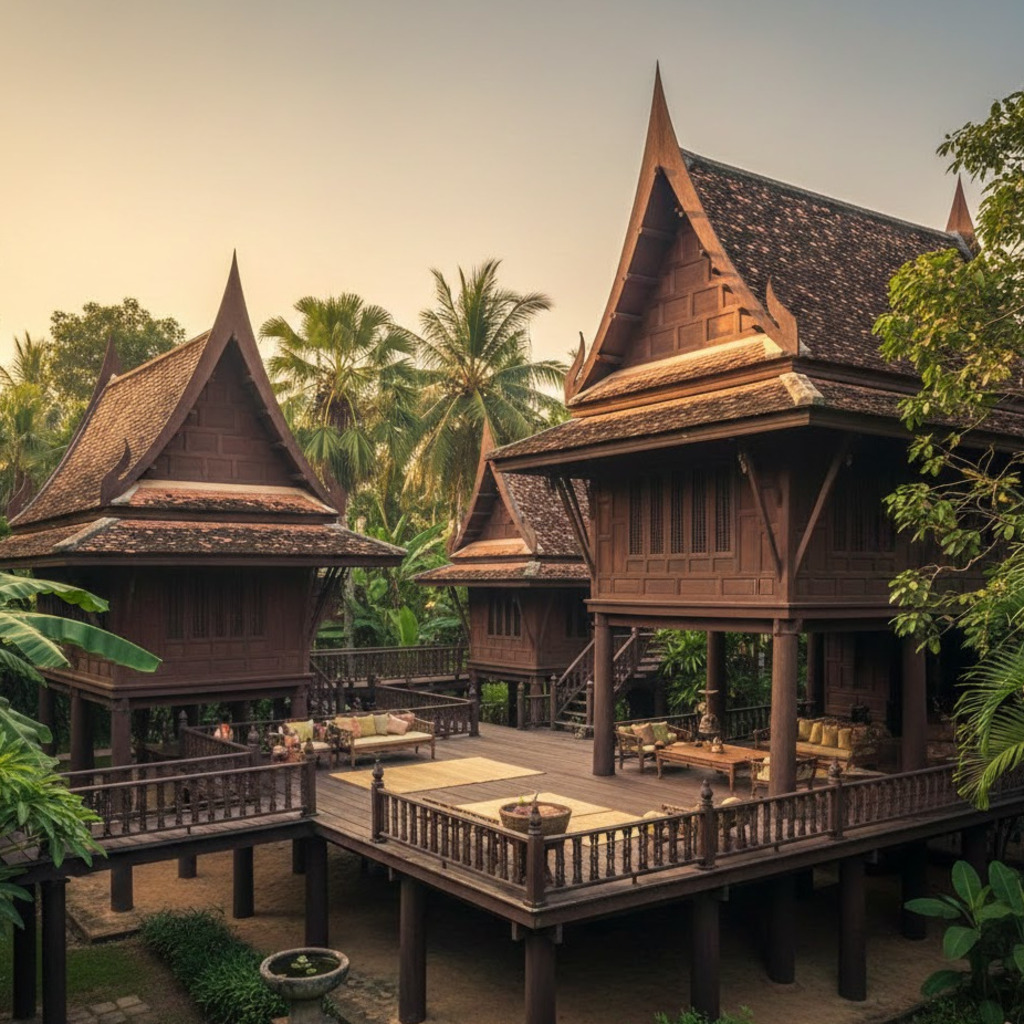

To understand these estates, one must first understand the term “vernacular.” In linguistics, a vernacular is the native dialect of a specific people. In architecture, it refers to a building designed not by an international blueprint, but by the “logic of the soil.”
A vernacular mansion is a grand hotel of SE Asia built using local wisdom, indigenous materials, and traditional techniques. It rejects the imported “stone blocks” of the West. Instead, it relies on the living intelligence of the forest. These estates were not built to impress visiting European dignitaries. They’re designed to negotiate with the tropical sun, the monsoon rains, and the local spirits.
In the tropics, permanence isn’t found in stone. It’s found in the ability of a house to move and breathe. From the Sultanates of Malaysia to the Kingdoms of Thailand, the “Big House” was a masterpiece of timber engineering. It was designed to float above the heat and the dampness of the earth.
The Anatomy of the Timber Manor
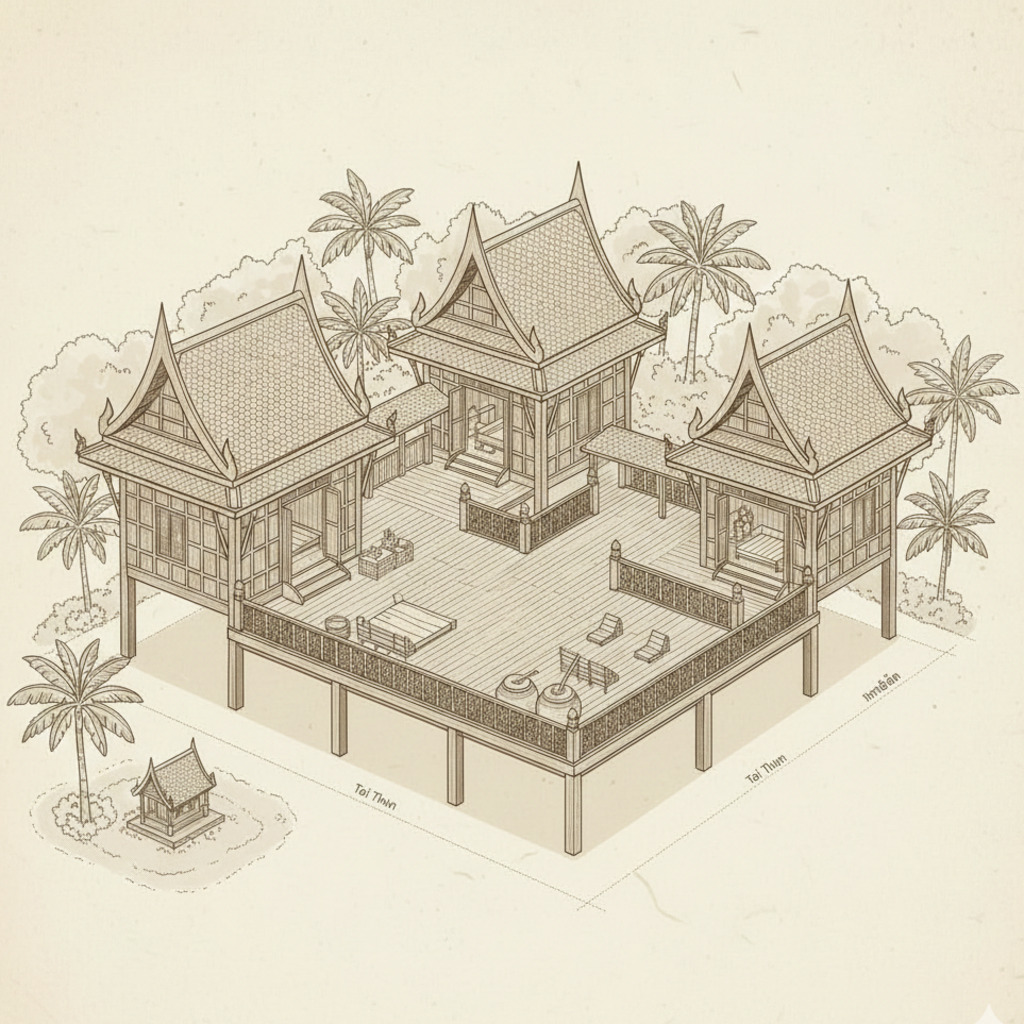
The most vital component of the mansion is the air beneath it. The elevated stilt design—the Tai Thun in Thailand and the Kolong in Malaysia—is a thermal engine. By shading the ground, the structure creates a pocket of high-pressure, cool air.
Hot air inside the living quarters escapes through high roof gables. This creates a vacuum that pulls cool air from under the floorboards upward. The interior remains remarkably chilled without the need for thick masonry.
The Precision of the Puzzle
These grand estates were built entirely without metal nails. Master carpenters utilised the Tebuk-Pasak (mortise and tenon) system. In the humid tropics, metal nails rust and split the grain. The wooden joinery allows the timber to expand and contract with the monsoon cycle.
This modularity turned the mansion into a mobile asset. It was common for a royal dowry to be dismantled and moved across the border. A house was a collection of parts, not a static monument.
The Social Hierarchy of the Floorplan
In the vernacular mansions of Southeast Asia, the floorplan serves as a silent social map. It manages privacy and status without the need for heavy doors or corridors. These houses utilise a series of “filters” to regulate movement through the estate.
The journey begins at the Serambi in Malaysia or the Chaan in Thailand. These elevated platforms are the most public parts of the home. A casual guest or business associate rarely moves beyond this point. It’s a space designed for hospitality. Yet, it serves as a protective barrier for the family within.
Deeper into the estate lies the Rumah Ibu or “Mother House.” This is the highest and most sacred section of the mansion. In traditional Malay logic, this is the centre of the household’s semangat (soul). Only the closest family members and honoured guests are invited here. It’s where life’s most significant rituals occur.
Movement between these spaces is marked by raised wooden sills. One must step over these sills, never on them. This is both a physical and spiritual requirement. High sills help to keep out crawling insects. Spiritually, they’re believed to act as a barrier against malevolent entities. Stepping over them forces a guest to bow their head slightly. This is a natural gesture of respect to the house.
Wood Science: Teak vs. Chengal
Understanding the vernacular mansions of SE Asia requires a deep appreciation for its materials. The choice of timber was the ultimate indicator of a family’s wealth.
In the teak manors of Chiang Mai, Tectona grandis reigns supreme. This wood is prized for its high oil content and natural silica. These properties make it remarkably resistant to the monsoon rains of Northern Thailand. Over decades, teak “seals” itself. It develops a silver-gold patina that requires little maintenance. It is stable and rarely warps. This makes it the perfect material for the intricate modular panels of a Thai estate.
In the Malay Peninsula, builders favoured Neobalanocarpus heimii, or Chengal. This is one of the densest timbers in the world. It is so heavy that it sinks in water. Unlike teak, Chengal is incredibly hard. It’s resistant to the subterranean termites of the South. A Chengal beam cut two centuries ago is often harder today than the day it was felled. For the luxury traveller, original Chengal is the highest mark of authenticity.
Regional Dialects: From Peninsula to North
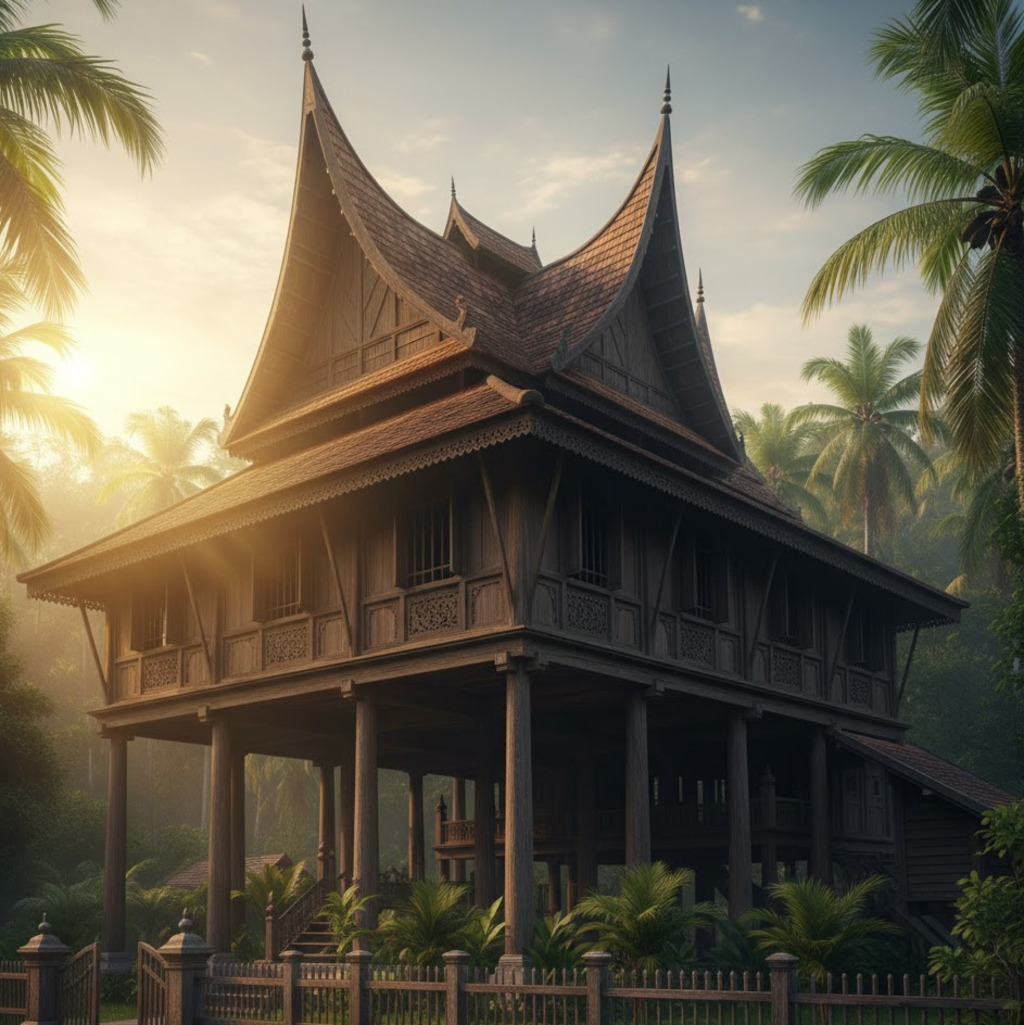
While the engineering logic remains consistent, the “accents” of the houses change.
The Rumah Tiang Dua Belas (Twelve-Pillar House) represents the peak of Malay timber craft. It features intricate Bunga Kerawang floral carvings. These are not merely decorative. They allow air to pass through walls while maintaining strict family privacy. Architecture in Terengganu and Langkawi showcases this rescued timber majesty.
In Central Thailand, a mansion is a cluster of individual houses. They’re joined by a massive central wooden deck called a Chaan. This open-air platform serves as the family’s living room. The Siam in Bangkok features a century-old teak house that perfectly illustrates this elevated, modular lifestyle.
As we move toward Chiang Mai, the architecture reflects the wealth of the teak forests. The houses feature the Kalae—crossed wooden horns on the roof gables. These finials are the “Anorak” anchor of the North. They mark the transition into a style defined by the great Teak Lords. Properties like 137 Pillars House and Raya Heritage utilise this Lanna vernacular to create a sense of grounded, organic luxury.
Seasonal Living: The House as an Organism
A vernacular mansion doesn’t fight the weather. It adapts to it.
During a tropical downpour, the steep roof pitches and deep eaves perform a vital task. They channel water away from the timber walls. This creates a “water curtain” around the veranda. This curtain of falling rain actually pulls heat away from the house through evaporative cooling. It transforms a violent storm into a cooling mechanism for the interior.
In the peak of the Thai or Malay summer, the house begins to “breathe” through its pores. The modular wall panels are designed with slight tolerances. As the heat increases, the timber shrinks minimally. This creates tiny gaps that allow even the smallest breeze to penetrate the house. In a stone mansion, the heat remains trapped in the walls. In a timber estate, the house sheds its heat the moment the sun sets.
Case Studies in Pure Vernacular
To see these principles in action, four properties stand out as the definitive “Heritasian” benchmarks.
1. Terrapuri: The Rescued Village (Terengganu, Malaysia)
Terrapuri is a physical archive of 17th-century Malay timber logic. The founder salvaged 29 separate antique houses from across the state to recreate a royal palace layout. It proves the “modular” brilliance of the vernacular style; each house was dismantled, numbered, and rebuilt without losing its soul. It is the purest example of “upcycled” heritage in the region.
2. The Siam: Connie’s Cottage (Bangkok, Thailand)
Located within one of Bangkok’s most exclusive hotels, Connie’s Cottage is a century-old teak house relocated from the ancient capital of Ayutthaya. Originally owned by socialite Connie Mangska, it perfectly illustrates the “Modular Ruean” lifestyle. It is a sanctuary of dark, polished wood that feels entirely removed from the concrete chaos of modern Bangkok.
3. 137 Pillars House: The Lanna Legend (Chiang Mai, Thailand)
The 137 Pillars House takes its name from the sheer volume of its foundations. Originally the 19th-century headquarters of the British Borneo Company, it represents the height of the teak trade. The structure is a masterpiece of “Pillar Logic,” elevating the living quarters high above the ground to catch the breeze. It serves as our primary bridge into the history of the Northern Teak Lords.
4. Raya Heritage: The Modern Blueprint (Chiang Mai, Thailand)
Raya Heritage demonstrates that vernacular logic isn’t a dead language. While a newer build, it utilises Lanna “breathing” architecture, open-air weaver’s stations, and high timber ceilings. It proves that you can build for the 21st century using 500-year-old rules of air and light.
The Ecological Estate: Gardens with a Purpose
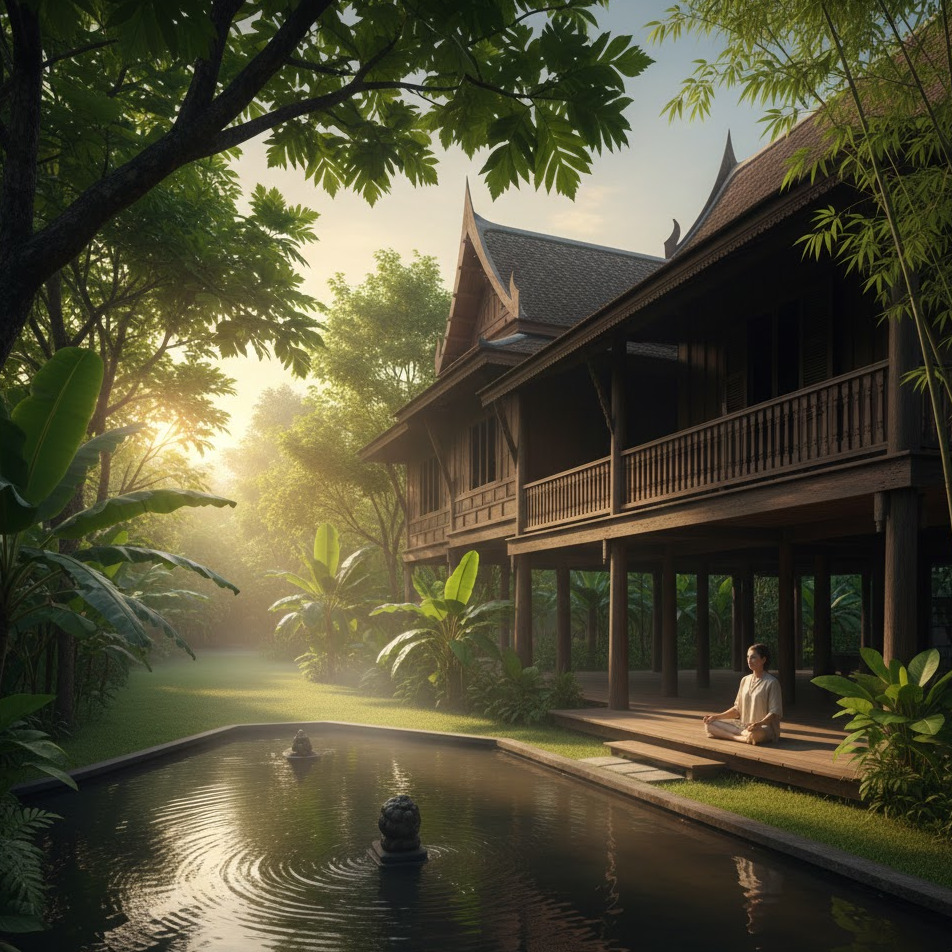
A vernacular mansion doesn’t end at its walls. The surrounding landscape is an extension of the house’s cooling system.
Traditional builders almost always surrounded vernacular mansions with a dense “food forest.” Broad-leafed trees, such as breadfruit or mango, provide deep shade. This canopy prevents the sun from heating the ground. Consequently, the garden ensures that the air flowing into the house’s Tai Thun or Kolong remains naturally chilled.
Architects always sited vernacular mansions of Southeast Asia near water sources. This presence provided more than just sustenance; it offered evaporative cooling. Designers crafted many heritage mansions so that prevailing winds passed over a pond or stream before entering the house. This layout created a natural precursor to modern air conditioning.
The Sensory Vernacular
Staying in a timber mansion is a tactile experience. It begins at the bottom of the stairs. Leaving one’s shoes behind is a ritual of entering a sacred space. The luxury is felt through the feet on hand-polished wood.
The soundscape is also unique. There’s no echo of concrete. Instead, there’s the “song of the wood”—the gentle creak of floorboards and the rhythm of rain on shingles. The air carries the faint scent of aged Teak and Chengal oil. It’s a sophisticated, barefoot elegance that modern resorts rarely replicate.
The Ethical Dilemma: Restoration vs. Reconstruction
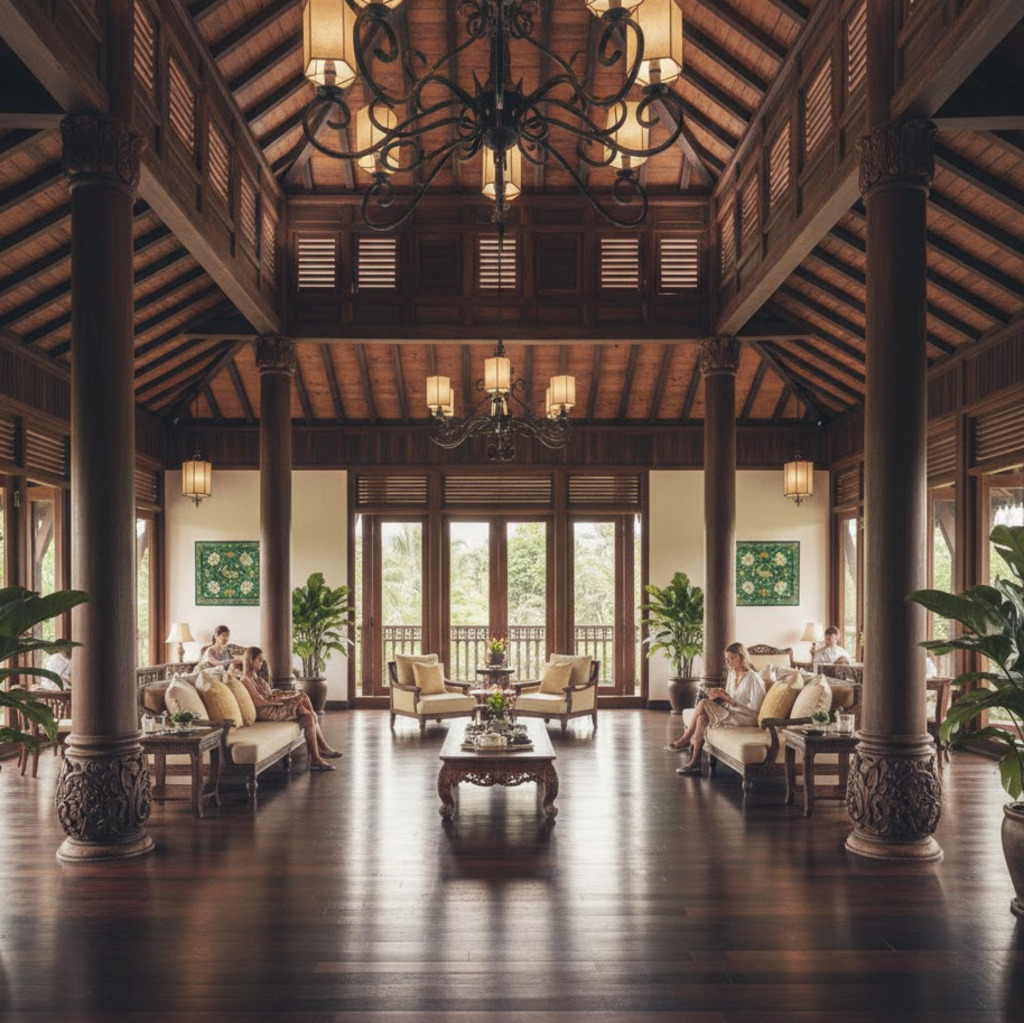
The survival of a vernacular mansion into the 21st century is an act of defiance. This section addresses the serious “Anorak” traveller who cares about the ethics of heritage.
If you replace every plank in a 200-year-old mansion, is it still historic? This is a constant debate. True restoration prioritises “conservative repair.” This means keeping as much of the original timber as possible, even if it bears the scars of time. When you stay at a property like Terrapuri, look for the “patches” in the wood. These are badges of honour. They show that the builders valued the original soul of the timber.
Conclusion: The Master Narrative of Heritasian
The vernacular mansions of Southeast Asia express a culture’s DNA in its ultimate form. It scales itself to the level of aristocracy. Instead of fighting nature, this building dances with it.
By choosing these estates, you support a form of luxury that is inherently sustainable. You ensure that the master carver’s skills remain relevant in the 21st century.
Whether you are walking across a sun-drenched Thai Ruean or resting in a Malay Rumah, you participate in a 500-year-old conversation. This is the story of how to live well in the tropics. Our journey into this world is only beginning. From the southern Sultanates to the northern Teak forests, the “Big House” awaits.
Vernacular Mansions of Southeast Asia FAQs
What is the “Tai Thun” or “Kolong” in Southeast Asian architecture?
The Tai Thun (Thai) or Kolong (Malay/Indonesian) is the open space beneath a house raised on stilts. While often used for storage, livestock, or socialising, its primary architectural purpose is to allow cool air to circulate beneath the floor, preventing ground heat from rising into the living quarters.
Why are “food forests” common around these traditional estates?
A dense “food forest” serves as more than just a grocery store. Broad-leafed trees like mango and breadfruit create a thick canopy that provides deep shade, preventing the sun from baking the ground. This creates a microclimate of naturally chilled air that the house pulls in through its elevated floor.
What does it mean for a building to “dance with nature”?
This phrase describes architecture that works with local environmental forces rather than fighting them. Instead of using thick walls to seal out the heat (and then using energy to cool the interior), vernacular mansions use lightweight materials, stilts, and open layouts to embrace airflow and humidity, harmonising with the tropical cycle.
How does a vernacular mansion express a culture’s “DNA”?
Every mansion is a physical map of its culture’s values, social hierarchy, and ancestral wisdom. From the specific pitch of the roof (designed for local rainfall levels) to the orientation of the entrance (aligned with cosmological beliefs), these buildings reflect the spiritual and practical identity of the people who built them.
Are these traditional design principles still relevant today?
Yes. Modern sustainable architecture—often called “bioclimatic design”—borrows heavily from these vernacular traditions. By using natural ventilation, shading, and local materials, contemporary architects can reduce carbon footprints and create homes that are more resilient to the warming tropical climate.