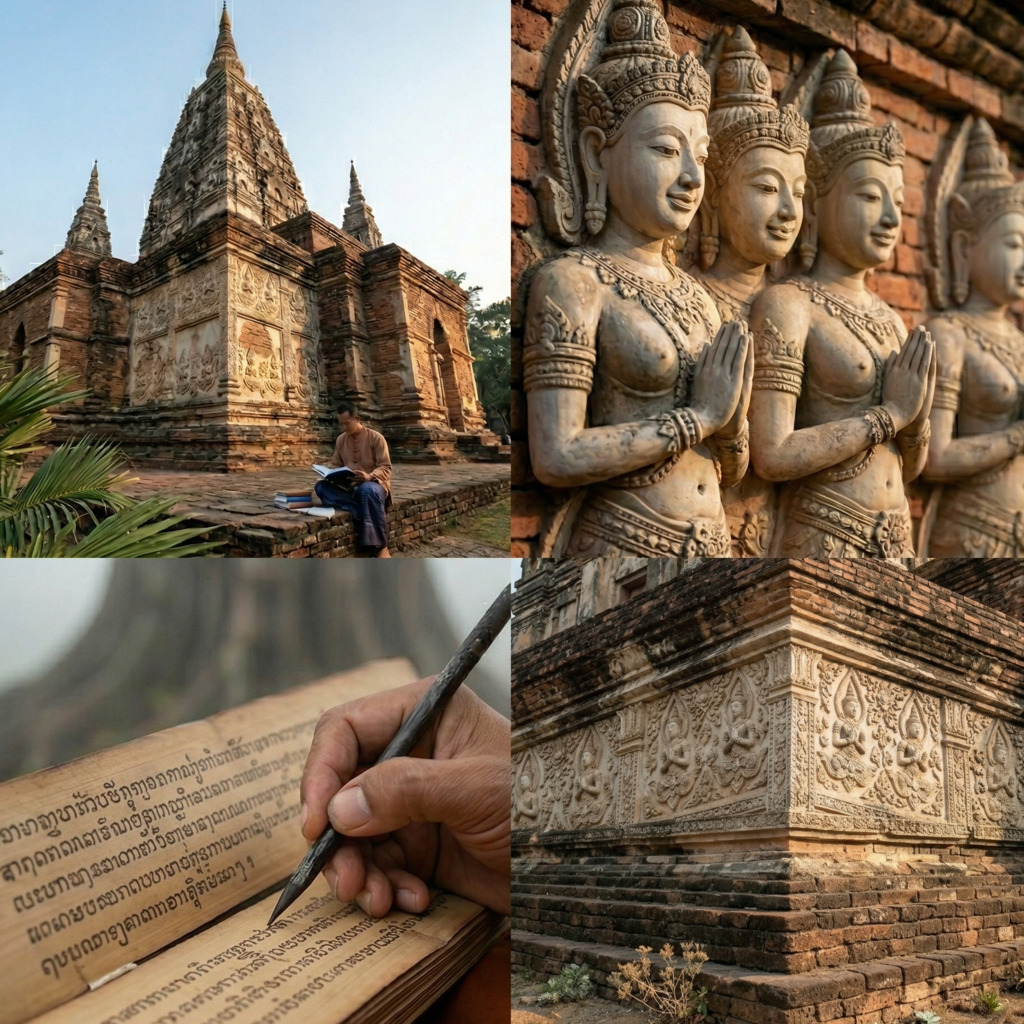

In 1477, Chiang Mai was the centre of the Buddhist world. King Tilokkarat sat at the peak of his power. He was a warrior, a scholar, and a visionary. He summoned hundreds of monks to a quiet forest grove. They did not come for war. They came to standardise the truth. This was the 8th World Buddhist Council. Today, the site of that massive intellectual gathering remains. It is Wat Chet Yot, the “Temple of Seven Spires.”
As part of the 2026 UNESCO nomination, this site represents the Lanna mind. It is a monument to 15th-century diplomacy. It proves that ancient Chiang Mai was a global hub of ideas.
The Warrior King’s Transformation
Tilokkarat was not born a man of peace. He took the throne by force in 1441, then spent his early years fighting the Ayutthaya Kingdom to the south. He was a master of elephant warfare and expanded Lanna’s borders to their greatest extent.
But a king needs more than land. He needs legitimacy. Tilokkarat turned his eyes toward religion. He wanted to be a Chakkavatti, a universal monarch, realising that iron fades, but ideas endure. He traded his sword for a stylus and began to invite the greatest minds of Asia to his court. This transition from “War-Lord” to “Law-Giver” is etched into the very bricks of Wat Chet Yot.
The Indian Blueprint: A Lanna Mirror
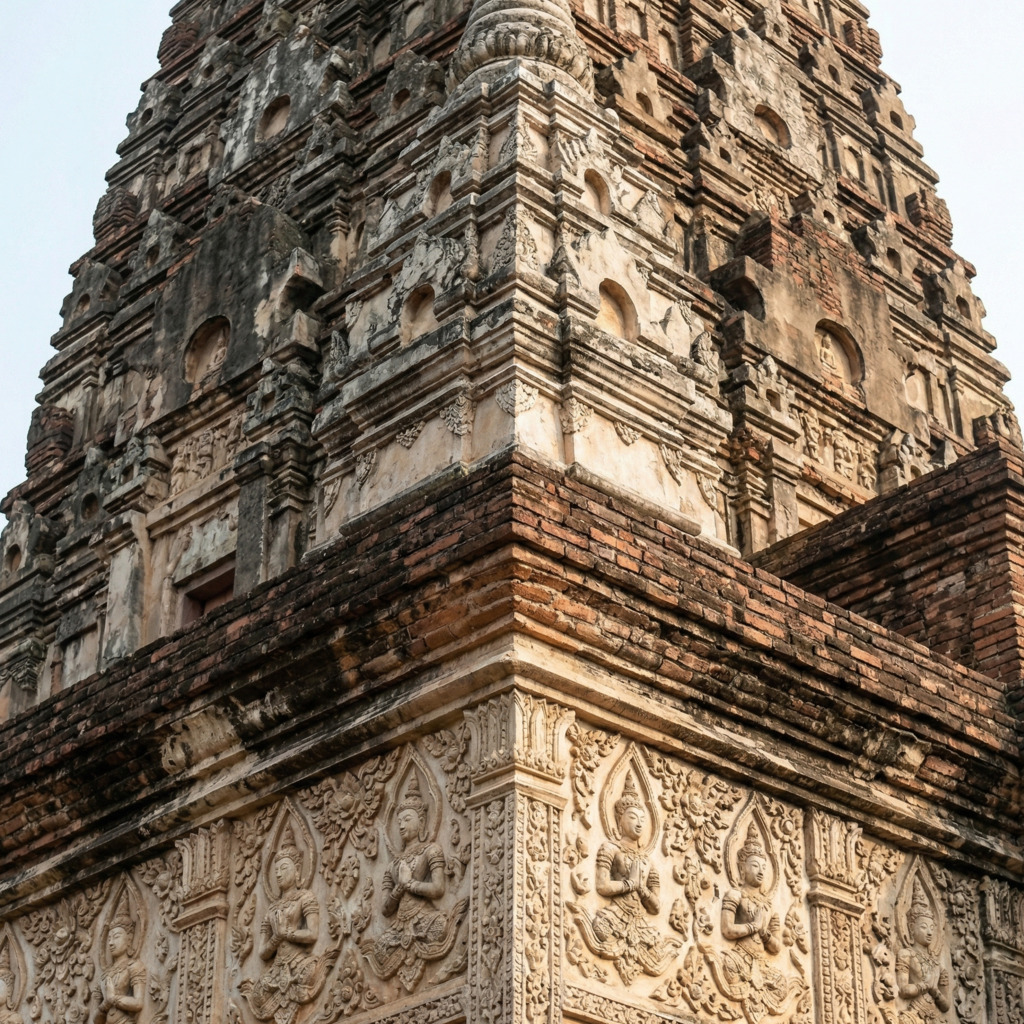
The King wanted more than a local shrine. He sent an architectural mission to Bodh Gaya, India. They travelled thousands of kilometres to study the Mahabodhi Temple. This was the site of the Buddha’s enlightenment.
The King wanted a “Lanna Mirror” of that sacred space. The result was the Viharn Maha Photharam. It looks unlike any other temple in Thailand. It features a massive, rectangular brick base. Seven distinct spires rise from its roof. These spires represent the seven weeks Buddha spent in meditation.
Lanna craftsmen faced a technical challenge. They were masters of teak, not stone, and replicated the heavy Indian style using local brick and stucco. They succeeded brilliantly. The temple feels grounded and ancient, like a mountain carved by hand. It was a 15th-century “copy-paste” of a global icon. It showed that Lanna builders could speak the architectural language of the world.
The Celestial Fashion Show
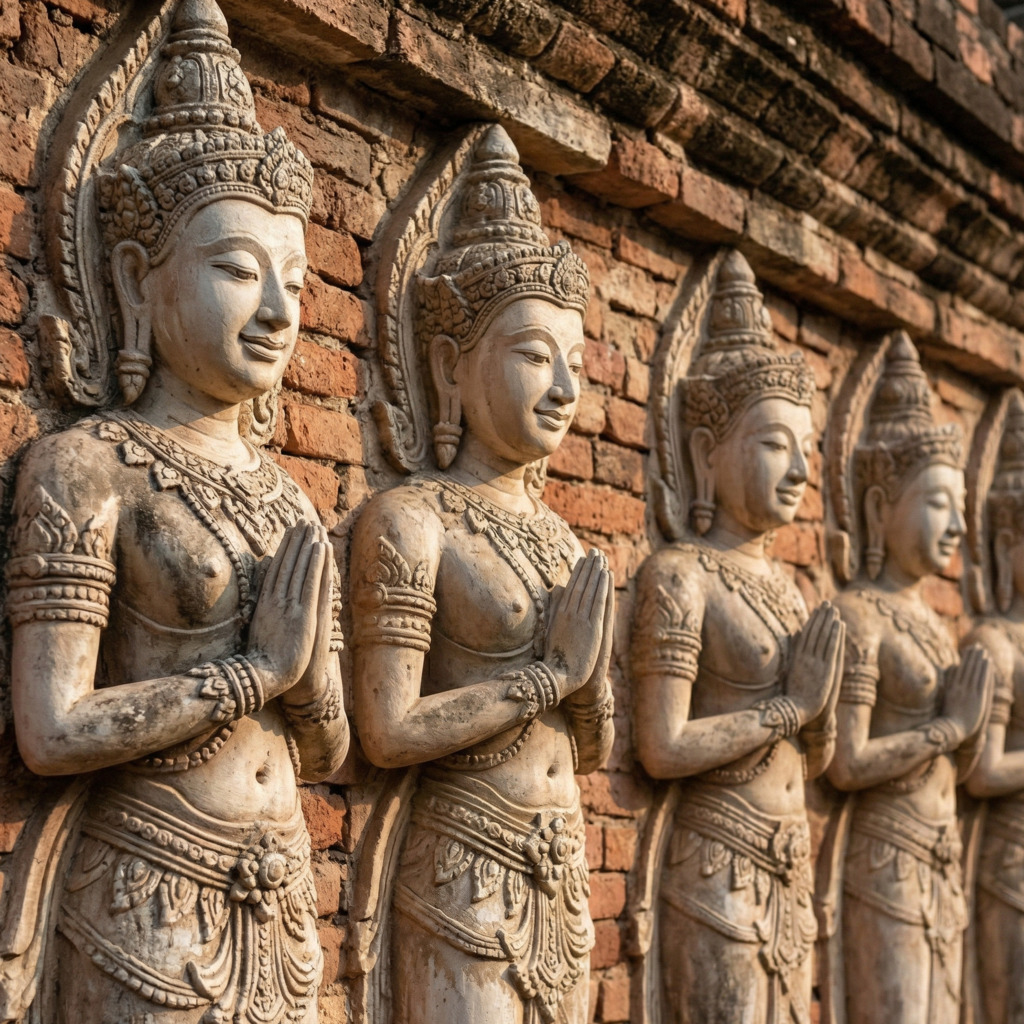
Walk along the exterior walls of the main sanctuary. You will see 70 stucco deities, or Thep Phranom. They sit in a posture of eternal adoration. These figures are the pinnacle of Lanna art history.
Legend has it that Tilokkarat was a proud man. He ordered the artists to use his family as models. The faces of these deities are likely the faces of 15th-century royalty. Look at their intricate jewellery and high-waisted sarongs. They provide a visual “lookbook” of Lanna court fashion.
One anecdote tells of a master artist who struggled with the expressions. He spent weeks watching the King’s daughters in the palace gardens. He captured their subtle smiles in the wet stucco. Today, those smiles still catch the morning light. They have survived 500 years of monsoon rains and heat. They offer a rare, human glimpse into a lost royal world.
The 1477 Council: Standardising the Truth
The 8th World Council was a massive logistical feat. Monks spent a full year comparing sacred manuscripts. They worked to create a definitive version of the Tripitaka. This was not just a religious act. It was a major “soft power” move.
By hosting the council, Tilokkarat sent a message to the south. He showed the Ayutthaya Kingdom that Chiang Mai was the intellectual leader. He proved that Lanna was the true guardian of the faith. The council standardised the Lanna “Dhamma” script. This script became the backbone of Northern Thai literacy for centuries.
Imagine the scene in 1477. The air was thick with the smell of old parchment. Hundreds of monks sat in rows, chanting in Pali. They used iron styluses to scratch words onto dried palm leaves. These leaves were then bound with silk thread. Some of these original “Council Manuscripts” were hidden for centuries. They were tucked away in the libraries of remote mountain temples. They are the “DNA” of Northern Thai Buddhism.
The Botanical Pilgrimage: Seven Sacred Stations
In 1455, the King planted a Bodhi tree sapling. It came from a sacred tree in Sri Lanka. This turned the temple into a “living” relic. The grounds became a botanical map of the Buddha’s life.
The complex is laid out in seven “stations.” Each corresponds to a week of the Buddha’s journey after Enlightenment.
- The First Week: Spent under the Bodhi tree. This is where the central temple stands.
- The Second Week: The “Animesa Lochana” station. The Buddha stood and gazed at the tree without blinking.
- The Third Week: The “Golden Cloister.” Legend says jewels appeared under the Buddha’s feet.
- The Fourth Week: The “Jewelled House.” This is where he meditated on the higher teachings.
- The Fifth Week: Under the Banyan tree. He was tested by the daughters of Mara.
- The Sixth Week: By the pond. The Naga king Mucalinda rose to protect him from a storm.
- The Seventh Week: Under the Rajayatana tree. He received his first offerings from merchants.
Walking the grounds is a physical form of prayer. You aren’t just visiting a building. You are walking through a 15th-century landscape design.
The Living Library: Palm Leaf Preservation
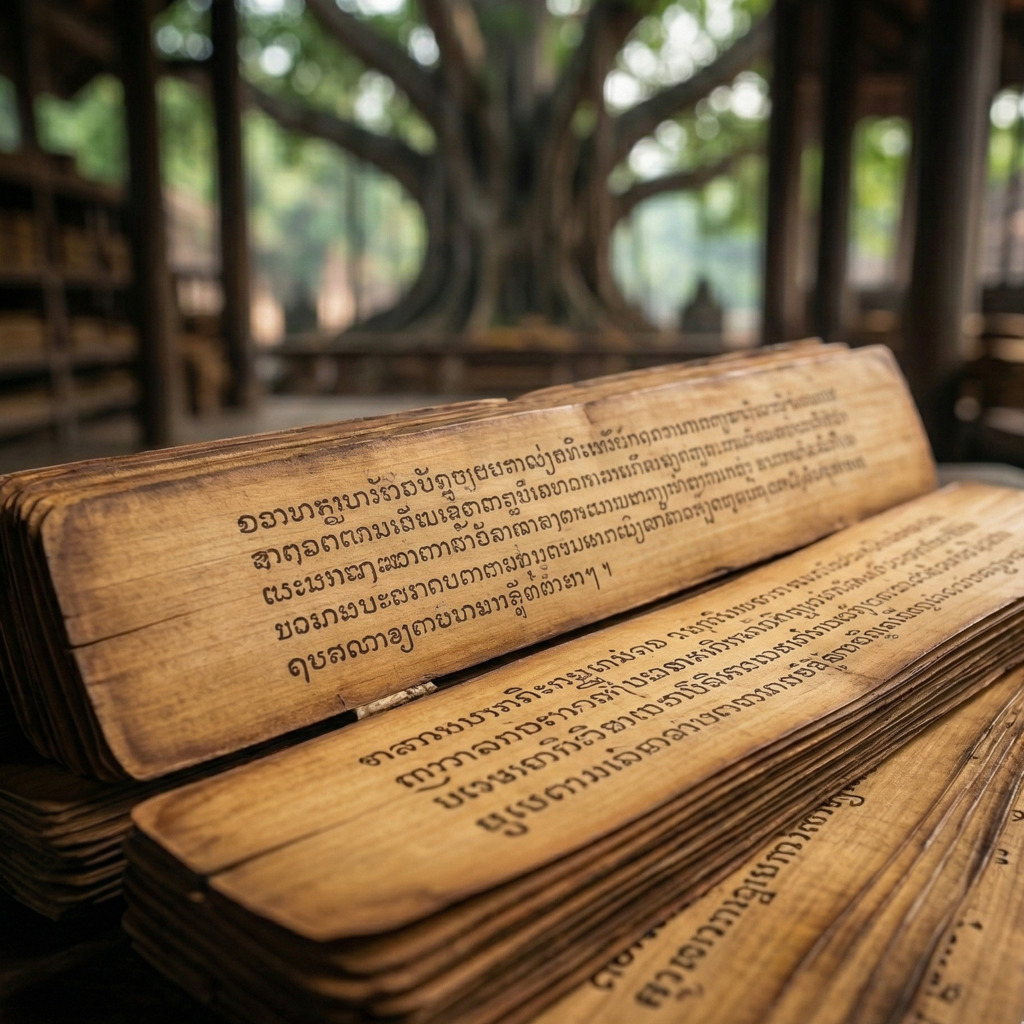
The 1477 Council wasn’t just a meeting; it was an industrial effort. Before the council, Buddhist texts were scattered and full of regional errors. King Tilokkarat transformed Wat Chet Yot into a massive scriptorium. Hundreds of scribes worked in the shade of the Bodhi trees. They used “Dhamma” script, a beautiful, rounded alphabet unique to Northern Thailand.
They etched these words onto specially treated palm leaves (Bai Lan). These leaves were soaked in herbal oils to repel insects. This “Lanna technology” is why we still have 500-year-old manuscripts today. The Council created a “Master Set” of the Tripitaka. This set became the gold standard for every temple from Luang Prabang to Keng Tung. It established Chiang Mai as the “Oxford of the East.”
The Diplomacy of the Seven Spires
The architecture of Wat Chet Yot was a calculated diplomatic message. By replicating the Indian Mahabodhi temple, Tilokkarat told the world that the “Centre of the Faith” had moved. He was claiming that the spiritual energy of India had migrated to the mountains of Chiang Mai.
This was “Architecture as Identity.” It told travelling monks from Sri Lanka and Burma that they were welcome. It showed them that Lanna was a sophisticated, global player. The Seven Spires were a lighthouse for the mind. They signalled that Chiang Mai was a place where different cultures—Indian, Mon, and Thai—could merge into a single, brilliant Golden Age.
The King’s Final Rest
In the back of the complex, you find a smaller stupa. This is the Ku, or reliquary, of King Tilokkarat himself. His ashes were placed here in 1487. He wanted to be buried near the trees he planted. He wanted to stay close to the scholars he supported.
Even in death, he guards the “Think Tank” he created. The Ku is shaped like a miniature version of the main temple. It is simple, elegant, and weathered. It reminds us that even the greatest kings eventually return to the earth. But the ideas they foster remain. Tilokkarat’s legacy isn’t in his conquered lands. It is in the standardised scriptures that survived him.
The Scholarly Silence
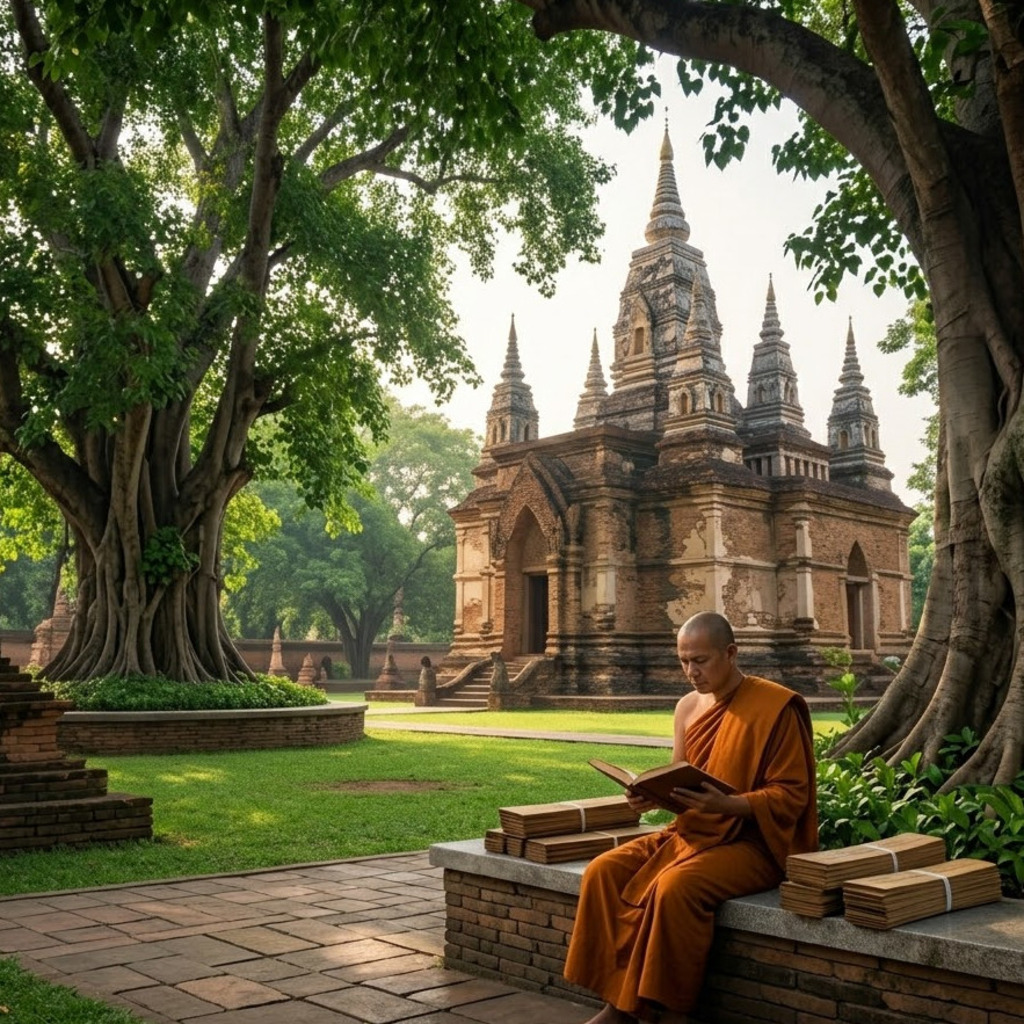
Today, Wat Chet Yot feels different from other temples. It lacks the tourist crowds of the Old City. Massive, ancient trees provide deep, cool shade. It feels like a university campus or a silent library.
This atmosphere is why UNESCO values the site. It preserves the “Intangible Heritage” of Lanna scholarship. It represents a time when ideas were as valuable as gold. The “Seven Spires” remind us that true power lies in knowledge. It is a place for contemplation, not just sightseeing.
The 2026 Vision: Protecting the Lanna Mind
As we look toward the 2026 UNESCO decision, Wat Chet Yot stands ready. It’s a nod to Lanna’s global reach. It shows that 500 years ago, Chiang Mai was a beacon of light. It was a place where the world came to think.
Recognising this site protects the “Intellectual Property” of the Golden Age. It ensures that the 70 stucco deities continue to smile. It ensures that the Bodhi tree continues to shade the seekers. Wat Chet Yot is proof that Chiang Mai was never an isolated mountain town. It was a capital of the mind.
Heritasian Takeaway
Visit Wat Chet Yot in the late afternoon. The sun hits the stucco deities at a sharp angle. Their shadows lengthen against the brick. Sit under the Bodhi tree and listen to the leaves. You are sitting in the same shade as the 15th-century masters. You are part of a long chain of seekers. This is where Lanna found its voice.
Wat Chet Yot FAQS
What makes Wat Chet Yot different from other temples in Chiang Mai?
Unlike the classic wooden Lanna style, Wat Chet Yot is a rare example of 15th-century brick-and-stucco architecture. Its unique rectangular base and seven spires were specifically designed to replicate the Mahabodhi Temple in Bodh Gaya, India.
Why was the 8th World Buddhist Council held here in 1477?
King Tilokkarat wanted to standardise the Buddhist scriptures (the Tripitaka) and establish Chiang Mai as the “Oxford of the East.” By hosting the council, he solidified Lanna’s status as a global intellectual and spiritual hub.
What is the significance of the “Seven Spires”?
The seven spires represent the seven weeks the Buddha spent in meditation following his Enlightenment. The temple grounds are also landscaped into seven “stations” that mirror this sacred journey.
Is King Tilokkarat buried at Wat Chet Yot?
Yes. A smaller, elegant reliquary stupa (or Ku) at the back of the complex contains the ashes of the great Warrior King. He requested to be buried near the Bodhi trees he planted and the scholars he supported.
Why is Wat Chet Yot part of the 2026 UNESCO World Heritage nomination?
The site is recognised as a monument to “Lanna Diplomacy” and scholarship. It proves that ancient Chiang Mai was not an isolated town but a sophisticated capital capable of hosting international intellectual summits.