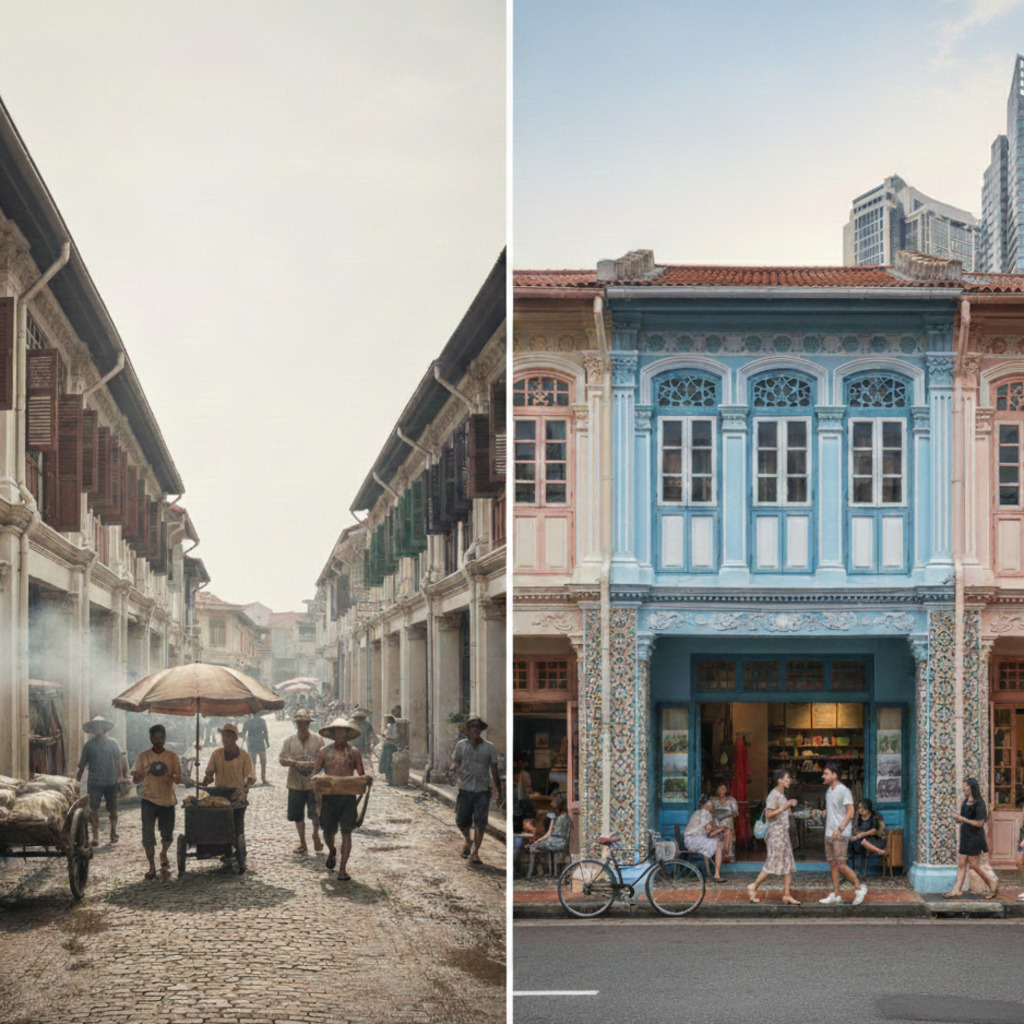

In George Town, Penang, the morning begins with a sound. It’s not an electronic alarm. It is the rhythmic, metallic rattle of folding shutters. Nearby, a vendor prepares charcoal for a coffee shop. The scent of woodsmoke drifts through an open timber window. This is the daily reality of shophouse hotels in Southeast Asia.
These buildings are narrow, deep, and historic. Most date from the 1800s to the mid-1930s. They were built for trade on the ground floor. Families lived in the rooms above. Today, they’re the frontline of heritage stays and tourism. They offer a depth that modern hotels simply cannot match.
The Spice Engine: Why These Houses Exist
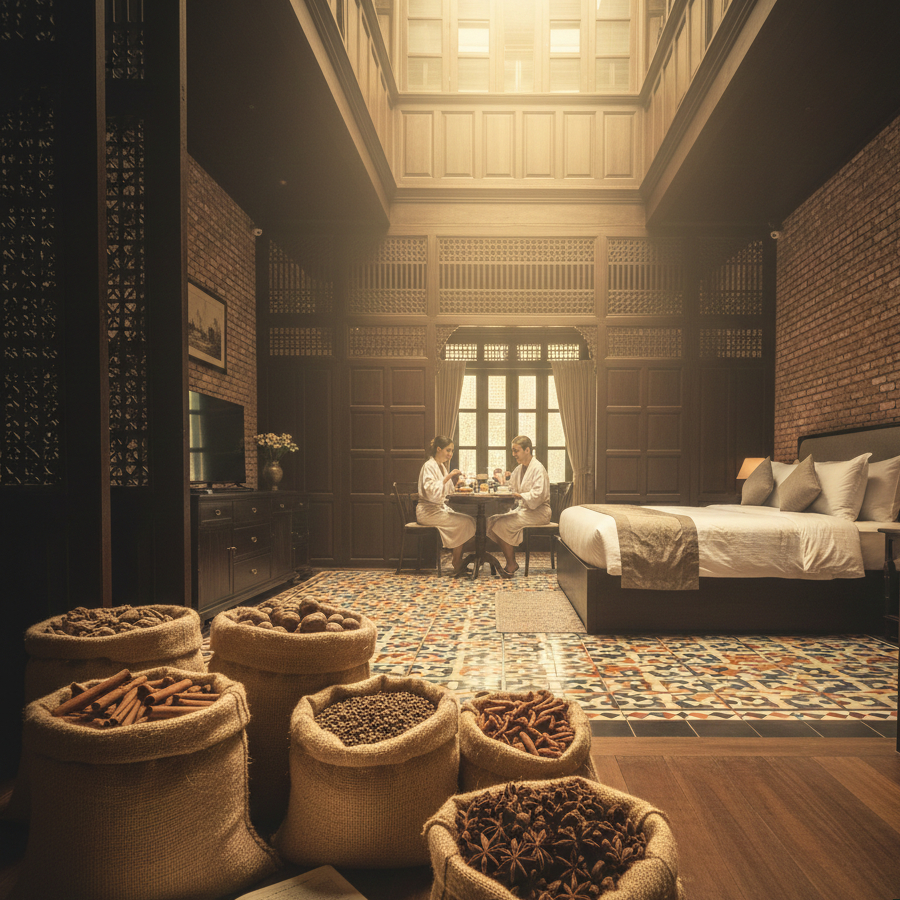
To understand the shophouse, you must understand the spice trade. In the 19th century, Penang, Melaka, and Singapore were “Straits Settlements.” They were vital ports for the British Empire. Traders came from China, India, and the Arab world. They traded in pepper, nutmeg, cloves, and cinnamon.
The shophouse was designed for this commerce. The ground floor served as a “godown“ or warehouse. Merchants stacked sacks of spices right behind the front door. The deep layout allowed for massive inventory storage. This trade created immense wealth, and the wealth was poured into the architecture.
When you stay in shophouse hotels in Southeast Asia today, you sleep in a monument to mercantilism. You walk on floors paid for by the world’s hunger for spice. The very air seems to hold the faint memory of nutmeg and mace.
Architecture as a Natural Cooler
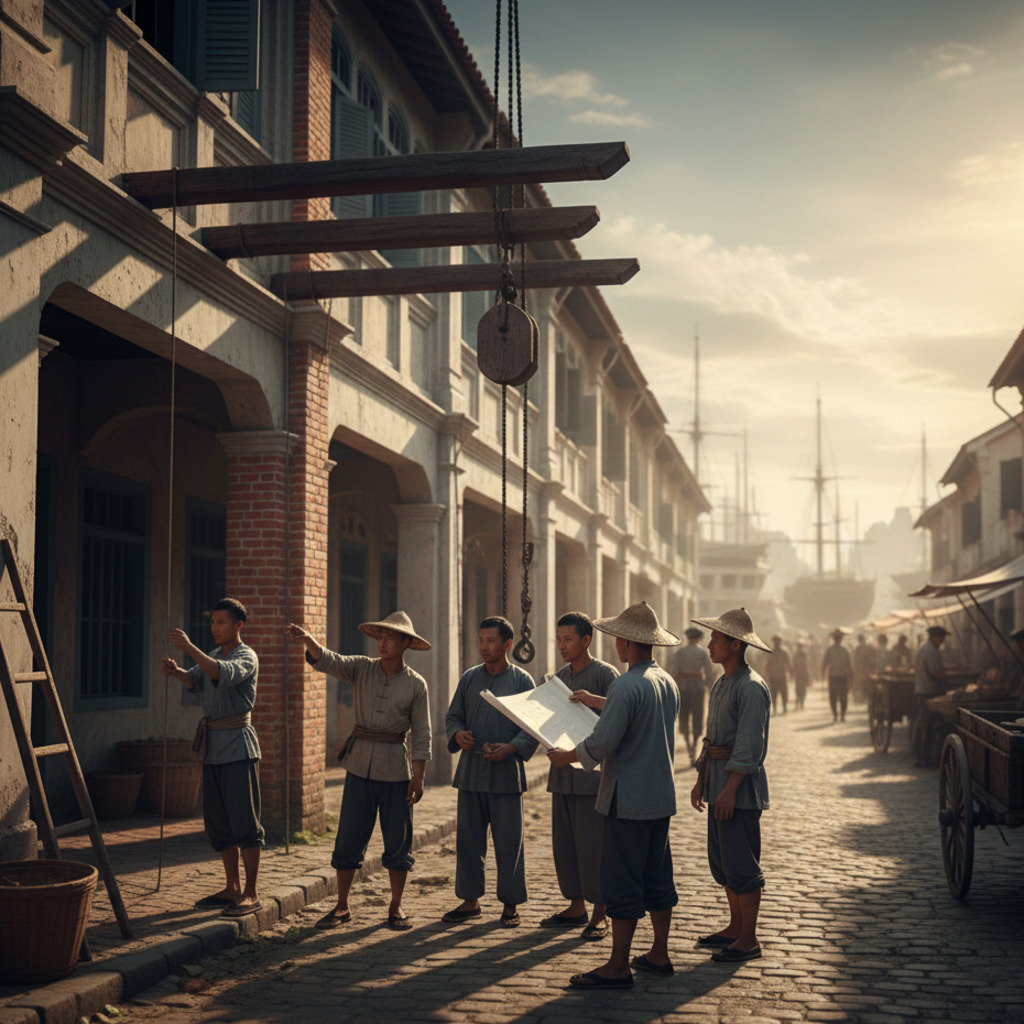
Despite the tropical heat, these buildings remain comfortable. Traditional shophouses don’t need modern air conditioning. They use a clever system of “airwells.” These are internal courtyards open to the sky. They allow hot air to rise and escape. They also bring rain and natural light into the dark centre of the house.
In Singapore’s Keong Saik Road, many hotels occupy “Straits Eclectic” buildings. These features include ornate plasterwork and Chinese porcelain shards. The walls are thick. They’re made of brick and lime plaster. This material absorbs the midday heat. It keeps the interior cool without the constant hum of machinery.
The Five-Foot Way: A Public Stage
Beyond the walls, the building extends into the street. A unique feature of shophouse hotels in Southeast Asia is the kaki lima. This is a covered walkway. It measures exactly five feet wide. Sir Stamford Raffles mandated these in 1822. He wanted pedestrians to have shade from the sun. He also wanted them to be dry during monsoons.
When you stay here, you walk through these tunnels. You pass your neighbour’s front door and see their laundry. You hear their television. This creates a forced proximity to local life. You’re not a guest in a glass tower. You’re a resident on the street. The kaki lima acts as a social bridge. It’s where the hotel ends and the city begins. You might find a guest reading next to a local repairing a bicycle. This interaction is the heart of heritage travel.
The Art of the Global Tile
While the structure is functional, the decoration is global. The floors often tell a story of 19th-century trade. You’ll find brightly colored “Peranakan” tiles in almost every hallway. These are actually encaustic tiles.
Most did not originate in Asia. They were imported from the United Kingdom, Belgium, and Germany. Victorian England loved these geometric patterns. Manufacturers like Minton produced them by the thousands. In the Straits Settlements, they became a status symbol. Wealthy merchants used them to decorate their shop fronts. It showed they had the means to import luxury goods from Europe. These tiles aren’t painted. The colour is part of the clay itself.
Evolution of Style: From Simple to Sublime
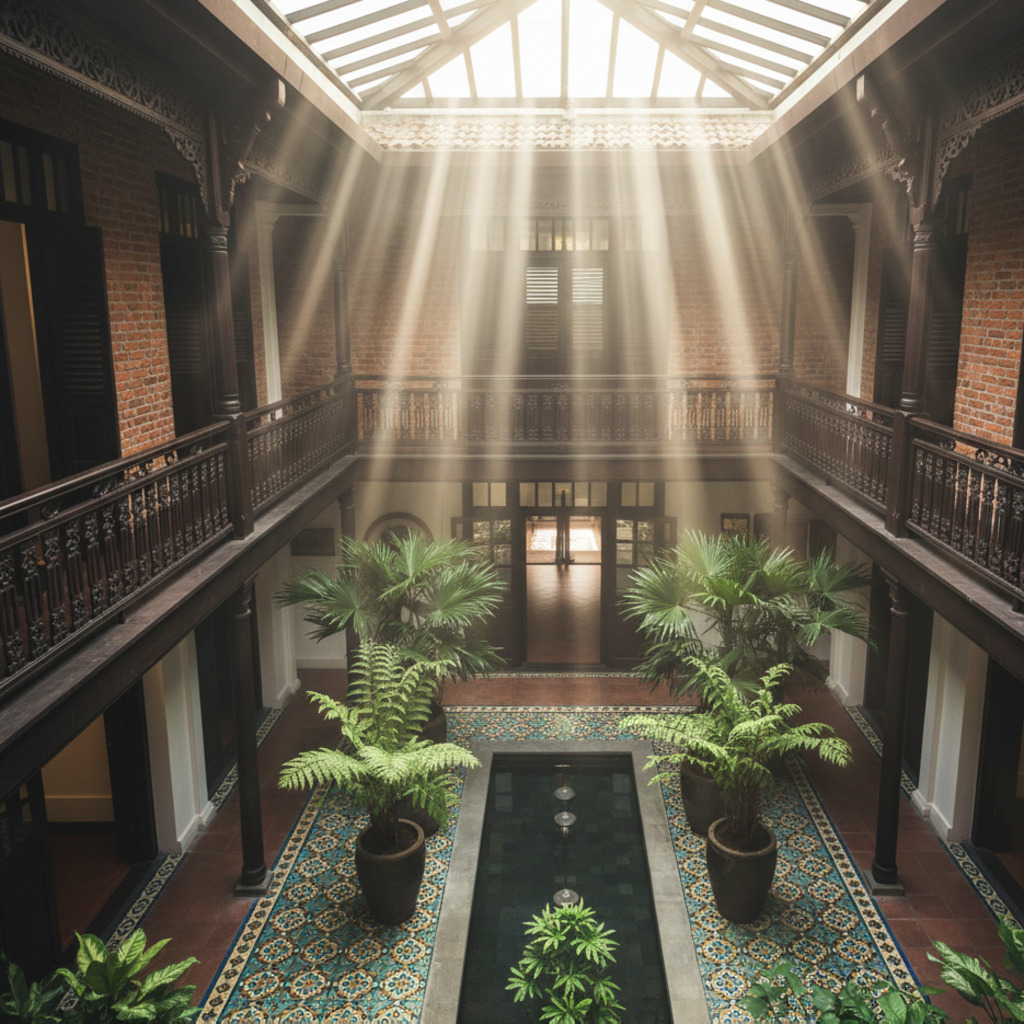
Not all shophouses are the same. Their facades evolved in tandem with the region’s wealth. The “Early Style” (1840-1900) was modest. These buildings had low ceilings and small windows. They reflected the humble beginnings of immigrant traders.
By 1910, the “Late Style” took hold. This era was flamboyant. Owners added French windows and Corinthian columns. They used colourful tiles and elaborate fanlights. This was “Straits Eclectic” architecture. It blended Chinese, Malay, and European influences. Staying in a hotel from this era is a visual feast. You see Scottish ironwork alongside Chinese stone lions. It’s a physical map of the world’s trade routes.
The Great Rescues: From Stables to Suites
This beauty was nearly lost to time. One of the best examples of a shophouse rescue is Muntri Mews in Penang. In the 19th century, these buildings served as stables and carriage houses. They provided communal housing for the workers of the grand houses nearby.
For decades, the row sat in disrepair. The timber was rotting. The horse stalls were filled with debris. Conservationists saw the potential in these humble structures. They restored the long, narrow footprints. They kept the original materials but added modern comforts.
Today, it’s a boutique hotel that celebrates its working-class roots. It shows that heritage isn’t just for the elite. Even a stable can become a place of luxury like that of Montri Mews. Nearby, on Stewart Lane, sits Seven Terraces. This hotel was once a row of seven derelict shophouses. The owner sourced 19th-century antiques to fill the rooms. The hotel now feels like a private museum.
The Science of the Shophouse
This preservation requires deep technical knowledge. Shophouse hotels in South East Asia are designed to “breathe.” The walls are made of porous brick. They’re coated in lime plaster. Modern cement traps moisture. This causes “rising damp.” It makes the walls rot.
Lime plaster allows the moisture to evaporate. It keeps the structure dry. Furthermore, traditional shophouses don’t use iron nails. The timber frames are held together by “mortise and tenon” joints. These are precision-cut wood connections. They allow the house to expand and contract with the humidity.
When you stay in a shophouse, you’re supported by this engineering. You hear the timber “settle” at night. It is the sound of a living machine. It is the sound of a 100-year-old teak doing its job.
The Social Fabric: Life at Eye-Level
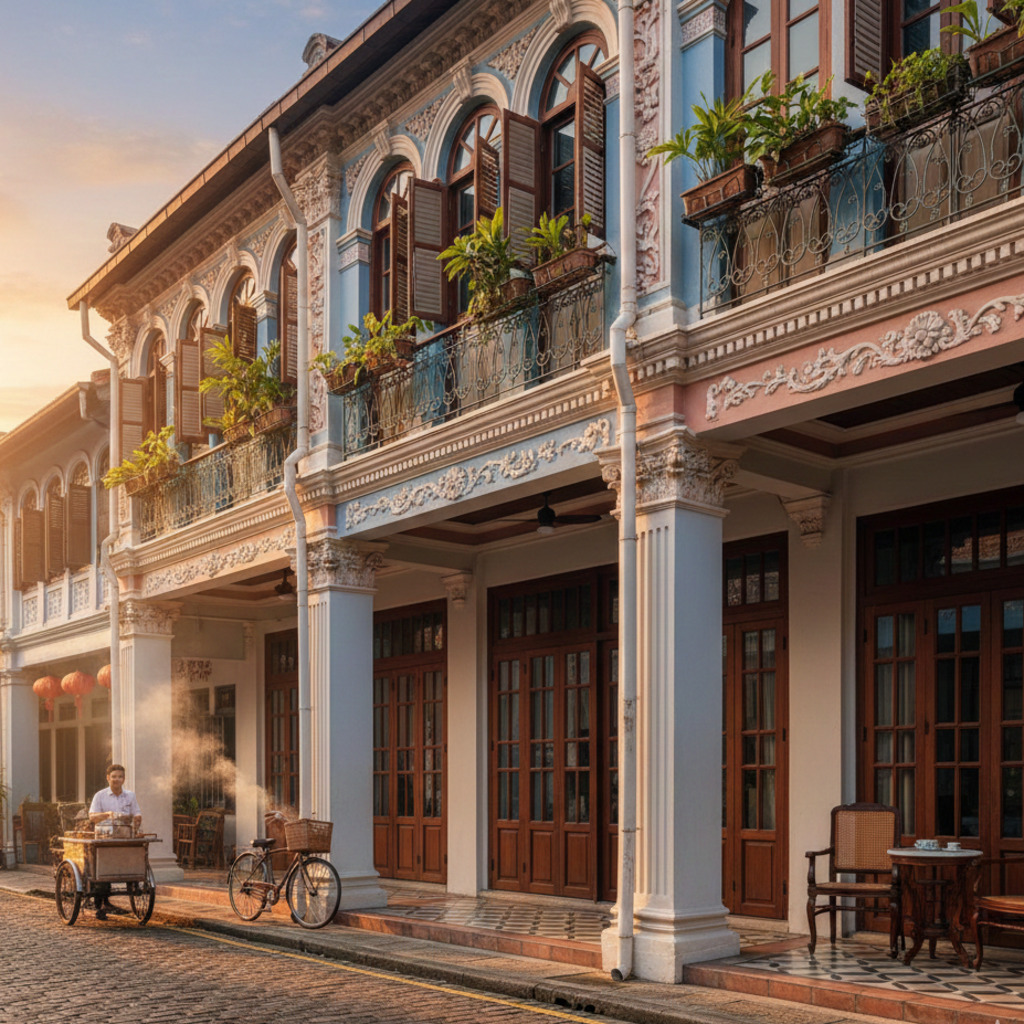
The building is only half the story. In a standard hotel, the lobby is a private fortress. In shophouse hotels in Southeast Asia, the boundary is porous. Residents use the walkway to reach the market. Delivery drivers park their bikes against the pillars.
This proximity changes the guest’s perspective. You’re part of the daily flow. In many heritage hotels, the “lobby” is near the entrance. You hear the gossip of the neighbours. You see the arrival of the morning mail. This is “unfiltered” travel. It removes the insulation that separates a tourist from a citizen.
The Morning Soundtrack: A Living Intangible Heritage
The connection to the neighbourhood is most visceral at dawn. A stay in a heritage district has its own acoustic signature. This is often called “Intangible Heritage.” It is the history you cannot touch, only hear.
At 5:30 AM, you hear the heavy wooden bolt of a neighbour’s door. Then comes the clatter of a coffee shop opening nearby. In Penang’s Little India, the air fills with roasting spices. You hear the “thwack” of dough for roti prata.
Historically, neighbourhoods were defined by these sounds. Before wristwatches were common, residents relied on mobile vendors. The “Tok Tok Mee” man was a famous example. He hit a bamboo block to announce his presence. The sound “tok-tok” told families that dinner had arrived.
In some shophouse hotels in Southeast Asia, you still hear the distant chime of these traditions. You hear the bell of the newspaper deliveryman. You hear the rhythmic sweeping of the five-foot way. Modern luxury defines “quiet” as the absence of sound. Heritage luxury defines “quiet” as the presence of the right sounds. It’s the sound of a functioning community, one that hasn’t been hollowed out for tourism.
Local Symbiosis: The Micro-Economy of the Street
This acoustic connection leads to a physical one. This relationship is “symbiotic.” The hotel and the street need each other to survive. Many shophouse hotels don’t have massive dining halls. They do not want them. Instead, they act as curators for the neighbourhood.
Guests are encouraged to step outside for breakfast. They buy kaya toast from a third-generation baker. They drink kopi-O from the corner kopitiam. This supports the micro-economy of the street. It ensures that traditional trades remain viable.
There is a fascinating fact regarding this economy. In many heritage zones, a single shophouse hotel can support up to ten neighbouring micro-businesses. This includes the laundry man, the florist, and the noodle vendor.
One anecdote from a Melaka hotelier highlights this. He noticed his guests loved the local handmade rattan chairs. He began commissioning them from a weaver across the street. The weaver, who was close to closing his shop, stayed in business. The hotel guests now sit on history. The weaver’s craft is preserved. This is not charity; it is a successful business model. It keeps the “soul” of the neighbourhood intact for the next generation.
The Ethical Traveller: A Balancing Act
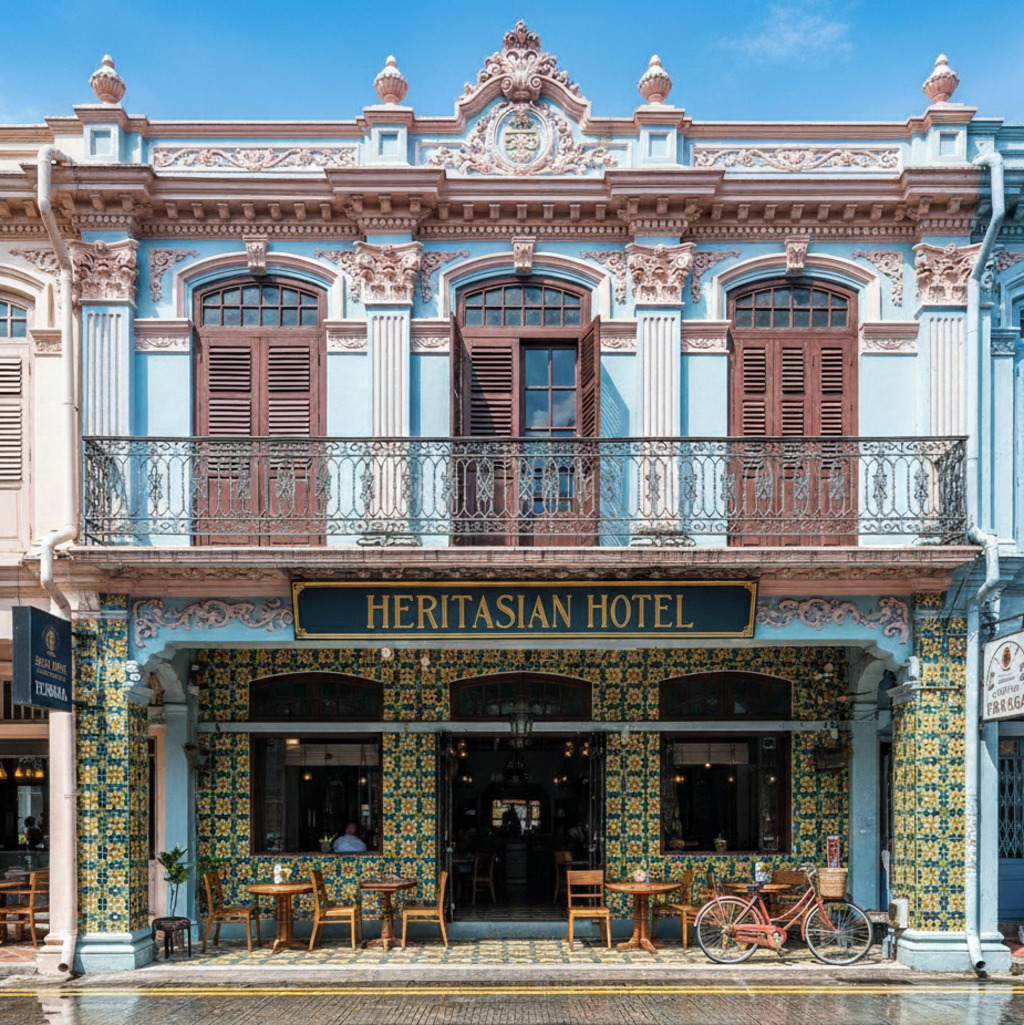
However, we must address the cost of this change. Heritage restoration can lead to rising rents. When a row becomes a luxury hotel, original tenants may move. This is a delicate balance.
Many shophouse hotels in Southeast Asia now focus on inclusive growth. They hire staff from the area. They sponsor local festivals. In George Town, UNESCO status requires buildings to be preserved. Without the hotel model, many buildings would rot. The hotel provides capital for expensive repairs. It ensures the roof stays on. It is a trade-off. We lose a warehouse, but we save a landmark. The building continues to serve a purpose. It remains a part of the city’s living fabric.
The Responsibility of the Guest
Staying in a heritage building requires a different mindset. Accept that the floors might creak. You are paying for lineage. You are paying to sleep inside a story.
Guests are encouraged to be active travellers. This means walking the streets instead of calling a car. It means asking staff about the history of the tiles. It means noticing the “pintu pagar” doors. These half-height swinging doors are unique to the region. They provide privacy while allowing air to circulate. They are a symbol of the “open-door” culture of the Straits.
Key Takeaways: The Heritage Shophouse Experience
Best Times to Visit: A Seasonal Guide
While Southeast Asia is a year-round destination, the experience changes with the calendar.
Conclusion: The Luxury of Lineage
In conclusion, the future of Asian travel is changing. It is moving away from generic gold leaf. It is moving toward “place-making.” Shophouse hotels in South East Asia offer something a skyscraper cannot. It offers a “sense of place.”
You wake up and know where you are: the heart of maritime history. You’re surrounded by the crafts of the past. True luxury is the weight of a 100-year-old teak door. It’s the touch of a granite threshold. It’s the knowledge that your stay helps a neighbourhood survive. By living in the heritage, you ensure it has a future. You’re not just a visitor. You are a guardian of the street’s story.
Summary of Notable Shophouse Hotels
Shophouse Hotels in Southeast Asia FAQs
What exactly is a “shophouse” hotel?
A shophouse hotel is a boutique accommodation set within a restored traditional “shophouse”—a historical building type common in Southeast Asia. These structures typically feature a narrow street frontage, a deep floor plan, a ground floor originally used for trade (the “shop”), and upper floors used for residential living. Today, they are prized for their architectural character and “Straits Eclectic” style.
Why are shophouse hotels often cooler inside than the street outside?
Traditional shophouses were built with “vernacular intelligence.” They feature internal airwells (open courtyards) that allow hot air to escape and natural light to enter. Additionally, their thick walls are made of breathable lime plaster and brick, which absorb midday heat and allow moisture to evaporate, keeping the interior naturally tempered.
Are shophouse hotels loud because they are in local neighbourhoods?
While they are located in the heart of historic districts, many shophouse hotels offer what the article calls a “heritage luxury” soundscape. Instead of the anonymous hum of a high-rise, guests might hear the rhythmic sounds of the neighbourhood at dawn—as the rattle of shutters or the distant call of a street vendor—which many travellers find adds to the authenticity of the experience.
How do these hotels support the local community?
Shophouse hotels often exist in a “symbiotic” relationship with their neighbours. Because they are smaller, they often encourage guests to explore the street for breakfast or coffee, supporting local kopitiams (coffee shops) and artisans. The article notes that one heritage hotel can support up to ten neighbouring micro-businesses, such as laundry services or rattan weavers.
What should I expect when staying in a heritage shophouse?
Expect a “luxury of lineage.” You should anticipate unique architectural quirks, such as creaking original teak floors, steep staircases, and “pintu pagar” (half-height swinging doors). Staying here is about choosing connection over isolation; you are sleeping inside a 100-year-old story rather than a generic hotel room.