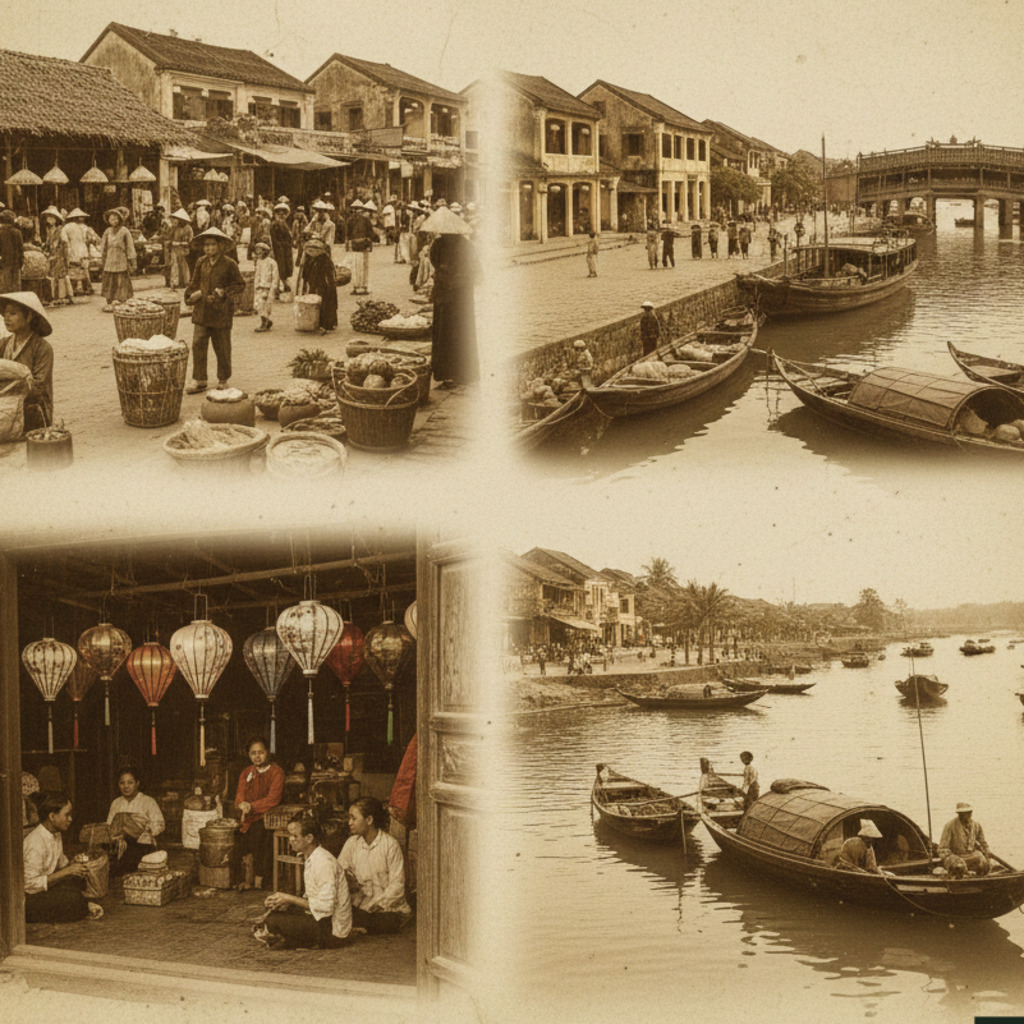

To the casual tourist, Hoi An is a backdrop for appointments and lantern selfies. Yet, the stones here tell a heavier story. They speak of monsoons, silk, and a centuries-long slumber. Hoi An was not built for cameras. It was built for ships.
Its survival is a historical accident. Most ancient trading ports evolve or perish under the weight of glass and steel. Hoi An did neither. It simply froze. This preservation offers us a rare window into a vanished Asia. It’s a place where Japanese shoguns, Dutch merchants, and Chinese clans once shook hands.
The story begins long before the yellow paint. Three thousand years ago, the Sa Huynh people walked these riverbanks. They weren’t simple farmers. These people were masters of the sea. They traded glass and jewellery across Southeast Asia. We know them by their dead. They buried their ancestors in large earthen jars. These urns, found in the sandy soil, point to a civilisation that looked outward to the ocean.
The Urns of the Ancestors
Then came the Cham.
From the 2nd to the 15th century, the Champa Kingdom ruled these shores. They built brick sanctuaries that glowed red in the sunset. They named the estuary Lam Ap. Persian and Arab traders docked here. They sought eaglewood, cinnamon, and gold. The river was already the lifeblood of the region. It connected the spice-rich mountains to the hungry sea.
However, the geopolitical tides shifted. The Vietnamese moved south. By the late 16th century, the Nguyen Lords controlled the region. They needed weapons and silver. To get them, they opened the doors.
The Era of Faifo
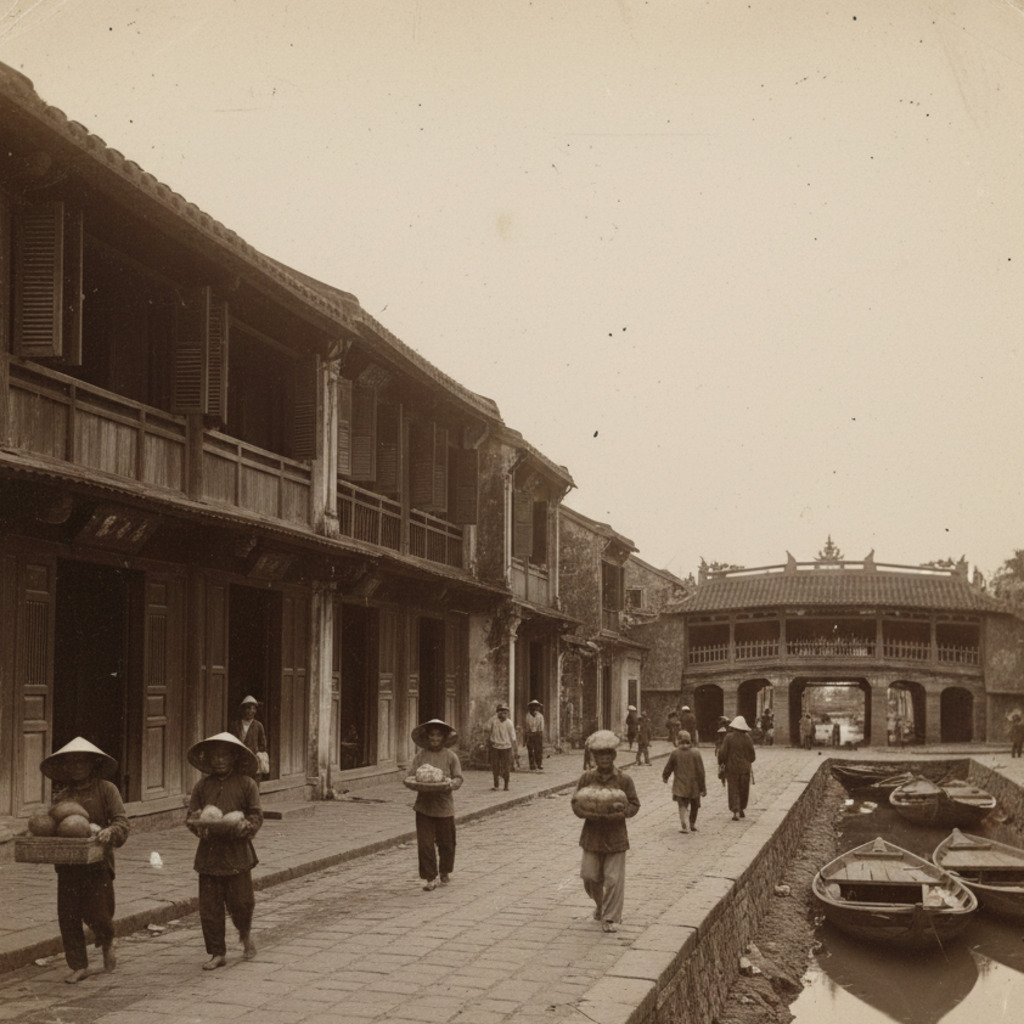
The 17th century brought the world to Hoi An. Western traders called it Faifo. Some say the name came from “Hai Pho,” meaning “seaside town.” Others claim it morphed from a question merchants asked locals: “Có phải phố không?” (Is this the town?). The town became a global funnel.
Every year, the trade winds dictated the rhythm of life. The Northeast monsoon blew ships in from China and Japan. They stayed for months. They waited for the wind to turn. During these long layovers, commerce became a settlement.
The Japanese arrived first. They were escaping the strict isolationist policies of the Tokugawa shogunate. They established their own quarter. It was orderly and distinct. Following them came the Chinese. They fled the chaos of the Ming-Qing transition. The Dutch East India Company set up warehouses. Even the Portuguese Jesuits walked these streets.
Hoi An was the Babylon of the East Sea.
Silver flowed in. Silk and ceramics flowed out. The town was a cacophony of languages. Contracts were signed in characters, script, and handshakes. It was here that the priest Alexander de Rhodes perfected the romanised script used in Vietnam today.
The Monster Beneath the Bridge
The most enduring symbol of this era is the Japanese Covered Bridge. It’s a graceful curve of wood and stone. It spans a small canal. But it’s more than a crossing. It is a weapon. According to local legend, the world was plagued by a monster. The Japanese called it Namazu. The Vietnamese knew it as Cu. It was a colossal earth-dragon. Its head lay in India. Its tail rested in Japan. It spanned the coast of Vietnam.
When the monster moved, the earth shook. Japan suffered earthquakes. Hoi An suffered floods.
The merchants were desperate. They needed to pin the beast down. They built the bridge at a strategic point. It was believed to be the dragon’s “Achilles heel,” or perhaps its heart. The heavy stone pillars pierced the creature’s back. The bridge pinned it to the riverbed. The monster could no longer thrash. The earthquakes ceased. Peace returned to the trade route.
Inside the bridge, there is a small temple. It does not honour a Buddha. It honours the god of weather, Tran Vo Bac De. He controls the storms. It’s a reminder that in Hoi An, commerce always bowed to nature.
The Eyes of the House
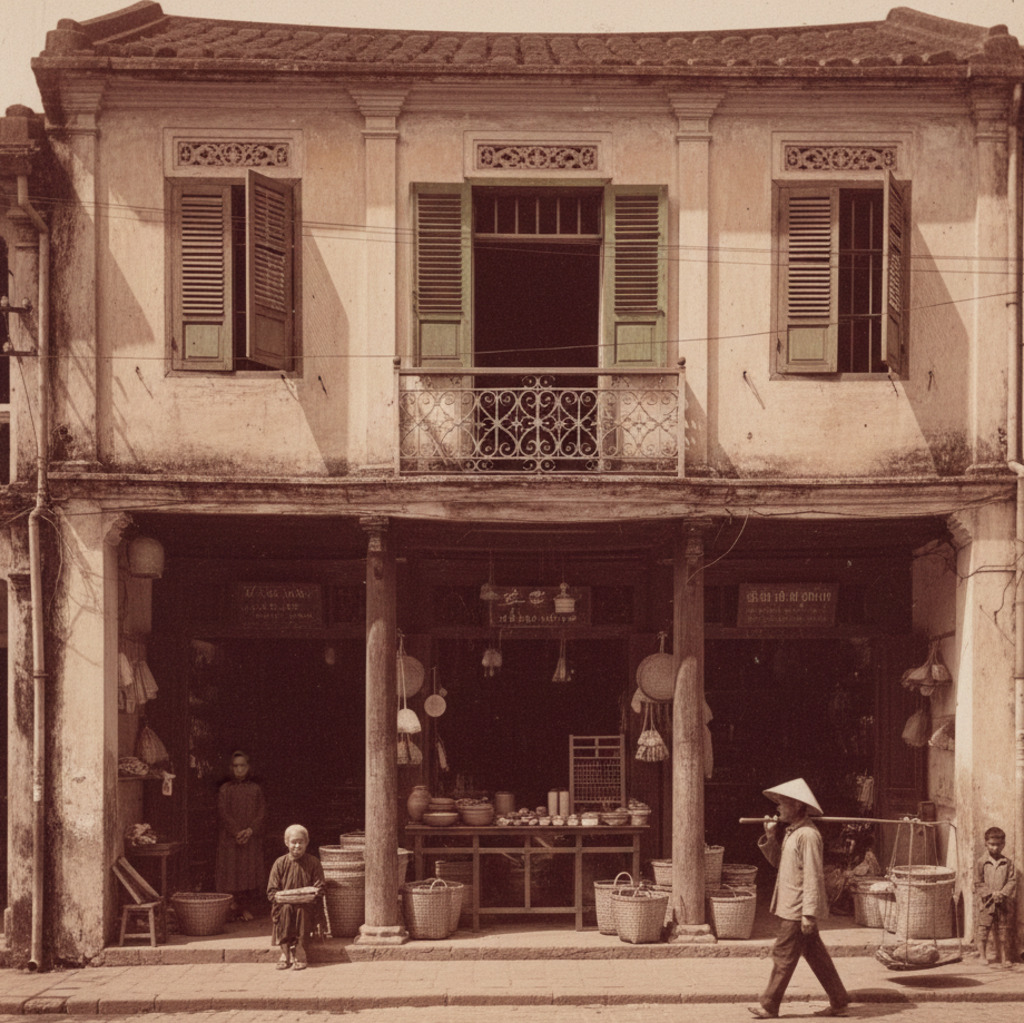
The tube houses of Hoi An are more than just architecture; they are living vessels of history, designed by the logic of the river and the reach of the tax collector. While their narrow facades—often no more than three meters wide—suggest modesty, their depth tells a story of ambition and survival.
The Anatomy of the Deep House
These structures were built to be mercantile engines. A single house could stretch up to 60 meters back, a literal bridge between two worlds: the bustling commercial street at the front and the life-giving Thu Bon River at the back.
- The Shopfront: The front room was the public face, a “showroom” where silk, ceramics, and spices were traded.
- The Sky-Well: Because the houses are so long, the middle would be a tomb of darkness if not for the internal courtyards. These open-air spaces allow rain to fall into stone basins and sunlight to reach the family’s private quarters. They are the “lungs” of the house.
- The River Gate: The back of the house was where the heavy lifting happened. Boats would dock directly at the rear door to unload cargo straight into the warehouse sections of the home.
The Silent Sentinels: Mat Cua
The mat cua (door eyes) are the most hauntingly beautiful feature of these homes. In the 17th century, merchants believed that a house, like a ship, was a living entity. If a ship needed eyes to navigate the treacherous South China Sea, a house needed eyes to navigate the spiritual world.
The Living Eye: It’s a local custom that when a house is sold or a family moves, the “eyes” must be respected. To remove them is to blind the soul of the home. Even today, during the Lunar New Year, families will offer incense and prayers to the mat cua, asking the house itself to remain vigilant against misfortune.
Adaptation and the “Great Flood”
One cannot talk about Hoi An tube houses without mentioning the water. The town is a child of the river, but that parent is often temperamental.
- The Trapdoor Trick: If you look at the ceilings of the ground floors, you will often see a square wooden hatch. This isn’t for ventilation—it’s for survival. When the monsoon floods come, and the river claims the street, the family moves their valuable furniture and inventory through this hatch to the second floor.
- The Pulley System: Many old houses still have ancient pulley systems fixed to the rafters, used to hoist heavy mahogany cabinets and silk looms above the rising tide in a matter of minutes.
A Fusion of Three Worlds
The tube house is an architectural handshake between cultures. You see the Japanese influence in the heavy, dark wooden beams and triple-span roofs. You see the Chinese influence in the “Yin-Yang” tiles—concave and convex terracotta pieces that fit together like scales, allowing the house to “breathe” during the humid summers. Finally, the Vietnamese touch is in the open, airy flow and the vibrant “Hoi An Yellow” lime-wash walls, a colour chosen because it absorbs heat and glows like gold under the setting sun.
These houses have watched the world change through their wooden eyes. They survived the silting of the river that ended the golden age of trade, and they survived the wars of the 20th century. Today, they remain, narrow and deep, holding the secrets of the merchants who once called this “The Crossroads of the Seas.”
The River Giveth, The River Taketh
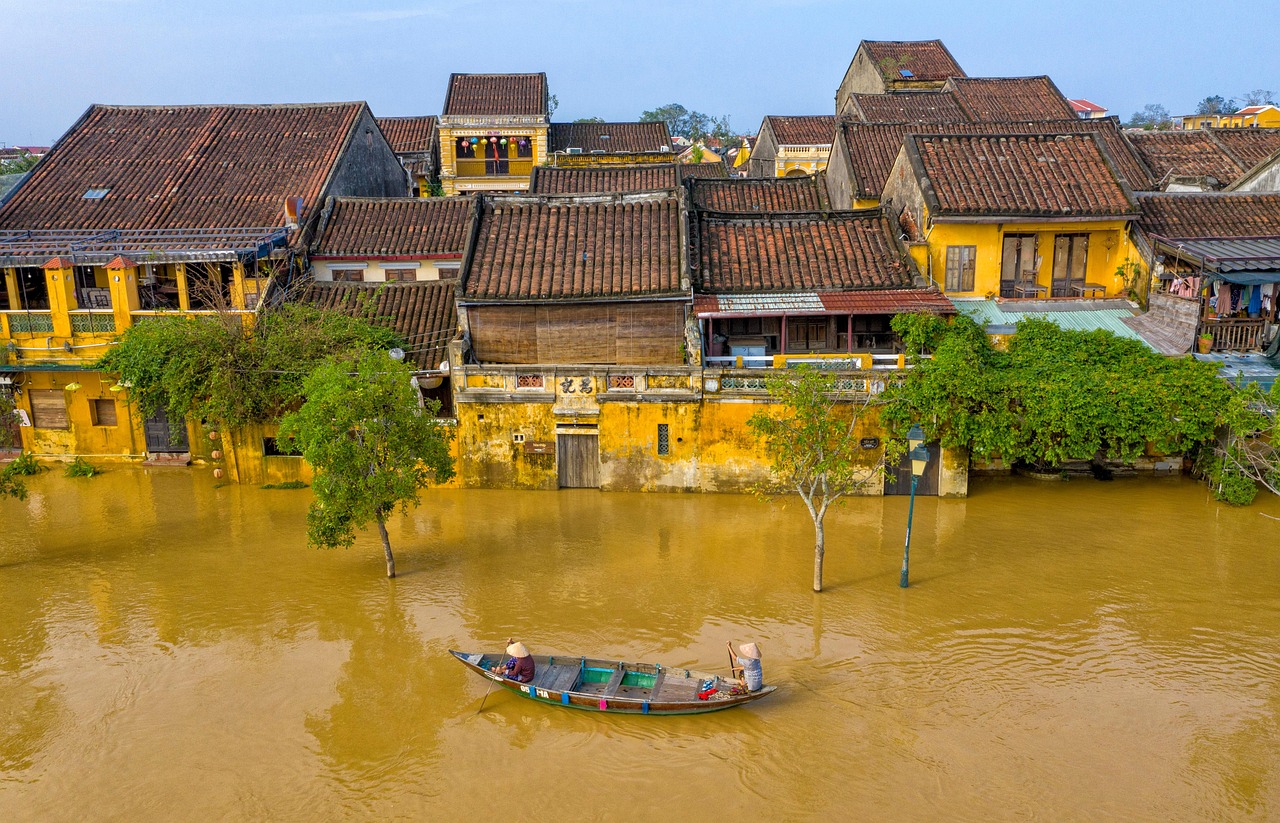
Hoi An’s greatest enemy was not war. It was silt. The Thu Bon River is a moody creator. For centuries, it dredged a deep harbour. Then, the currents changed. By the late 18th century, the river mouth began to shallow. The sandbars grew. The timing was terrible for Faifo.
Steamships were replacing sails. These new, heavy iron vessels needed deep water. They could not navigate the treacherous sandbanks of Hoi An. French colonialists looked north. They saw the deep, sheltered bay of Tourane (modern Da Nang). They built their port there. The administrative centre moved. The money moved. The traders packed their crates and left. Hoi An was abandoned. This abandonment was its salvation.
During the Vietnam War, Da Nang and Hue were battered. They were strategic targets. Hoi An was a backwater. It had no military value. The bombers flew over it. The artillery struck elsewhere. The town slipped into a coma. Moss grew over the tile roofs. Termites chewed the jackfruit wood columns. For nearly 100 years, Hoi An simply existed. It was a ghost town of fading yellow paint and silence.
The Polish Architect
The awakening began with a stranger. In the early 1980s, Vietnam was isolated. The economy was struggling. A Polish architect named Kazimierz Kwiatkowski arrived. Locals called him “Kazik.”
He was part of an exchange program aimed at restoring the My Son ruins. But on his weekends, he wandered Hoi An. He saw past the rot. He saw the structural integrity of the tube houses and recognised the urban layout as a medieval masterpiece. Kazik lobbied the government,
“Do not tear this down,” he urged. “This is gold.”
At the time, locals wanted to demolish the old, damp houses. They wanted modern concrete. Kazik fought them. The facades were cleaned the facades. The streets were mapped. He convinced the authorities that the value of Hoi An lay in its adaptive reuse.
He was right. In 1999, UNESCO declared the Ancient Town a World Heritage Site. The world remembered Hoi An.
A Living Museum
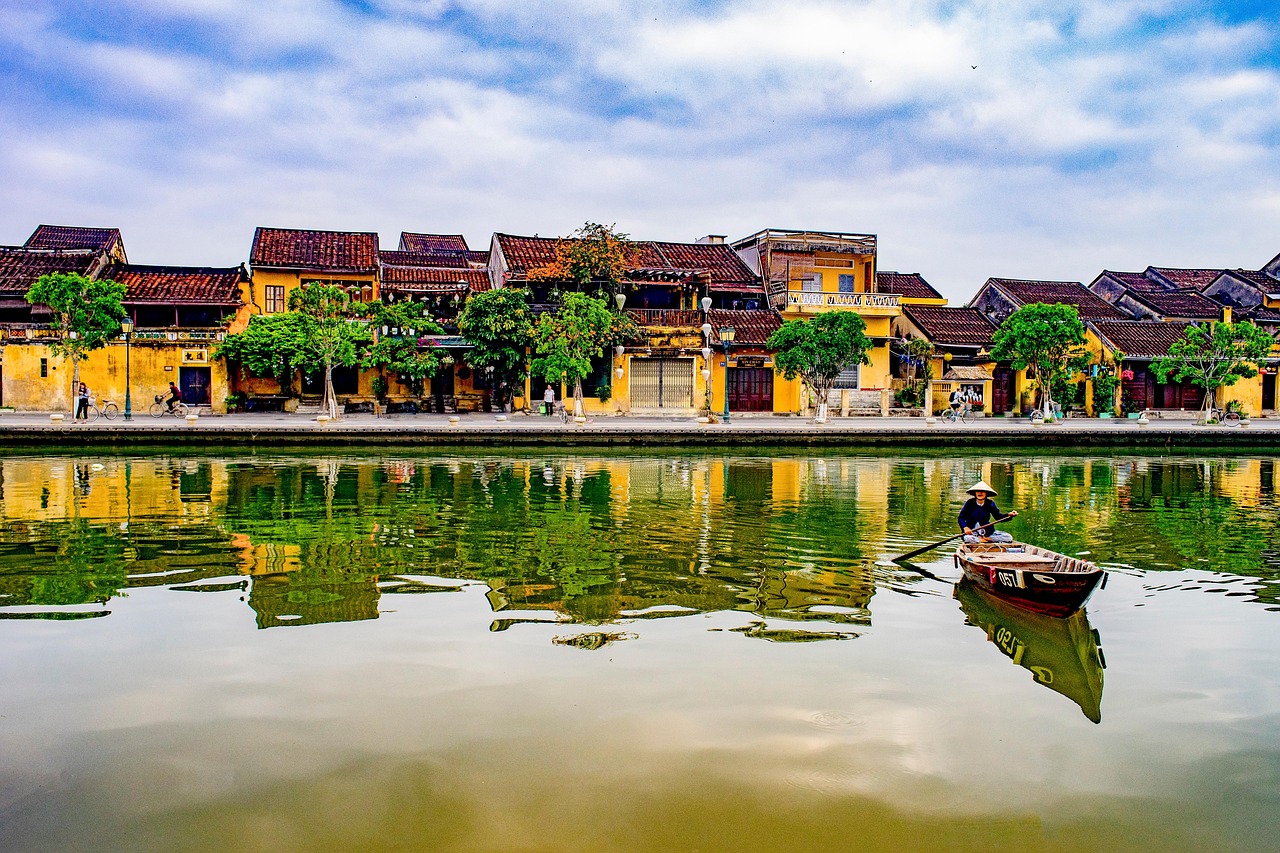
Hoi An’s history is a shows us the shifting fortunes of maritime trade and geographical fate. Originating with the Sa Huynh culture and the Champa Kingdom, the town flourished in the 16th and 17th centuries as Faifo, a cosmopolitan hub attracting Japanese, Chinese, and European merchants. Its architecture, notably the Japanese Bridge and Chinese tube houses, reflects this cultural convergence, with legends like the Namazu monster adding a layer of myth to the masonry.
Today, the silt that killed the port has created a new economy. Tourism is the new trade wind. The river is filled with boats again, but they carry cameras, not ceramics. The Japanese Bridge is undergoing restoration, carefully dismantled and reassembled. There is a danger here.
Hoi An risks becoming a theme park. The ticket booths are efficient. The tailors are aggressive. But if you wake up early, the ghosts return. At 5:00 AM, the streets are empty. The shop shutters are closed. The light is grey and soft. You can hear the slap of water against the stone quay. You can smell the wet wood.
For a moment, the souvenir shops vanish. You are standing in Faifo. The monster Namazu is sleeping beneath the bridge. The eyes on the doors are watching. And the river flows slowly to the sea, carrying the memories of a thousand ships.