
Key Insights
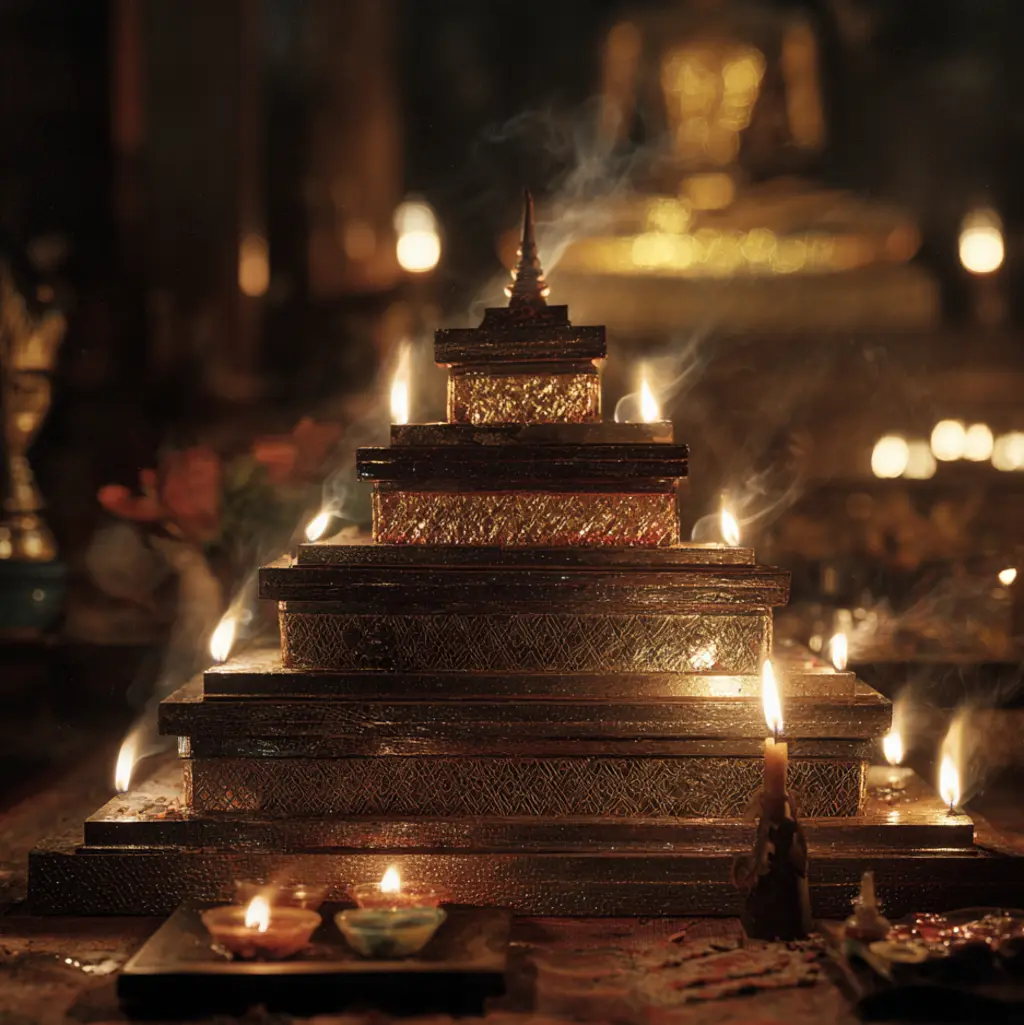
The Sattapan is a tiered, triangular Lanna candle holder that serves as a physical map of Buddhist cosmology. Representing the seven mountain ranges surrounding Mount Meru, it bridges traditional craft with the Traibhumikatha (Three Worlds) philosophy.
Key technical markers include the use of Heartwood Teak, Thong Changko gilding, and hand-cut mirror inlays designed to simulate celestial light.
Explore the complete Lanna Teak Trail topic.
Thong Changko: A heavy-duty gilding technique where sheets of brass or copper are hammered into plates, gilded, and fastened to the wood. This creates a durable, deep metallic glow that resists being degraded by candle soot.
Kanchok Chok: Hand-cut mosaic mirror inlays strategically angled across the wooden carvings to capture and scatter the low-frequency flicker of traditional beeswax candles.
Naga Bantha: A structural design framework where the curved bodies of two mythical Naga (serpent) figures serve as the actual outer frame and load-bearing edges of the pedestal.
Naga Sadung: The undulating or “shaking” serpent form characteristic of the fluid Nan (Lan Xang-influenced) style, which prioritises a rippling, organic snake anatomy over rigid geometric mountain tiers.
While many visitors entering a traditional northern Thai Viharn (assembly hall) immediately raise their eyes to the towering, gilded Buddha icon, a more rigorous design logic waits at the altar’s base. Resting directly in front of the primary image stands the Sattapan – a highly stylised, tiered wooden candle holder unique to Lanna Buddhist art.
Rather than a simple piece of ritual furniture, the Sattapan functions as a complex, three-dimensional blueprint of the universe. Its distinctive structure features seven rising peaks, directly mirroring the Sattaparibhanda—the seven concentric rings of golden mountain ranges that encircle Mount Meru, the sacred axis of the cosmos in Theravada Buddhist theology.
Carved from native hardwoods and meticulously embellished with gold leaf, colored mirrors, and protective Naga (serpent) motifs, this ceremonial object serves as a physical, didactic bridge, guiding the human congregation through the vertical tiers of the spiritual realm.
The Origin of the Cosmic Pedestal
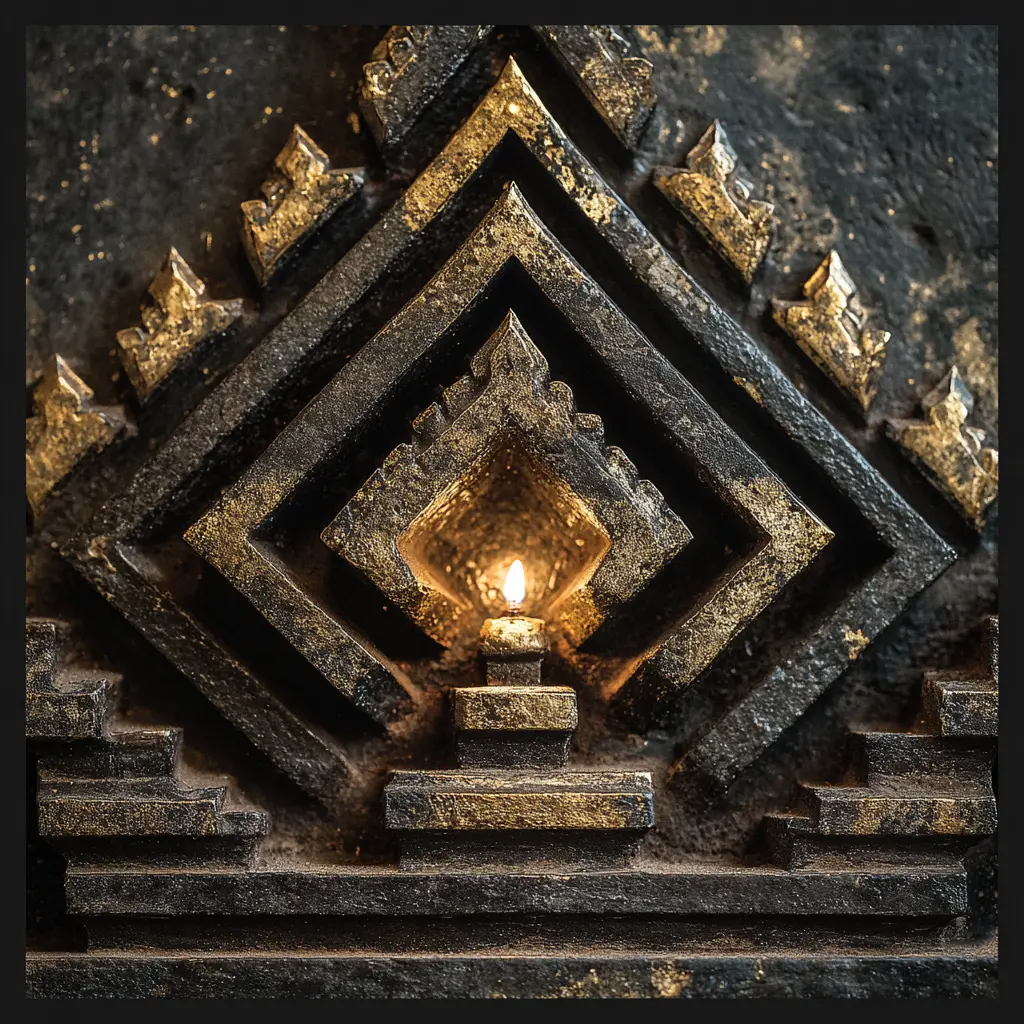
The Sattapan emerged as a central liturgical object during the peak of Lanna artistic expression. Its name derives from the Pali words Satta (seven) and Phan (pedestal), and its primary function is to support the seven candles lit during major Buddhist rituals. Historically, the craftsmanship of these pieces was a collaborative effort between monks and local artisans, often funded by the royal courts of Chiang Mai or Nan to generate merit.
Far from a simple piece of furniture, the Sattapan’s silhouette mirrors the Traibhumikatha – the Three Worlds – connecting regional faith to a broader Indian-influenced cosmology that arrived via cultural exchange with neighbouring Lan Xang.
Architectural Layers: The Seven Tiers
The Sattapan is defined by its stepped, triangular form, which symbolises the seven mountain ranges surrounding Mount Meru, the axis of the universe. Each tier represents a specific range that practitioners must mentally traverse on the path to enlightenment.
Materiality and the “Spirit of the Wood”
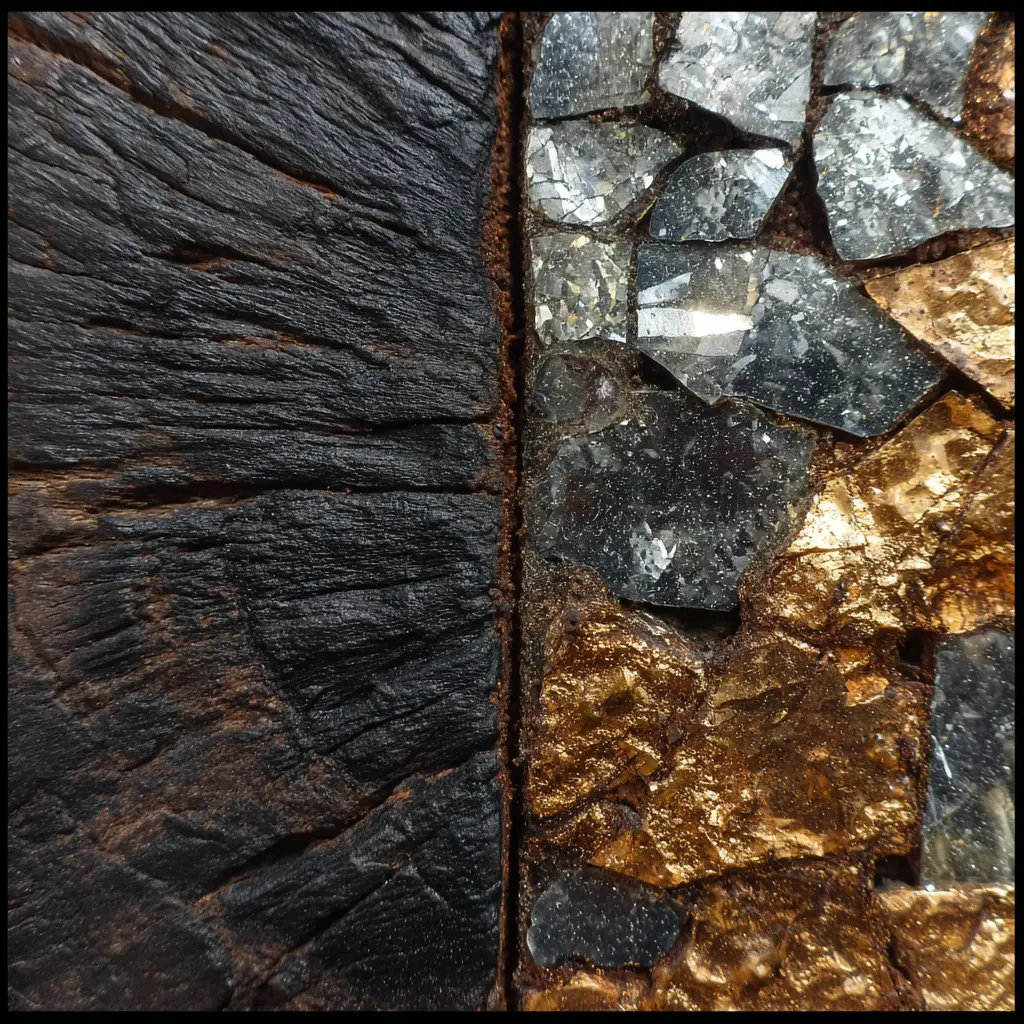
To understand the Sattapan is to understand the Lanna obsession with material integrity. These objects were built through layers of organic chemistry. The foundation is almost universally Heartwood Teak (Tectona grandis), chosen for its high silica content, which repels the Boring Beetle and resists the warping effects of Northern Thailand’s humidity.
The surface treatment follows a rigorous traditional process. First, the wood is sealed with Rak (the sap of the Gluta laccifera tree). This natural lacquer cures to a deep, obsidian black, providing a high-contrast base for Thong Changko. Unlike thin gold leaf used on statuary, Thong Changko involves hammering brass or copper into heavy plates, which are then gilded. This gives the Sattapan a structural weight and a dull glow that survives the soot of thousands of devotional candles.
The use of Kanchok Chok (hand-cut mirror inlay) serves a specific atmospheric purpose. In the era before electricity, the Viharn was a space of strategic shadows. The mirrors on the Sattapan were angled to catch the low-frequency flicker of beeswax candles, creating a shimmering effect known as Saeng Sawan (Celestial Light). This technical simulation of the “Radiant Body” of the Buddha was essential for creating a state of mindfulness among the congregation.
The Heritage Highlight: The Naga Bantha
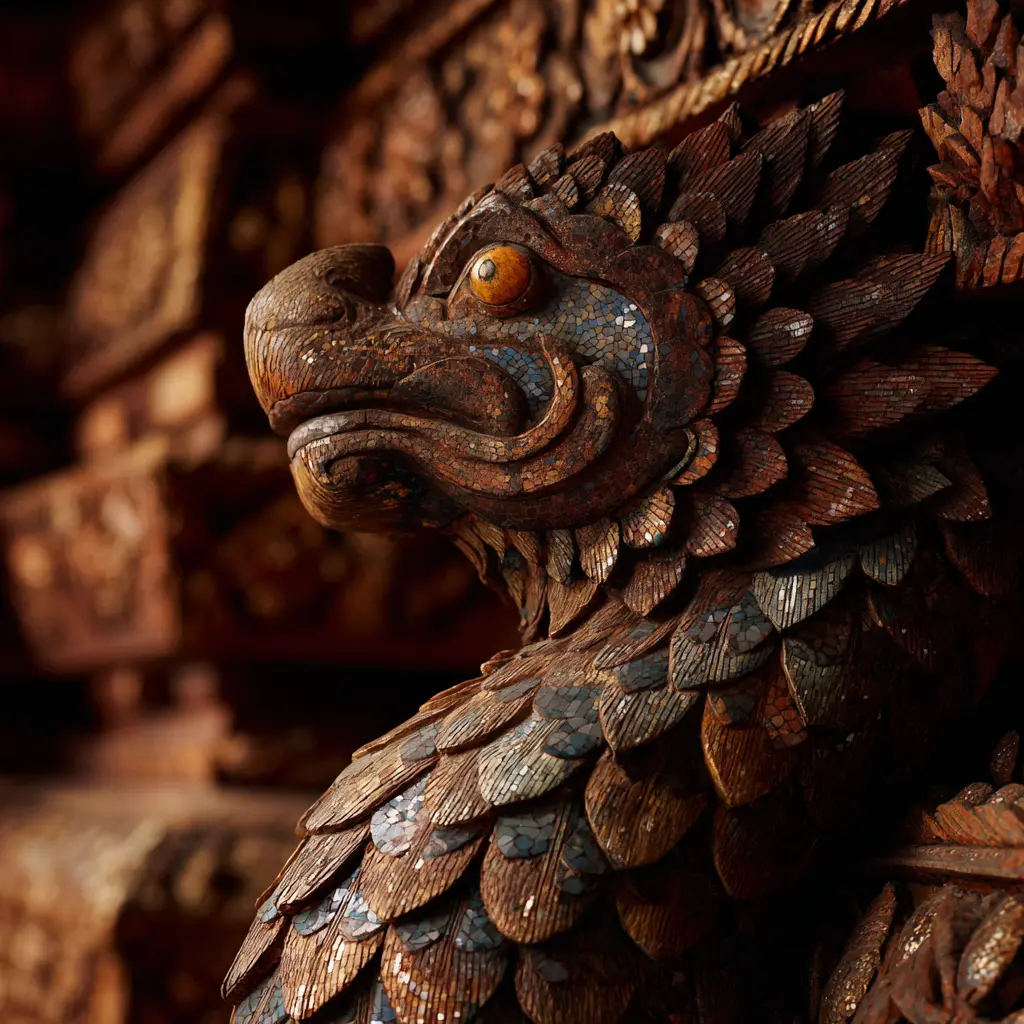
A defining feature of a high-status Sattapan is the Naga motif. Two large mythical serpents typically curve along the outer edges of the frame, their bodies forming the very structure of the pedestal. In Lanna belief, the Naga is the guardian of water and the protector of the Dhamma. The detail in these carvings is often meticulous; the scales are frequently inlaid with colored glass that catches the light, simulating the shimmering halos of the celestial mountains.
The Linguistic and Etymological Bridge
The word “Sattapan” acts as a linguistic fossil, preserving the link between Lanna culture and its Pali-Sanskrit roots. While Satta (Seven) is the numerical anchor, the term Phan carries a dual meaning in the Northern Thai dialect. It refers to both a “pedestal” and a “multiplication of beauty.”
In the regional courts of the 19th century, the Sattapan was often described as the Kao Sattapan – the “Seat of Seven.” This terminology elevates the object from a utility item to a piece of royal regalia. It reinforces the Lanna concept of the “God-King” (Devaraja), where the ruler’s merit is physically manifested in the quality of the temple’s liturgical furniture.
A Comparative Heritage: Lanna vs. Lan Xang
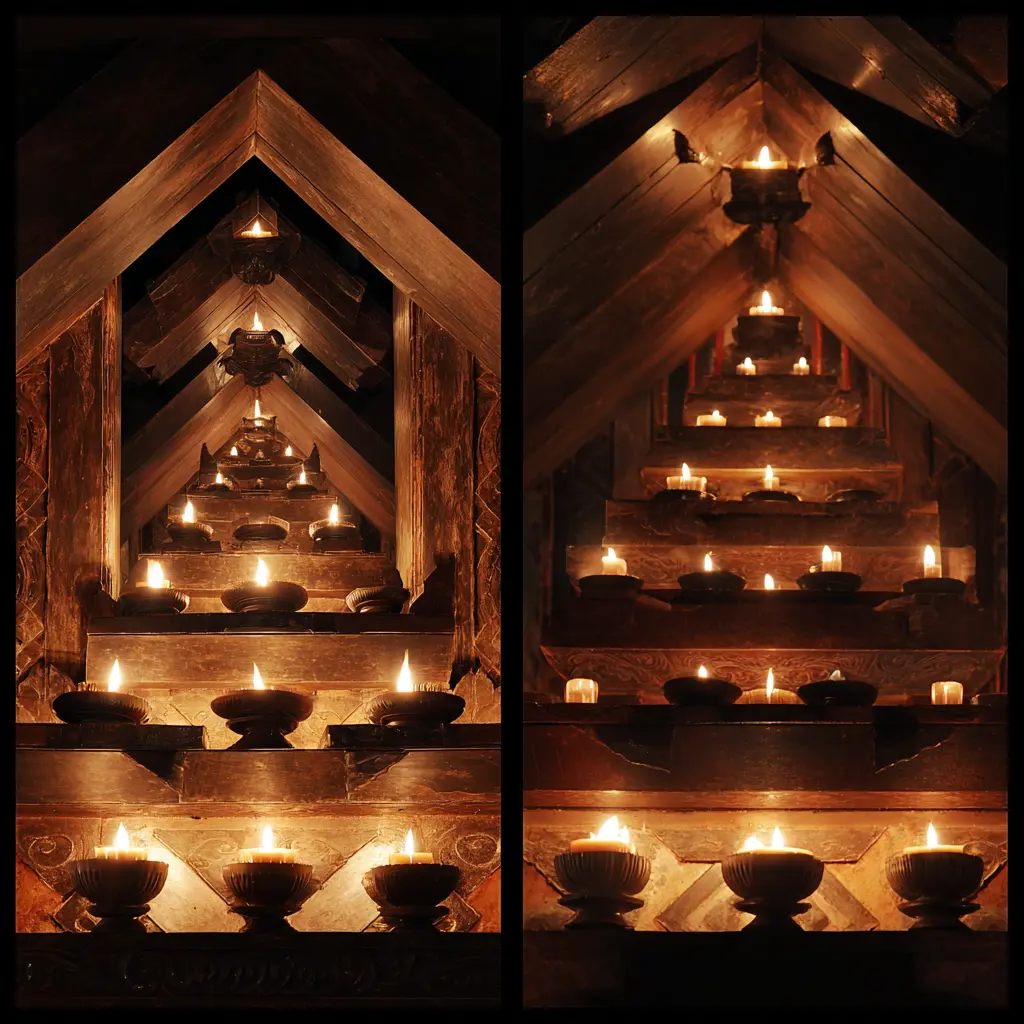
While the Sattapan is a Lanna icon, subtle shifts in its architecture appear as one moves toward the eastern borders. The Nan Style, influenced by Lan Xang, replaces rigid triangles with a fluid, “shaking” Naga form called Naga Sadung. These versions prioritise serpent anatomy over mountain tiers, reflecting a deep cultural connection to the Mekong River’s spiritual currents. In contrast, the Chiang Mai Style remains strictly geometric, prioritising the vertical hierarchy of the seven peaks.
Conservation and the “Golden Age” Patina
The survival of an authentic 19th-century Sattapan is a feat of environmental management. In the high-humidity pockets of Northern Thailand, the primary enemy is not time but the microclimates created by modern tourism. The introduction of air conditioning into ancient teak structures can cause the wood to contract, leading to the flaking of the original Thong Changko.
Conservationists now prioritise passive preservation, maintaining natural airflow to keep teak at a consistent moisture level. A well-preserved piece avoids the garish brilliance of modern spray paint, retaining a deep, honeyed lustre instead. This patina results from decades of oxidation and settling dust, which forms a natural protective layer over the lacquer.
The Sensory Altar: A Study in Atmosphere
The experience of the Sattapan is inseparable from the sensory environment of the Lanna assembly hall. To witness the object as intended, one must arrive during the “Blue Hour” just after sunset. At this time, natural light fades, and the temple’s internal shadows deepen.
The air within the Viharn smells of popped rice, dried jasmine, and the medicinal tang of local incense. As the seven candles are lit, overhead fans move the heat, causing candlelight to dance across the mirror inlays. This is a kinetic architectural performance. The flickering light makes the Nagas appear to move, symbolising the living nature of the Lanna Dhamma.
The Modern Experience: Encountering the Sattapan
The Viharn Lai Kham at Wat Phra Singh houses one of the most exquisite examples of 19th-century Sattapan architecture. To see the piece in its intended state, visit during the Yi Peng festival, when the seven candles are lit. When examining a Sattapan, remain seated on the floor as a sign of respect. Avoid pointing your feet toward the altar, and wait for the light of late afternoon to hit the facade of the temple, which often illuminates the interior altar through the open doorways.
Conclusion: The Enduring Grid
The Sattapan remains a testament to the Lanna “Living Grid.” It proves that even in the smallest ritual objects, the ancient architects aimed for a total synthesis of cosmology and craft. For the heritage traveller, the Sattapan is the final piece of the puzzle – a vertical representation of the same cosmic order found in the city’s moats, its mountain peaks, and its spiritual heart. To stand before one is to see the Lanna universe in its most concentrated, illuminated form.