Chiang Mai 2026: The UNESCO World Heritage Bid Hub
Your essential guide to the “Capital of Lanna” nomination—from the June inspection to the final November decision.
The 2026 Roadmap
January 30: Official Nomination Dossier Submitted (✅ COMPLETE)
March – May: City Beautification & Public Awareness (🚀 IN PROGRESS)
June: ICOMOS Technical Site Inspection (⏳ UPCOMING)
November: Final Decision at the World Heritage Committee Meeting (🏁 THE GOAL)
Expert Insight: This bid is unique because it is a “Living Heritage” nomination. Unlike Ayutthaya, Chiang Mai is being judged on how our modern, bustling city preserves its 700-year-old soul while people still live and work here.
Chiang Mai UNESCO Timeline
February 9, 2015
Chiang Mai is officially added to UNESCO’s Tentative List. This started the “long game” of research and dossier drafting.
2020 – 2024
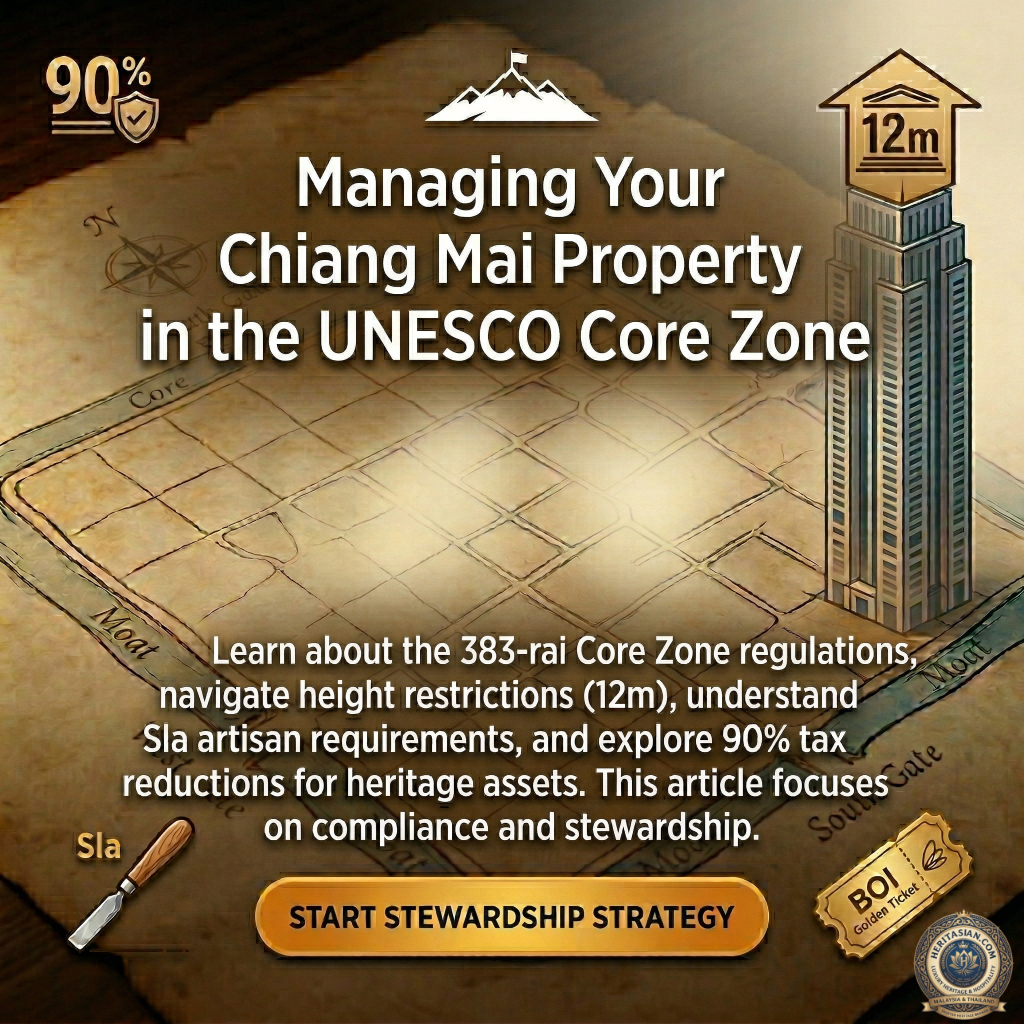
Multiple rounds of local committee meetings, academic research, and public hearings to define the “383-rai” core zone.
December 16, 2025
The National Committee for the World Heritage Convention officially approves the final draft of the “Chiang Mai, the Capital of Lanna” nomination.
January 30, 2026
The completed nomination dossier is officially submitted to the UNESCO World Heritage Centre in Paris
March – May 2026
Local authorities are currently scrambling to remove “eyesores.”
June 2026
An evaluation team from ICOMOS (UNESCO’s advisory body) arrives in Chiang Mai. They will walk the 8 core sites to see if our “Living Heritage” management plan actually works in practice
Nov 2026
The World Heritage Committee is expected to hold an extraordinary session or a late-year meeting where the verdict for the 2026 cycle (including Chiang Mai) will be announced.
II. The Core Geography: Three Pillars of Lanna
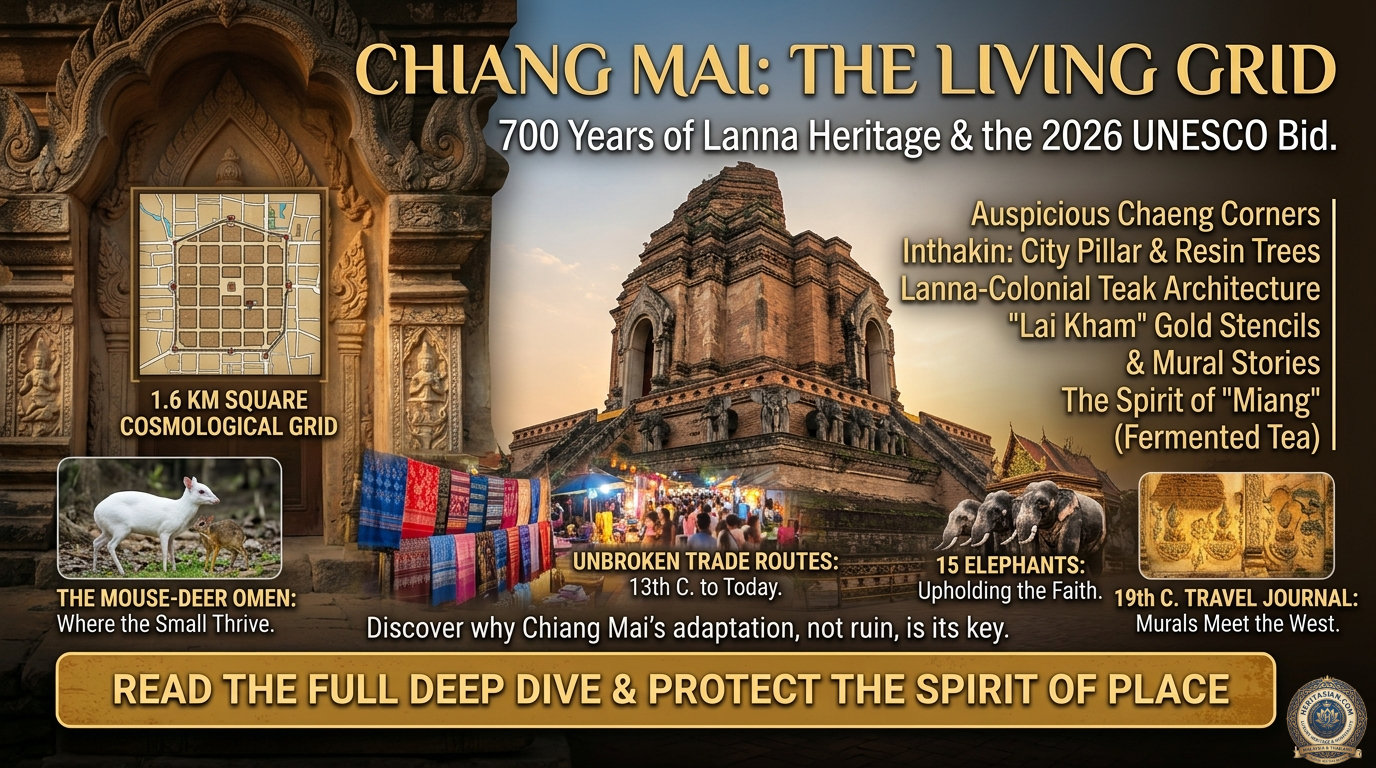
The 383-rai (151-acre) UNESCO nomination isn’t a single block. It’s a “serial nomination” composed of three distinct geographic components that tell the story of the Lanna Kingdom’s spiritual and political evolution.
Component 1: The Fortified Centre & Royal Foundations
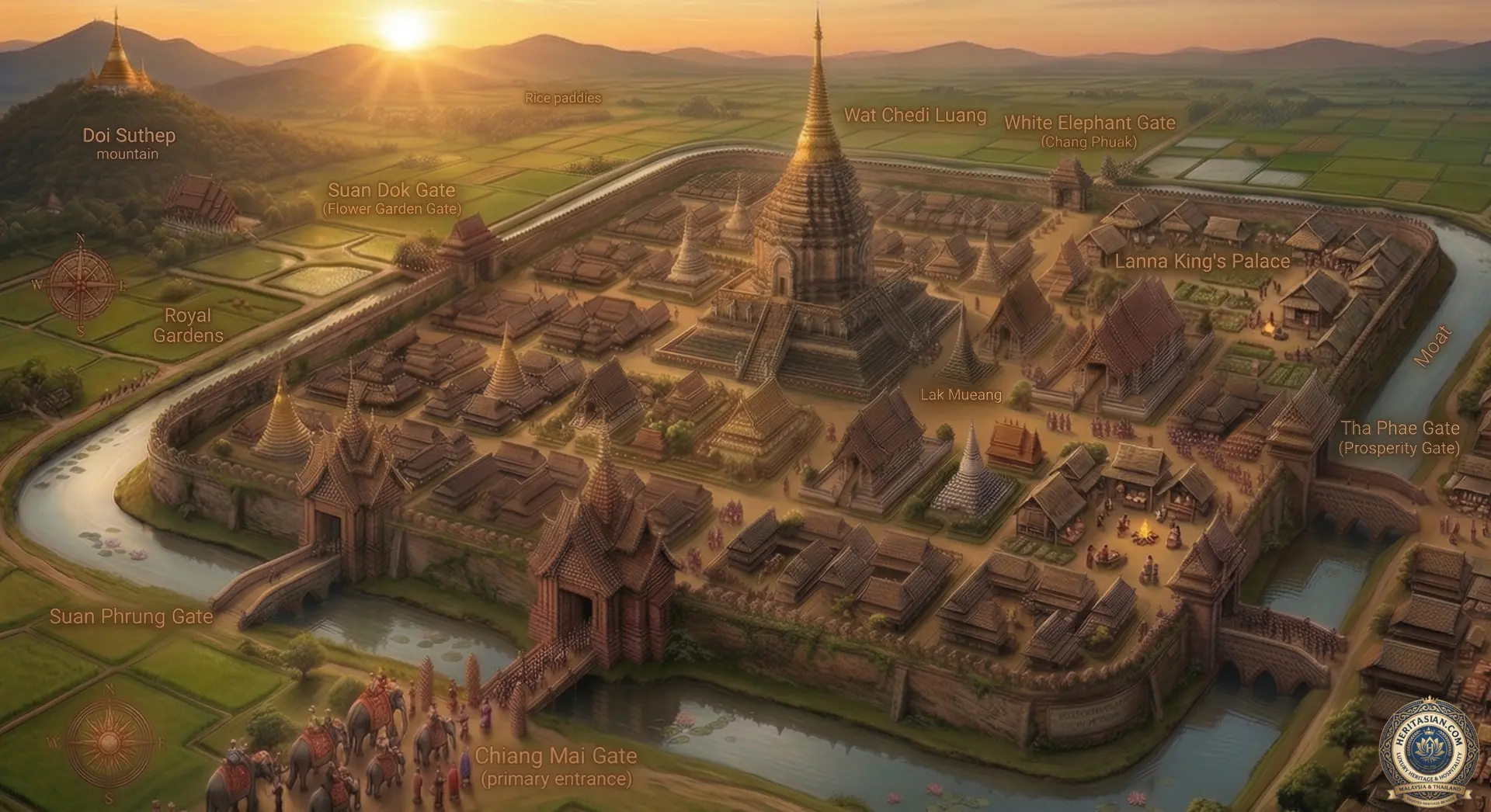
This is the heart of the “Capital of Lanna.” It focuses on the urban planning that King Mangrai used to symbolise a human figure in harmony with the cosmos.
The City Walls & Moat: The physical “skin” of the ancient capital, including the 5 gates and 4 corner bastions.
The Royal Temples: Includes Wat Chiang Man (the first temple), Wat Phra Singh (the centre of religious law), and Wat Chedi Luang (the historic “skyscrapers” of the 15th century).
Wat Suan Dok:Located just outside the Suan Dok gate, this site holds the ashes of the royal Lanna lineage and represents the “Sacred Garden.”
Component 2: The Sacred Axis (The Mountain)
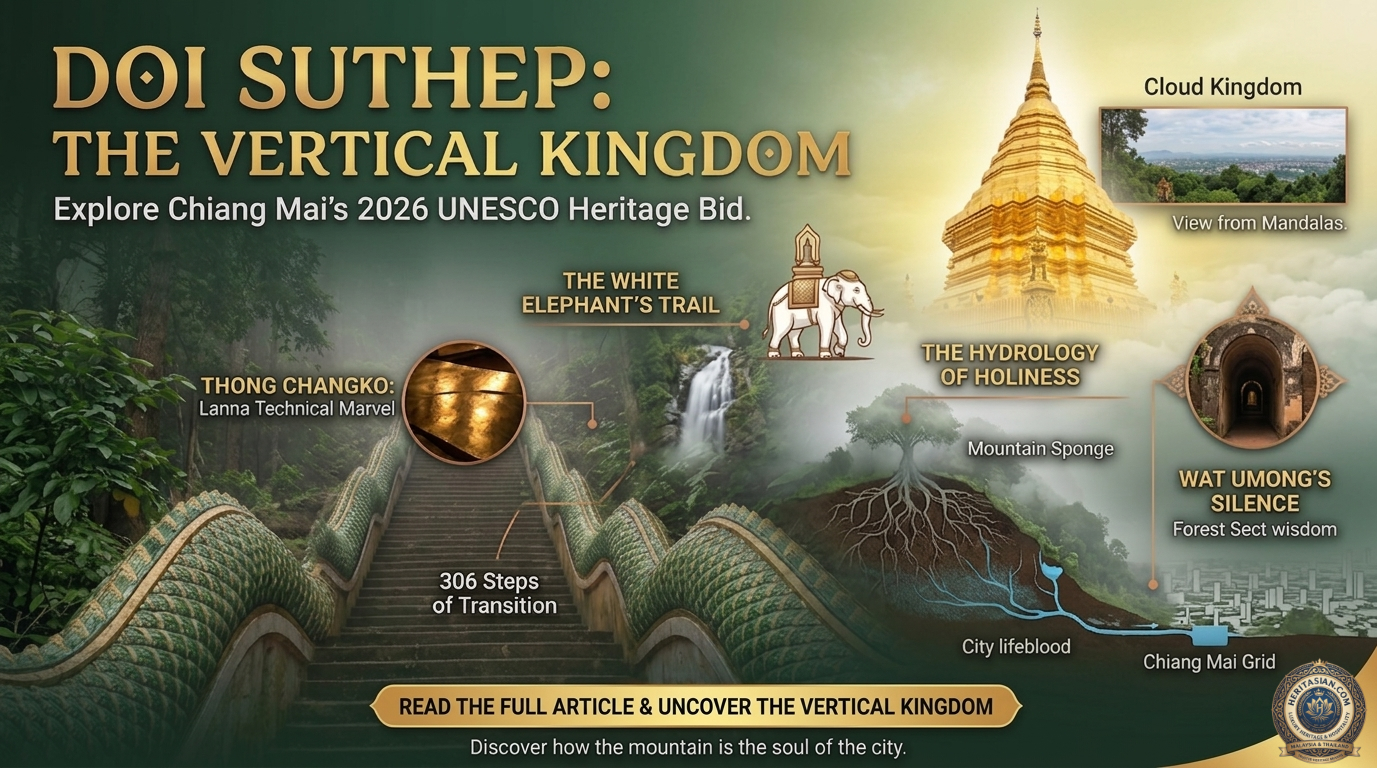
Component 2: Doi Suthep — The Vertical Kingdom
This component represents the vital relationship between the man-made “Living Grid” of the city and the wild, sacred highlands. It illustrates the concept of a “Cultural Landscape” through three primary spiritual and ecological anchors:
Wat Phra That Doi Suthep: The “Golden Lighthouse” and spiritual crown of Northern Thailand. It marks the summit where the sacred white elephant’s journey ended, housing the Buddha relic that anchors the entire Lanna kingdom.
Wat Pha Lat (The Waterfall Temple):Halfway up the mountain, this site is the “Architecture of Transition.” It represents the “Heritasian” ideal where stone lions and shrines are carved directly into the waterfall and jungle roots, serving as a historic resting point for pilgrims on the Monk’s Trail.
Wat Umong (Suan Phutthatham): The “Subterranean Silence” at the mountain’s foot. It represents the “Forest Sect” meditative traditions that counterbalance the city’s political power, sitting at the source of the watershed that feeds the city’s moat.
Component 3: The Global Council Site
This is the most specialised part of the bid, proving that Chiang Mai was a centre of global influence.
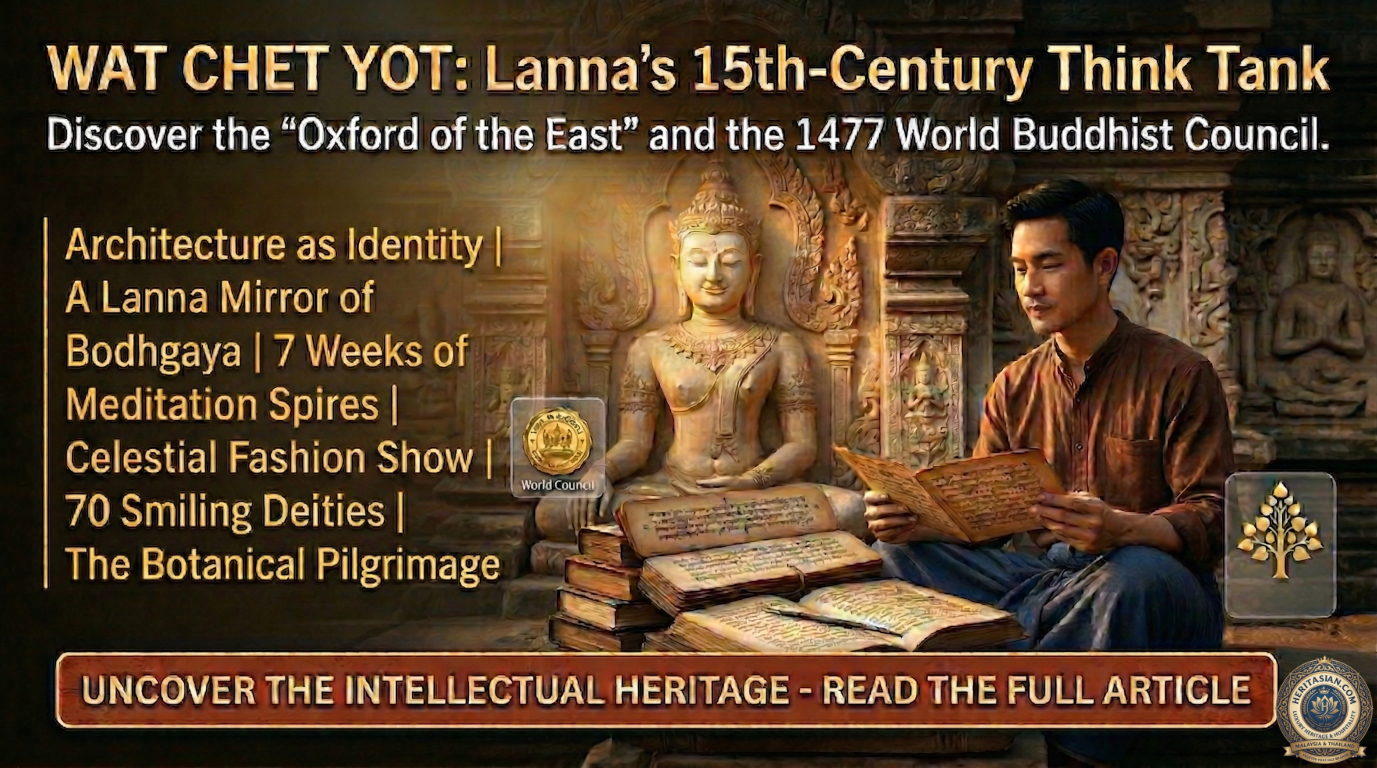
Wat Chet Yot (Wat Maha Photharam): Located to the northwest, this temple was built specifically to host the Eighth World Buddhist Council in 1477. It’s the “technical proof” of Chiang Mai’s historical importance in the wider Buddhist world.
III. The “Myth vs. Reality” Matrix
The Myth
The UNESCO Reality
“I won’t be allowed to paint or renovate my Old City shop-house.”
False. The 2024–2028 Management Plan encourages “Living Heritage.” You can renovate, but you must follow “Lanna-sensitive” aesthetic guidelines to protect the city’s character.
“UNESCO status will make Chiang Mai too expensive for locals.”
Contextual. While property values often rise, the goal is to shift from “mass tourism” to “high-value cultural tourism,” which typically brings more stable, long-term income to local businesses.
“The decision is already made because we submitted the paperwork.”
False. The June inspection by ICOMOS is the “make or break” moment. They are coming to see if the city actually looks and acts like a heritage site in real life.
The June 2026 Inspection: What to Expect
In June, a team from ICOMOS (UNESCO’s technical advisors) will arrive for a week-long site visit. They aren’t just looking at temples; they’re looking at our management.
The “Cable Blitz”: You’ve noticed the 90% completion of the cable burial project. This is a strategic move to show the “integrity” of the historic views.
Billboard Removal:Expect to see oversized signs near Chang Phueak and Tha Phae gates being removed or downsized to meet visual standards.
Community Participation: The inspectors will talk to locals. They want to see that we care about our heritage.