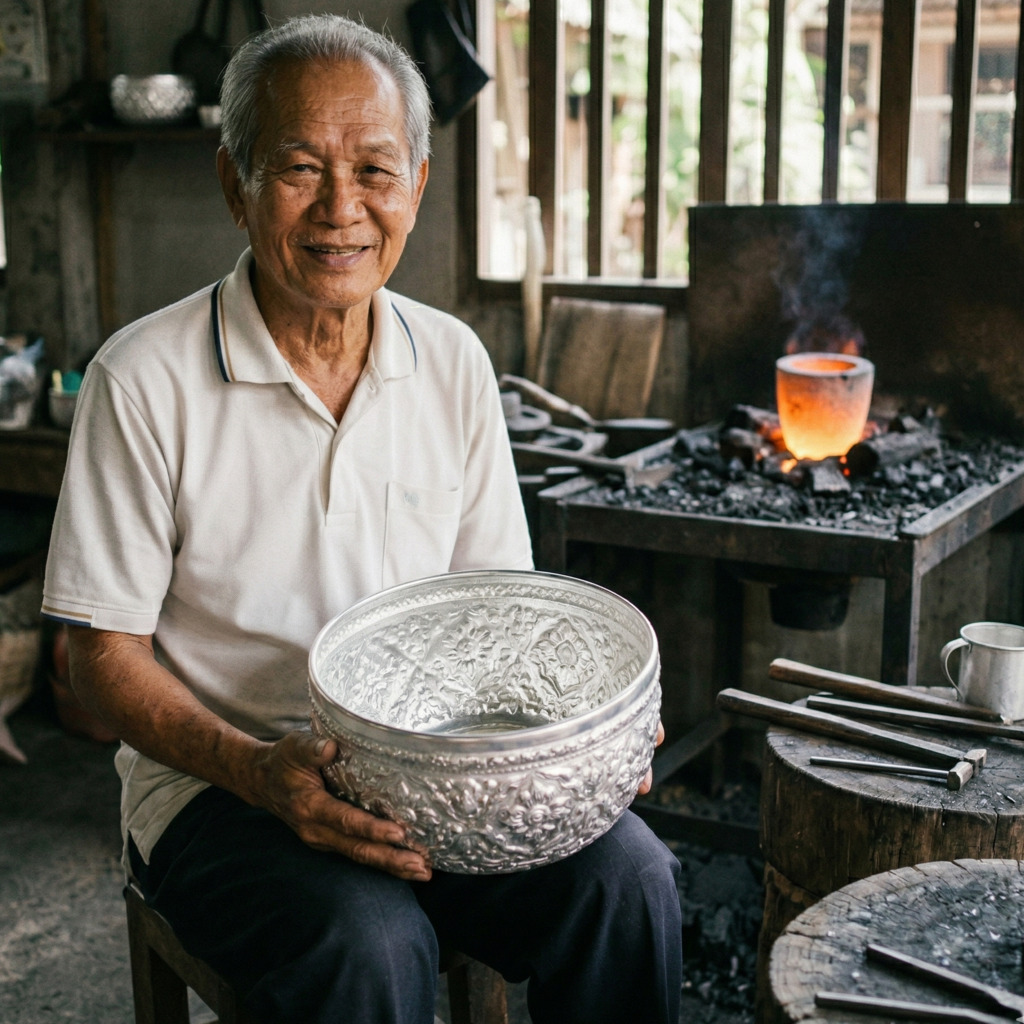

The silver of Chiang Mai is not a mere commodity. It is a 700-year-old metallurgical language. This craft defines the Wualai silver district and is also an important element of the Lanna Creative Renaissance. It sits just south of the old city walls. Here, the air carries a constant metallic rhythm. Hammers strike steel chisels against silver sheets. This rhythm has pulsed since the founding of the Lanna Kingdom.
The Genesis of the Wualai Silver District
In 1296, King Mangrai established Chiang Mai as his new capital. He understood that a great city required elite artisans. Mangrai looked toward the borders of modern-day Myanmar. He invited master silversmiths from the Kengtung region to settle. He granted them land in the Wualai area. This strategic relocation created a dedicated guild. These families became the custodians of the “khruang ngoen” tradition.
For centuries, these smiths worked exclusively for the elite. They forged heavy belts for noblewomen. They hammered offering bowls for high-ranking monks. Silver was more than wealth. It was a medium for spiritual merit. One local elder, Khun Somchai, recalls his childhood in the 1950s. The village was a forest of charcoal fires. “We didn’t use thermometers,” he says. “We watched the colour of the glow.”
The Science of the “Lunar Glow”
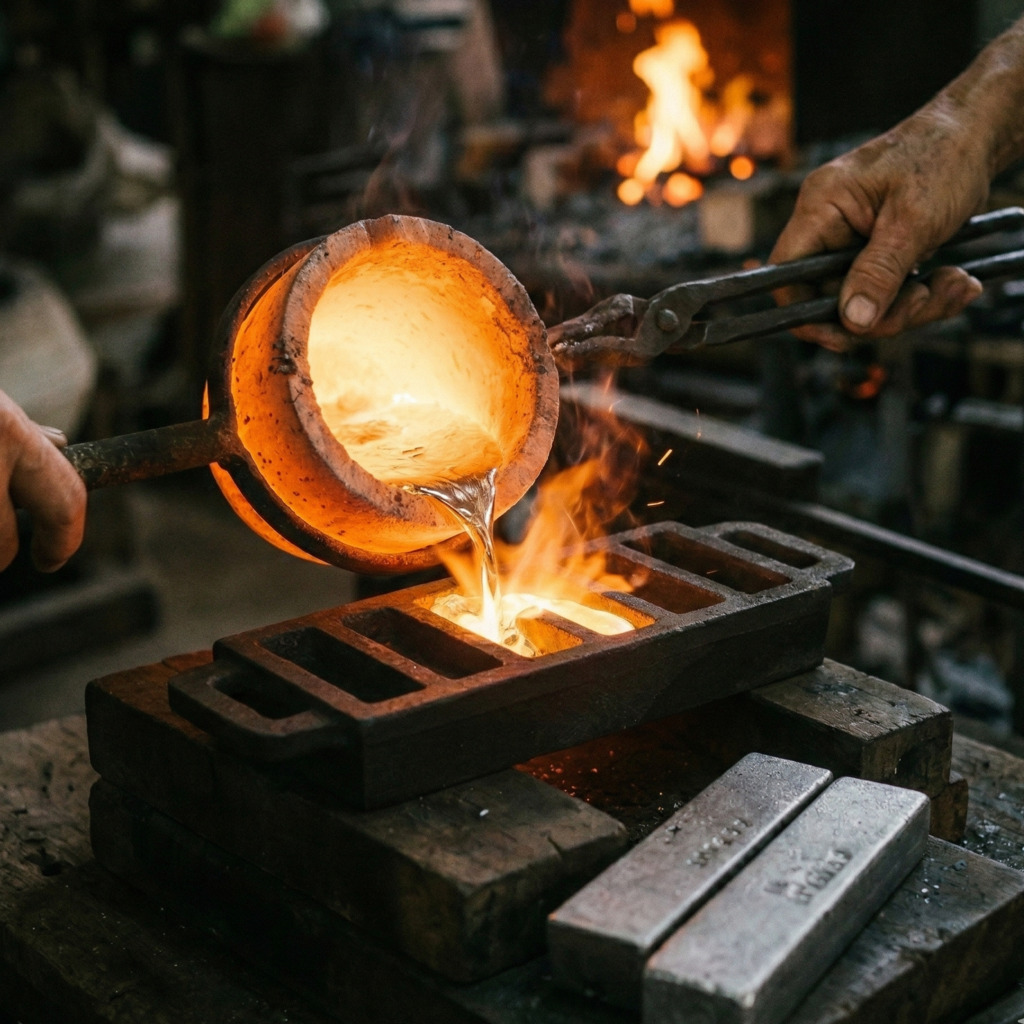
Lanna silver possesses a distinct matte white finish. This is the result of specific metallurgical choices. Most Western jewellery uses Sterling Silver. This is 92.5% pure silver and 7.5% copper. However, Wualai Smiths often prefer higher purity. They frequently work with 95% to 98% silver.
The process begins with “pickling.” After heating the metal, it turns black with oxidation. Artisans traditionally used natural acids to clean it. They boiled the silver in fermented tamarind water. They also used concentrated lime juice. These organic acids strip away the cupric oxide. This reveals the “fine silver” surface. In Lanna philosophy, this mirrors the Buddhist path. The fire represents the trials of life. The acid represents the wisdom of the Buddha. The resulting shine represents an enlightened mind.
The Master Techniques: Repoussé and Chasing
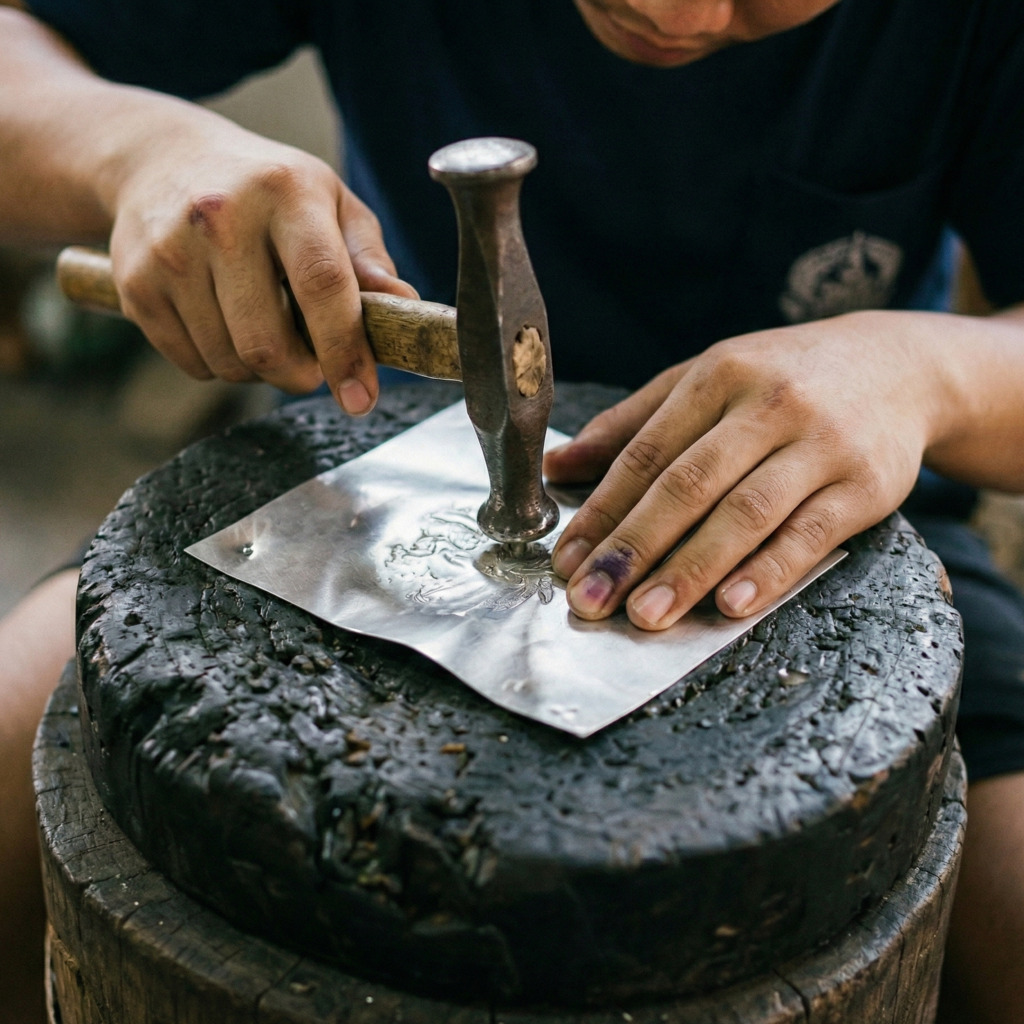
How does a flat sheet become a three-dimensional elephant? The secret lies in a medium called “pitch.” Smiths mixes tree resin with fine brick dust and oil. This creates a bed that is firm yet flexible.
A master can spend months on a single panel. At the Wualai workshops, an apprentice is a “beginner” for twenty years. “The hammer is heavy, but the silver is patient,” says Anan, a young student. He shows his calloused palms with pride. He is currently carving 5,000 scales onto a single Naga serpent.
The Alchemist’s Tool Kit
Behind the finished shine lies a rugged array of tools. A Wualai workshop is a study in controlled force. The most vital tool is the “Satao” or pitch block. This is the Smith’s canvas. Without the pitch, the silver would tear under the hammer.
The smith also uses a variety of “Punches.” These are small steel rods with shaped tips. Some tips are round, some are square, and some have tiny floral stamps. A single workshop may have over 200 different punches. Many are handmade by the smiths themselves. They grow their tool collection over a lifetime. This ensures that no two families produce the same style.
Wat Sri Suphan: The Silver Miracle
In the centre of Wualai stands Wat Sri Suphan. It is the world’s first silver shrine. The original temple dates to 1500. However, the tropical humidity destroyed the wooden structure. In 2004, the community made a bold choice. They decided to rebuild the ordination hall entirely in metal.
The exterior is a staggering display of relief carving. It is not all pure silver. The community uses zinc and aluminium alloys for durability. These metals resist the harsh Thai sun. However, the internal “heart” of the temple is pure silver.
Look closely at the panels. You will find more than Buddhist myths. The artists have included modern icons. You can spot the Eiffel Tower and the Taj Mahal. There are even depictions of UFOs and space shuttles. This reflects the Lanna belief in a connected universe. The temple acts as a living history book.
The Sacred Energy Lines
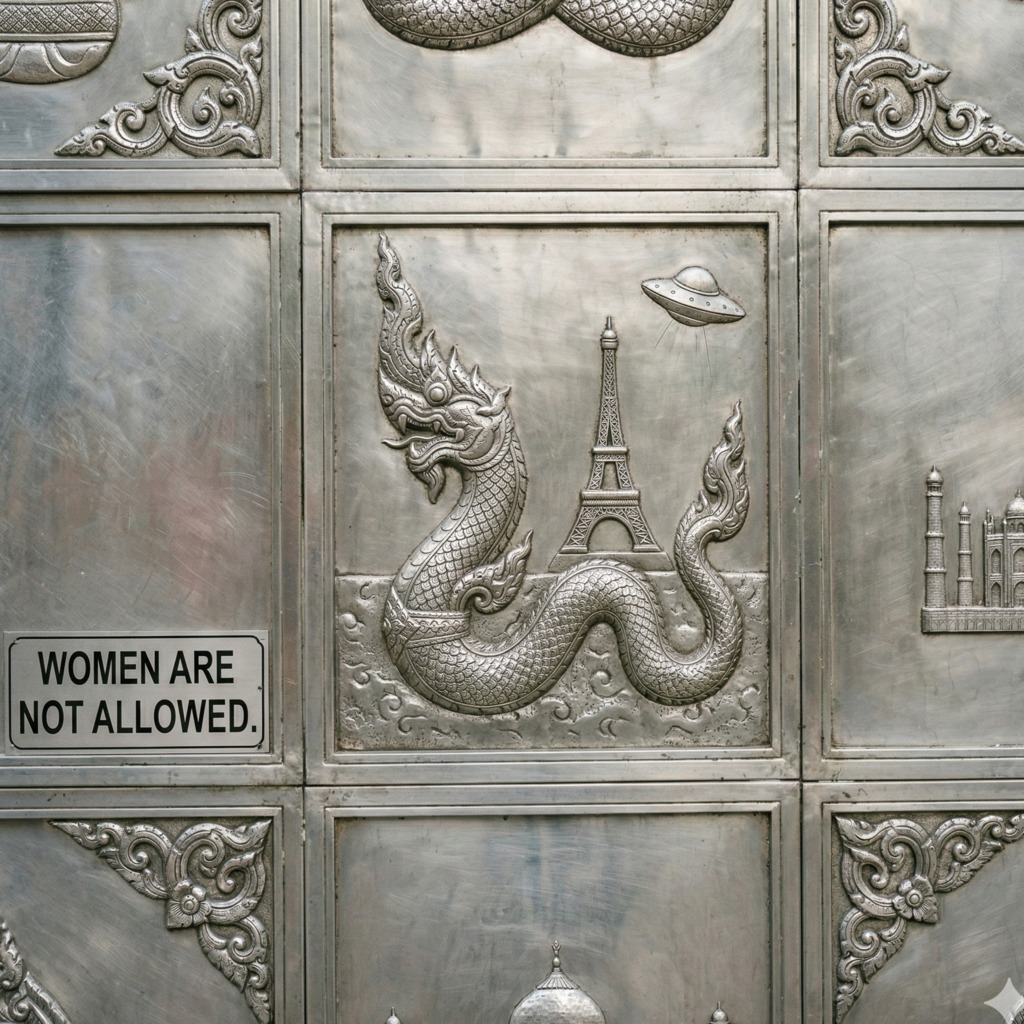
A sign at the entrance carries a strict warning. “Women are not allowed to enter the ordination hall.” This rule stems from ancient Lanna spiritual geography. The hall sits on a “holy site” with buried sacred objects. Local tradition holds that the female presence disturbs these “Ley Lines.” While some find this controversial, the Wualai community guards it fiercely. They encourage women to admire the stunning exterior carvings instead.
The Grammar of Lanna Ornamentation
The patterns hammered into Wualai silver are not random. They form a visual language rooted in Buddhist cosmology. The most common motif is the “Lai Kanok.” This is a flowing, flame-like design. It represents the vital energy of nature. Another frequent image is the “Lotus.” It symbolises purity rising from the mud.
Artisans also carve the Twelve Zodiac Signs. In Northern Thai culture, your birth year is sacred. Each sign is associated with a specific pilgrimage temple. By carrying a silver bowl with your zodiac sign, you carry a blessing. The detail on these animals is microscopic. A master uses a “lining tool” to create fur textures. He uses a “doming punch” to create the curve of an eye. This precision turns a flat sheet into a storied heirloom.
The Silk Road and the Tribal Influence
Chiang Mai was a hub for the Ancient Tea Horse Road. Caravans from Yunnan and Tibet passed through these mountains. This trade transformed the local silver style.
The Karen people live in the Northern highlands. They are legendary silversmiths. They favor 99% pure silver. Their designs are chunky and bold. Wualai Smiths blended these tribal motifs with courtly Lanna patterns. This created the “Chiang Mai style” known today. It features intricate floral scrolls and heavy geometric borders.
For the hill tribes, silver was a portable bank account. A woman’s dowry was often worn as heavy torque necklaces. This “high-grade” silver is whiter and softer than Sterling. It feels warm against the skin.
The Monk-Artisans of the Forge
At Wat Sri Suphan, the monks are also smiths. They view manual labour as “Vipassana in motion.” It is a form of active meditation. This prevents the mind from wandering.
The Legend of the Hidden Buddha
There is a story from the Burmese-Siamese wars. Villagers feared their treasures would be looted. They covered their solid silver statues in black lacquer. They made them look like worthless wood. Decades later, a monk dropped a “wooden” statue. The lacquer cracked. Sunlight hit the metal underneath. It blinded the monk for a moment. They had been praying to a silver god for fifty years. This story reinforces the Lanna concept of “inner worth.” The beauty is hidden beneath the surface.
The Evolution of the Wualai Economy
The district has survived many economic shifts. In the early 20th century, silver was a currency. People traded rice and cattle for heavy silver bars. Later, the tourist boom of the 1970s changed the focus. The smiths began making smaller, lighter items. They created rings and earrings for the international market.
Today, the community faces a new challenge. Young people are moving into the tech sector. To counter this, the “Ancient Silver Arts Study Centre” was formed at the temple. It provides free training to anyone willing to learn. This initiative has saved the craft from extinction. It bridges the gap between traditional apprenticeship and modern vocational education.
The Saturday Transformation
Every Saturday, Wualai Road closes to cars. It becomes the Saturday Walking Street. This is the best time to hear the hammers. You can watch the master’s work in the temple courtyard. You can also try a “DIY” class. For two hours, you can hammer your own pendant. Most tourists leave with a simple star. But they also leave with a new respect for the craft.
How to Spot the Real Thing
The market is full of “silver,” but quality varies. Experts at the temple give three tips:
Wualai Silver District into the Digital Age
Chiang Mai is changing. High-rise condos now line the Ping River. Digital nomads fill the local cafes. Yet, in Wualai, the old world persists. The silver is a bridge across time. It connects 13th-century kings to modern travellers. It proves that some things are worth doing slowly.
As long as the hammers ring, the Lanna heart beats. The silver of the North is not just metal. It is memory made solid. It is the shimmering soul of Chiang Mai.
Wualai Silver District FAQs
What makes Wualai the official silver district of Chiang Mai?
Wualai’s identity as a craft enclave dates back over 200 years to the reign of King Kawila. During the “Put Phak Sai Khon” era (repopulating the city), elite silversmiths were brought from the Shan State and the Salween River regions to settle just outside the city’s southern walls. This concentration of skill transformed the district into a hereditary archive of repoussé and chasing techniques that are still practised in family ateliers today.
Can women enter the “Silver Temple” (Wat Srisuphan)?
No. While the exterior of the Silver Ubosot is a public masterpiece of metalwork, women are strictly prohibited from entering the interior. According to ancient Lanna belief, holy objects and amulets are buried beneath the ordination hall’s base; entering would supposedly deteriorate the spiritual sanctity of the site or the well-being of the visitor. However, the external silver-plated panels—depicting everything from Buddhist mythology to modern world landmarks—are accessible to all.
Is the temple actually made of solid silver?
While it is commonly called the “Silver Temple,” the structure is a technical synthesis. The most sacred images are often cast in pure silver, but the majority of the decorative wall panels and roof tiles are crafted from aluminium and nickel alloys. This “industrial remix” ensures the structure can withstand the tropical climate while still showcasing the high-relief artistry of the Wualai smiths.
What is the best time to visit for a “Slow Travel” experience?
To avoid the chaotic crowds of the Saturday Walking Street, visit on a weekday morning. Between 9:00 AM and 11:00 AM, the district is at its most atmospheric. You can hear the rhythmic, metallic tink-tink-tink of hammers hitting chisels echoing from the small workshops in the side-lanes (Sois). On Tuesday, Thursday, and Saturday evenings, Wat Srisuphan also hosts “Monk Chats” and meditation sessions for those seeking a spiritual connection.
Are there opportunities to learn the craft from a Master?
Yes. The Ancient Lanna Arts Study Centre (Sala Sip Mu Lanna), located within the grounds of Wat Srisuphan, offers short workshops in metal engraving. For a more intensive “High-Intent” experience, you can book half-day or full-day sessions where local masters teach you the basics of silver relief, allowing you to create your own small piece of Lanna history to take home.