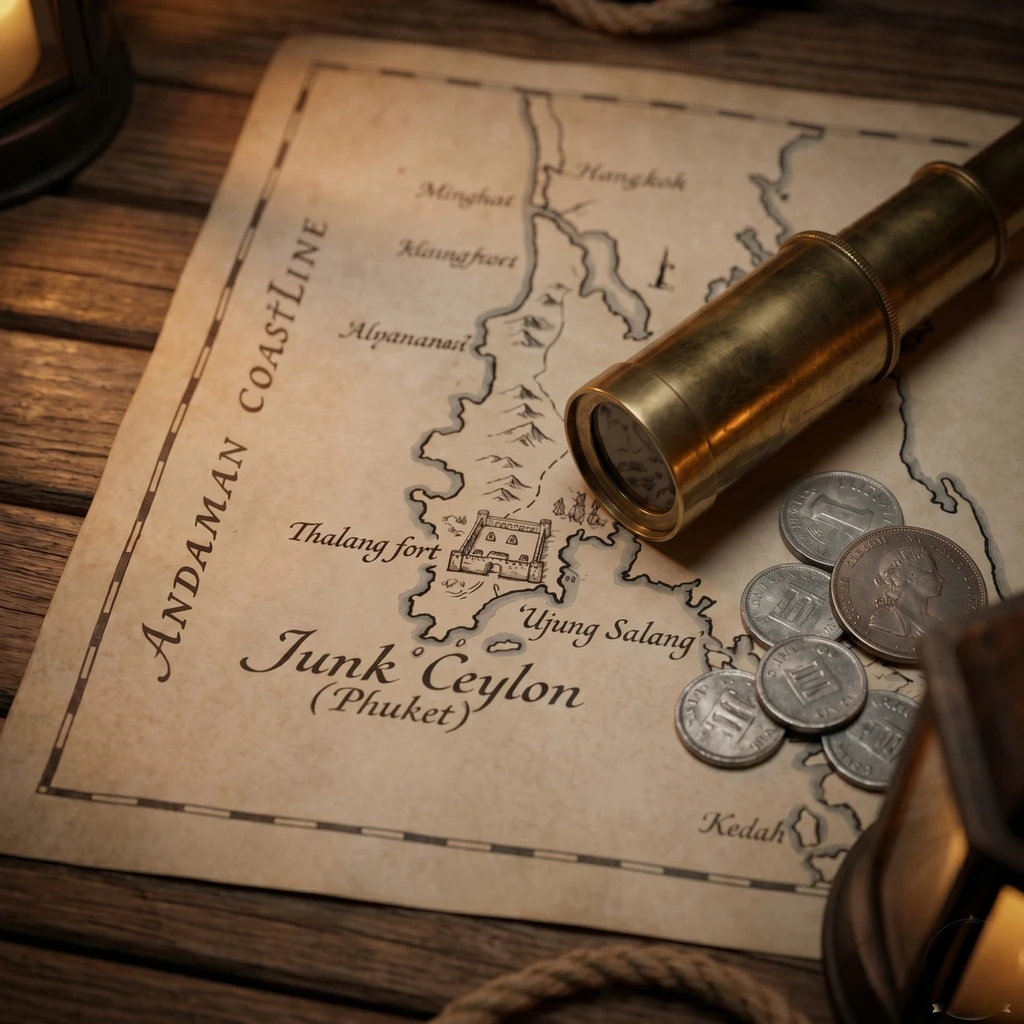

If you look at the modern marketing machine for Phuket, you are relentlessly fed a single, glossy script: beach clubs, pristine yachts, luxury villas, and the desperate ambition to be the “St. Tropez of Thailand.”
Welcome to Banalistan.
Banalistan is that figurative, uninspired place where all destination marketing goes to die. It’s where unique cultural landscapes are flattened into copy-pasted adjectives like “sun-drenched paradise,” “breathtaking vistas,” and “luxury lifestyle.”
When we rely on the Banalistan playbook, we strip a place of its soul, turning complex islands into interchangeable backdrops for generic tourism.
But if you look past the infinity pools, Phuket has an entirely different identity—one forged in the mud, tin mines, and high-stakes geopolitics of the Andaman Sea.
To tell a story that actually commands attention, you don’t pitch the beach. You pitch the grit. Let’s look at how a real story transforms a destination.
The Geopolitical Powder Keg: Siam on the Brink
Long before it was Phuket, sea captains and European traders knew this rugged, rain-soaked landmass as Junk Ceylon (a corruption of the Malay Ujung Salang, meaning “Salang Cape”).
It wasn’t a place for sunbathing; it was a rough, lucrative wild west of tin mining, deeply intertwined with the maritime trade networks of Northern Malaya, Kedah, and the early foundations of Penang.
The year was 1785, and the stakes could not have been higher.
Siam (Thailand) was utterly exhausted. The country had spent the last two decades bleeding out, fighting for its survival after the cataclysmic fall of Ayutthaya in 1767. A new capital had just been established in Bangkok, but the kingdom was weary, fractured, and militarily spent.
Sensing absolute vulnerability, King Bodawpaya of Burma launched the Nine Armies War – a massive, multi-pronged invasion designed to permanently crush Siam.
One of those prongs was a formidable naval fleet sailing straight down the Andaman coast. Their target? Junk Ceylon. If they captured the island, they would seize its immense tin reserves, control the regional trade routes, and choke off Siam’s southern supply lines.
To make matters worse, the island’s governor had just died. Junk Ceylon was leaderless, outgunned, completely isolated from Bangkok, and staring down total annihilation.
Enter Lady Muck and the Smuggled Muskets
Enter our protagonist: Than Phu Ying Chan.
Than Phu Ying essentially translates to “High-Born Lady,” but given her later aristocratic status and commanding nature, you could affectionately call her “Lady Muck” of the tin coast. She wasn’t lounging in a resort; she was a hardened political operator navigating the brutal, chaotic realities of the late 18th century.
Chan knew Bangkok wasn’t coming to save them. Survival required looking south, deep into the networks of Northern Malaya.
Chan’s secret weapon was an intimate business alliance with Francis Light, the legendary English country trader who was actively plotting the British East India Company’s acquisition of Penang from the Sultan of Kedah. Light and Chan were old trade partners who spoke the same language of commerce, tin, and survival.
Recognising the Burmese troop movements from his vantage point further south in the Straits, Light did two things that changed the course of Southeast Asian history:
The Phantom Garrison
Armed with Light’s intelligence and a fresh shipment of British firearms, Lady Muck and her sister didn’t flee. They took control.
With no regular Siamese army at her disposal, Chan improvised. She gathered the remaining local women, dressed them in men’s traditional sarongs, cropped their hair short into military styles, and marched them day and night along the ramparts of the Thalang fort, carrying painted bamboo sticks alongside Light’s muskets.
From the bay, the Burmese scouts saw an island fortified by what appeared to be a massive, tireless garrison. After a gruelling one-month siege – depleted of food, psychologically outmaneuvered by a phantom army of women, and taking fire from actual muskets – the Burmese fleet withdrew.
King Rama I later awarded Chan and her sister the noble titles of Thao Thep Krasattri and Thao Sri Sunthon. They didn’t just save an island; they protected the back door of a vulnerable, rebuilding empire.
The Destination Marketing Takeaway
When we tell stories through the lens of Banalistan, we sell a commodity. When we tell stories through the lens of history, geopolitics, and human grit, we sell provenance.
The next time you market a place, a product, or a brand, ask yourself: Am I writing a brochure for Banalistan, or am I uncovering the mud, steel, and gunpowder that made the place real?