Key Insights
The Core Objective: An independent strategic audit of Chiang Mai’s official bid for UNESCO World Heritage status, evaluating the balance between urban modernisation and heritage conservation.
The Spatial Scope: The dossier assesses the 2,800-word conservation framework governing the ancient Moated City Core, its protective Buffer Zones, and surrounding historic wiangs (fortified settlements).
Key Preservation Challenges: Managing Tourism Carrying Capacity (TCC) in living neighbourhoods, mitigating overtourism, and establishing institutional guidelines for the adaptive reuse of historic Lanna structures.
The Verdict: Chiang Mai’s inscription hinges on a shift from passive monument protection to an active, community-led “Living Heritage Site” model that legally protects local craftsmanship guilds and ancestral spatial zoning.
Geo-Cultural & Spatial Frameworks
The Living Heritage Site (LHS) Concept: A UNESCO classification framework where a historical site is not treated as an unpopulated archaeological ruin, but as a dynamic, evolving urban ecosystem where traditional communities actively live, work, and maintain continuous cultural practices within the protected zone.
Intangible Cultural Heritage (ICH): The living traditions, oral histories, performing arts, social practices, rituals, and traditional craftsmanship inherited from ancestors. In Chiang Mai’s bid, this covers everything from the Yam Khang (fire massage) to the seasonal execution of Northern Thai culinary rituals.
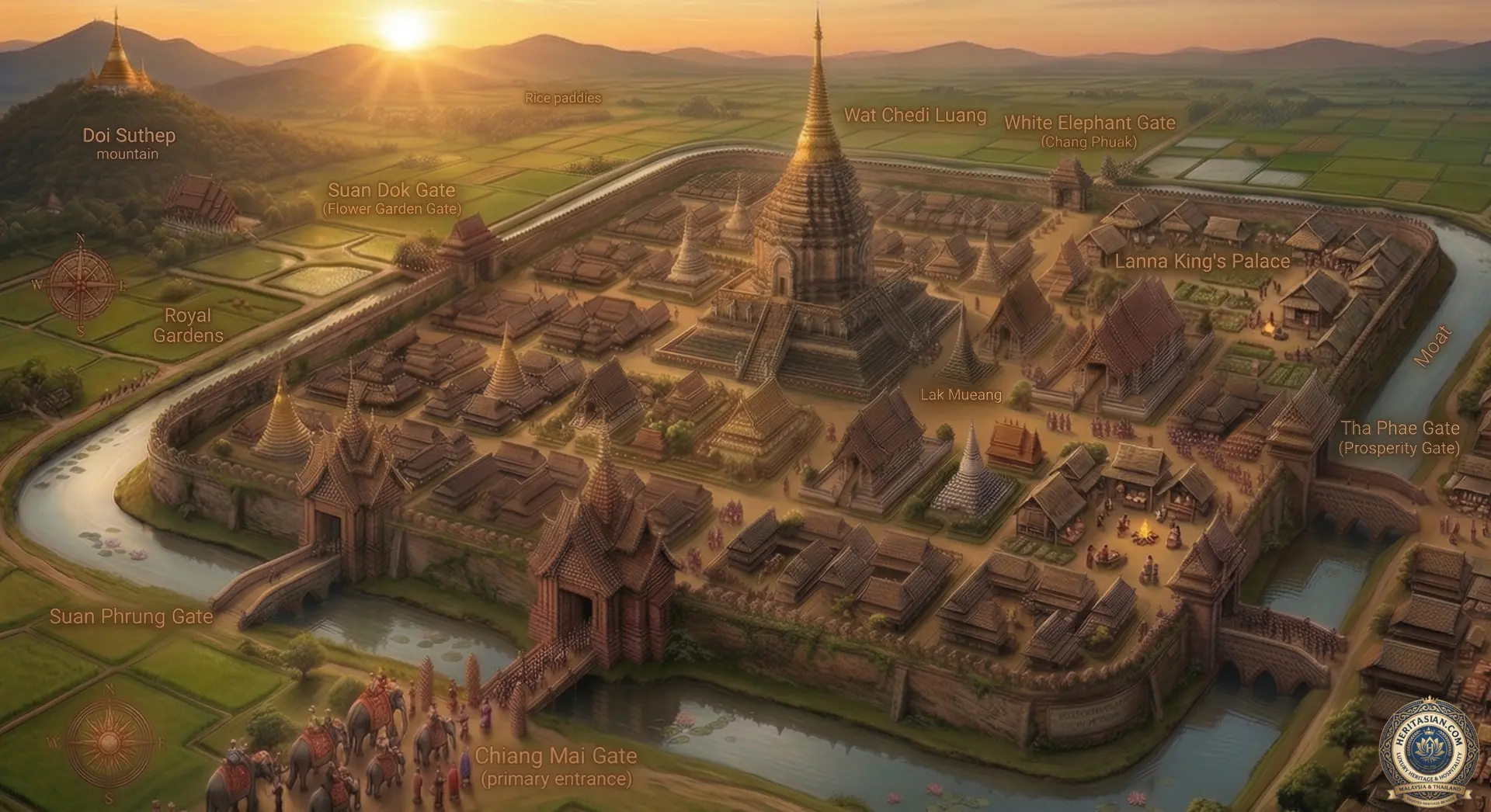
Moated City Core: The geometric, square-shaped historical heart of Chiang Mai, defined by its 13th-century brick walls, bastions, and defensive moat. This area serves as the primary spatial boundary for urban heritage preservation.
Buffer Zone: A strictly regulated perimeter wrapping around the core heritage site. It acts as a legal shield to prevent aggressive modern real estate development, high-rise construction, and visual pollution from encroaching on the historical silhouette of the ancient city.
Lanna Architectural & Spatial Geometry
Wiang: The traditional Northern Thai term for a fortified, walled settlement or city. In the Lanna context, a wiang is strategically situated near water sources and sacred peaks to align with traditional cosmological geography.
Kalae: The iconic, crossed V-shaped wooden roof gables characteristic of traditional northern aristocrats. Spiritually, they function as protective symbols; structurally, they act as stabilising anchors against the high winds of pre-monsoon storms.
Hong Phra: The dedicated Buddha room or elevated sacred altar zone situated at the absolute centre or highest point of a Lanna manor, acting as the spiritual spine of the entire domestic space.
Chedi: A Buddhist stupa or relic monument. In Chiang Mai’s historic core, the architectural evolution of the chedi (from classic bell-shaped designs to layered Lanna spires) documents centuries of regional diplomacy, trade, and religious exchange with neighbouring kingdoms.
Preservation, Policy & Risk Management
OUV (Outstanding Universal Value): The foundational benchmark required for any UNESCO World Heritage inscription. To qualify, a site’s cultural significance must be so exceptional that it transcends national boundaries and holds vital importance for humanity as a whole.
Integrity and Authenticity: The dual pillars of a UNESCO evaluation. Integrity measures whether the physical boundaries and historic structures are whole and undamaged; authenticity evaluates whether the building materials, traditional craftsmanship techniques, and cultural expressions genuinely reflect the historical era without modern fabrication.
Tourism Carrying Capacity (TCC): The maximum level of visitor traffic an urban heritage zone can sustain without triggering irreversible damage to the physical monuments, disrupting the lives of residents, or diluting the authentic visitor experience.
Overtourism Mitigation: The strategic deployment of policy tools—such as timed entry, pedestrianisation of historic corridors, and decentralised neighbourhood routing—designed to spread tourist foot traffic and protect delicate historical fabrics from wear and tear.
Craftsmanship, Provenance & Ritual Economy
Lanna Silverware & Hammered Metalwork: A traditional, highly specialised metallurgy craft localised in historic quarters like the Wua Lai neighbourhood. This generational artisan economy is vital to the bid, proving that the city’s historical trade guilds remain economically viable today.
Sa Paper (Saa): A traditional, sustainably harvested mulberry bark paper utilised for centuries in Lanna manuscript production and ceremonial umbrella crafting, representing a continuous line of indigenous organic material processing.
Monastery-Led Conservation: A traditional, localized heritage stewardship model where Buddhist monks act as the primary custodians of historical structures, working directly with local communities to handle minor repairs using ancestral materials rather than relying on centralised state bureaus.
The nomination of “Chiang Mai, Capital of Lanna” to the UNESCO World Heritage Centre represents a landmark shift from static historical preservation to a dynamic, living heritage model. Officially submitted in January 2026, this 383-rai (151-acre) serial nomination tests whether a thriving modern capital can preserve its 700-year-old soul without displacing the communities that animate it. This hub tracks the real-time status, core geographic pillars, and institutional milestones of Chiang Mai’s historic 2026 bid.
I. The “Live” Status
Chiang Mai 2026: The UNESCO World Heritage Bid Hub
Your essential guide to the “Capital of Lanna” nomination—from the June inspection to the final November decision.
The 2026 Roadmap
- January 30: Official Nomination Dossier Submitted (✅ COMPLETE)
- March – May: City Beautification & Public Awareness (🚀 IN PROGRESS)
- June: ICOMOS Technical Site Inspection (⏳ UPCOMING)
- November: Final Decision at the World Heritage Committee Meeting (🏁 THE GOAL)
Expert Insight: This bid is unique because it is a “Living Heritage” nomination. Unlike Ayutthaya, Chiang Mai is being judged on how our modern, bustling city preserves its 700-year-old soul while people still live and work here.
II. The Core Geography: Three Pillars of Lanna
The 383-rai (151-acre) UNESCO nomination isn’t a single block. A three-part serial nomination mapping the Lanna Kingdom’s spiritual and political evolution through its distinct geography.
Component 1: The Fortified Centre & Royal Foundations
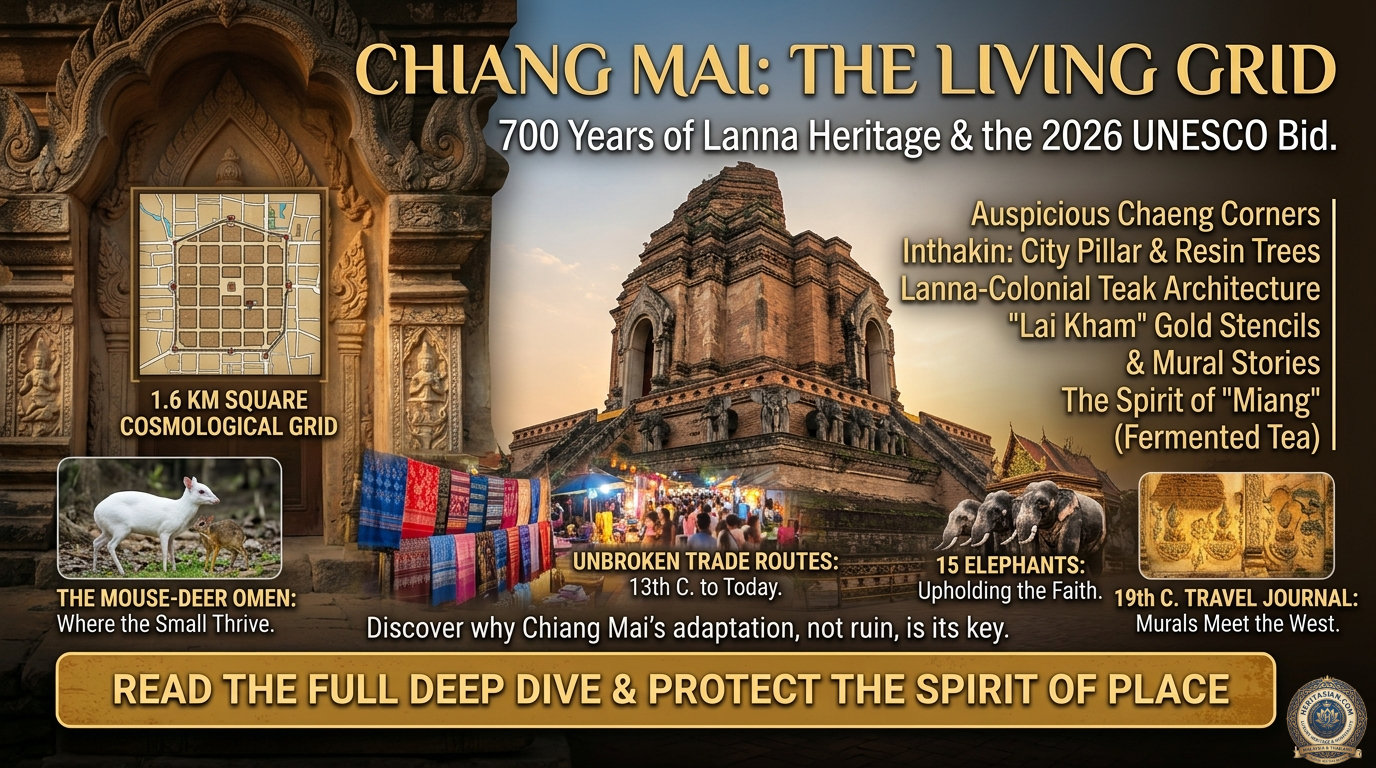
This is the heart of the “Capital of Lanna.” It focuses on the urban planning that King Mangrai used to symbolise a human figure in harmony with the cosmos.
Component 2: The Sacred Axis (The Mountain)
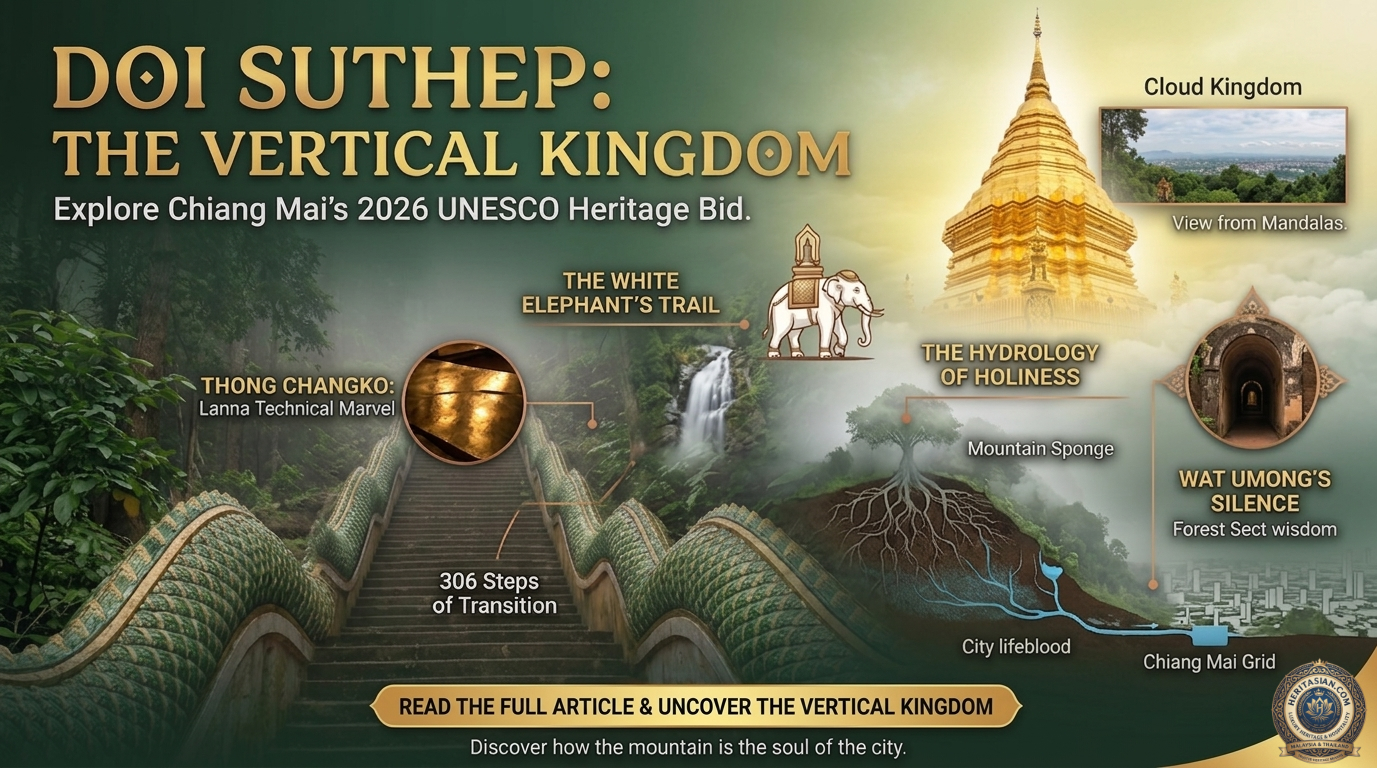
Component 2: Doi Suthep — The Vertical Kingdom
This component represents the vital relationship between the man-made “Living Grid” of the city and the wild, sacred highlands. It illustrates the concept of a “Cultural Landscape” through three primary spiritual and ecological anchors:
Component 3: The Global Council Site
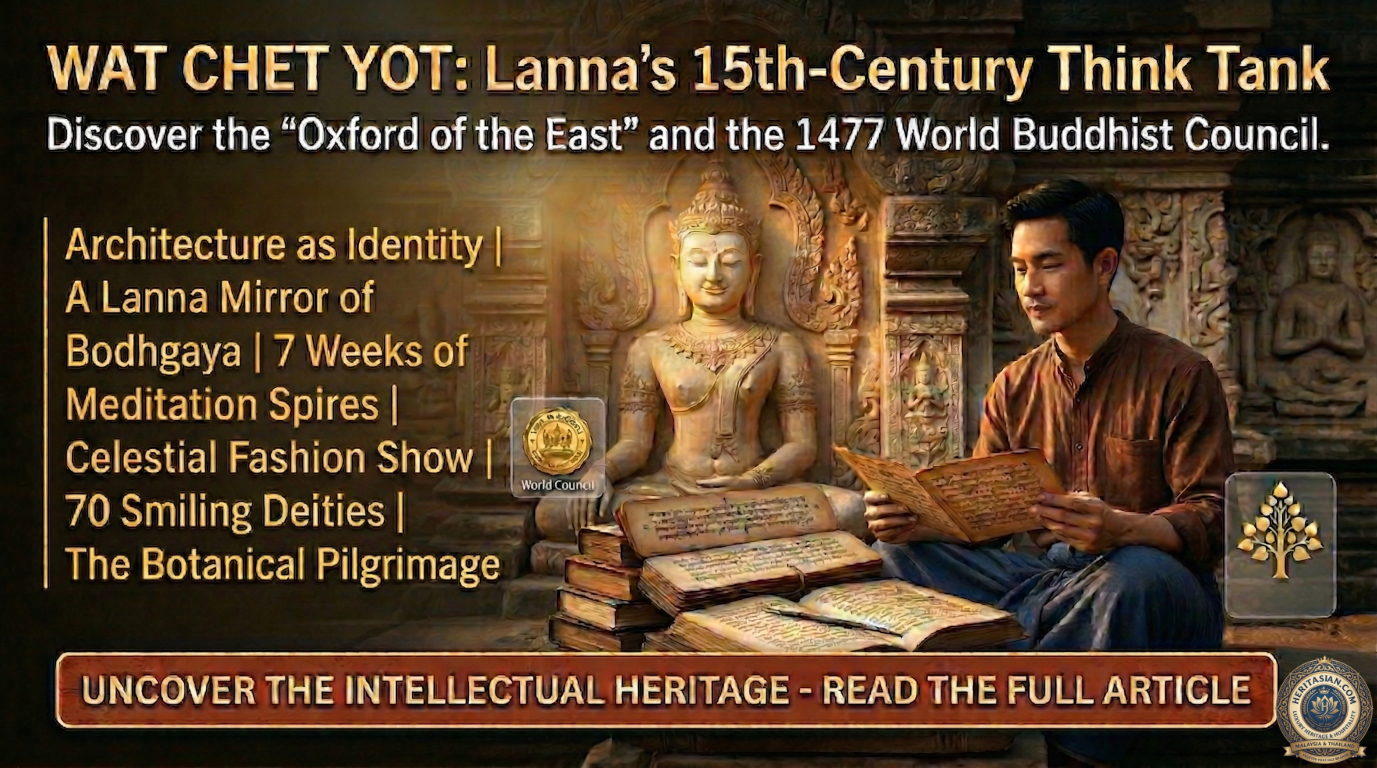
This is the most specialised part of the bid, proving that Chiang Mai was a centre of global influence.
III. The “Myth vs. Reality” Matrix
| The Myth | The UNESCO Reality |
| “I won’t be allowed to paint or renovate my Old City shop-house.” | False. The 2024–2028 Management Plan encourages “Living Heritage.” You can renovate, but you must follow “Lanna-sensitive” aesthetic guidelines to protect the city’s character. |
| “UNESCO status will make Chiang Mai too expensive for locals.” | Contextual. While property values often rise, the goal is to shift from “mass tourism” to “high-value cultural tourism,” which typically brings more stable, long-term income to local businesses. |
| “The decision is already made because we submitted the paperwork.” | False. The June inspection by ICOMOS is the “make or break” moment. They are coming to see if the city actually looks and acts like a heritage site in real life. |
The June 2026 Inspection: What to Expect
In June, a team from ICOMOS (UNESCO’s technical advisors) will arrive for a week-long site visit. They aren’t just looking at temples; they’re looking at our management.
Related Posts