
Key Insights
The Baba Nyonya, or Peranakan, are a unique cultural hybrid born from the union of early Chinese settlers and local Malay communities. This “Straits Chinese” identity is celebrated for its opulent architecture, intricate beadwork, and world-renowned fusion cuisine.
It represents a refined synthesis of global trade influences and deep-rooted Southeast Asian traditions.
Explore the complete Evolution of a Shophouse topic.
Peranakan Typology: A distinct socio-cultural identity blueprint that emerged in the Straits Settlements when waves of male Chinese traders married local indigenous women, creating an elite, highly formalised creole society.
Syncretic Hegemony: A cultural dominance strategy where Peranakan elites seamlessly combined Southern Chinese ancestral rites, local Malay language and cuisine, and British colonial political status to secure maximum commercial influence.
The Ancestral Hall (Chia-Thng): The architectural and spiritual command centre of a grand Baba Nyonya mansion, strictly arranged symmetrically to house ancestor tablets and enforce rigid patriarchal Confucian lineages.
Nyonya Needlework: A high-status domestic art form utilising microscopic glass seed beads (manek-manek) imported from Europe, hand-stitched by elite women onto shoes and bags to display marital readiness and familial wealth.
Encaustic Tiling: The widespread structural practice of embedding imported geometric European clay tiles onto interior airwell floors and outdoor veranda walls, functioning as an expensive, durable status symbol.
Nyonyaware Porcelain: A specialised category of custom-commissioned ceramic dinnerware manufactured in Jingdezhen, China, featuring vibrant, non-traditional colour palettes like turquoise and pink paired with phoenix and peony motifs.
The 19th-century Melaka morning air was thick with an alchemy of fermented shrimp paste, indigenous herbs, and sea salt. Observing a Peranakan Baba patriarch during this colonial era was to witness a masterclass in regional cultural diplomacy.
He might spend his mornings in a velvet-draped commercial office negotiating rubber futures or maritime shipping contracts in fluent English. Later, he returned to a traditional courtyard shophouse where ancestral joss sticks burned before gilded Ming-style altars.
This lifestyle represented a curated “Third Space” – a creolised identity that was neither purely Chinese, nor Malay, nor British, but a highly sophisticated synthesis of all three. For modern heritage travellers, this Baba Nyonya cultural legacy represents a historical blueprint for high-status hybridity, urban architectural preservation, and deep-rooted provenance along the historic Straits of Malacca.
The Genesis: Alchemy on the Straits
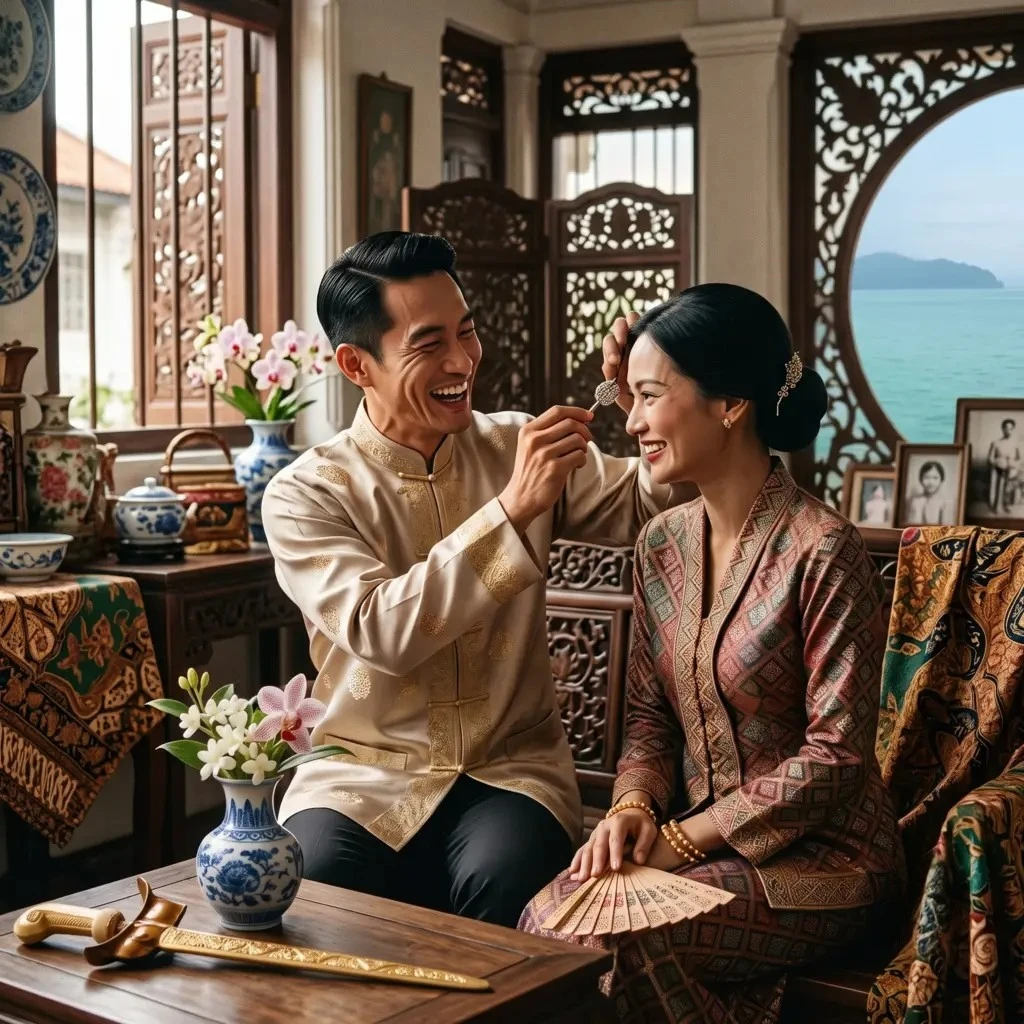
The origin of Creole Cultures of Malaysia is rooted in maritime ambitions. For the Peranakan Chinese, it was the Ming Dynasty. When Admiral Zheng He’s colossal treasure ships dropped anchor in Melaka in the early 15th century, they brought more than silk and porcelain; they brought the DNA of a new civilisation.
Legend tells of Princess Hang Li Po, sent by the Ming Emperor to marry the Sultan of Melaka. While historians debate her literal existence, the anecdote represents the “Great Merging” – the marriage of Chinese capital and Malay political legitimacy. These early Hokkien merchants adapted to the local environment, adopting the Malay language and dress while maintaining their ancestral religious rites.
By the time the British established the Straits Settlements, the Peranakans were already an established elite. They possessed a local knowledge that the Europeans could not replicate. They also held a sophisticated provenance that newly arrived Sinkheh immigrants from China envied.
The “King’s Chinese”: Navigating the Imperial Order
Under British rule, the Peranakans occupied a unique social layer, becoming known as the “King’s Chinese”. They were the definitive bridge-builders of the era.
In cities like Georgetown and Singapore, the Baba elite established prestigious gentlemen’s clubs and sent their sons to study law and medicine in London. Yet, this Westernisation was always balanced by a fierce preservation of their roots. A Baba might wear a three-piece Victorian suit to a meeting at the cricket club, but he would return home to a dinner eaten with his hands in the traditional Malay fashion.
This political savvy allowed them to occupy a unique social layer. Neither the British nor the local Malays could fully inhabit this space. They became the indispensable middlemen, navigating the “Intellectual Airlock.”
This bridge connected European colonial policy and Asian mercantile reality. By the turn of the century, they were the most powerful economic force in the region. They sat atop fortunes built on tin, rubber, and the savvy translation of two worlds.
The Alchemy of the Kasut Manek and Textile Engineering
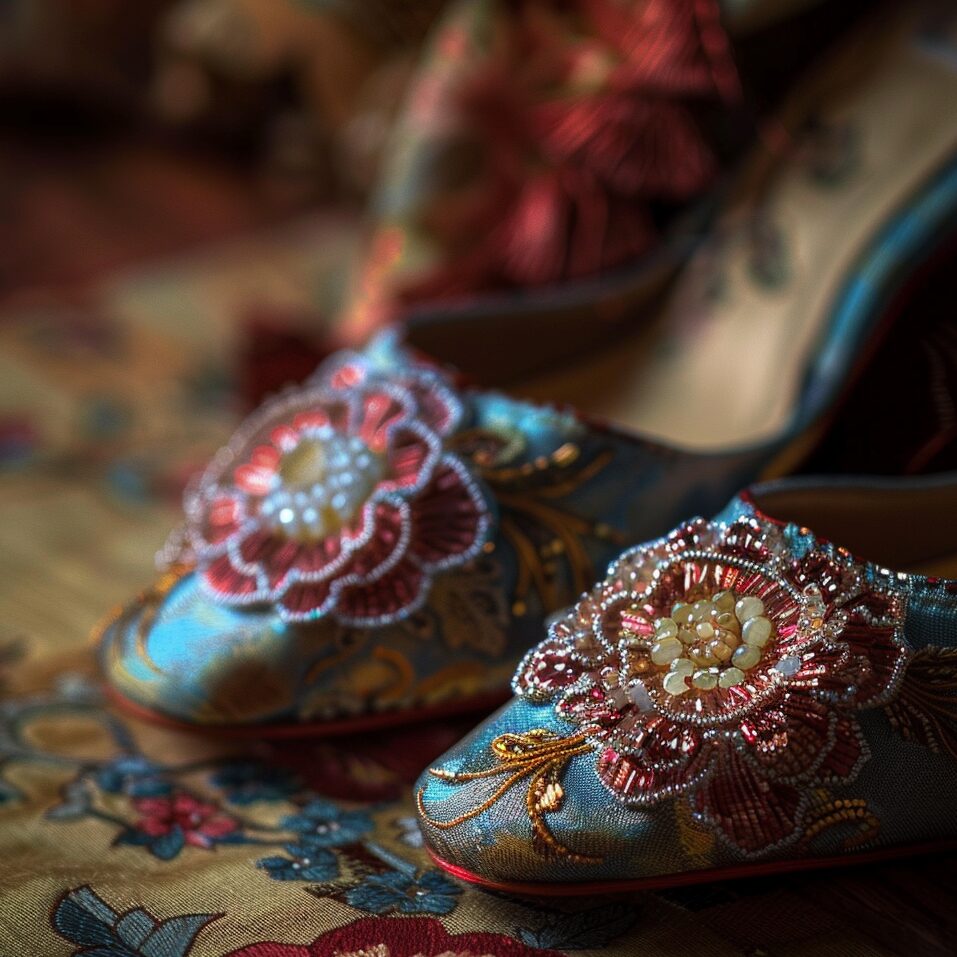
In the Peranakan context, the term “luxury” is synonymous with the technical mastery of craft that defined the Nyonya (the women of the community). Perhaps no object embodies this better than the Kasut Manek, or beaded shoes. They are a vestige of a time when patience was the ultimate status symbol.
The Anatomy of the Straits Eclectic
The Straits Eclectic Chinese Mansion architectural style is the physical manifestation of the Peranakan mind. Governed by colonial property taxes based on street frontage, these terrace houses evolved into a “long-house” format that stretched deep into the block.
Internal courtyards acted as the “lungs” of the house, creating a thermal chimney effect that pulled cool air through the ground floor while allowing tropical rains to fall into a central pool. According to Feng Shui principles, this was more than engineering; it was a way to trap wealth (water) within the sanctuary of the home.
Life in a grand Peranakan mansion was a dance of visibility and secrecy. In the upper floors of mansions like the Pinang Peranakan Mansion, small circular holes were cut into the floorboards. These allowed the Nyonyas – who were often kept away from public view during formal business meetings – to scrutinise visitors in the hall below. They were assessing the social standing and suitability of guests long before a word was ever exchanged.
Baba Malay: The Linguistic Third Space
To understand the Baba Nyonya, one must also listen to them. They created a linguistic “Third Space” called Baba Malay, a creole that blended Malay grammar with Hokkien loanwords.
This language was born of necessity and refined into a social filter. To hear a Nyonya speak was to hear a poem of hybridity. She might use Malay verbs for Chinese rituals, punctuated by British loanwords for furniture.
This language acted as a secret code for the community. Neither the “Sinkheh” Chinese nor British administrators could fully decode its nuance. It was the ultimate intellectual luxury – a bespoke language for a bespoke people.
The Culinary Paradox: Mastery Over Danger
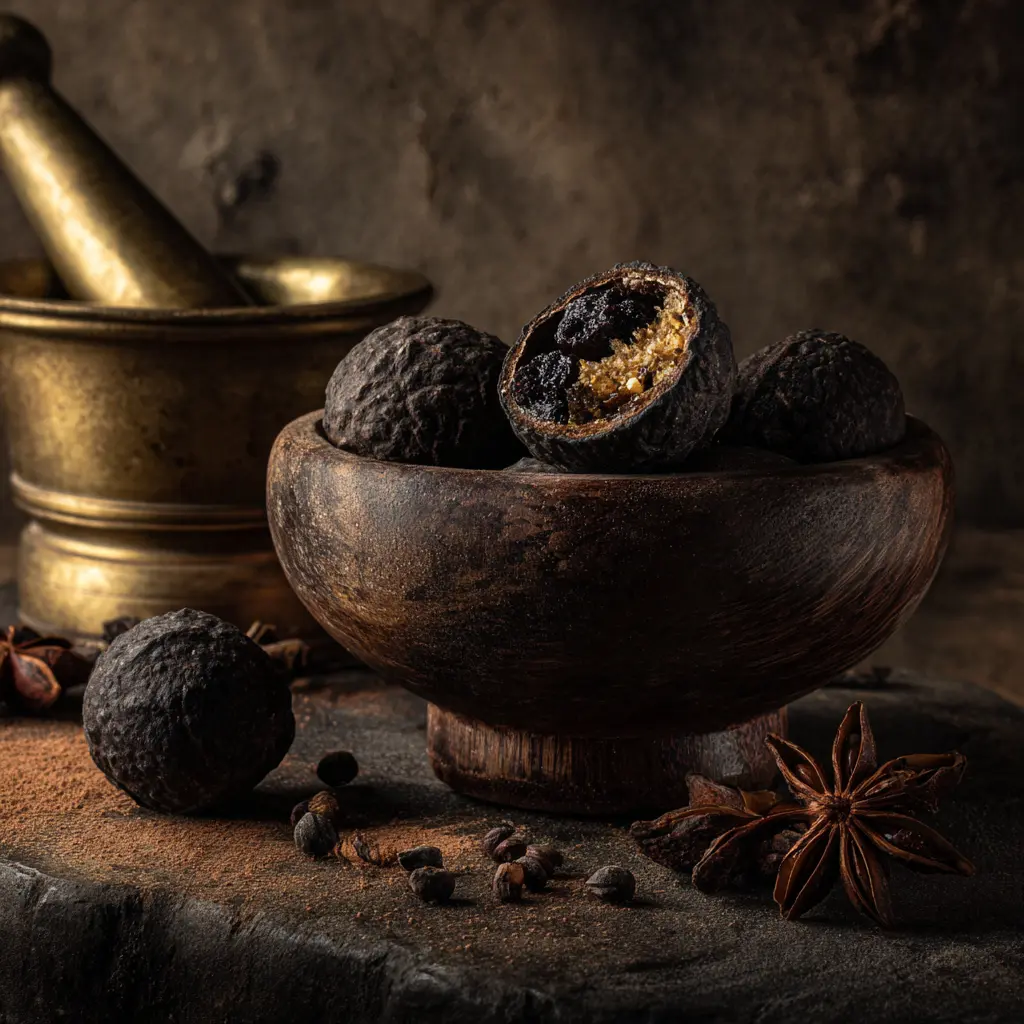
Nyonya cuisine should be viewed through the lens of culinary science rather than simple recipes. It is a slow-food movement born from the spice ports, where time was the primary currency.
The Semiotics of the Table
While the Tok Panjang provided the stage, the Nyonyaware (Peranakan porcelain) provided the visual vocabulary. Unlike mainland blue-and-white porcelain, Peranakans commissioned bespoke polychrome pieces from Jingdezhen, China. These sets featured audaciously vibrant palettes of turquoise, coral pink, and canary yellow.
This was a semiotic signal; the frequent phoenix and peony motifs represented the Nyonya herself. She was resilient, beautiful, and the heart of the home. For the modern heritage conservator, these porcelain sets represent a “Total Brand” approach. Every element of life was part of a unified aesthetic of high-status hybridity.
Case Study: The Blue Mansion and Seven Terraces
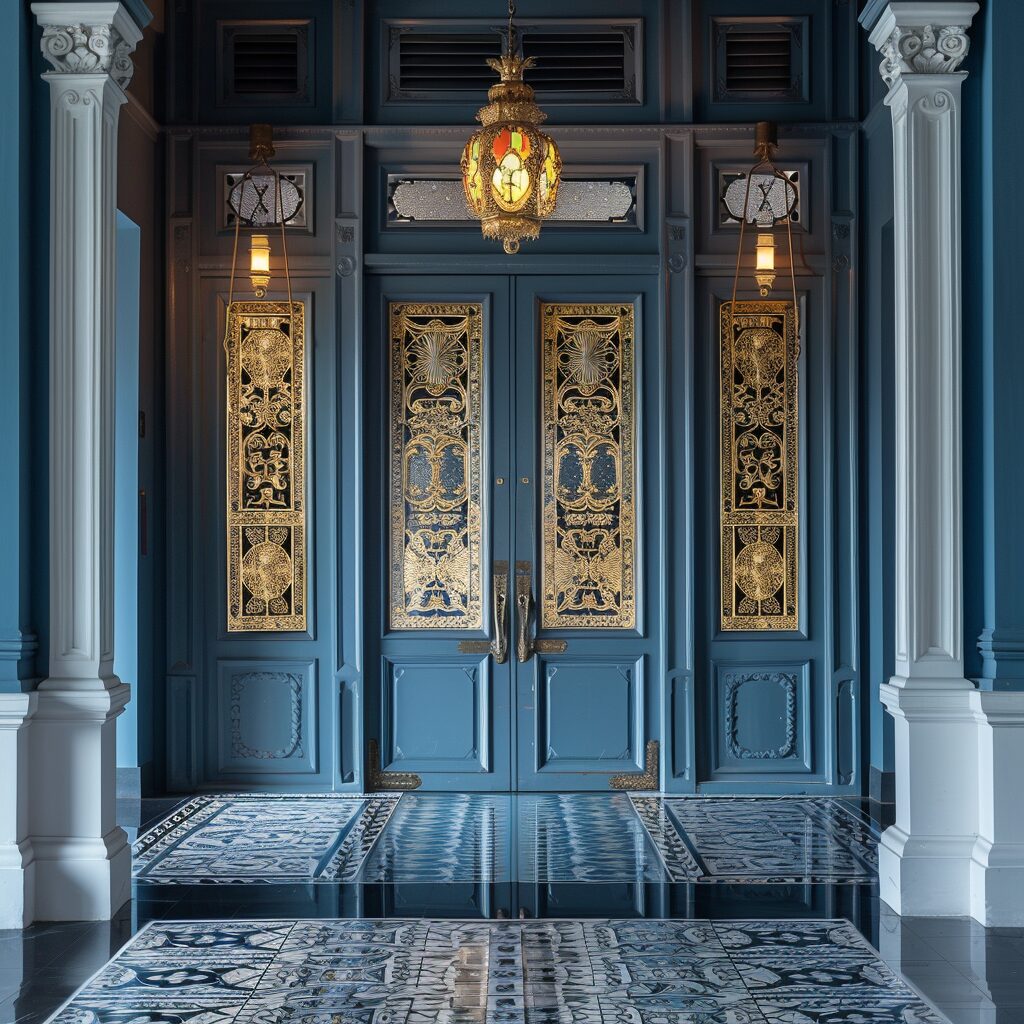
In the modern context, the Cheong Fatt Tze Mansion and Seven Terraces in Georgetown are successful heritage conservation case studies. These sites adhere strictly to the ICOMOS Nara Document on Authenticity. Restoration work utilises original materials like teak, lime, and terracotta. The projects avoid modern synthetic substitutes to maintain historical integrity.
For the investor, this represents a pivot toward “Archival Integrity”. The value is found in the tactile history that cannot be replicated in a new-build luxury project. These buildings offer a “Golden Age” experience that the modern, discerning traveller increasingly demands – one where the patina of the walls tells a deeper story than any modern five-star suite.
The Heritasian Verdict
The emergence of the Peranakan Chinese was a deliberate architectural and cultural achievement. They proved that one could adopt the tools of the West—the English language, the Scottish ironwork, the Victorian furniture—without ever losing the soul of the East.
Their story reminds us that authenticity is about the honesty with which we curate our various influences. The Baba Nyonya legacy teaches us that the most enduring luxury is the unique, hybrid story we choose to tell through our craftsmanship, our homes, and our hospitality.