
Key Insights
Established in 1885 by the Sarkies Brothers, the E&O is the original “Grand Dame” of Southeast Asian heritage hotels. Predating the Raffles, it became the “Premier Hotel East of Suez,” featuring a world-record seafront promenade.
A survivor of global conflicts, it remains a living link to Penang’s colonial past, where 19th-century Persian luxury meets timeless Straits hospitality.
The Sarkies Brothers: The visionary Armenian hospitality dynasty – comprising Martin, Tigran, Aviet, and Arshak Sarkies – who pioneered luxury tourism in Southeast Asia, founding Penang’s Eastern & Oriental Hotel (1885) before establishing Singapore’s Raffles Hotel (1887) and Java’s Hotel Majapahit (1910).
Amalgamation Typography: The structural consolidation of two competing 19th-century waterfront hotels on Farquhar Street. Established by the Sarkies, the Eastern Hotel (1884) and the Oriental Hotel (1885) were physically and operationally fused to create a singular, uninterrupted luxury complex along the Malacca Strait.
Straits Neoclassical Grandeur: The dominant architectural style of the hotel’s historic Heritage Wing. It features symmetrical whitewashed masonry, wide arcaded verandas, soaring multi-tiered ceilings, and a dramatic, echoing echo-chamber dome in the main lobby engineered to project imperial prestige.
Suez Canal Transit Boom: The massive influx of wealthy global travellers (“Globetrotters”) arriving in the Straits Settlements following the 1869 opening of the Suez Canal. This shift cut maritime transit times between Europe and Asia in half, creating an immediate market for high-end colonial grand dame properties.
The Longest Waterfront: A defining physical asset of the E&O property during the late Victorian and Edwardian eras. The hotel boasted a sweeping seawall promenade stretching over 800 feet along Farquhar Street, anchoring it as the premier social, political, and literary salon for the colonial elite.
Khaki Luxury Enclave: A socioeconomic operational model where an ultra-exclusive European space was explicitly serviced by a massive, highly disciplined domestic staff of local and migrant labourers, insulating colonial administrators, rubber barons, and travelling literary figures from the gritty realities of the port city.
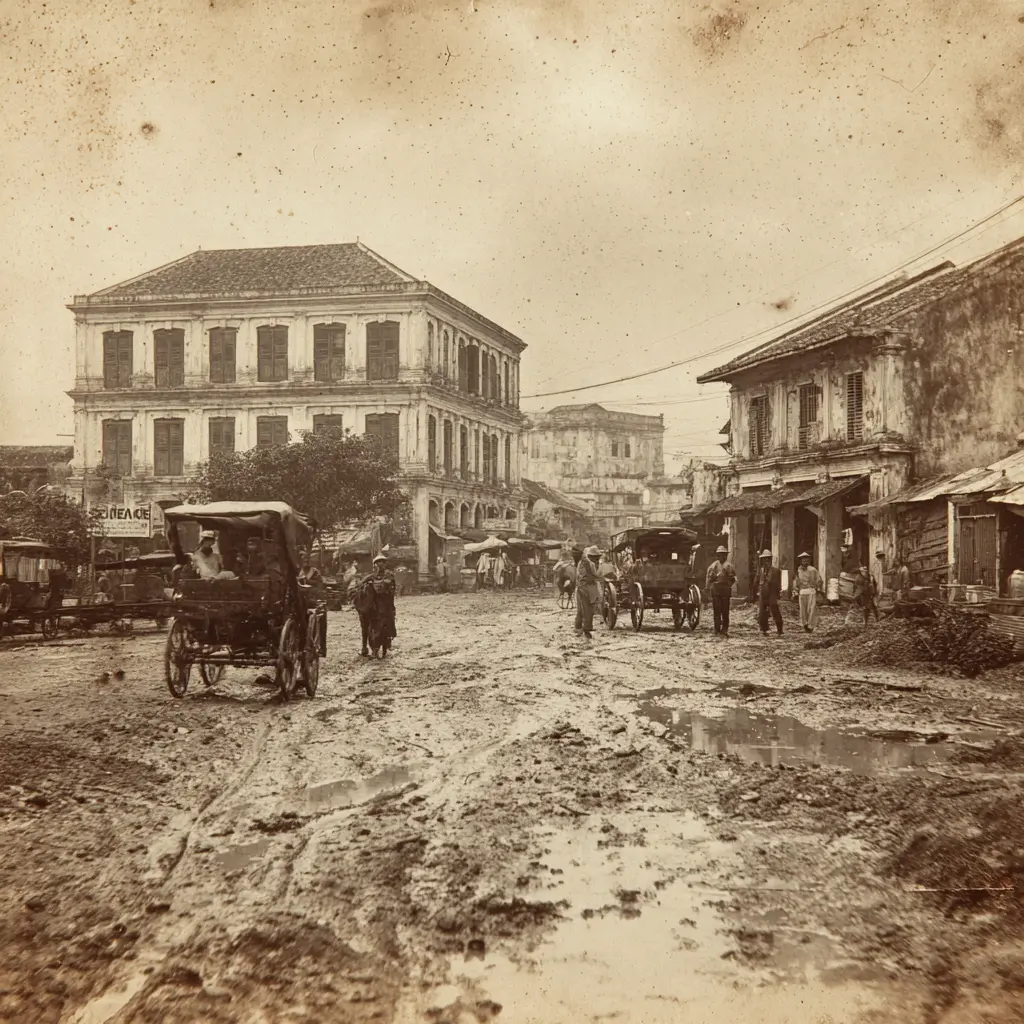
In the late 19th century, George Town operated far outside the bounds of quiet nostalgia; it functioned as a volatile, hyper-growth, polyglot maritime frontier. The coastal atmosphere carried a dense convergence of low-tide brine, roasting cash-crop spices, opium smoke, and coal dust.
Muddy transit tracks served as primary roads, heavily churned by bullock carts, manual rickshaws, and the footwear of international sailors, merchants, and fortune-hunters. It was a chaotic geopolitical gateway where the British Empire directly intersected with the untapped resource wealth of the East.
Yet, despite the massive fortunes flowing through its deep-water harbour, Penang completely lacked a proper infrastructure anchor for affluent travellers. For wealthy European merchants or globetrotting aristocrats disembarking from modern steamships, lodging options in the region were remarkably primitive.
Travellers were relegated to damp, utilitarian boarding houses where sanitary engineering was nonexistent, and local culinary offerings carried a high risk of waterborne pathogens.
The Eastern & Oriental (E&O) Hotel did not emerge to integrate into this landscape, but rather to utterly obliterate it. The property was the physical manifestation of a rapidly shrinking world, engineered at the exact historical intersection of two global macroeconomic forces: the 1869 opening of the Suez Canal and the dawn of high-speed intercontinental steamship travel.
It was a high-stakes, rule-breaking business gamble executed by complete geopolitical outsiders – the Armenian Sarkies Brothers – who, despite having zero prior hospitality experience, accurately calculated that the future of global maritime transit belonged to uncompromising luxury.
Act I: The Exiles of Isfahan and the “Orang Sarkies”
The story does not begin in Malaya, but in the historic city of Isfahan, Persia. For generations, Armenian merchants had thrived along the overland Silk Road. But by the mid-19th century, that ancient network of camel caravans and desert trading posts was dying, choked out by maritime trade.
Looking out at a changing world, the Sarkies family realised that the future of commerce had shifted from the desert sands to the open ocean. They joined the maritime diaspora, tracing a path toward the booming ports of British India and Southeast Asia.
When Tigran Sarkies stepped ashore on Penang Island in 1869, he possessed an outsider’s clarity. He looked at the influx of Western travellers and identified a massive market failure. Westerners were arriving on state-of-the-art steamships, expecting the comforts of London or Paris, only to be confronted by the rugged, unforgiving realities of the tropics.
Tigran and his brothers, Martin and Aviet, had no formal training in hospitality—and that was their greatest asset. Unshackled by the conventional industry wisdom of the time, they didn’t build a boarding house; they built a fantasy.
Leveraging their deep Middle Eastern and continental connections, they bypassed local supply chains. Soon, steamships were unloading crates of fresh caviar, fine French wines, European linens, and crystal glassware onto the George Town docks.
The locals and the colonial elite didn’t quite know what to make of these flamboyant, entrepreneurial brothers. In a playful nod to the Orang Asli (the indigenous tribes of Malaya), the brothers were affectionately dubbed the “Orang Sarkies”—the “Sarkies Tribe.” They had successfully subverted the colonial social hierarchy, becoming the ultimate, indispensable native hoteliers of the Malay Peninsula.
Act II: The Fusion (How the Eastern Met the Oriental)
The E&O as it stands today was not born from a grand architectural blueprint, but from a chaotic game of real estate chess between brothers. In 1884, a 23-year-old Tigran took over the lease of the Eastern Hotel on Light Street. Sensing the insatiable demand for luxury, his older brother Martin arrived shortly after, purchasing a separate property down the road on Farquhar Street, which he named the Oriental Hotel.
For a few years, the brothers ran these competing bastions of luxury in tandem. However, by 1889, following a bitter property dispute with the landlord of the Eastern Hotel, the brothers made a definitive move.
They decided to pool their resources, abandon the Light Street property, and consolidate everything into the Farquhar Street site. They expanded the building, fused the concepts, and christened it the Eastern & Oriental.
In its infancy, it was a modest affair—just 30 rooms and a single dining room with 12 tables. But its design was a masterclass in architectural alchemy. The Sarkies brothers didn’t just copy British neo-classical design; they re-engineered it for the equator.
Massive, soaring ceilings allowed hot air to rise; deep, shaded verandahs kept the torrential monsoon rains out while letting the sea breezes in; and polished marble floors offered a cool respite underfoot. It was a fortress of European opulence structurally engineered to tame the stifling tropical heat.
Act III: Arshak Sarkies and the Jazz Age Gilded Cage
If Tigran was the calculating architect of the empire, it was the youngest brother, Arshak Sarkies, who infused the E&O with its legendary, intoxicating soul. Arshak was a natural-born flâneur—a man of extravagant tastes, immaculate dress, and a boundless appetite for high society. When he took over the management, he decided that the hotel should not merely accommodate guests; it should bewitch them.
Under Arshak’s stewardship, the hotel swelled. It swallowed up the George Town coastline, boasting a magnificent, world-record seafront promenade where guests could walk alongside the crashing waves of the Malacca Strait. In 1918, he opened the legendary Victory Annex, transforming the E&O into the undisputed “Premier Hotel East of Suez.”
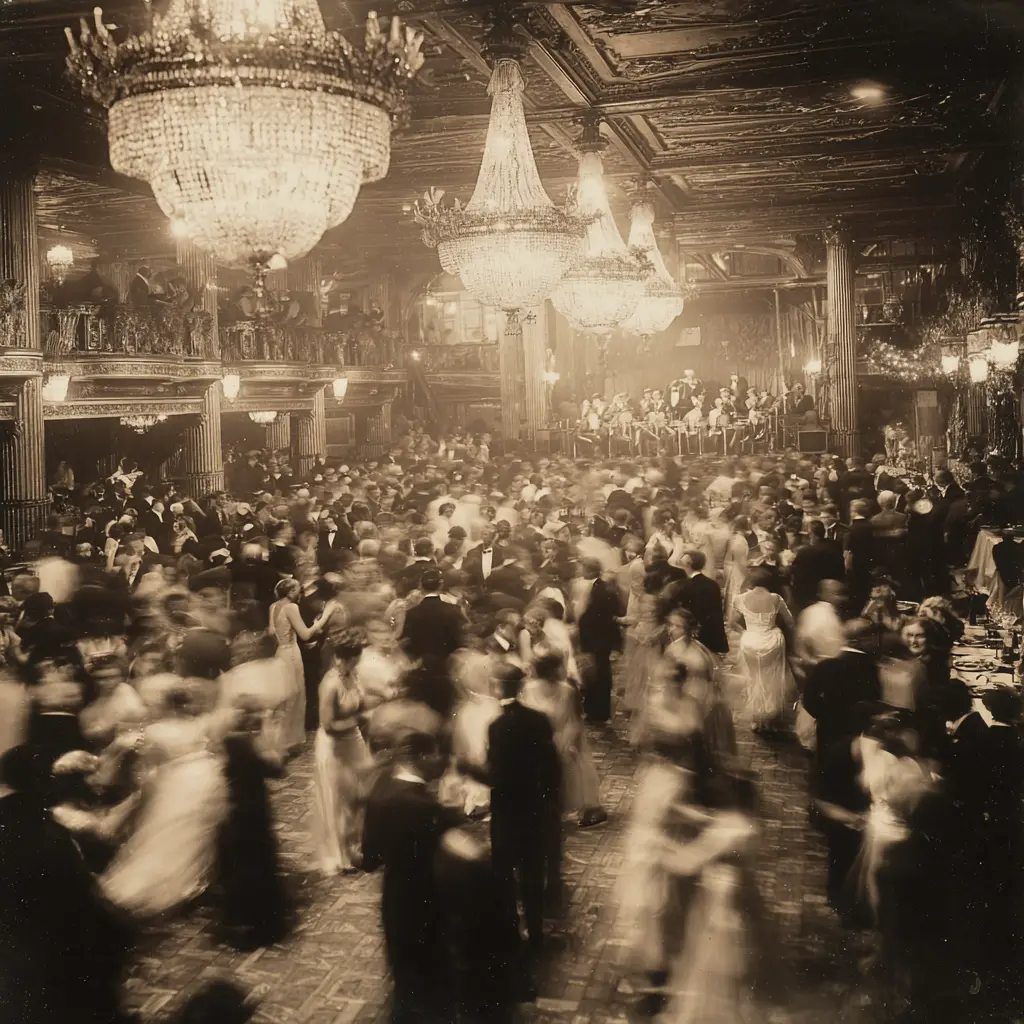
During the roaring 1920s, the E&O became a gilded cage of hedonism. Underneath the slowly ticking ceiling fans, a resident live orchestra played late into the night. Jazz music echoed off the ballroom walls as flappers and colonial officers danced the Charleston.
The hotel’s guestbook read like a roll call of 20th-century cultural giants: Rudyard Kipling took notes in the courtyard; Noël Coward paced the corridors composing witty barbs; and Charlie Chaplin sought refuge from the madness of Hollywood beneath its palms.
Yet, Arshak’s greatest strength as a host was his fatal flaw as a businessman. He treated the E&O not as a commercial enterprise, but as an endless, personal parlour party. He was tragically generous. If a friend fell on hard times, Arshak would offer them a luxury suite indefinitely. If a patron was charming enough, their astronomical bar tabs were quietly forgiven or forgotten.
He signed checks blindly and handed out cash to anyone with a convincing sob story. While the champagne flowed and the jazz orchestra played on, the financial foundations of the E&O were quietly rotting away.
Act IV: Bankruptcy, War, and Ghostly Resiliency
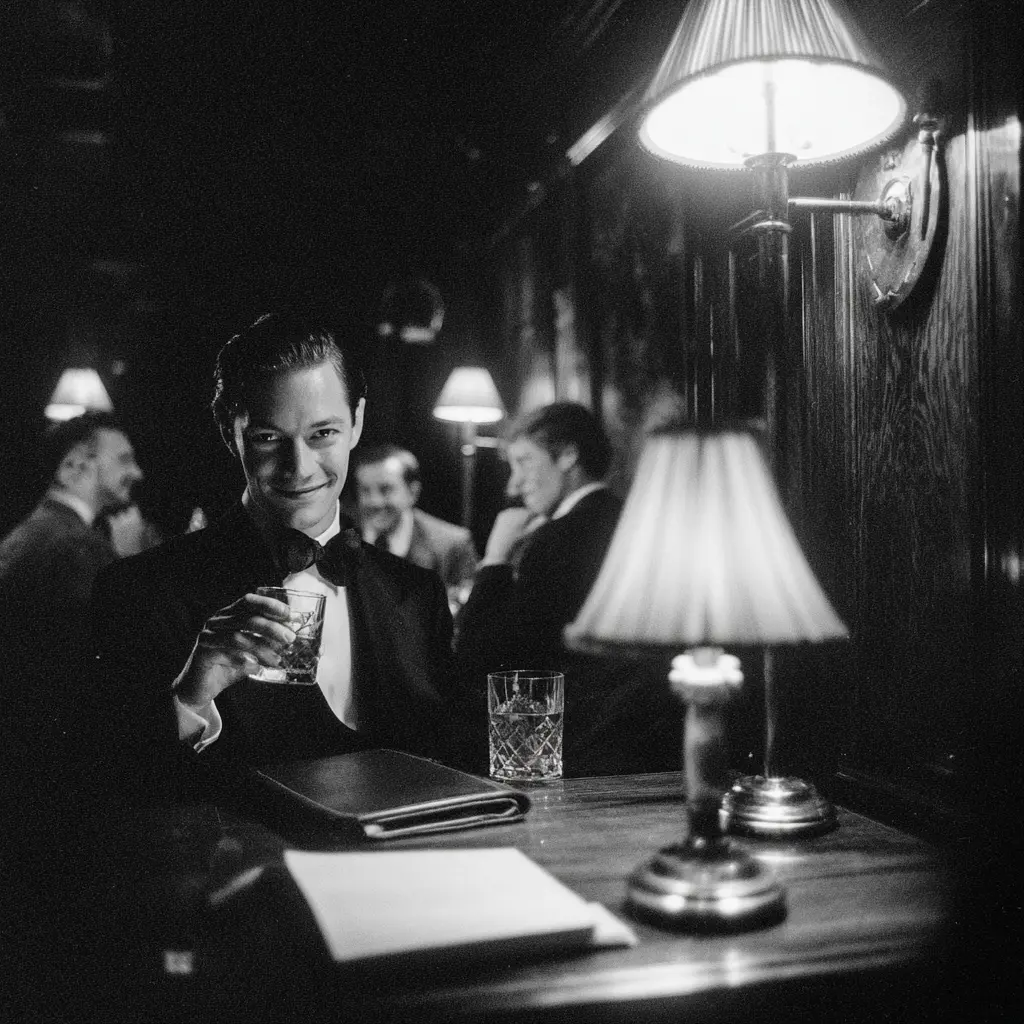
The music stopped abruptly in 1931. Arshak Sarkies passed away, and when the executors opened the hotel’s books, they discovered a catastrophic ledger of ruin. The generous host had left behind a mountain of uncollectible debts and an insolvent empire, just as the shadow of the Great Depression deepened across the globe. The E&O was declared bankrupt.
The hotel’s survival over the next several decades reads like a geopolitical thriller. It was briefly managed by the Raffles Group, then bought in 1938 by the wealthy, local Penang-based Choong family. But the geopolitical tectonic plates were shifting.
During World War II, the British retreated from the area. Japanese imperial forces then occupied the hotel. They repurposed their grand ballroom for military bureaucracy.
When the war ended, the E&O awoke to a changed world. The British Empire was waning, and by the 1960s, a newly independent Malaysia was finding its footing. The era was marked by intense socio-political turbulence. Widespread labour union strikes crippled the hospitality industry.
The E&O cycled through various owners during this difficult period. Each owner possessed grand visions but lacked the capital to execute them. For a time, the “Grand Dame” looked less like a luxury resort. It resembled a faded, peeling ghost of a bygone era. The property remained structurally intact. However, it was losing its lustre to time and tropical decay.
Act V: The Modern Renaissance: Preserving the Ghost
The turning point arrived in 1994. Recognising that the E&O was too historically vital to be allowed to slide into obscurity, a premier property consortium purchased the hotel for 60 million Ringgit. What followed was not a cosmetic facelift, but an architectural resurrection.
The hotel was closed for years as craftsmen painstakingly restored the iconic dome, stabilised the colonial foundations, and polished the expansive marble floors.
When it reopened its doors in 2001 (followed by a further meticulous restoration of the Heritage Wing in 2019), it achieved something rare in luxury travel: it banished the sterile, focus-grouped banality of modern hospitality.
Today, the modern E&O gracefully straddles two worlds. While guests have access to high-speed Wi-Fi, infinity pools, and contemporary fine dining, the structural ghosts of the past remain entirely undisturbed.
The khaki-uniformed bellhops still greet you at the entrance; the manually operated vintage lift still creaks elegantly between floors; and the Echo Dome in the lobby still carries whispers across the room just as it did in the 1920s.
The E&O persists not because it is a museum piece, but because it is a living time capsule. To walk through its corridors today is to cross paths with the exiles of Isfahan, to hear the phantom echoes of Arshak’s jazz orchestra, and to experience the stubborn, resilient romanticism of an era that the modern world could never replicate.
As you’ve journeyed through the history of the E&O, from its legendary beginnings to its enduring grandeur, perhaps you’re now envisioning your chapter within its storied walls. Discover how you can experience this iconic piece of heritage and hospitality firsthand.
Experience the Living History
Rudyard Kipling and Charlie Chaplin chose the E&O as their sanctuary East of Suez. When you visit Penang, will you follow in their footsteps? Book a stay with Trip.com