
Key Insights
Yam Khang is the ultimate “Healing Luxury” – a rare, centuries-old Lanna ritual where practitioners use white-hot iron ploughshares and medicinal oils to “tame” fire for deep therapeutic relief. This is a sophisticated synthesis of indigenous science and ancestral soul, offering the discerning traveller a visceral connection to Northern Thailand’s living heritage.
Matao (Khang): The heavy, iron ploughshare utilised as the central tool in the ritual; it must be sourced from an ancient, broken agricultural plough to carry the symbolic metaphysical energy of turning over old soil and breaking through resistance.
Plai Oil (Zingiber cassumunar): A potent medicinal ginger oil applied to the skin during the therapy, prized for its high concentration of sabinene, which provides immediate anti-inflammatory and analgesic relief when activated by heat.
Nam Boran: The proprietary medicinal bath or solution containing wild Lanna herbs, used to cool the therapist’s foot immediately before it makes contact with the white-hot iron plate.
Nuad Yam Khang: The technical term for the specialised “foot-sole fire massage” technique itself, differentiating it from standard Thai massage by its reliance on thermodynamic transfer and specific Buddhist lineage blessings.
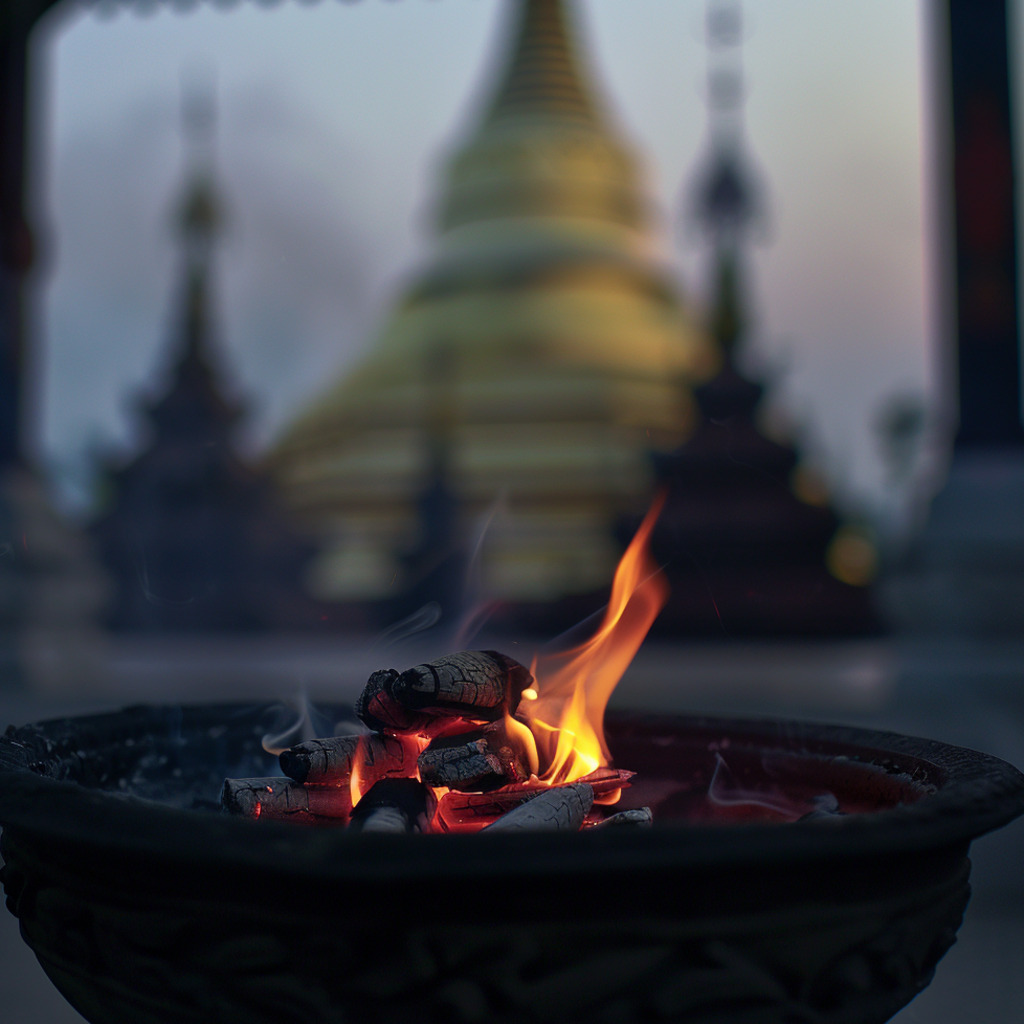
The hiss of a damp foot meeting a white-hot iron ploughshare cuts through the humid stillness of Northern Thailand. Toasted sesame and Plai (Zingiber cassumunar) ginger scents rise, mingling with the smoke of a charcoal brazier. This is Yam Khang, the ancient Lanna art of fire massage.
Far from a standardised wellness treatment, this centuries-old ritual is an endangered form of intangible cultural heritage. Practised by specialised traditional healers (Mor Muang) in the Chiang Mai region, Yam Khang represents a sophisticated synthesis of traditional Thai medicine, elemental therapy, and sacred performance, offering heritage travellers a profound connection to an authentic spiritual world.
The Sacred Alchemy: Fire and the Lanna Soul
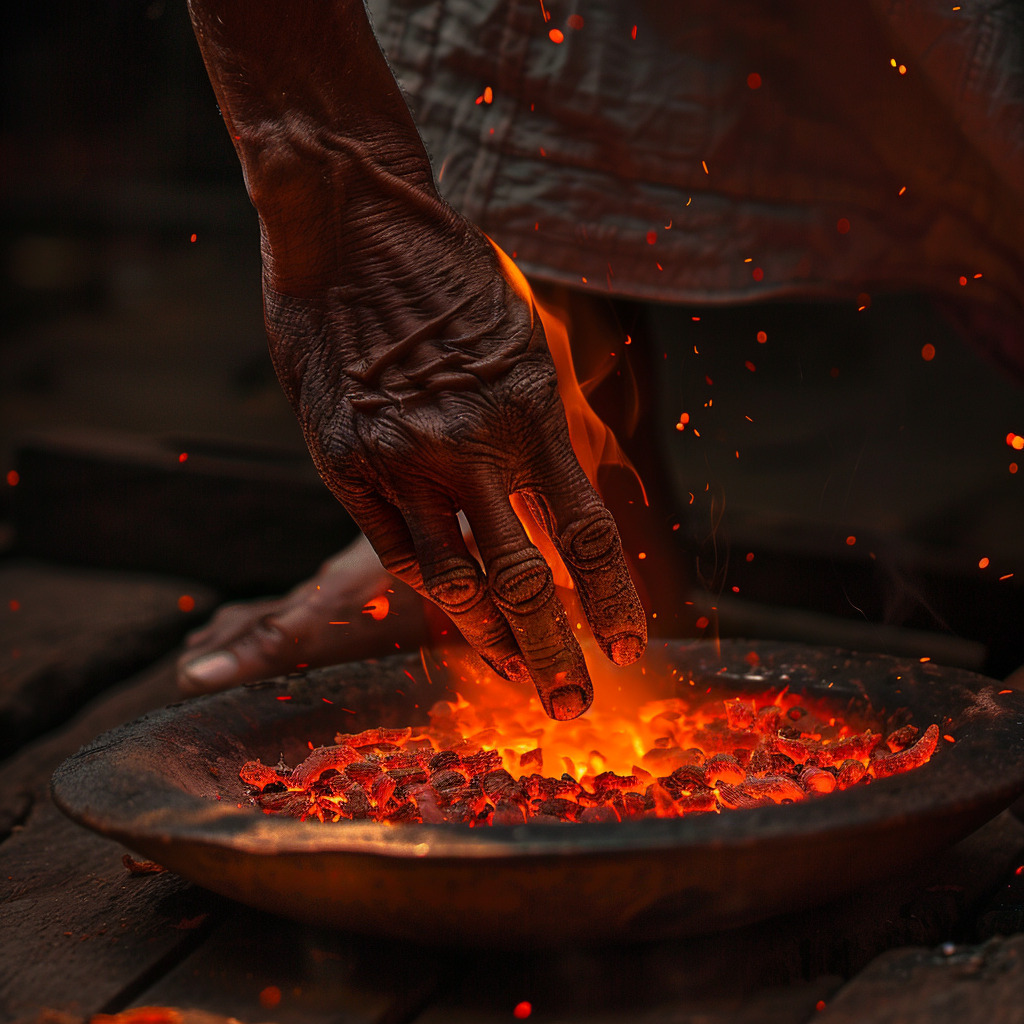
The origins of Yam Khang are linked to the agricultural foundations of the Lanna Kingdom. This kingdom dominated Northern Thailand from the 13th to the 18th centuries. To understand the fire, one must look to the Khang, the iron ploughshare. In traditional Lanna culture, the plough was more than just a tool. It symbolized strength and breaking hard earth to bring forth life.
Historically, Yam Khang was the preserve of the Achan, usually a village elder with the fortitude to tame fire. The ritual wasn’t merely physical but deeply esoteric, requiring sacred chants to protect the practitioner from negative energy. This spiritual lineage elevates the practice from a simple massage to a significant cultural archive.
Global significance shifted during the travel’s Golden Age as new transport brought explorers into contact with Lanna traditions. While early Europeans viewed these rituals as exotic, modern philosophy recognises them as sophisticated systems of thermotherapy. These traditions actually predate modern sports medicine by over half a millennium.
Heritage Highlight: The Khang (Ploughshare) and the Plai Root
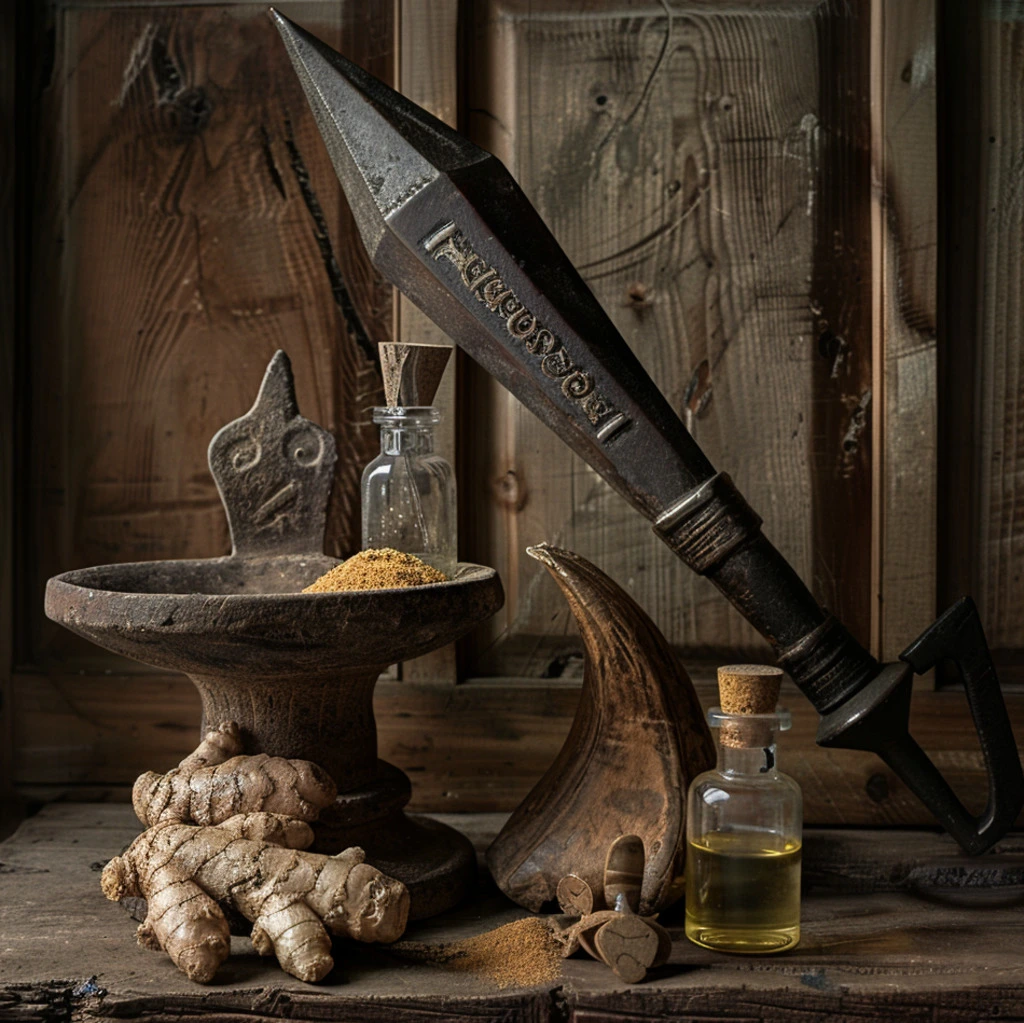
The technical heart of Yam Khang is the Khang, a heavy, triangular iron ploughshare. Unlike standard cast iron, the traditional Khang possesses a “spirit” seasoned through years of agricultural use. When heated over charcoal, the iron maintains a consistent temperature that facilitates the medicinal oil’s vaporisation.
The primary active ingredient in this oil is Plai (Zingiber cassumunar). Unlike common ginger, Plai contains high concentrations of terpinen-4-ol, a powerful anti-inflammatory. When the practitioner’s foot hits the hot iron, the Plai is flash-heated. This allows the essential oils to atomise and deeply penetrate the skin with unmatched speed. Manual massage simply cannot achieve this level of deep absorption. This process beautifully showcases Indigenous Lanna Science in action. The heated iron perfectly catalyses both chemical and thermal transfer.
The Architecture of the Foot: Engineering the Stroke
Beyond spiritual and botanical components, Yam Khang’s physical mechanics are a marvel of traditional biomechanics. The practitioner’s body acts as the primary instrument, calibrated through repetitive discipline. Using the foot is a technical necessity rather than a matter of convenience. A human hand is restricted by the delicate nature of small bones and ligaments. The foot provides a stable “iron,” distributing intense thermal energy over large muscle groups without rapid heat loss.
The stroke itself is a study in pressure gradients. As the Achan slides their foot across the recipient’s back or limbs, they utilise a “rolling” technique – starting with the heel for deep tissue penetration and finishing with the ball of the foot for more nuanced sensory stimulation. This creates a sensation of “liquid heat” that seems to flow through the muscles, a physical manifestation of the Lom (wind) being guided and balanced.
The Choreography of Heat: A Multi-Sensory Process
To experience Yam Khang is to witness a master’s choreography of balance and precision. The practitioner stabilises with a wooden staff while one foot performs a precise three-step movement. The foot dips into medicinal oil, sweeps across a glowing iron ploughshare, then presses into the muscles.
The sensation is a paradox of heat and relief, providing an initial surge of concentrated warmth. As the practitioner moves along energy lines, heat dissipates into a vibrating throb that releases myofascial tension. The foot’s broad surface acts more effectively than a hand, allowing pressure that melts stubborn knots.
For the culturally curious, the scent of the ritual is equally evocative. The aroma is heavy with the nuttiness of roasted sesame and the medicinal sharpness of camphor. It is a fragrance that evokes the teak-walled pharmacies of old Chiang Mai, a sensory patina that lingers long after the fire has been extinguished.
The Modern Synthesis: Refinement and Mastery
Today, the “Healing Luxury” of Yam Khang is undergoing a renaissance within the hospitality sector. Premium heritage hotels and wellness retreats are integrating the practice into their offerings, but with a refined attention to the guest’s environment. The rustic village setting is replaced by private, open-air pavilions where the rhythmic whir of overhead punkah fans drowns out the city’s noise, and the guest is draped in handwoven indigo linens.
This transition requires a careful balance. The “luxury” here isn’t just the setting, but the provenance of the practitioner. True masters of Yam Khang are increasingly rare. To book a session with an Achan who has trained for decades in the Lanna tradition is a form of high-end exclusivity. It’s an opportunity to participate in a living history, ensuring that the financial support of tourism fosters the continuation of these sacred skills.
The Cultural Patina: A Living Archive of Lanna Identity
For the heritage enthusiast, the true value of Yam Khang lies in its refusal to be modernised into a sterile, electric-heated substitute. The charcoal must be real; the iron must be seasoned; the mantras must be whispered. This adherence to authenticity is what secures its place in the “Golden Age” of travel narratives. It’s a sensory bridge to the 19th-century Lanna courts, where such treatments were reserved for royalty and high-ranking officials recovering from the rigours of elephant-back travel or diplomatic expeditions.
The preservation of this ritual serves as a vital anchor for local communities surrounding Chiang Mai and Chiang Rai. Heritage tourism has transformed this once-dying folk art into a prestigious profession. By seeking authentic practitioners, travellers participate in a sophisticated act of cultural conservation. This ideal enriches the guest while providing the patronage necessary to safeguard the host’s heritage.
Practical Insights for the Discerning Traveller
The Heritasian Verdict: A Legacy of Fire
Yam Khang is a survivor from a time when the spiritual and medicinal worlds were deeply intertwined. For travellers valuing depth, it offers a therapeutic experience that’s both physically restorative and intellectually grounding. As the antithesis of “fast wellness,” this slow, intentional ritual profoundly honours the Lanna soul.
As the embers in the brazier begin to dim, the session concludes with a traditional herbal tea – often a warm infusion of lemongrass and pandan – to stabilise the body’s internal temperature. The guest is left with a profound sense of lightness, a physical “unburdening” that mirrors the clearing of the Lanna fields after the harvest.
To truly understand the spiritual landscape that birthed such fire-tempered rituals, one must look to the architectural anchors of the north. We recommend continuing your journey by exploring our archives on Vernacular Mansions of Southeast Asia, where the same craftsmanship and ‘Intellectual Luxury’ found in Yam Khang is immortalised in wood and stone.”