
Key Insights
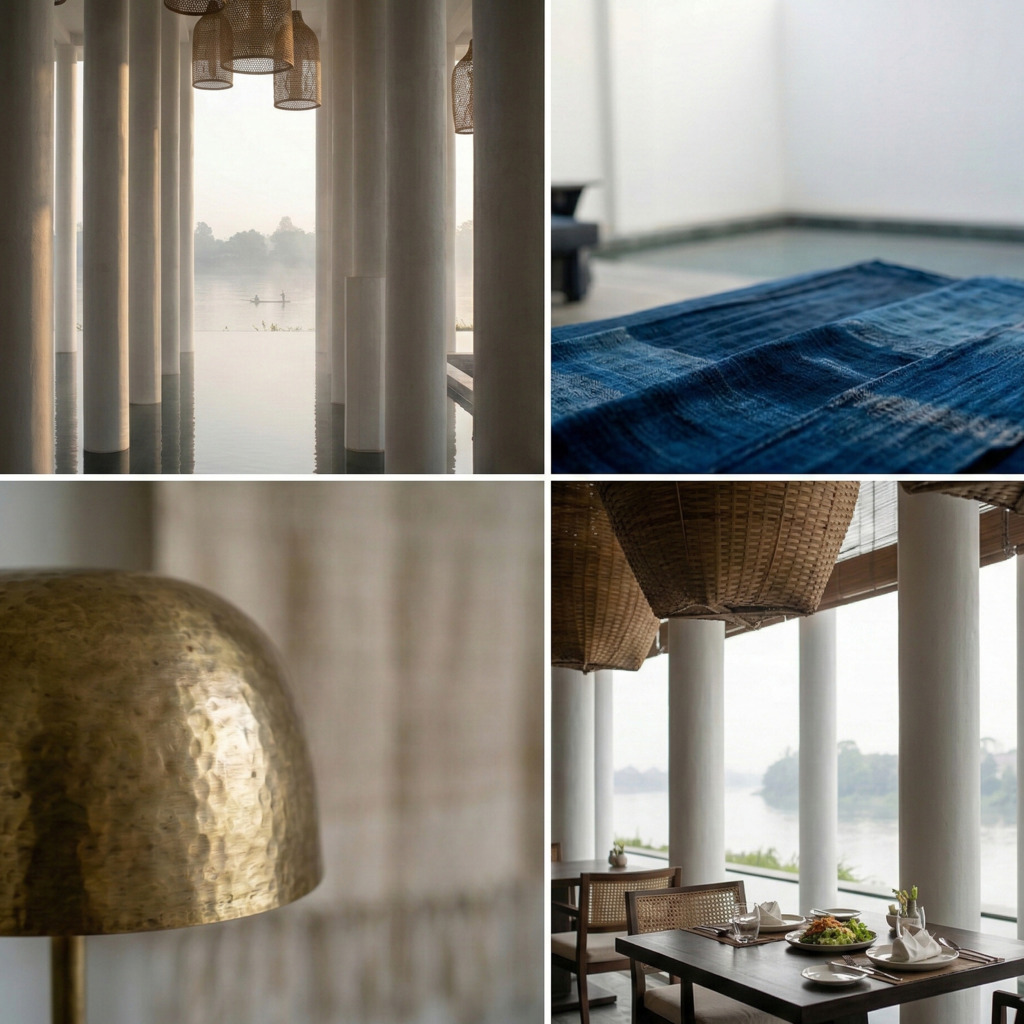
Raya Heritage is a “Living Lanna” sanctuary that replaces grand opulence with the quiet beauty of Northern Thai craftsmanship. Its design celebrates the “Architecture of Silence,” utilising hand-loomed textiles, local pottery, and low-impact riverfront structures to prove that true luxury is found in the preservation of ancient, artisanal techniques.
Raya Heritage: A luxury boutique resort situated on the banks of the Ping River, designed by architect Boonlert Hemvijitraphan as a structural homage to classic Lanna culture and rural northern living.
Artisanal Provenance: The deliberate design strategy of sourcing interior furnishings – such as hand-woven textiles, hardware, and pottery – exclusively from local village cooperatives, documenting and preserving traditional regional craft lineages.
Monolithic Columns: High-impact structural pillars that anchor the resort’s open-air architecture. Their towering scale and clean lines mirror the stark grandeur of ancient Lanna monastic halls while maintaining a minimalist, contemporary aesthetic.
Ta-Kao (Basketry Pattern): The traditional northern Thai bamboo weaving technique integrated into the resort’s custom lighting fixtures and screens, transforming a functional agrarian utility into a high-end design motif.
Natural Pigment Ecology: A curated interior colour palette derived entirely from organic northern materials, utilising localised shades of indigo (Mo Hom), unprocessed golden teak, and unbaked river clay to evoke a quiet sensory patina.
Somatic Slow Travel: A hospitality philosophy that leverages architecture, acoustic design, and traditional material textures to slow down a guest’s internal pacing, shifting the travel experience from passive leisure to deep cultural immersion.
Raya Heritage demands strict client vetting before it goes onto a northern Thai itinerary. The property operates on quiet architectural restraint. It bypasses the colonial teak nostalgia of 137 Pillars House and the gilded pastiche common to Chiang Mai’s palace-style resorts.
Guests expecting bustling resort programming or walkable nightlife will be disappointed. The secluded Mae Rim riverfront requires a dedicated twenty-minute car transfer into the historic walled city. This compound serves architectural purists and serious textile collectors.
Advisors should sell the stay as a living study in contemporary Lanna vernacular design. Build the itinerary around verified material provenance. Arrange private studio access with the Baan Tawai metalsmiths and Mae Chaem weavers whose work furnishes the suites, then pair the stay with a comparative architectural walkthrough against 137 Pillars House downriver.
Spatial Typology: The Lanna Granary Reinterpreted
Bangkok architect Lek Bunnag structured Raya Heritage around the historical trade crossroads of the Ping River basin. His spatial programme draws directly from the traditional northern Thai khu khao (raised timber rice granary), translating an agricultural storage typology into a modern riverfront compound.
Triple-height lobby volumes function as passive thermal chimneys. By aligning open-sided corridors with prevailing river currents, the building pulls cool air off the water and channels heat upward through high clerestory apertures, minimising mechanical air-conditioning across public spaces. For clients interested in tropical modernism and vernacular climate engineering, this passive cooling strategy is the building’s defining achievement.
Unpolished Brass and Surface Provenance
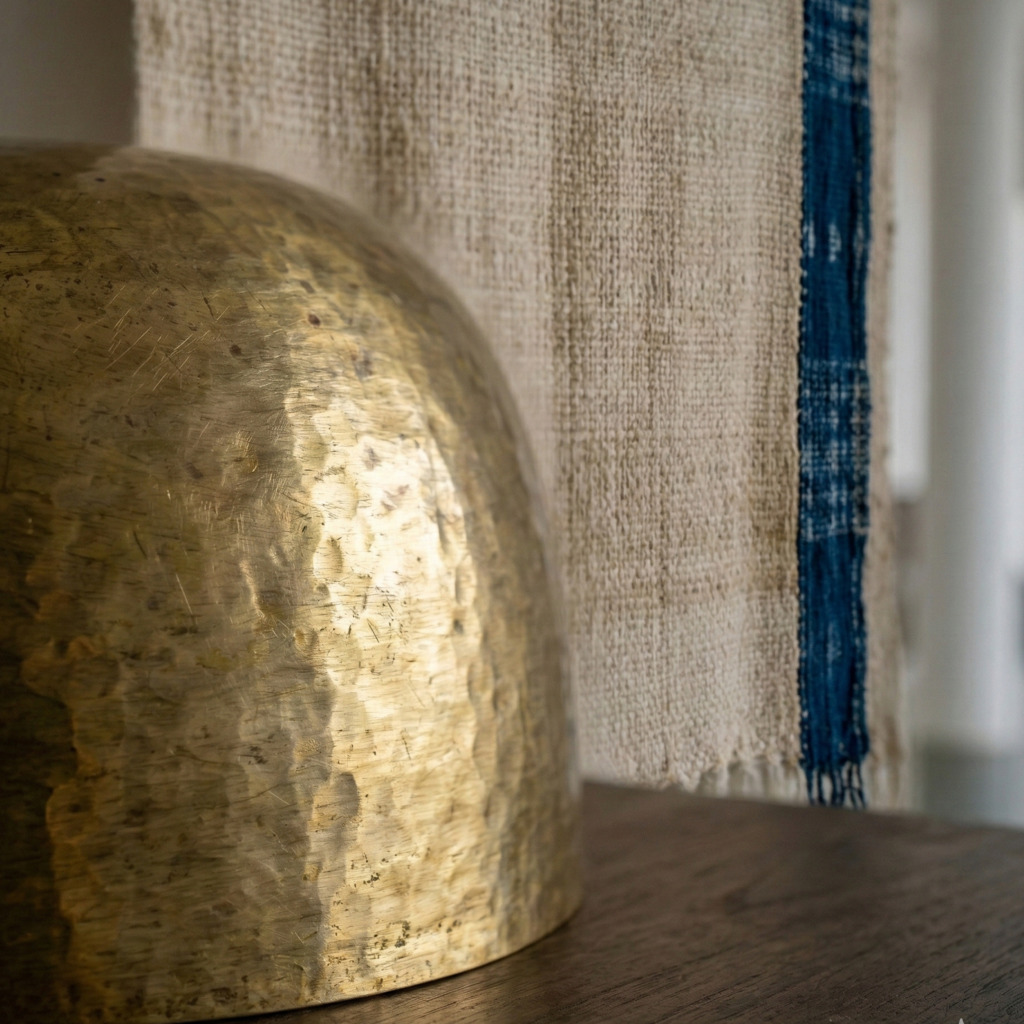
Baan Tawai metalsmiths fabricated the suite lighting, hardware, and basin fittings using traditional hand-hammered brass techniques. Lek Bunnag specified that every piece remain unlacquered and unpolished, leaving planishing marks and surface oxidation visible across the metal. As the brass patinates in the humid river climate, the fixtures absorb ambient light and anchor the property’s lime-washed walls in verifiable regional craftsmanship.
Three-Tier Suite Categorisation
Raya Heritage eliminates standard hospitality tiers in favour of a three-level architectural and craft progression across its thirty-eight suites. Advisors should match suite levels directly to client priorities around privacy, outdoor space, and elevation.
The Single-Slab Teak Lobby Table
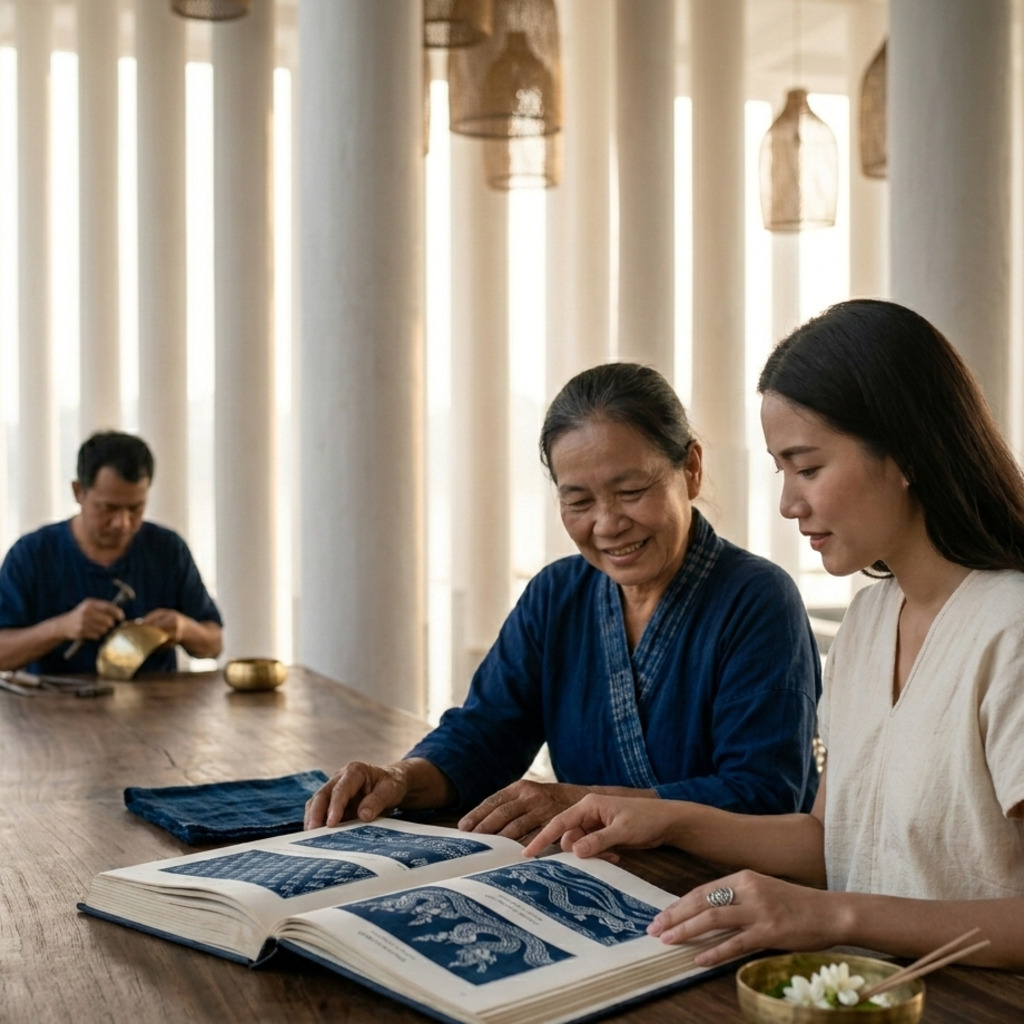
Raya Heritage anchors its ground-floor reception around a monolithic, single-slab teak table that reinterprets the tern (the raised, open-sided communal verandah central to traditional northern Thai domestic architecture).
Historically, the tern functioned as a semi-public threshold where households received neighbours, conducted trade, and hosted guests without breaching private living quarters. By placing this communal worktable at the physical centre of the arrival pavilion, the hotel creates an informal working interface where visiting weavers, ceramicists, and suppliers regularly deliver commissions alongside resident guests.
The Artisan Lounge Material Archive
Adjacent to the main lobby, the Artisan Lounge operates as an onsite material archive documenting the northern Thai craft lineages represented across the suites. The collection pairs raw materials with traditional production tooling, placing finished textiles beside boat shuttles from Mae Chaem looms and forged woodcarving gouges from Baan Tawai.
The lounge also houses a hand-bound reference volume cataloguing historical Lanna textile motifs, from geometric river meanders to stylised naga (serpent) iconography. Advisors can utilise this space for a forty-five-minute pre-excursion briefing with the property’s cultural concierge, equipping textile-focused clients to decode regional weave structures before departing for private studio visits in Chiang Mai or Lamphun.
Regional Trade Gastronomy at Khu Khao and Baan Ta
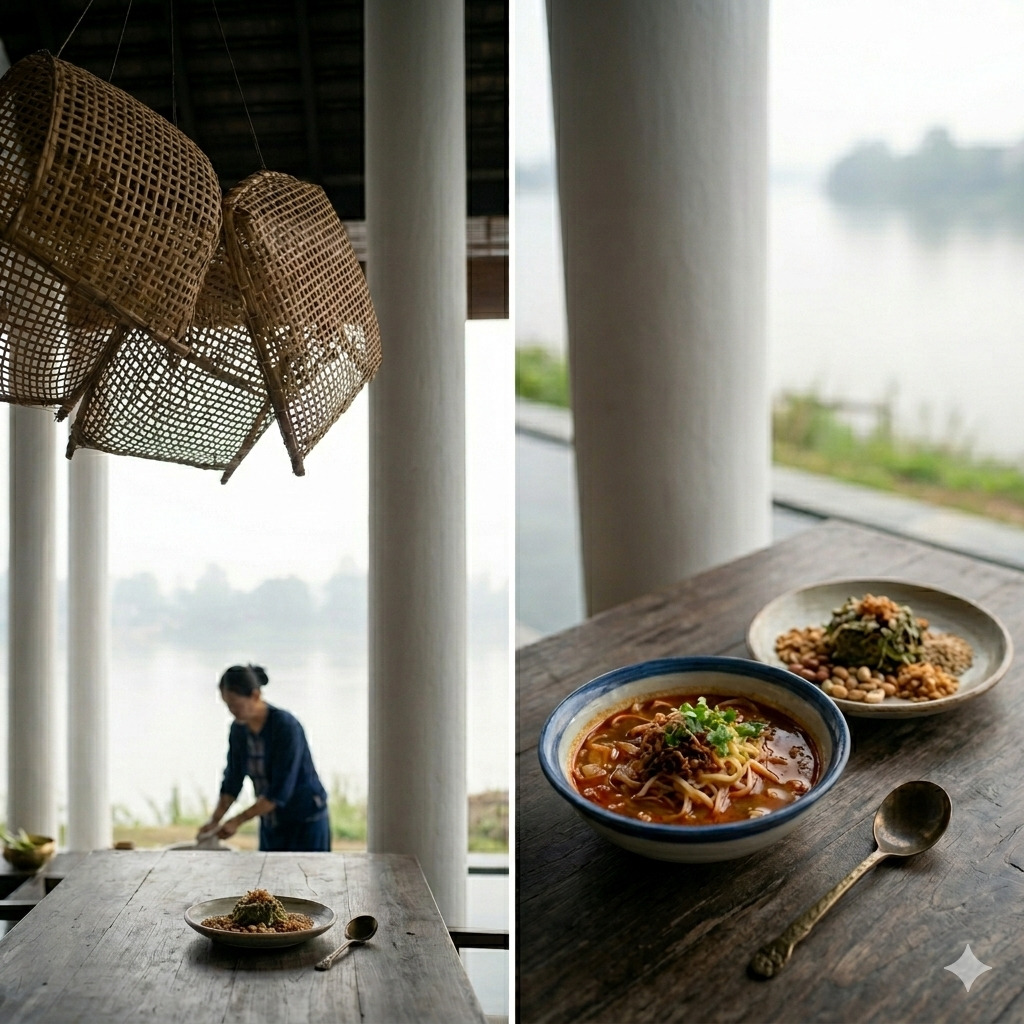
Raya Heritage anchors its food and beverage programme in the historical trade routes linking northern Thailand, Shan State, Yunnan, and Laos. Inside Khu Khao, suspended bamboo kradong (winnowing trays) frame a menu built around caravan-era culinary exchanges.
Kitchens prepare Burmese-influenced curries tempered with pickled ginger and dry-roasted spices, alongside Shan noodle preparations and lahpet thoke (fermented tea leaf salad) plated for contemporary fine dining. At Baan Ta, the riverside terrace bar, beverage menus pair northern Thai botanicals, wild highland honey, and makrut lime harvested from the grounds with house-infused spirits, reflecting the Lanna hospitality ethos of nam jai (unconditional generosity toward guests).
Lanna Botanical Protocols at Ai Baan Spa
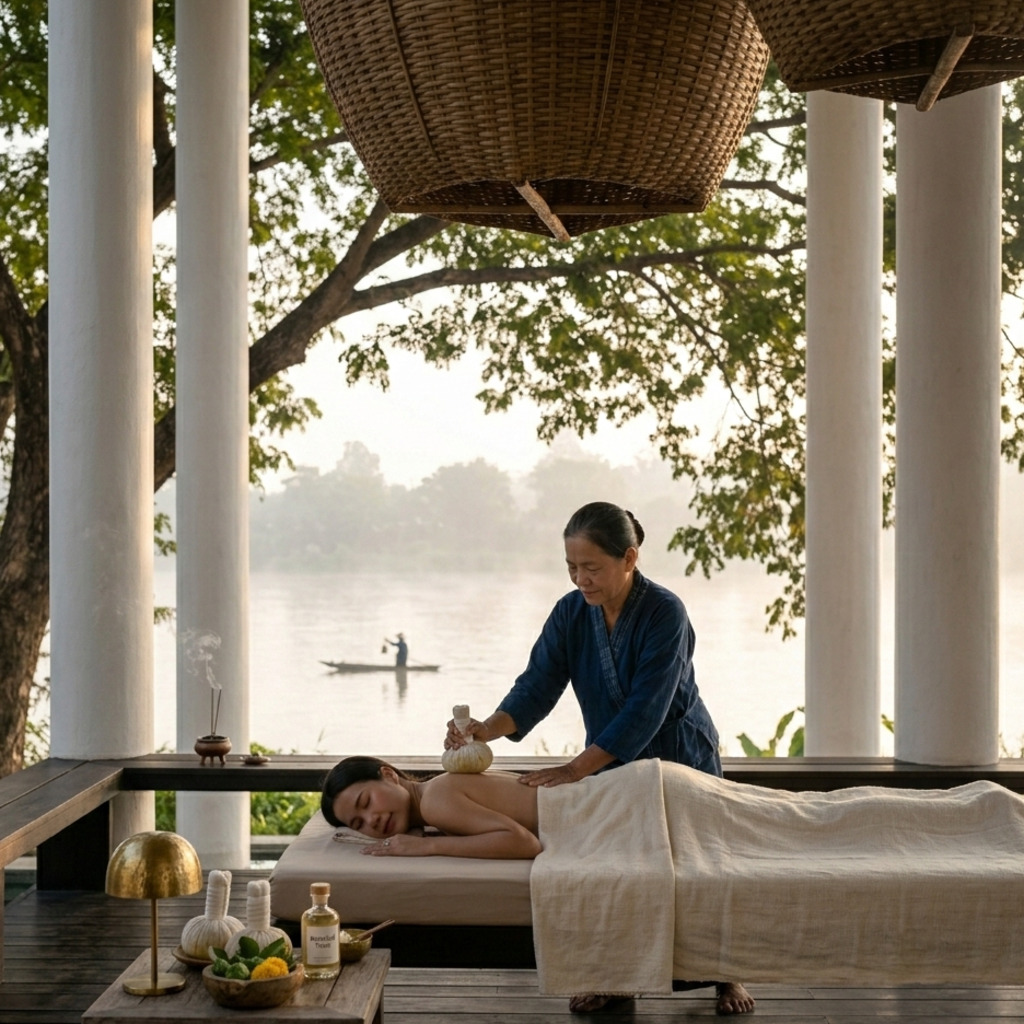
Ai Baan Spa formulates its treatment protocols around Thaat Si (the four-element diagnostic framework of traditional Thai medicine: earth, water, wind, and fire).
Therapists work with hand-bound luk prakob (herbal compresses) packed with plai (Zingiber cassumunar), wild turmeric, and natural camphor, steaming the poultices over low heat to relieve muscular stagnation and regulate the lom (wind) element. Formulations are developed in consultation with northern folk herbalists (mor mueang) who harvest forest roots and rhizomes according to seasonal potency cycles. Advisors booking wellness-focused travellers should note that treatments lean heavily toward pungent, medicinal herbalism and deep physical release.
Site Ecology and Closed-Loop Timber Salvage
Landscape architects preserved the riverfront plot’s mature longan and tamarind canopy during construction, maintaining natural shade cover and riverbank soil stability without synthetic chemical inputs.
Culinary gardens integrated into the grounds supply fresh lemongrass, galangal, and holy basil directly to Khu Khao’s kitchen. When seasonal monsoon storms bring down mature tamarind limbs on the property, the timber is seasoned and turned by local woodworkers into utilitarian vessels and trays for the guest suites, keeping salvaged site wood in active service.
Craft Procurement and Regional Supply Chains
Raya Heritage operates as a commercial patronage model for northern Thai artisans, commissioning architectural hardware and soft furnishings directly from established craft districts. The procurement team commissioned brass smiths in Hang Dong and Baan Tawai to cast and hand-hammer custom door hardware and lighting housings using traditional planishing methods.
In Mae Chaem, a remote valley south-west of Doi Inthanon known for its intricate teen jok (discontinuous supplementary-weft) weaving, the hotel commissioned master weavers to adapt historical ceremonial skirt-border motifs into a restrained palette of raw undyed cotton and charcoal-grey tones.
This bespoke specification opened a contemporary architectural market for weavers previously reliant on bright traditional dye combinations. Operational protocols extend this material discipline into daily suite servicing, where housekeeping teams clean with locally distilled citrus oils and dress beds to showcase the open slub of hand-loomed textiles.
Riparian Site Engineering and Elevated Construction
Positioned directly along the western bank of the Ping River, Raya Heritage responds structurally to the waterway’s seasonal monsoon flood cycle. For centuries, the Ping served as Lanna’s primary commercial artery, and during the late nineteenth century, British and Siamese logging concessions floated felled teak logs down this channel toward Bangkok sawmills.
Lek Bunnag elevated the primary residential wings on structural piers modelled on traditional northern Thai stilt architecture, keeping the plot open to the riverbank without heavy concrete retaining walls. This raised footprint accommodates seasonal water-level fluctuations while preserving natural riverbank drainage and riparian vegetation.
Solar Orientation and Reflected River Light
Bunnag’s massing uses deep overhangs and tall lime-washed colonnades to modulate harsh tropical sunlight across the day. Morning sun casts sharp geometric shadows across the courtyards, while late-afternoon light reflects off the Ping River surface and projects shifting water ripples onto the triple-height lobby ceilings. Open breezeways channel ambient acoustic cues directly through the compound, replacing sealed, artificially soundproofed resort corridors with the natural soundscape of river currents and bamboo foliage.
Itinerary Positioning and Booking Criteria
Raya Heritage succeeds as an architectural and material-culture sanctuary by exercising disciplined restraint. By replacing gilded palace pastiche with verified regional craft provenance, the property delivers an intellectually coherent stay for architectural purists and serious textile collectors. Advisors should book this property when an itinerary calls for quietude and structured private access to Chiang Mai’s master artisans.