
What turns a historic town into a global cultural destination?
It is not just a collection of old buildings or a carefully funded marketing campaign. The true catalyst is the synergy between community, preservation, and progressive economic strategy.
Thailand’s Songkhla presents a prime example of this exact synergy.
Known officially in Thai heritage lore as the “City of Two Seas” (Mueang Song Thale), the moniker is actually a fascinating geographic paradox. Songkhla, the city, does not border two open oceans; rather, it occupies a unique, narrow peninsula wedged between the open waves of the Gulf of Thailand and the tranquil, massive expanse of Songkhla Lake- a brackish lagoon complex so vast that locals historically treated it as an inland sea.
Today, this specific urban ecosystem is aggressively advancing its official bid to secure a spot as Southeast Asia’s next UNESCO Living Heritage Icon. For professionals working across destination marketing, hospitality, urban planning, and sustainable tourism, Songkhla is far more than a beautiful coastal town. It offers a crucial blueprint for how a destination can successfully scale its global appeal without selling its soul.
1. The Strategy of Living Heritage vs. Open-Air Museums
The global tourism industry is undergoing a massive shift. Modern, experiential travellers are increasingly fatigued by manicured, artificial luxury and heavily commodified tourist traps. They crave authenticity. This is where the concept of “Living Heritage” changes the game.
Unlike ancient archaeological ruins that serve as static, open-air museums, a living heritage site integrates its past directly into the mechanics of modern commerce. In Songkhla’s Old Town (centring around historic corridors like Nang Ngam, Nakhon Nai, and Nakhon Nok roads), history is not roped off behind glass.
Centuries-old, wooden-framed Chinese shophouses and striking Sino-Portuguese structures are not mere backdrops for photos—they are active places of business.
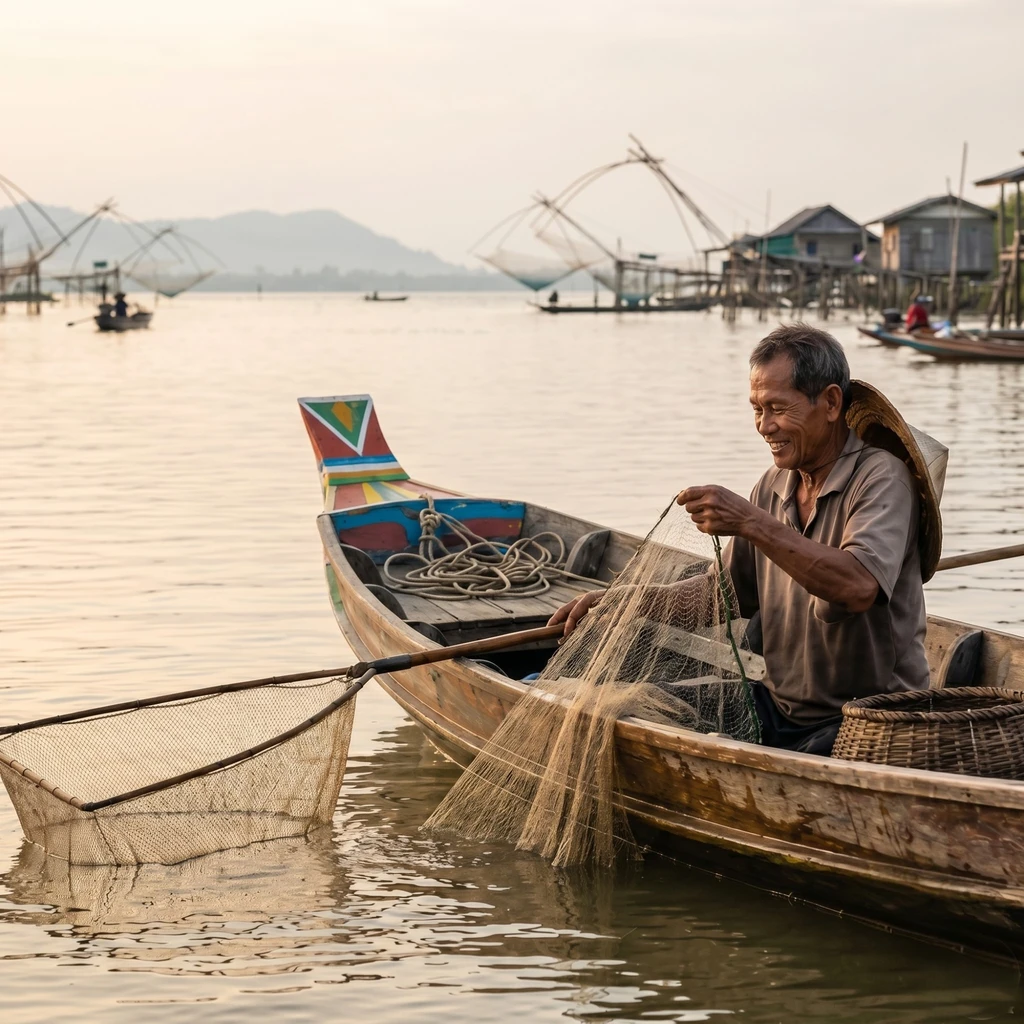
A multi-generational family recipe for traditional ice cream is served right next door to a minimalist, specialty coffee roastery housed inside a restored 19th-century building. Active fishing communities still cast their nets into the estuary alongside contemporary art spaces.
When historic infrastructure is allowed to evolve naturally with modern entrepreneurship, it creates a sustainable ecosystem that retains long-term residential value while driving organic tourism.
2. Multi-Ethnic Branding as a Competitive Advantage
One of Songkhla’s greatest economic assets is its incredibly rich, pluralistic past. Historically operating as a vital maritime port city along international trade routes between the East and the West, it became a cultural melting pot where Thai-Buddhist, Chinese, Baba-Nyonya, and Malay-Muslim communities intertwined.
This historic diversity has given rise to a highly distinct, cross-cultural brand identity that manifests in two tangible ways:
When building a destination brand, leveraging a singular cultural narrative is no longer enough. Sophisticated global travellers are drawn to complex, multi-layered cultural identities. By celebrating its multi-ethnic roots, Songkhla has built a resilient brand that sets it completely apart from regional competitors.
3. The Power of Public-Private-People Partnerships (4P)
Top-down government mandates frequently stumble when it comes to heritage preservation. If residents feel excluded from the economic benefits or the decision-making process, a historical district can quickly suffer from gentrification, rapid depopulation, and local resentment.
Songkhla’s path toward its UNESCO bid succeeds because it relies heavily on a grassroots, community-led model. The revitalisation of the Old Town was heavily catalysed by organisations like the Songkhla Heritage Trust, alongside local academic institutions, private enterprises, and public bodies like the Designated Areas for Sustainable Tourism Administration (DASTA).
By bringing together long-time residents, young local creatives, and private stakeholders, the city has managed to navigate incredibly complex urban development challenges, such as:
Sustainable tourism cannot exist without deep community equity. When the people living in a destination are actively empowered to act as the primary custodians and storytellers of their own neighbourhood, the visitor experience becomes profoundly more authentic, memorable, and impactful.
Looking Ahead: The Future of Heritage Tourism
As Songkhla advances its dossier through national and international review, it serves as an invaluable blueprint for the future of travel. It proves that economic growth and historic preservation do not have to be mutually exclusive goals.
By treating culture as a dynamic, living asset rather than a fragile relic, cities can build vibrant, self-sustaining economies that thrive on the world stage.
For those of us leading the charge in sustainable tourism and regional development, watching Songkhla’s transformation is a powerful reminder: the destinations that successfully capture the future are the ones that fiercely protect their past.