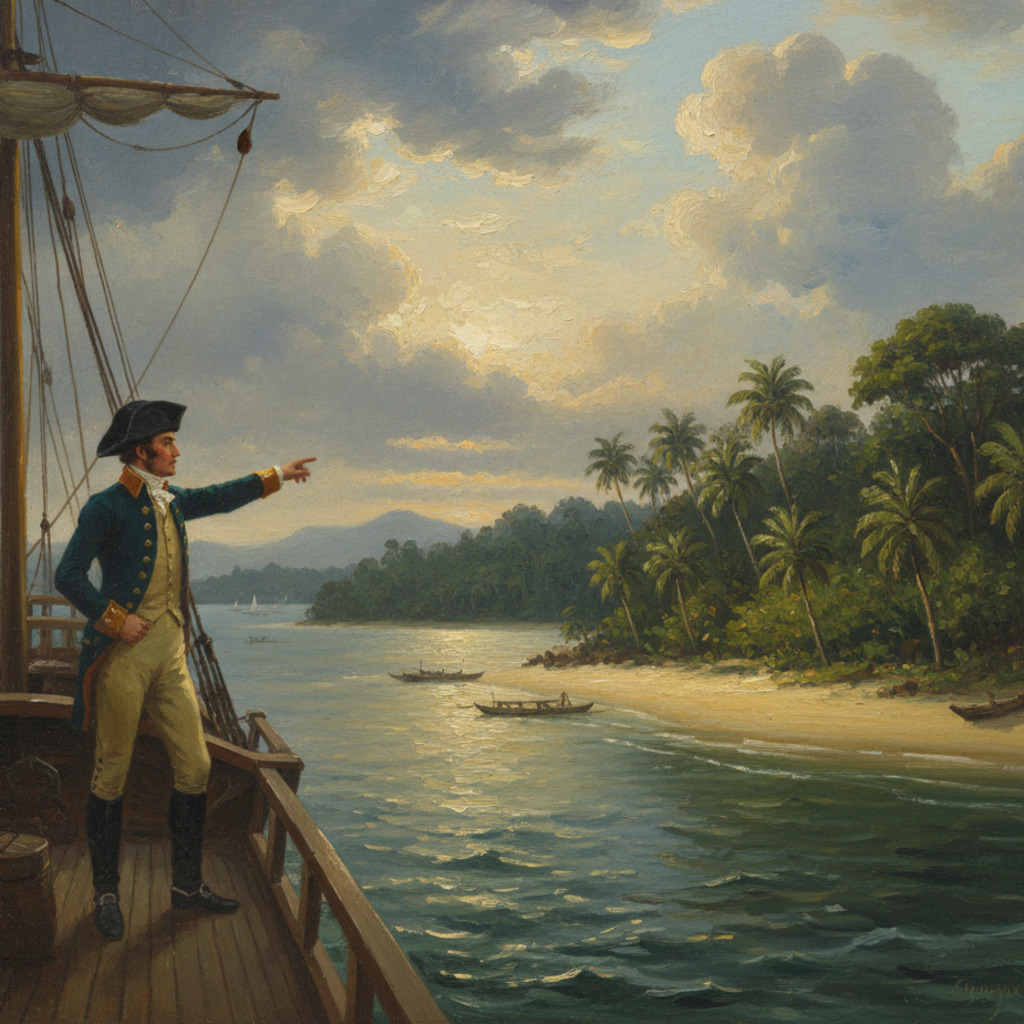

A desperate, debt-ridden mariner’s family, not the stately halls of Oxford, forged the ambition of Sir Thomas Stamford Raffles. Born at sea off the coast of Jamaica in 1781, his father was a troubled ship captain whose finances the American Revolution permanently ruined. This early instability meant Sir Thomas Stamford Raffles received little formal education; instead, it plunged him into the working world at the age of fourteen. His entry point was the most powerful corporation of the age: the East India Company (EIC), where he began as a humble clerk in London.
Sir Stamford Raffles was a creature of sheer intellect. His office hours were long, but his academic hours were longer; he spent his nights relentlessly devouring books on history, linguistics, and the geography of the Malay world. He was a self-taught polymath, transforming himself from an impoverished clerk into a rising authority on Asian affairs. This kind of intense, self-directed study was unheard of many times among his peers across Great Britain. Today, the legendary Raffles Hotel and the imposing Raffles statue immortalise his name. His eventual achievements were so vast that people would debate his resting place many times after his death.
The Orientalist Crucible: From Clerk to Malay Expert
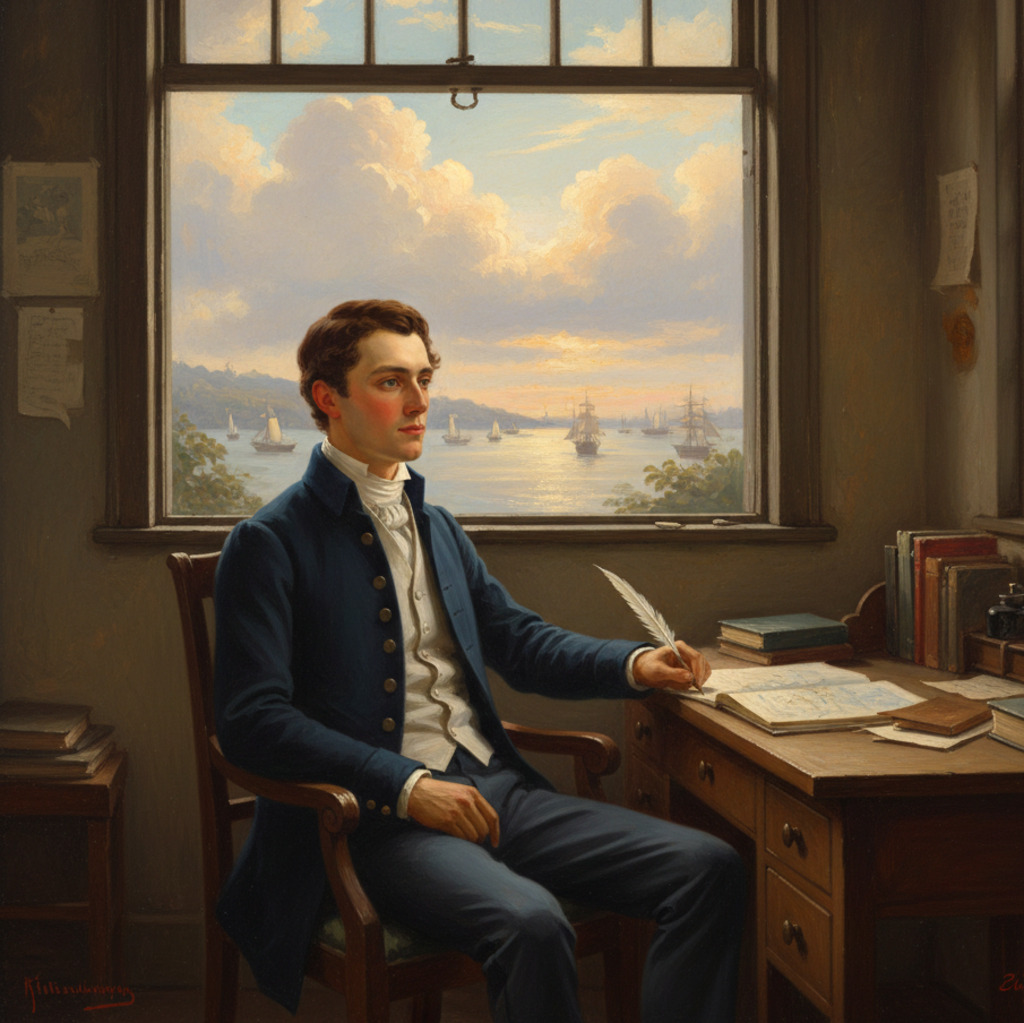
In 1805, fate and exceptional language skills granted Raffles passage East, transferring him to Penang. Seeing the tropics for the first time was a revelation that would shape Sir Stamford Raffles’s career. Here, amidst the cultural richness of the Straits Settlement, his intellectual life exploded. Unlike many colonial officials who viewed local culture with contempt, Sir Thomas Stamford Raffles immersed himself. He mastered the Malay language, communicating directly with local rulers and scholars, thereby gaining an unparalleled understanding of the region’s complex political and social dynamics.
This proficiency propelled him into the orbit of the Governor-General of India, Lord Minto. When the French-occupied Dutch East Indies (Java) became a strategic target during the Napoleonic Wars, Minto bypassed senior officials, recognising that Sir Thomas Stamford Raffles was the only man capable of providing the necessary depth of intelligence. By 1811, the self-taught former clerk was sailing to Java, poised to govern an island of five million people.
Java: The Radical Experiment and the Intellectual Inferno
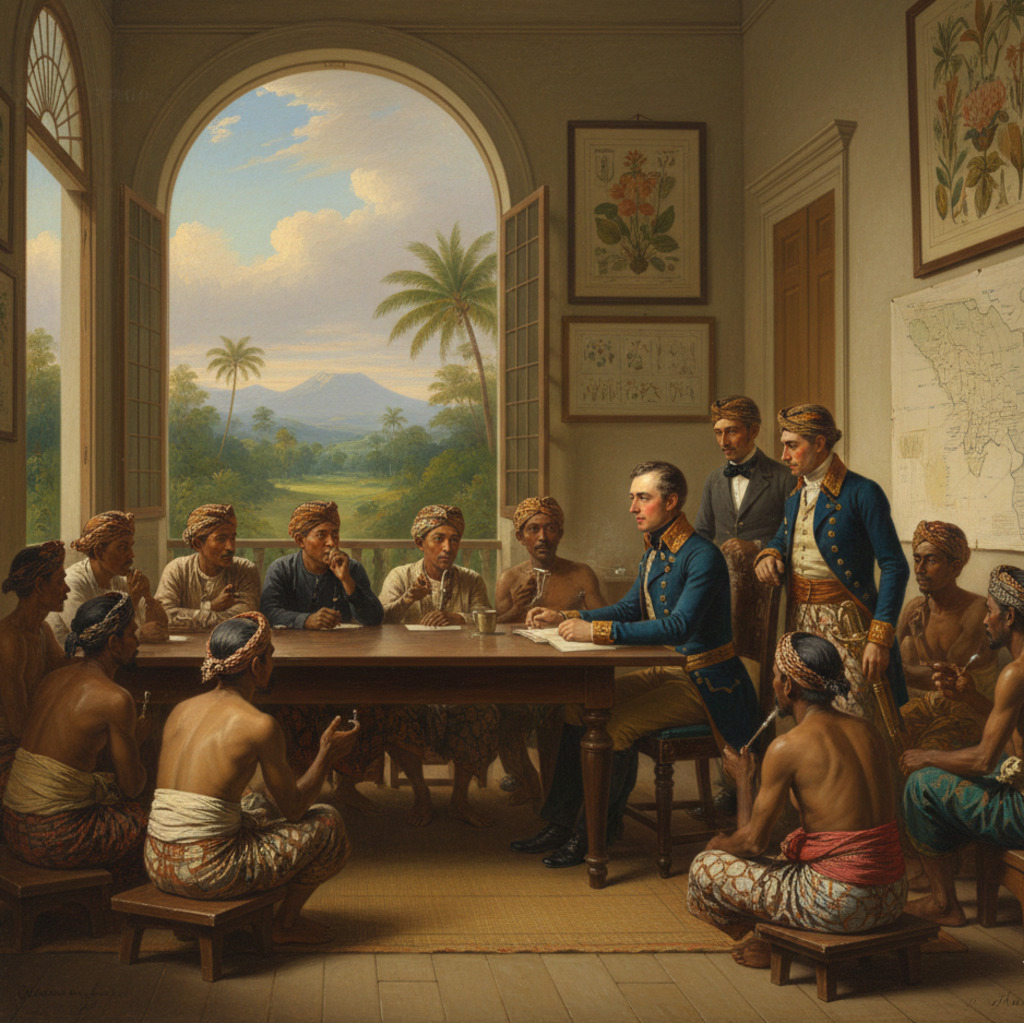
At age 30, Sir Stamford Raffles became Lieutenant-Governor of Java (1811–1816), during which time he embarked on an ambitious social engineering experiment. A follower of contemporary liberal thinkers, he believed the Dutch system of forced commodity production was both morally bankrupt and economically inefficient. The challenge faced by Sir Stamford Raffles was vast, requiring patience and cunning many times over.
Sir Thomas Stamford Raffles’ reforms were radical: he replaced feudal structures with a pioneering land-rent system and actively sought to abolish slavery. Beyond governance, Java was his intellectual inferno. He established an intense scholarly community, commissioning research that recovered monumental structures lost to the jungle. Under his watch, teams cleared the jungle over the massive, nine-tiered Buddhist stupa of Borobudur and the Hindu temples of Prambanan.
This feverish intellectual work culminated in his 1817 publication, the monumental two-volume History of Java. The work’s profound scholarship instantly earned Raffles a knighthood and secured his election as a Fellow of the Royal Society. Raffles shipped the ethnographic and natural history collections he had amassed over five years back to London, where they later formed the backbone of the National Museum collections. This scale of collecting was unprecedented at the time.
The Strategic Defiance: The Birth of the Anchor
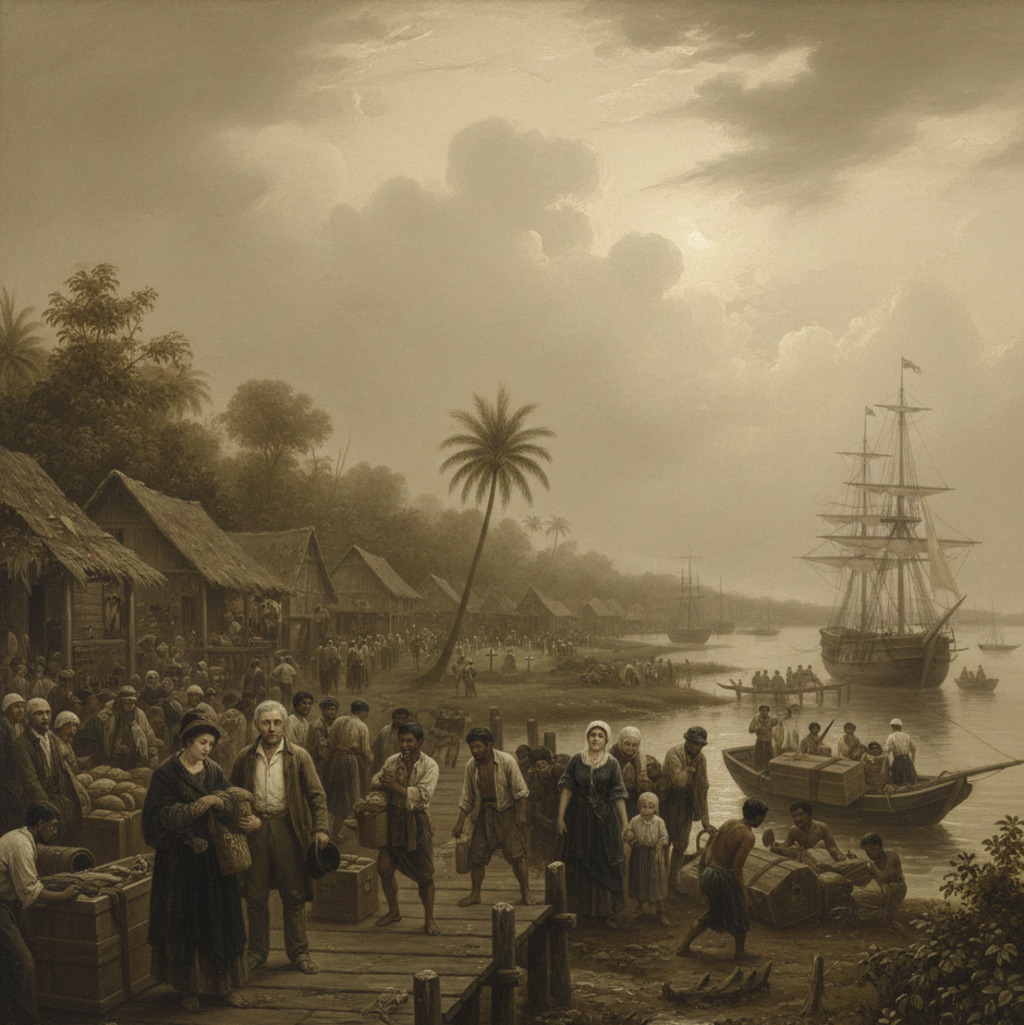
The euphoria of Java came to an end with the restoration of European peace. The Treaty of Vienna returned Java to the Dutch, shattering Sir Thomas Stamford Raffles’s life’s work. Sidelined to the remote, malarial backwater of Bencoolen (Bengkulu) in Sumatra in 1818, his strategic foresight remained intact.
From Bencoolen, Raffles watched the Dutch encircle British trade with a commercial monopoly that threatened the lifeline to China. He believed only a new, permanent base—a Grand Anchor—east of the Straits could secure British trade in Asia. This required him to commit an act of high-stakes political defiance that his rivals would question many times.
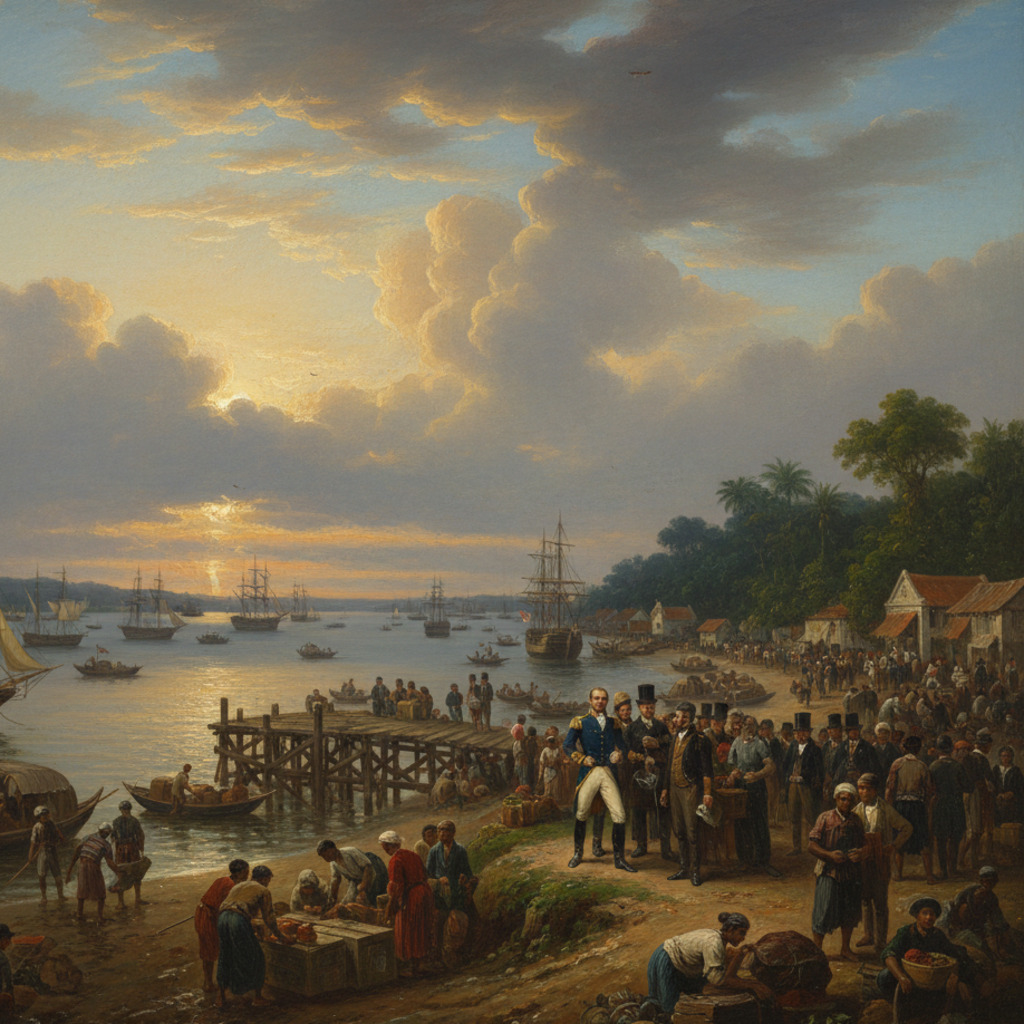
In December 1818, armed with only vague, contingent authority from Calcutta, Sir Thomas Stamford Raffles embarked on his desperate mission. He rejected established, Dutch-controlled sites and, on January 29, 1819, landed at the southern tip of the Malay Peninsula: Singapore. He was accompanied by Colonel William Farquhar, who was to be the first Resident. Sir Stamford Raffles recognised the potential instantly: a superb deep-water harbour strategically positioned at the confluence of Asia’s most vital trade routes.
Risking open collision with the Dutch, Sir Thomas Stamford Raffles immediately negotiated a treaty. They hoisted the flag on February 6, 1819, forever altering the destiny of Southeast Asia. Political rivals often questioned this audacious act. As shipping flocked to the new port, merchants repeatedly vindicated the location’s strategic importance.
The Cost of Empire: Tragedy, Loss, and Betrayal
Sir Stamford Raffles’s final, decisive visit (1822–1823), totalling barely a year, solidified his legacy. He imposed the Jackson Plan, laying out the city’s blueprint, defining ethnic quarters, and designating administrative and commercial areas. He also mandated the site for the Raffles Institution and planned the entire commercial centre, later Raffles Place. After this visit, he left Colonel William Farquhar in charge, though they frequently clashed over Raffles’s rigid regulations.
Raffles instantly declared Singapore a free port, eliminating burdensome duties. This singular policy became the engine of Singapore’s success and was vital for expanding British trade in the Straits. Today, the legendary Raffles Hotel and the Raffles Cup horse race immortalise his name, symbolising the elite sporting culture he cultivated.
But Bencoolen proved to be his undoing. Before his final return, the harsh climate and endemic disease claimed four of his beloved young children. The grief of Sir Stamford Raffles was profound, documented in letters describing the agony many times. He returned to England in 1824, physically broken and spiritually shattered. Though he was a celebrated Fellow of the Royal Society, professional hostility consumed his final years.
The final act of his life was a cruel betrayal. The EIC, resentful of his immense prestige, contested his expenditures, demanding he repay over £22,000—a crushing sum. Raffles died deeply indebted from an apoplectic fit on July 5, 1826, the day before his 45th birthday. Despite securing a vast imperial prize, the EIC denied him burial in Westminster Abbey. His remains were instead interred elsewhere, though a memorial to him was later placed in Westminster Abbey. Before his death, Sir Stamford had completed his final collection notes, many of which would eventually be housed at the British Museum.
Enduring Echoes: The City He Designed and the Leaders He Inspired
Sir Thomas Stamford Raffles remains a complex, contradictory symbol: the quintessential enlightened coloniser. His ultimate monument is not the Raffles Institution, the thriving commercial hub of Raffles Place, or even the Raffles Cup. It is the hyper-efficient, multicultural, and geographically blessed city of Singapore itself.
The modern state, under its founding father, Lee Kuan Yew, built upon the foundations laid by Raffles, transforming the imperial anchor into a sovereign nation. Lee Kuan Yew masterfully utilised the strategic genius of the free port concept to propel Singapore to global success. The foresight symbolised by the imposing Raffles statues still influences policy today. The collections he amassed, now distributed between the National Museum and the British Museum, preserve the history of the world he helped to unlock.
Sir Stamford Raffles FAQs
What was Sir Stamford Raffles’ background, and how did he begin his career?
Raffles was born at sea in 1781 to a desperate, debt-ridden mariner’s family. Due to his family’s instability, he received little formal education and was forced into the working world at age fourteen as a humble clerk for the East India Company (EIC) in London.
How did Raffles become an expert on Asian affairs despite his lack of formal schooling?
Raffles was a self-taught polymath. He spent his nights relentlessly studying and devouring books on history, linguistics, and the geography of the Malay world. This intense, self-directed study transformed him from an impoverished clerk into a rising authority on Asian affairs.
What were his most significant achievements as Lieutenant-Governor of Java?
During his time as Lieutenant-Governor of Java (1811–1816), Raffles implemented radical reforms, replacing feudal structures with a pioneering land-rent system and actively seeking to abolish slavery. Intellectually, he recovered monumental structures, commissioning research that cleared the jungle over the Buddhist stupa of Borobudur and the Hindu temples of Prambanan.
Why and when did Raffles found Singapore?
After Java was returned to the Dutch, Raffles was sidelined to Bencoolen. Fearing the Dutch would encircle British trade with a commercial monopoly, he decided a new, permanent base—a “Grand Anchor”—was needed. He committed an act of high-stakes defiance, and on January 29, 1819, he landed on the southern tip of the Malay Peninsula and negotiated a treaty to establish Singapore.
What tragedy and betrayal marked the end of his life?
Raffles suffered profound grief after the harsh climate and disease of Bencoolen claimed four of his beloved young children. His final years were consumed by professional hostility and betrayal: the EIC, resentful of his prestige, contested his expenditures and demanded he repay over £22,000. Raffles died deeply indebted on July 5, 1826, the day before his 45th birthday, and was denied burial in Westminster Abbey.