
Key Insights
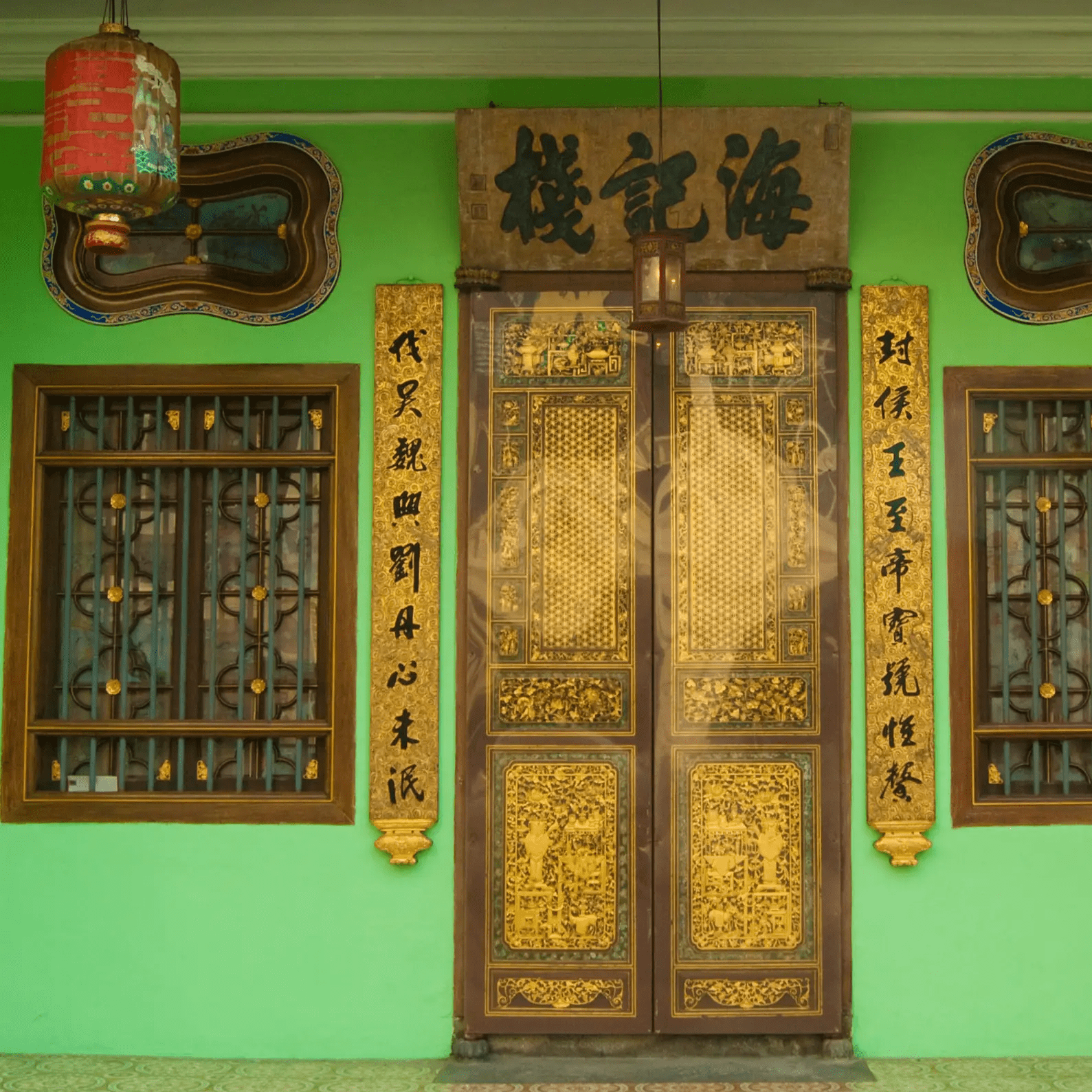
The Pinang Peranakan Mansion is the definitive monument to Straits Chinese opulence. Once the residence of Kapitan Chung Keng Quee, this emerald-green “Straits Eclectic” manor blends Chinese carved wood, Scottish ironwork, and English tiles.
Housing over 1,000 antiques, it offers an immersive window into the refined domestic life and unique hybrid heritage of the Peranakan community.
Straits Eclectic: An architectural style blending traditional Chinese layout plans, Malay timber detailing, and European classical elements like Corinthian columns and Venetian shutters.
Hai Kee Chan: “The Sea Remembrance Hall” in Hokkien, the original historical name of the Church Street residential estate and office built by Kapitan Chung Keng Quee in the 1890s.
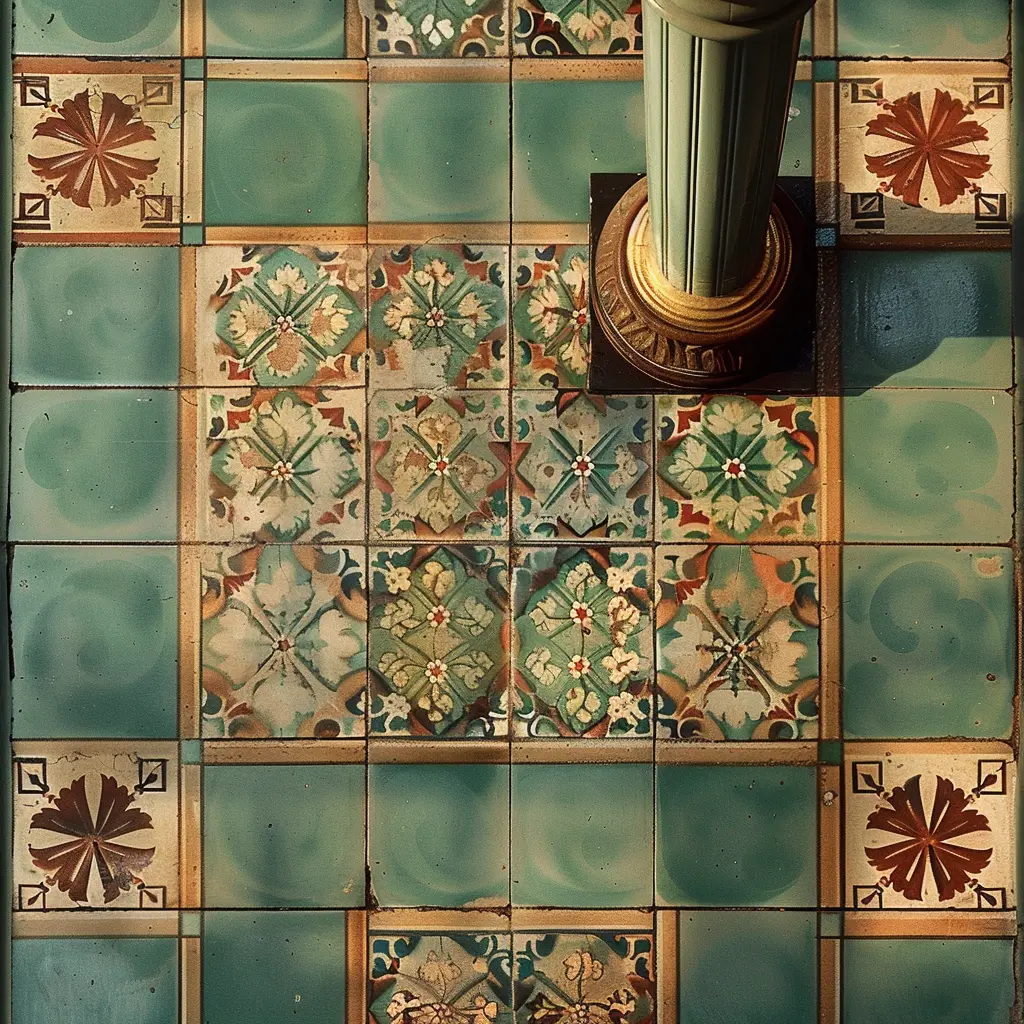
Minton Tiles: Premium encaustic ceramic floor tiles imported from Stoke-on-Trent, England, used by wealthy Straits Chinese merchants to line their reception halls.
Saracen Foundry: The Glasgow-based industrial ironworks responsible for exporting the decorative, fluted cast-iron pillars used to support the mansion’s balconies.
Peranakan: A distinct culture and elite class descended from early Chinese merchants who intermarried within the Malay Archipelago; also referred to as Baba-Nyonya.
On Church Street in George Town, Penang, the British colonial administration established a strict, rational grid of municipal governance. Stone customs houses, courtrooms, and commercial banks asserted the bureaucratic dominance of the British Empire within the Straits Settlements.
Yet, behind the emerald-green walls of Hai Kee Chan (The Sea Remembrance Hall) – known today as the Pinang Peranakan Mansion – a different form of socio-economic power was being projected.
This 19th-century courtyard mansion served as the residential and administrative headquarters of Chung Keng Quee, the powerful leader of the Hai San secret society and the designated Capitan China of Penang, demonstrating how indigenous and immigrant networks negotiated authority alongside colonial institutions.
The Paradox of Ownership: A Hakka Tycoon in a Nyonya Estate
To understand the material culture of the mansion, one must first dismantle a persistent historical misconception: the estate was not built by a traditional Baba-Nyonya family. It was conceived, owned, and operated by Kapitan Chung Keng Quee. Chung was a first-generation Hakka migrant from Guangdong province who arrived in Malaya with little more than raw ambition.
Through ruthless resource management, Chung secured a strict monopoly on tin mining concessions in Larut. His position as the absolute leader of the notorious Hai San secret society cemented his power.
Consequently, Chung became the wealthiest man in Malaya. Yet, he remained an outsider to Penang’s established, English-educated Peranakan elite.
The mansion represents a fascinating cultural paradox. How did a Hakka mining tycoon create the definitive monument of Straits Chinese heritage?
Chung Keng Quee maintained deep political ties to the Qing Imperial Court. The answer to his architectural choices lies in the shifting dynamics of late nineteenth-century capitalism.
Wealth, institutional power, and regional intermarriage quickly blurred provincial lines. By building this domestic fortress, Chung integrated Peranakan aesthetic markers into his daily life.
This layout was a calculated act of cultural assimilation. He anchored his family firmly within the highest tier of the Straits Chinese aristocracy.
His strategy proved that identities in the colonial port city were fluid and transactional. Ultimately, status was defined by the reach of one’s capital.
Materiality and Provenance: The Intellectual Luxury of the Eclectic
Architecturally, the Pinang Peranakan Mansion operates on two distinct levels: a rigid Chinese structural skeleton and a skin of imported European technology. The layout of the home adheres strictly to the traditional southern Chinese courtyard house configuration. It prioritises absolute symmetry, ancestral hierarchy, and the principles of Straits Chinese Feng Shui.
The central atrium serves as the lungs of the house, drawing in light, rain, and air while maintaining complete visual privacy from the chaotic street outside. Domestic life was compartmentalised by generation and gender, with the inner chambers reserved for the matriarchal domain and ancestral veneration.
However, within this highly conservative, traditional blueprint lies a radical material transgression. Chung Keng Quee did not build with local timber and masonry alone; he weaponised the international supply chains of the British Empire to furnish his home.
The structural integrity of the central courtyard relies on Corinthian-style cast-iron pillars imported directly from Walter MacFarlane’s Saracen Foundry in Glasgow, Scotland. Underfoot, the traditional beaten earth or local tile is replaced by geometric, encaustic floor tiles manufactured by Minton in Stoke-on-Trent, England.
These Western industrial imports sit flush against deeply carved Cantonese teakwood panels, heavily gilded with gold leaf shipped from Guangzhou, depicting scenes from the Romance of the Three Kingdoms.
This eclecticism was not a naive attempt to mix cultures; it was an exercise in intellectual luxury. By inserting Scottish iron and English ceramics into a Chinese domestic hierarchy, Chung demonstrated a profound understanding of global trade.
He took the literal products of Western industrialisation and forced them to support a traditional Chinese ancestral worldview, subtly signalling to visiting British officials that their finest industrial achievements were merely decorative assets to his empire.
The Domestic Treasury: Deconstructing the 1,000-Piece Collection
To view the interior of the mansion merely as a museum of beautiful things is to miss its value as a dense ledger of global commerce. The thousands of artifacts packed into the estate’s rooms function as historical data points, charting the tastes, alliances, and consumer habits of a unique merchant class.
The material culture preserved here reveals a community that possessed polyglot fluency—able to navigate multiple worlds simultaneously.
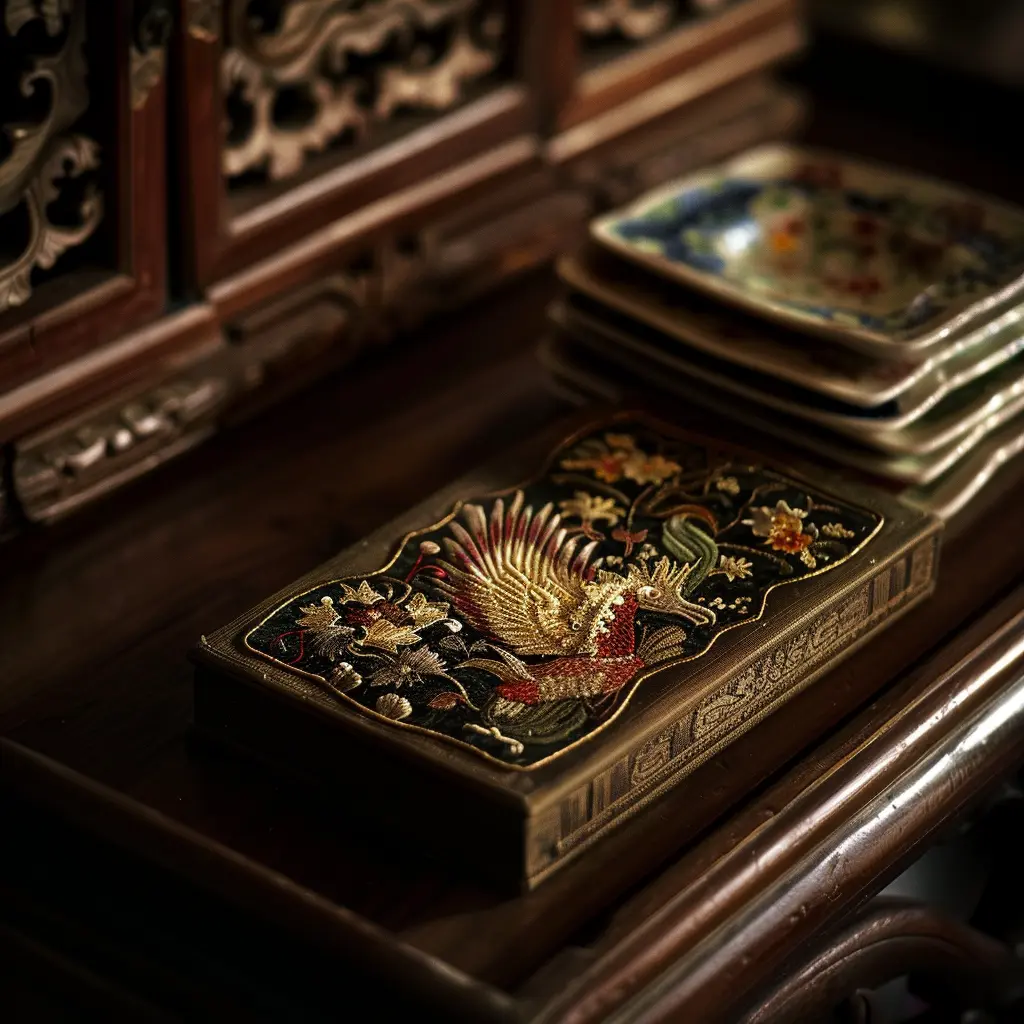
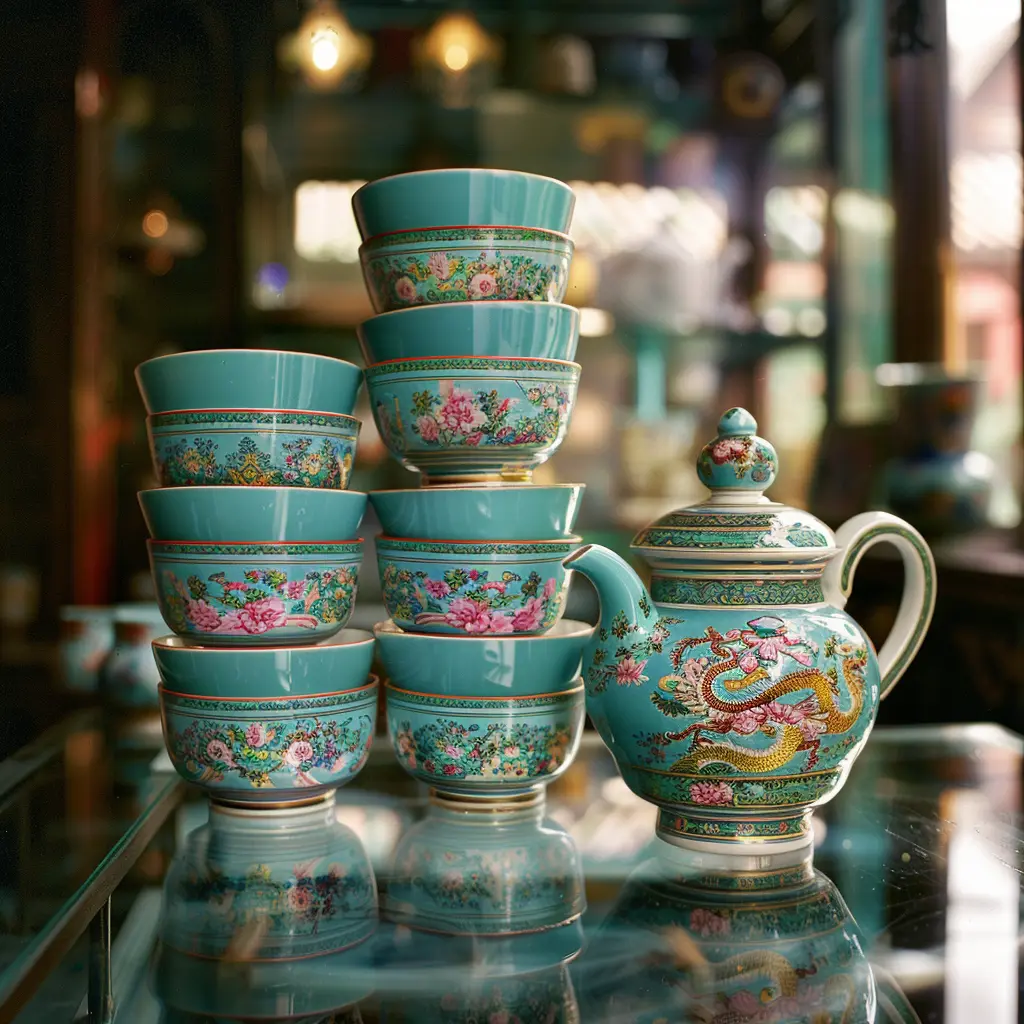
Consider the porcelain collections that fill the dining rooms. These are not standard Chinese exports, but custom-ordered nonya ware commissioned directly from the imperial kilns of Jingdezhen in Jiangxi province.
The colour palettes – dominated by vibrant magentas, turquoise, and lime greens – were specifically selected to suit the tropical aesthetic preferences of the Straits Settlements, completely distinct from the tastes of mainland China.
A few feet away from these Chinese ceramics sit Victorian glass epergnes, Venetian mirrors, and French under-glaze clocks. This juxtaposition was highly functional. The dining room was a theatre of diplomacy.
Chung and his heirs hosted elaborate, multi-course dinners for British governors, colonial judges, and European business partners. These high-profile guests were served Western cuisine using fine European silverware.
The room itself argued that its wealthy owner was culturally bilingual. He was perfectly capable of operating within British high society, yet remained entirely autonomous.
Material Palette & Provenance
- Cast-Iron Pillars
- Provenance: Saracen Foundry, Glasgow
- Role: Structural support for the central airwell; symbol of Western industrial mastery.
- Encaustic Tiles
- Provenance: Minton, Stoke-on-Trent
- Role: Durable, geometric flooring for high-traffic reception areas; clear marker of British colonial luxury.
- Teak Wood Panels
- Provenance: Guangdong Province, China
- Role: Intricate gold-leaf carvings outlining domestic boundaries; reinforce traditional Confucian hierarchy.
- Nonya Porcelain
- Provenance: Jingdezhen Kilns, Jiangxi
- Role: Custom-hued dining ware showcasing unique Straits Chinese aesthetic autonomy.
Cinematic Resonance and Modern Preservation
The Pinang Peranakan Mansion’s journey from near-ruin to global cultural icon reflects modern Malaysia’s complex heritage politics.
Following decades of post-WWII neglect, the estate nearly faced demolition. This destructive fate claimed many neighbouring structures during George Town’s rapid mid-century modernisation.
Its rescue and painstaking 1990s restoration by a private collector marked a crucial historical turning point. This massive effort shifted Penang’s narrative away from a purely Eurocentric view, recentering its Asian architects instead.
In the twenty-first century, the mansion gained an unexpected secondary life as a global pop-culture phenomenon. It now serves as a shorthand for historical Southeast Asian opulence.
Its ornate backdrops, jade-panelled walls, and dramatic central staircase anchor major international screen productions. These cinematic backdrops notably include the definitive Singaporean drama The Little Nyonya.
This newfound cinematic fame introduces an interesting modern paradox. It risks reductionism, flattening a complex site of historical negotiation into a highly stylized fantasy of effortless wealth.
Yet, this global visibility simultaneously secures the essential capital needed to maintain the physical structure. Ultimately, this funding ensures the mansion remains a permanent fixture of Penang’s architectural memory.
The Living Archive of the Straits
The Pinang Peranakan Mansion remains far more than an aesthetically striking, emerald-green landmark on the corner of Church Street. It operates as a living archive of a specific, brief historical moment when regional Asian capital grew powerful enough to look the British Empire in the eye and negotiate on its own terms.
Through its deliberate synthesis of Scottish engineering, Chinese philosophy, and Peranakan material culture, the estate shatters the simplistic, binary narrative of colonial history – the idea of a dominant European power imposing its will onto a passive local population.
Instead, it proves that the true architects of Penang’s nineteenth-century golden age were these hyper-adaptable, regional tycoons. They extracted immense wealth from the earth, mastered the trade routes of the world, and built enduring empires out of tin, spice, and stone.
Visiting Pinang Peranakan Mansion
Location: 29, Church Street, 10200 Penang, Malaysia.
Opening Hours: Monday – Sunday (including Public Holidays) 9:30 am to 5 pm
Admission Fees: Adults RM25, Children RM12
Pinang Peranakan Mansion Tips
Photography: Photography is allowed, but flash photography might be restricted at certain times and in certain areas.
Guided Tours: Experience the Pinang Peranakan Mansion with an experienced tour guide.
Respectful Etiquette: Dress appropriately and, above all, respect the cultural significance of the mansion and its artifacts when visiting Pinang Peranakan Mansion.
Penang’s heritage mansion serves as a vital link to the past, preserving the cultural heritage of the Peranakan people. By exploring the mansion’s exhibition, visitors gain a deeper appreciation for the Baba Nonya community that has played such an important role in the history of Malaysia.
Whether you love history, architecture, or Peranakan culture, this mansion offers a fantastic journey into old Penang.