
Key Insights
Dim sum originated not in imperial palaces, but in the humble 19th-century Guangdong teahouses catering to dockworkers and labourers.
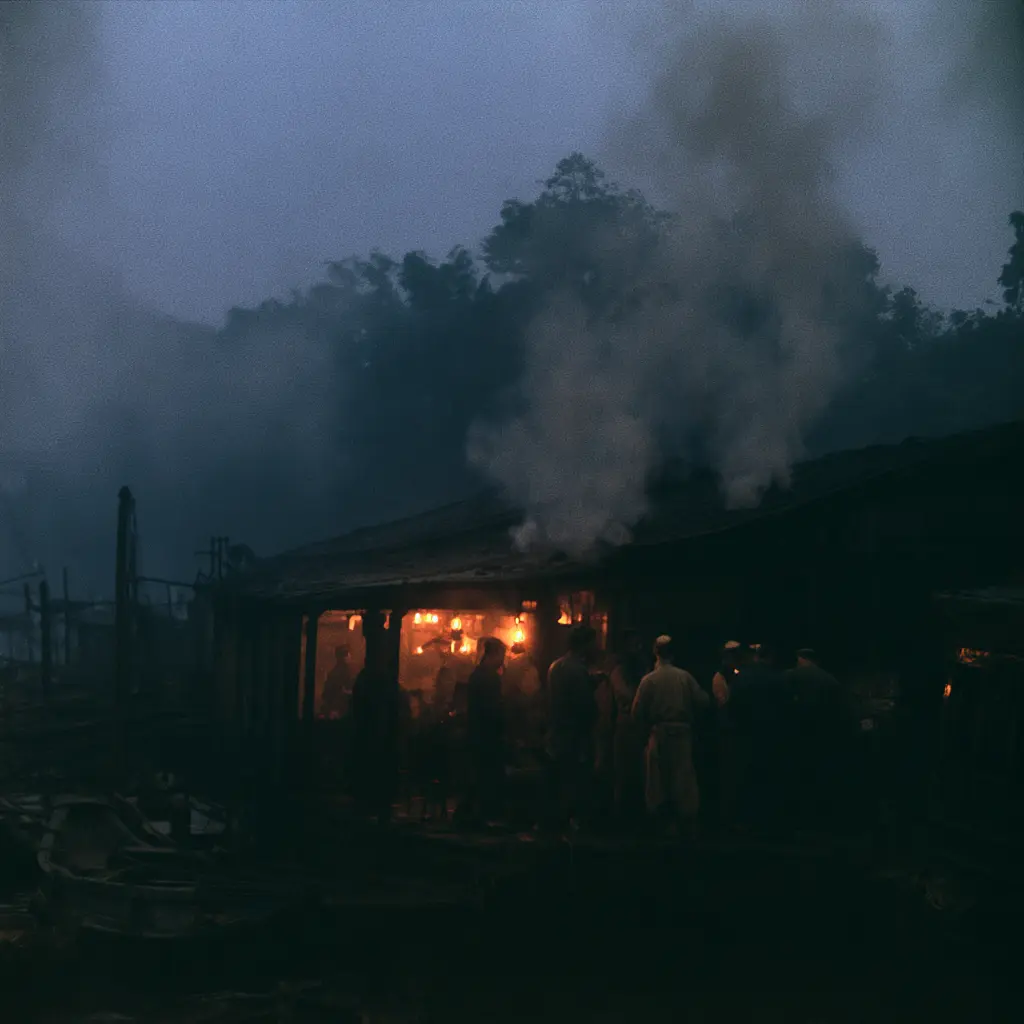
Along the mist-shrouded Pearl River in Guangzhou, workers gathered over cheap tea and warm pork buns—a simple daily ritual known as “one cup, two buns”—forging the vibrant, community-driven culinary tradition enjoyed around the world today.
Yum Cha: The Cantonese cultural ritual of drinking hot tea alongside an array of small, savoury dishes. Originally a morning ritual for labourers, it evolved into a prolonged social tradition enjoyed across generational dining tables.
Yi Taak Bou: Modest roadside resting booths established along Guangdong’s trade routes during the early 19th century. They served cheap tea and coarse steamed buns to weary coolies seeking basic physical sustenance.
Cha Lau: Multi-story, ornate urban teahouses designed to cater to wealthy merchants, scholars, and guild leaders. Intense commercial competition among these venues drove chefs to transform basic street snacks into refined dim sum.
Har Gow: A translucent wheat-starch dumpling filled with seasoned river shrimp and young bamboo shoots. Widely considered the ultimate benchmark of a dim sum chef’s technical prowess, its skin requires precise folding and steaming.
Siu Mai: An open-topped dumpling filled with hand-chopped pork shoulder, fresh shrimp, and rehydrated shiitake mushrooms. It is wrapped in a paper-thin lye-water egg dough and crowned with crab roe for a distinct textural snap.
Nanyang: The historical Chinese geopolitical term translating to “Southern Ocean,” referring to maritime Southeast Asia. This region became the primary destination for southern Chinese migrants who transplanted teahouse culture into Malaya and Siam.
Modern fine dining has long preferred to dress dim sum in courtly silk. High-end menus routinely retrofit the food with an aristocratic pedigree of imperial banquets and palace ceremonies, garnishing steamer baskets with abalone and shaved truffle to flatter the myth that this was an elite indulgence handed down from dynastic rulers.
The reality was far coarser, shaped entirely by the working waterfronts of the Pearl River Delta. Long before it became an elaborate morning ritual, what is now called yum cha operated as a basic caloric utility. It was not conceived in imperial pavilions, but in the rough, riverine tea shacks of nineteenth-century Canton, built to fuel the dockers, salt traders, and warehouse coolies who hauled maritime freight through South China’s principal trade corridor.
The Myth of the Imperial Banquet
Wrapped doughs had long sustained Silk Road caravans across northern China, but the technical discipline of dim sum developed through an entirely different geography: the river arteries of the south.
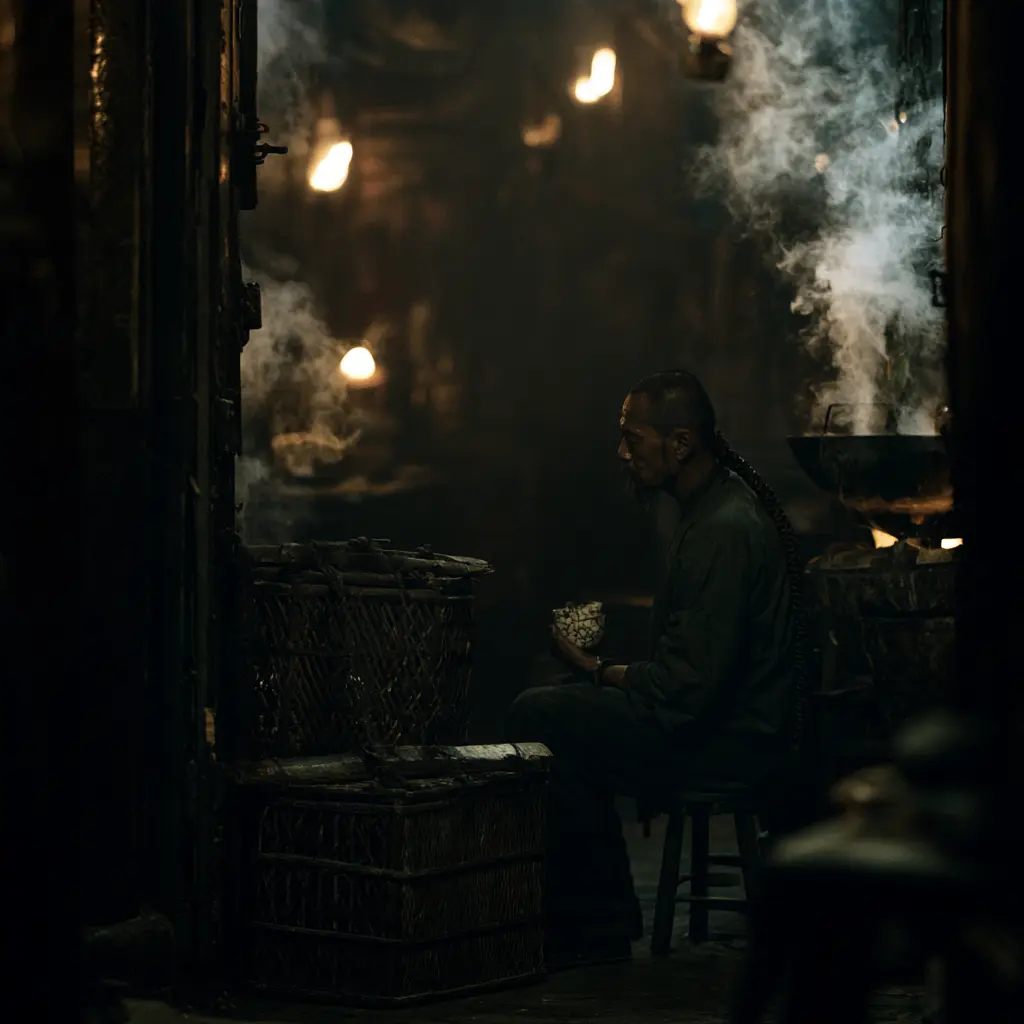
During the Qing Dynasty, rural transit shacks known as yi taak bou—literally “resting booths”—sprang up along the trade routes feeding Guangzhou. These rough-hewn sheds functioned as metabolic refuelling points for manual freight hauliers.
The transaction was rudimentary: heavy, coarse-flour steamed buns to deliver dense starch calories, washed down with bowls of cheap, astringent tea. The hot tannins cut through grease, settled strained stomachs, and offered a brief respite from physical exhaustion.
At this stage, the food bore none of the hallmarks of the modern craft. There were no gossamer wheat starches, no layered folds, and no porcelain services. Translating these blunt roadside rations into a refined culinary system required the commercial pressures of Guangzhou’s urban trade boom.
From Roadside Booths to Multi-Story Teahouses
As Guangzhou expanded under the maritime monopoly of the Canton System, the crude roadside yi taak bou divided into two distinct urban architectures. At street level were the cha caan—utilitarian ground-floor stalls with bare timber trestles opening before dawn to feed coal haulers, fishermen, and street peddlers requiring immediate, calorically dense fuel.
Above them rose the cha lau. These multi-story establishments featured carved lattice screens, balconies hung with songbird cages, and private upper chambers built for the merchant guilds. Here, silk brokers and timber traders spent hours negotiating bulk shipments, demanding a different style of hospitality: small, delicate savouries that paired with high-grade infusions without inducing the sluggishness of a heavy midday meal.
Commercial rivalry among cha lau proprietors rapidly professionalised the trade. Establishments recruited specialised pastry masters, pulling the production of steamed snacks out of domestic improvisation and establishing an independent bench craft. The classical idiom dim sum—once an incidental literary phrase denoting light morsels—was codified as a technical discipline.
Kitchens staked their commercial reputations on the structural limits of starch: the micrometre-thin translucency of steamed wrappers, the precise moisture retention of minced fillings, and the speed of bench work required to sustain prolonged service.
The “Four Heavenly Kings” of Cantonese Culinary Engineering
Operationally, dim sum developed entirely outside the jurisdiction of the traditional wok line, the faan tong. The teahouse structure established an independent pastry and steam brigade governed by entirely different material constraints: the manipulation of aged sourdough starters, multi-layered fat lamination, and the thermodynamic behaviour of saturated steam inside stacked bamboo racks.
This technical framework crystallized around four standardised benchmarks, traditionally designated the Four Heavenly Kings.
1. Har Gow (Crystal Shrimp Dumpling)
The standard assessment of bench skill begins with har gow. Originating in the peri-urban market settlements along the riverways outside Guangzhou, the dumpling functions as an exercise in pre-gelatinized starch chemistry.
Because non-glutinous wheat starch lacks gluten to form an elastic matrix, it is cut with tapioca starch and scalded with boiling water, forcing the starch granules to swell and gelatinise before kneading.
Portioned into small rounds, the dough cannot be rolled with a pin; instead, a craftsman lubricates the broad face of a carbon-steel cleaver with lard and draws it across the bench in a single shearing sweep, smearing the paste into a paper-thin disc.
The skin is folded over whole river shrimp, hand-diced back fat, and young bamboo shoots, closed with nine to thirteen overlapping pleats gathered along one edge while the back remains smooth.
In the steamer, moisture swells the filling while the starch gelatinises into a glassy, taut membrane—translucent enough to reveal the coral pink of cooked shrimp, yet elastic enough to trap expanding pork broth without rupturing under steam pressure.
2. Siu Mai ( Open-Topped Pork Dumpling)
Where northern iterations rely on unleavened wheat skins gathered into loose ruffs, the Cantonese siu mai is defined by an alkaline, egg-enriched pastry sheet rolled to paper thickness. The addition of lye water (kansui) shifts the dough’s pH, inhibiting gluten extensibility while conferring a characteristic yellow cast, a firm bite, and resistance to waterlogging in humid steam.
The cylinder remains open at the crown, exposing a filling that relies on knife work rather than a grinder.
Pork shoulder is hand-diced to preserve muscle grain, then beaten against the bowl until the salt extracts myosin proteins, forming a cohesive, springy matrix. Into this emulsion are folded rough-cut shrimp and dried shiitake mushrooms rehydrated in Shaoxing wine, contributing glutamate depth without excess free moisture.
Pinched into a fluted waist that supports the column during expansion, the open aperture is dressed with orange crab roe—substituted in commercial production by finely diced carrot—delivering a distinct shearing resistance before the casing yields to the broth trapped within the meat.
3. Char Siu Bao (Barbecued Pork Bun)
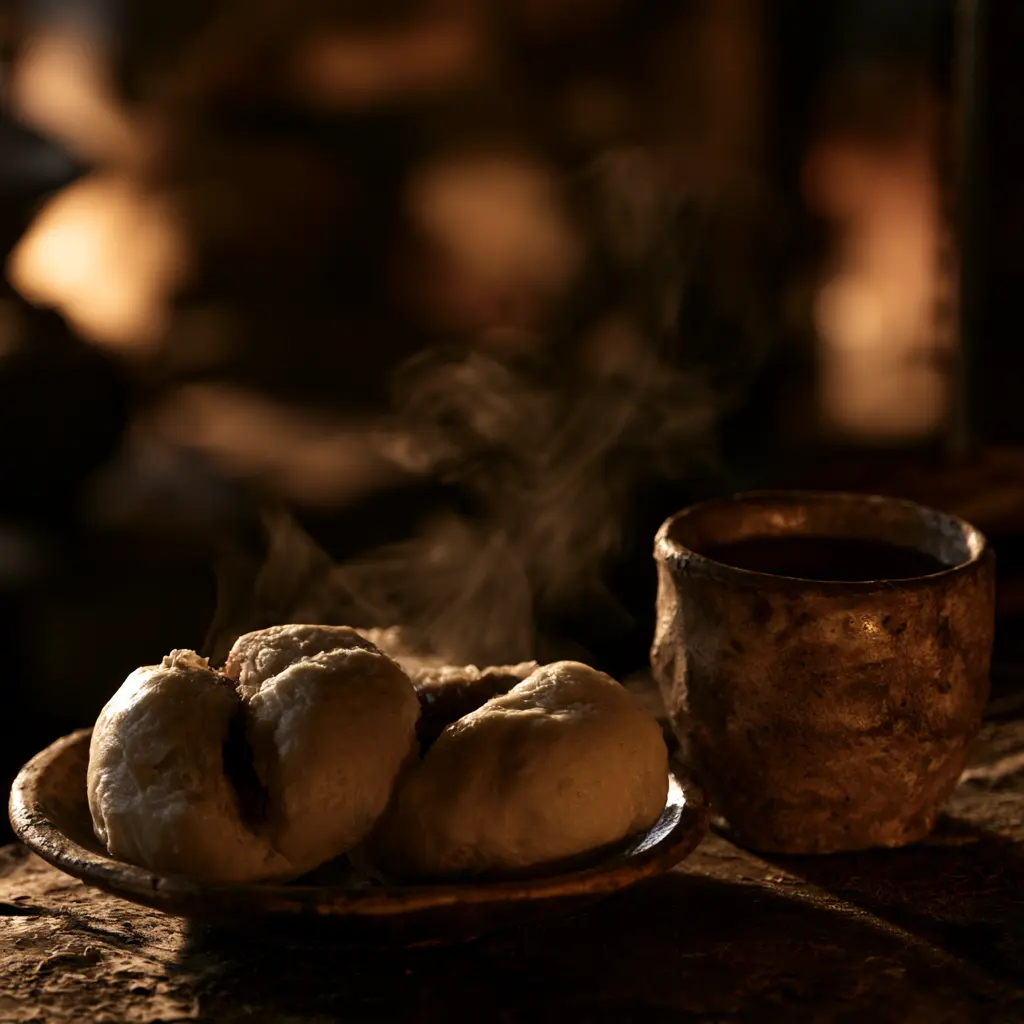
The architecture of char siu bao turns on the deliberate control of fermentation and gluten development. Rather than relying on commercial chemical leaveners, the dough is built around an aged starter culture (mian tao), enriched with rendered lard and blended with low-protein wheat flour to weaken gluten tensile strength. This structural fragility is deliberate: it yields a crumb that remains pillowy and soft rather than bread-like and chewy.
When the raw bun meets the high-pressure, saturated vapour of the bamboo steamer, the rapid thermal shock forces a sudden release of trapped gases. Because the low-gluten structure cannot stretch to contain the pressure, the apex ruptures along natural fracture lines into three distinct, blooming lobes—a phenomenon known in the workshop as siu, or “smiling.”
Sealed beneath this ruptured crown sits roasted pork shoulder, hand-diced and bound in a dense reduction of oyster sauce, dark soy, and toasted sesame oil engineered to hold its viscosity under intense steam heat without bleeding water into the surrounding dough.
4. Dan Tat (Egg Tart)
The dan tat preserves a direct material record of treaty-port mercantile exchange. Encountering the baked custard tarts of British merchants and the Portuguese pastéis de nata served in the foreign concessions of early twentieth-century Guangzhou, Cantonese pastry masters translated Western dairy baking through indigenous fats and bench techniques.
Because butter was scarce and prone to melting in humid riverine workshops, cooks turned to leaf lard, laminating alternating layers of water dough and oil-fat paste.
Lard possesses higher melting points and distinct crystalline fat structures that prevent premature absorption into the flour; in dry oven heat, moisture trapped between these stratified fat layers flashes to steam, lifting the pastry into dozens of fragile, shattered laminations.
Within this brittle, flared shell, the filling requires delicate temperature control: an egg-and-sugar emulsion baked under low, indirect heat to coagulate the proteins into a glossy, uniform suspension without blistering the surface or curdling into pockets of free whey.
The Southern Migration: Dim Sum in Nanyang
Driven south by rural collapse, famine, and rebellion in the late nineteenth and early twentieth centuries, millions of Cantonese, Teochew, and Hakka migrants crossed the South China Sea into the Nanyang. Along the boomtown corridors of British Malaya and Siam, they established the same teahouse networks they had left behind, anchoring their morning trade routines directly into the mines, rubber estates, and river ports of the diaspora.
Malaya’s Tin Mines and the Cantonese stronghold
In British Malaya, the tin boom across the Kinta Valley drew waves of Cantonese labour into Ipoh, Penang, and Kuala Lumpur. Ipoh proved uniquely suited to the trade: its subterranean hard-water limestone springs closely mirrored the alkaline mineral profile of Guangdong wells, providing the dissolved calcium necessary to yield tensile, translucent dumpling skins and smooth rice noodles.
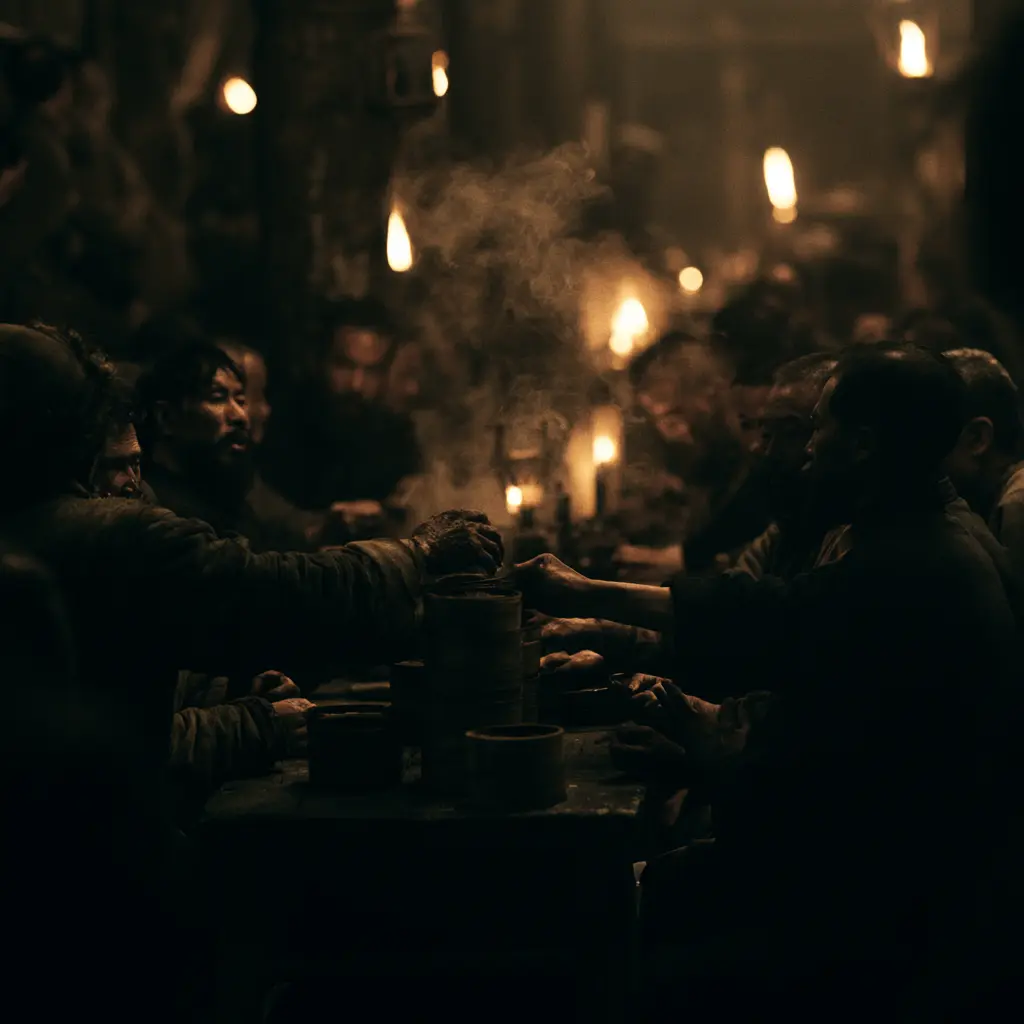
Yum cha quickly anchored the daily rhythm of the settlements. Labourers gathered before dawn for cheap calories before the morning shifts on tin dredges and rubber estates, while merchant guilds met on the upper floors of timber shophouses to fix commodity prices over pots of shoumei.
Over time, the baskets adapted directly to local supply lines. Abundant coastal mackerel was scraped into springy surimi to stuff bitter gourd, chili, and tofu skin—the classic yong tau foo crossover folded into the bamboo steamer circuit.
Dense lotus-leaf parcels of glutinous rice topped with dark soy chicken and shiitake (loh mai gai) became a core fuel source for manual workers, while later halal adaptations across the peninsula substituted rendered chicken broth, shrimp paste, and vegetable oils for traditional pork lard to serve a multi-ethnic public.
Siam’s Southern Spice and Royal Markets
In Thailand, migration concentrated Cantonese and Teochew enclaves within Bangkok’s Yaowarat corridor and the southern maritime trading hubs of Phuket, Trang, and Hat Yai.
Across the southern provinces, the morning service was incorporated into local daybreak habits as chokdee. Low marble tables were crowded with dozens of miniature steamers alongside bowls of broken-rice pork porridge (jok) and condensed-milk coffee (kopi).
The table seasonings shifted with the geography. The traditional Cantonese accompaniments of light soy and aged red vinegar gave way to nam chim chokdee, a thick, sour-sweet red condiment built on fermented plum, tamarind pulp, garlic, and crushed red chillies.
The leavened wheat bun was absorbed into daily market commerce as salapao. Steamed in portable, glass-sided street carts, the buns retained their traditional fillings of sweetened red bean or minced pork bound with salted duck egg yolk, becoming a ubiquitous morning ration across the country’s transit corridors.
The Pushcart Theatre and Modern Heritage
Postwar upheaval across the mainland pushed Guangzhou’s senior pastry guild masters south into British Hong Kong. There, in high-ceilinged, multi-tiered dining halls across Central and Sheung Wan, the commercial mechanics of yum cha reached industrial scale.
The dining floors operated on manual logistics: attendants pushed heated aluminium carts through narrow rows of round tables, calling out newly steamed batches as they emerged from the basement kitchens.
Consumption was tallied in real time—floor staff stamped ink grids on paper chits resting at each table, logging basket prices alongside the steady clatter of heavy porcelain and boiling water kettles.
Across the Straits of Malacca and the southern Thai peninsula, this mid-century system remains visibly intact. On the marble tabletops of George Town and the dawn markets of Trang, the service holds to its original trade logic: hot tea, dense starch, and shared tables built to turn manual labourers out into the morning heat.