

Every luxury travel agency boasts about its proprietary mobile app and real-time flight tracking. But the industry has fallen into a comfortable trap. We’ve convinced ourselves that “frictionless” is synonymous with digital. We craft complex, multi-week journeys costing upwards of five figures and then deliver the master plan as a twelve-page PDF attached to an email.
Let’s be honest about what actually happens to that PDF.
It gets downloaded onto an iPhone. It gets opened twice while the client is dodging crowds in an airport terminal. It sits in a clutter of receipts, boarding passes, and screenshots until the trip is over, at which point it quietly vanishes into a digital grave.
It serves a basic logistical purpose. It tells the driver what time to show up. But it carries no authority, no romance, and no lasting value.
If you’re engineering bespoke, highly detailed journeys, relying entirely on a PDF is a massive wasted opportunity. High-net-worth travellers do not pay top-tier design fees merely for utility; they pay for discernment, narrative, and quiet competence. The medium of your delivery should match the weight of the experience you have spent months building.
This is why a growing cohort of elite agencies are quietly walking away from screen-only delivery and shifting to the Provenance Report: a hardbound, custom-printed research volume delivered to the client’s front door ten days before they depart.
This isn’t a plastic comb-bound binder from an office supply store, nor a glossy, generic brochure littered with stock photography. It’s a linen-wrapped, foil-stamped briefing book designed to sit on a coffee table alongside monographs on architecture and art. It shifts the entire client dynamic from reading a schedule to unboxing an asset.
The Current Landscape: Why We Are Failing the Coffee Table Test
To understand the opportunity, we must acknowledge how the top tier of the market currently handles physical delivery. There’s an industry-wide consensus that “paper is premium,” but there’s a profound lack of ambition in what that paper contains.
Currently, the industry operates in three distinct tiers of physical delivery:
The Gap in the Market: Almost every agency in the world is printing schedules. Nobody is publishing.
There’s a massive, untapped space between a logistical document and a luxury book. The client doesn’t need another list of hotel addresses; they need a narrative map of their journey. When an agency treats the itinerary as a piece of editorial content – curating the history, the design lineage, and the cultural context – they move from being a vendor of logistics to a provider of intellectual capital.
The Making of a Provenance Report
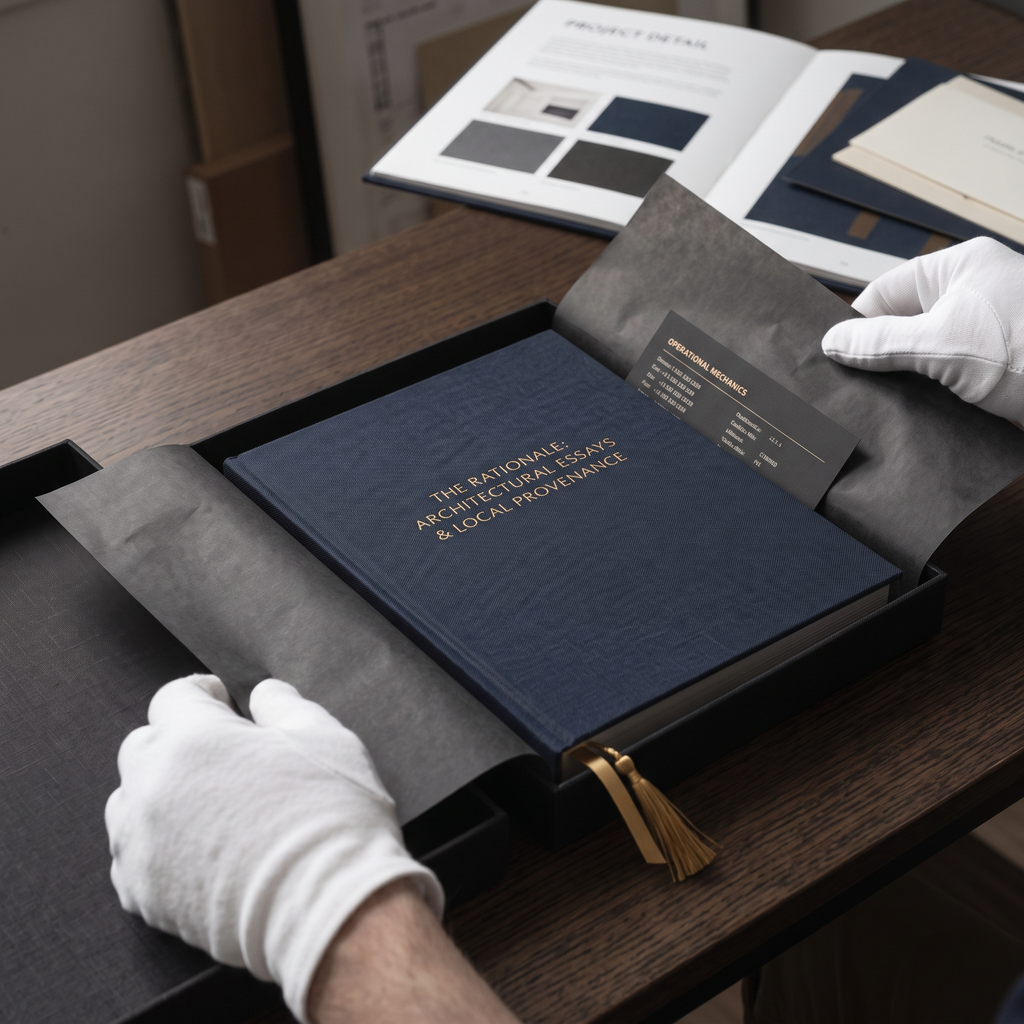
A standard itinerary tells a traveller where they’re going and when they need to be there. A Provenance Report explains why the trip was built this way in the first place. It documents the intellectual rigour behind the design.
1. The Rationale, Not Just the Listing
Do not merely print the hotel name and check-in time. Dedicate a full page to the property’s design lineage. Explain why that specific corner suite was selected over the rest – perhaps owing to the orientation of the morning light, or the preservation of original 19th-century teak joinery in the lobby. When you articulate the intent behind a choice, the client perceives the stay not as an expensive room, but as a deliberate architectural experience.
2. Deep Cultural Context Over Superficial Factoids
Replace generic tourist trivia with essays-in-miniature on regional heritage, vernacular building techniques, trade history, or local foodways. If your client is visiting a historic highland estate, give them a primer on the timber trade that built the valley before they land. When travellers understand the historical mechanics of a place beforehand, they don’t waste time skimming Wikipedia on a tour bus; they step into the landscape already informed.
3. The Human Layer and Social Capital
The most valuable element of high-end travel is access, and access is fundamentally about human relationships. Include short profiles and handwritten notes from the local specialists, historians, fixers, and craftsmen who will be hosting them. “We reserved Table 4 because it has a direct line of sight to the open kitchen, where the owner’s mother still hand-rolls the tagliatelle every afternoon.“
The Realism Check: The Friction of Printing Physical Books
Producing hardbound volumes for private travel is expensive, operationally painful, and entirely unnecessary for a weekend trip.
If you attempt to roll this out across every booking in your portfolio, your operations team will revolt. The logistics are unforgiving. Local bookbinders run on their own slow timelines, paper stocks go out of print, and international couriers will inevitably delay a shipment right when a client is packing.
Worse is the reality of schedule volatility. If an airline cancels a connection three days before departure, page 18 of your $300 book is officially obsolete.
You don’t fight this; you design around it.
The strategy requires a clear division between enduring narrative and volatile logistics:
By separating the history from the housekeeping, the book retains its value regardless of operational hiccups.
From Disposable Logistics to Institutional Legacy
When the journey ends, the app is deleted to free up storage. The PDF sinks into the email inbox, never to be seen again.
The bound volume, however, remains. It sits on the living room table as the client recounts the journey to friends. Eventually, it moves to a permanent home on the bookshelf in their study.
It ceases to be an itinerary and becomes an official Provenance Report – the permanent, beautifully crafted record of a life experience.
In a market saturated with automated booking engines, the ultimate flex is not a faster app. It is deep research, deliberate curation, and the patience to bind it in linen.
Are you delivering disposable logistics, or are you handing your clients an heirloom?