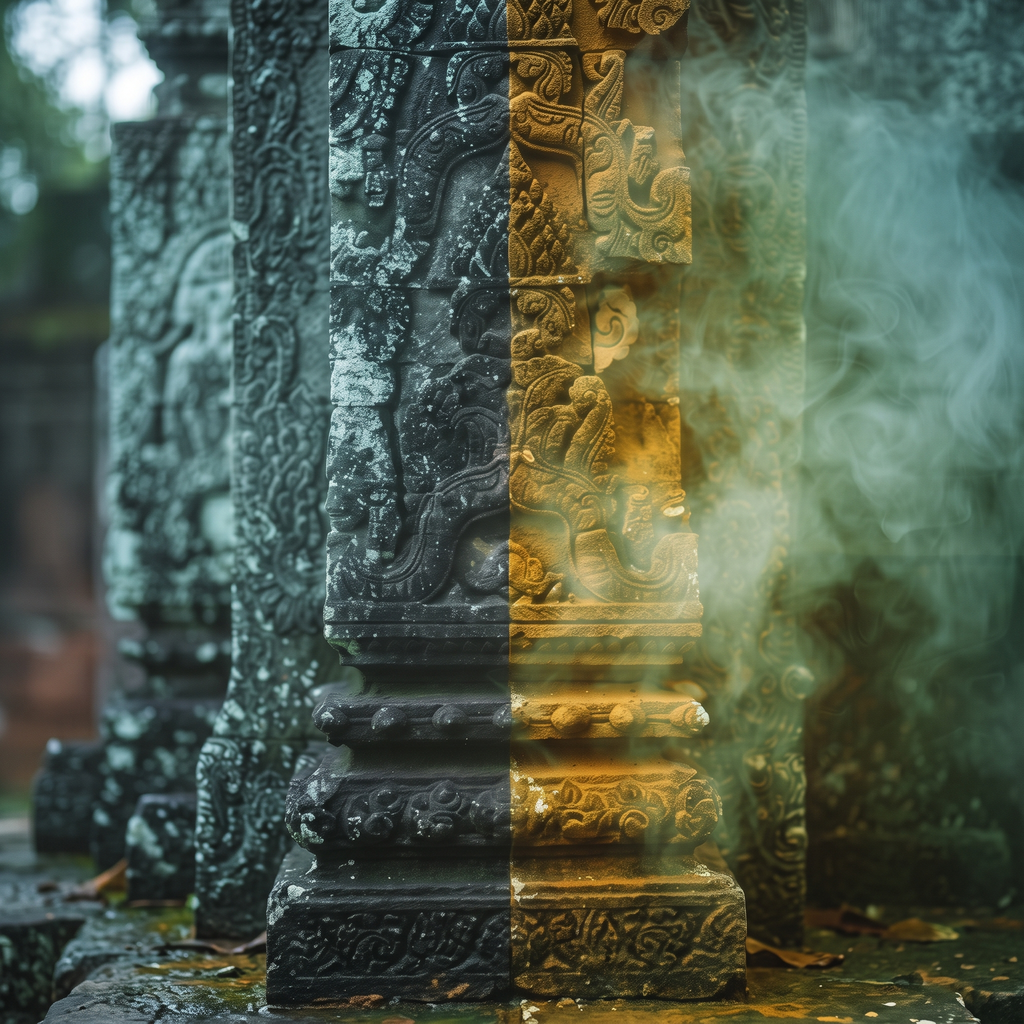

In the travel industry, we’re obsessed with the “World Heritage” designation. The UNESCO blue shield has been the gold standard for destination marketing—a promise of historical significance, architectural integrity, and bucket-list prestige.
But as someone who spends my professional life scouting heritage properties across Southeast Asia, I have come to a counterintuitive conclusion: If your itinerary stops at the UNESCO boundary, you’re missing 90% of the story.
The global tourism model currently treats heritage as a static artifact to be protected, fenced, and curated. However, culture is fluid. It doesn’t respect the arbitrary lines drawn by administrative committees in Paris. When we limit our scope to the “official” core, we inadvertently transform living communities into open-air theme parks.
For travellers seeking depth and for hospitality brands seeking differentiation, the real value lies not in the centre, but in the Buffer Zone—that space just outside the official map where history isn’t performed; it’s lived.
The Museumification Trap
Official heritage status is a double-edged sword. While it provides critical funding and protection for endangered sites, it also triggers a predictable cycle of gentrification.
Within the protected perimeter, authenticity often undergoes a process of “museumification.” The daily rhythm of a street – the smell of a local kitchen, the sound of a repair shop, the sight of neighbours chatting – is replaced by souvenir stalls, standardised café menus, and inflated price points designed for the day-tripper.
When a site becomes “world-class,” it often ceases to be a neighbourhood. The original inhabitants are priced out, and the culture becomes a curated performance. For the discerning traveller, this creates a sterile experience. You aren’t seeing a culture; you are seeing a carefully managed aesthetic.
The Buffer Zone: Where Culture Actually Breathes
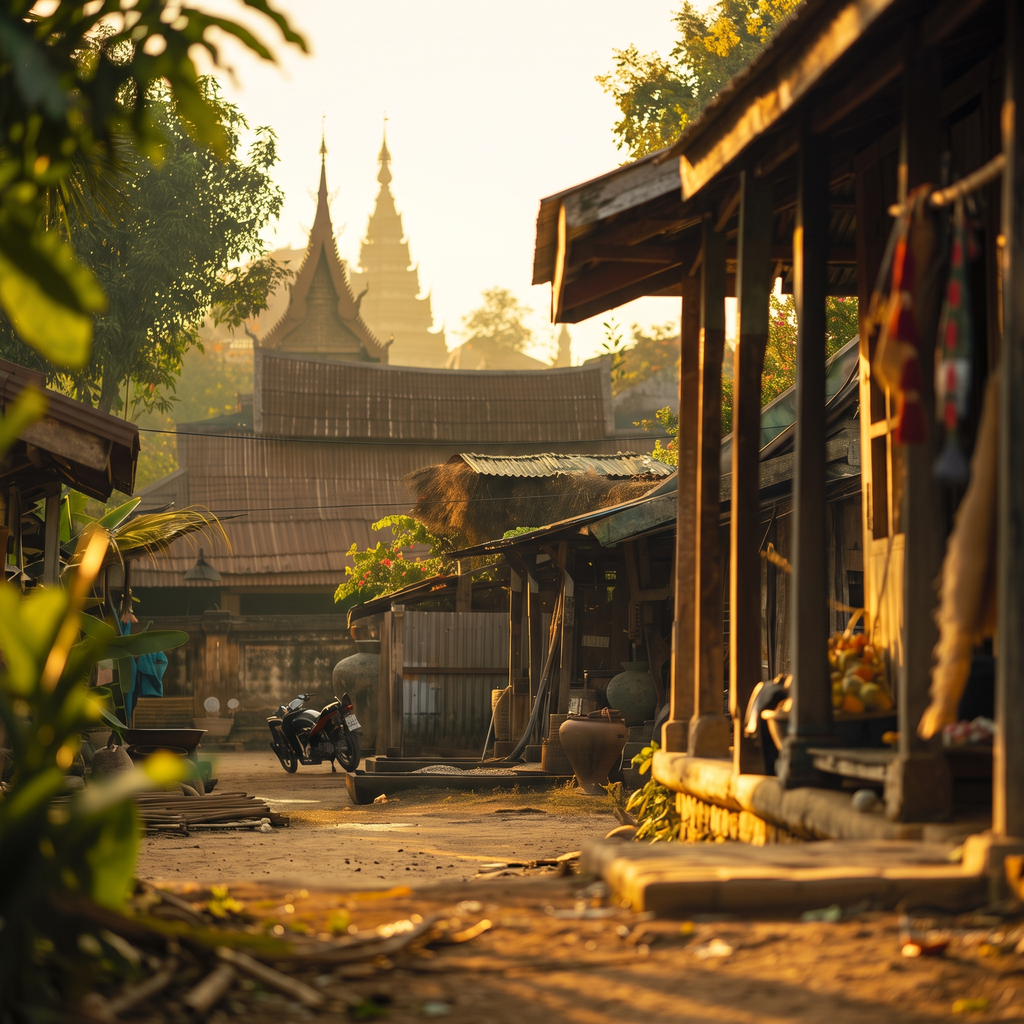
The most vibrant, organic, and uncommodified experiences in Southeast Asia rarely occur within the protected coordinates. They happen five or ten kilometres away, in the transition zones where traditional living meets modern evolution.
Think of the distinction between the hyper-manicured shophouses of a UNESCO World Heritage core and the “living” shophouse districts just blocks away. In the core, you find a boutique hotel with a perfectly restored façade. In the buffer zone, you find a multigenerational family business, a decades-old wet market, or a vernacular wooden home that is still evolving to meet the needs of the 21st century.
This is where the “authentic” actually resides. It’s messy, noisy, and uncurated. It is also where the true history of a region – how it adapts to change – is actively being written.
Case in Point: The Living Lanna Radius
Take Chiang Mai—a primary case study in this dynamic, currently nominated for UNESCO World Heritage status with a final decision still pending.
Inside the ancient moated Old City, the preservation of Lanna temples like Wat Phra Singh and Wat Chedi Luang is undeniable. Yet, as boutique hotel gentrification accelerates within the square, the living culture of northern Thailand increasingly migrates just beyond the historic brick walls.
Step outside the moat toward the Ping River or into the quiet lanes of San Khampaeng and Mae Rim, and the dynamic completely shifts. Here, in Chiang Mai’s informal “buffer zone,” woodcarvers, silversmiths, and contemporary artisans aren’t performing Lanna heritage for a crowd of tour buses; they are adapting it.
You find generational teak homes functioning as working design studios, quiet soup stalls operating out of century-old family compounds, and communities engaging in daily religious rituals free from the glare of smartphone cameras.
Chiang Mai illustrates the universal truth of the Buffer Zone: the UNESCO core gives you the static architecture of the past, but the surrounding radius gives you the living, breathing economic and artistic continuity of the present.
The Business Case for Boundary-Less Curation
For travel agencies, boutique hotels, and cultural consultants, the shift toward the Buffer Zone is more than a philosophical stance; it is a strategic competitive advantage.
As regional tourism policies shift toward managing overtourism, the “Core” will become increasingly difficult to navigate. Exclusive, high-value experiences will require moving beyond the saturation points. Here’s why prioritising the periphery is a winning business strategy:
How to Map the Unmapped
If you are a traveller or a professional in the hospitality space, how do you move beyond the UNESCO boundary?
The Future of Heritage
We must stop viewing heritage as a finite, precious object that we “consume” in a visit. Heritage is a living, breathing continuity.
By stepping outside the official boundary, we find that the world is far larger, more complex, and more rewarding than the brochure suggests. For the industry, the challenge – and the opportunity – is to help our guests see the value in the “ordinary” spaces surrounding the extraordinary ones.
The UNESCO blue shield marks the past. The Buffer Zone? That’s where the future of authentic travel is being built.