
Key Insights
Terrapuri Heritage Resort in Terengganu, Malaysia, is a preservation project of 29 salvaged 17th-century palaces. Built using traditional nail-less joinery (tangam), the villas act as a living archive of the ancient Langkasuka Kingdom.
By embracing climate-responsive design and indigenous materials, the resort offers a sustainable, culturally rich “Slow Travel” experience that prioritises historical authenticity over modern luxury.
Tangam: Traditional nail-less timber joinery that utilises precise mortise and tenon cuts. This pre-industrial technique allows entire wooden structures to be dismantled, moved, and reassembled without damaging the material.
Pasak: An oversized wooden peg used to lock timber joints firmly in place. These pegs swell during the humid monsoon season to tighten the building’s frame and contract during the dry season to allow natural airflow.
Kelarai: Woven bamboo wall panels that provide a textured finish to the villas. They function as a breathable skin for the building, offering essential cross-ventilation that naturally regulates indoor temperatures.
Tempayan: Large ceramic water jars traditionally used for storing water in bathing areas. In these villas, they are preserved alongside modern utilities to maintain a tactile connection to historical hygiene rituals.
Bendul: The elevated wooden threshold found at the doorways of traditional Malay houses. They serve structural purposes in binding the framework while mindfully slowing down your pace as you move through the rooms.
Tukang: Highly skilled Malay master craftsmen who possess ancestral knowledge of architecture and woodcarving. They construct complex palaces completely reliant on the flexibility and natural characteristics of native timbers.
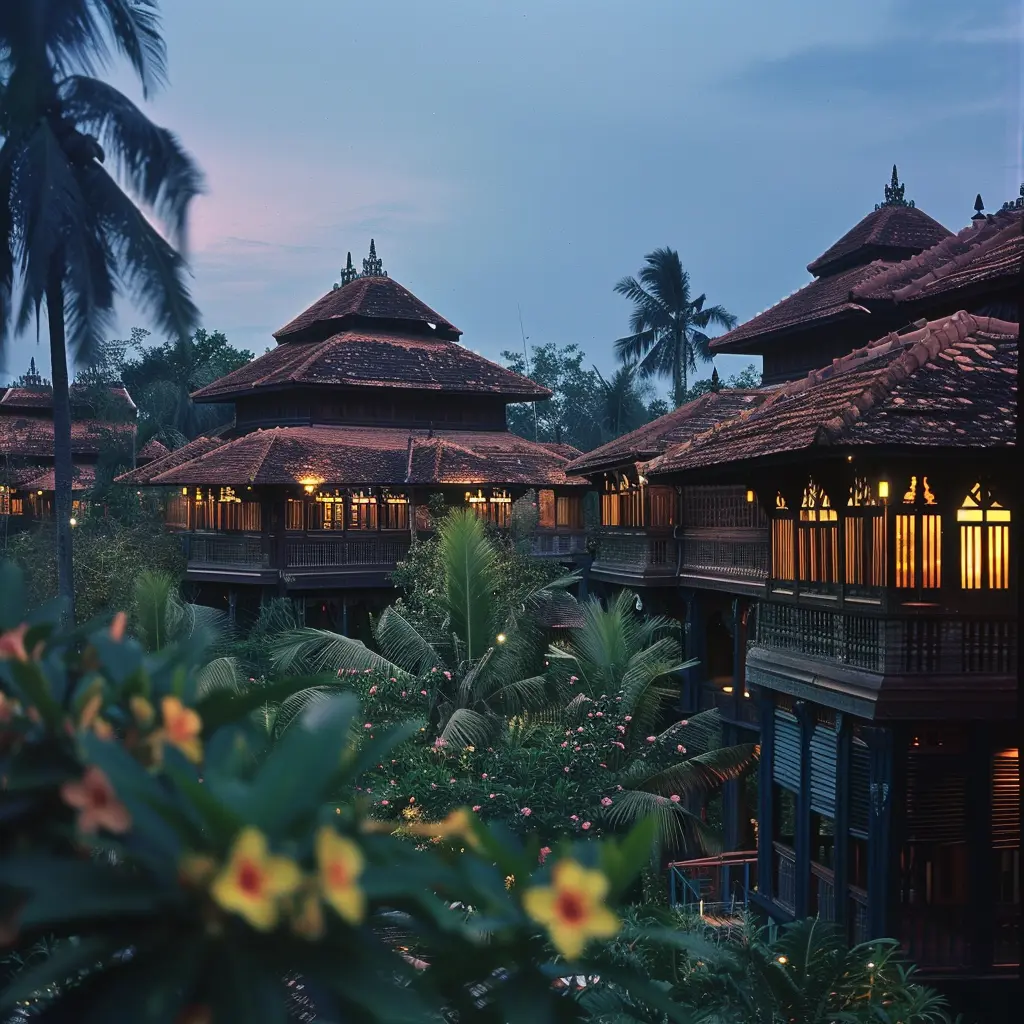
Terrapuri Heritage Resort, situated on the secluded coastline of Kampung Mangkok in Terengganu, Malaysia, operates as a physical archive of the ancient Langkasuka Kingdom. The property features conserved 17th-century Rumah Klasik Terengganu (Terengganu classic houses), showcasing the syncretic blend of Malay, Khmer, and Thai aesthetics that once defined the northern reaches of the Malay Peninsula.
The Architecture of Rescue
Terrapuri is less a resort and more a strategic preservation project comprising 29 classic Terengganu houses, each between 100 and 250 years old. These structures were not built in situ but were salvaged from the aristocratic heartlands of Terengganu by founder Alex Lee.
These are the Rumah Bangawan – the homes of noblemen and palace officials – dismantled and reassembled with a meticulous commitment to historical accuracy.
The site follows the layout of a 17th-century Terengganu palace, creating a sensory experience that mimics the “Golden Age of Travel.” The scent of aged teakwood and the rhythmic whir of overhead fans replace the sterile hum of modern luxury hotels.
One particular anecdote regarding the salvage of the “Rumah Paloh” illustrates the stakes involved. Lee discovered the house in a state of near-collapse, its Chengal pillars sinking into the mud. The local villagers viewed it as a liability, a “house of ghosts” that had outlived its utility.
It took six months of painstaking negotiation and a team of specialised craftsmen to label every joint, dismantle the timber, and transport it by barge to Kampung Mangkok. This was not a commercial purchase; it was a repatriation of Terengganu’s architectural soul.
Historical Context: The Langkasuka Legacy
To understand the structures of Terrapuri is to understand the maritime influence of the Langkasuka era. From the 2nd to the 15th century, this region served as a cultural bridge for the spice trade.
The architecture reflects this synthesis: the high-pitched Singgora clay tile roofs mirror the temple silhouettes of Ayutthaya, while the elevated stilts address the practical realities of a tropical monsoon climate.
The key figures in this narrative are the Tukang. These master craftsmen built these palaces without a single metal nail.
Their work survived centuries not through the permanence of stone. Instead, it endured through the flexibility of timber and the density of Chengal wood.
Technical Specificity: The Engineering of the Pasak

The structural integrity of each villa relies on Tangam (mortise and tenon) and Pasak (wooden pegs). This pre-industrial engineering allowed the villas to be nomadic; a nobleman could dismantle his home and move it should the riverbanks shift, or political tides turn.
The kelarai (woven bamboo) wall panels offer a textured patina that provides natural cross-ventilation, a vestige of climate-responsive design that modern skyscrapers have largely abandoned.
These panels are not merely decorative; they act as a breathable skin, allowing the structure to regulate its internal temperature against the relentless humidity of the East Coast.
In a notable display of traditional engineering, the Pasak are carved slightly oversized. As the wood absorbs the seasonal moisture of the monsoon, the pegs swell, locking the entire structure into a rigid, wind-resistant frame. When the dry season arrives, the timber contracts, opening minute gaps that facilitate airflow. It is a building that “breathes” in rhythm with the Terengganu climate.
The Interior Provenance and the “Spirit of the Wood”
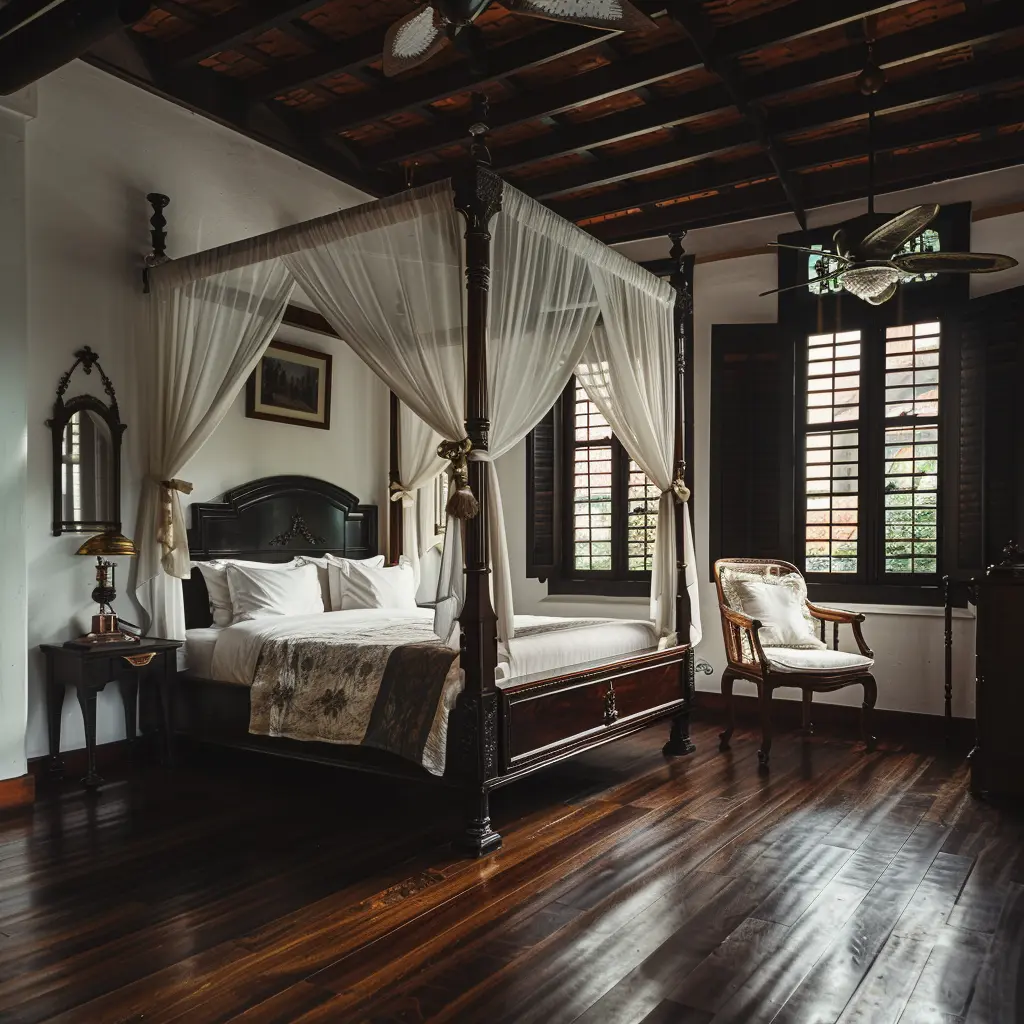
Inside the villas, the commitment to provenance remains absolute. The floors are wide planks of weathered Chengal, polished by decades of footfall to a dull, honeyed glow. Furniture is sparse, favouring heavy, dark-timber chests and four-poster beds draped in mosquito netting, echoing the functional elegance of the 19th-century Malay elite.
The bathing areas have been adapted from the original Dapur (kitchen) footprints. Here, the transition to modern utility is handled with restraint. Large ceramic tempayan (water jars) sit alongside wooden bathtubs, maintaining the tactile connection to traditional hygiene rituals.
The brass fittings carry a natural tarnish, avoiding the artificial high shine of contemporary brassware to maintain the historical “visual weight” of the room.
There is a local belief in the “Semangat Kayu,” or Spirit of the Wood. During the reassembly of the villas at Terrapuri, Lee observed an ancient custom. He placed three layers of cloth – red, white, and black – within the Tangam joints of the central pillar (Tiang Seri).
The red represents the blood of the earth, white the purity of the spirit, and black the land’s authority. To live in Terrapuri is to reside within a space spiritually sanctioned by centuries of tradition.
A Dialogue with the Landscape
Terrapuri is bordered by the South China Sea on one side and a tranquil mangrove swamp on the other. This positioning is not accidental. Historically, royal seats were situated at the mouths of rivers to control trade and ensure defence.
The landscaping avoids the manicured lawns of Western luxury. Instead, it utilises indigenous flora – wild hibiscus, pandan, and towering coconut palms. These provide both shade and a specific olfactory profile.
During the monsoon, rain on the heavy timber eaves and Singgora tiles creates a percussive resonance. This acoustic atmosphere defines the “Slow Travel” experience.
Local fauna, including the occasional monitor lizard or hornbill, often visit the grounds. Their presence reinforces the sense that the resort is a temporary guest in a permanent ecosystem.
The Discerning Experience
Each of the 29 villas retains its original nomenclature and provenance, such as Rumah Kedai Buluh or Rumah Kutai. Wandering through the grounds, one notices the deliberate absence of modern clutter. The “Slow Travel” philosophy is enforced by the architecture itself; the high thresholds (bendul) and steep stairs demand a mindful, unhurried pace.
The light catches the original lime-wash patina of the facades beautifully during the blue hour, just before the tropical sunset.
For the heritage traveller, luxury is not found in standardised amenities. Instead, it lives in distinct sensory specifics. It is the weight of a vintage brass key or the sound of the wind through the eaves.
An evening at Terrapuri often includes the sound of the Gamelan or a traditional Wayang Kulit shadow puppet performance.
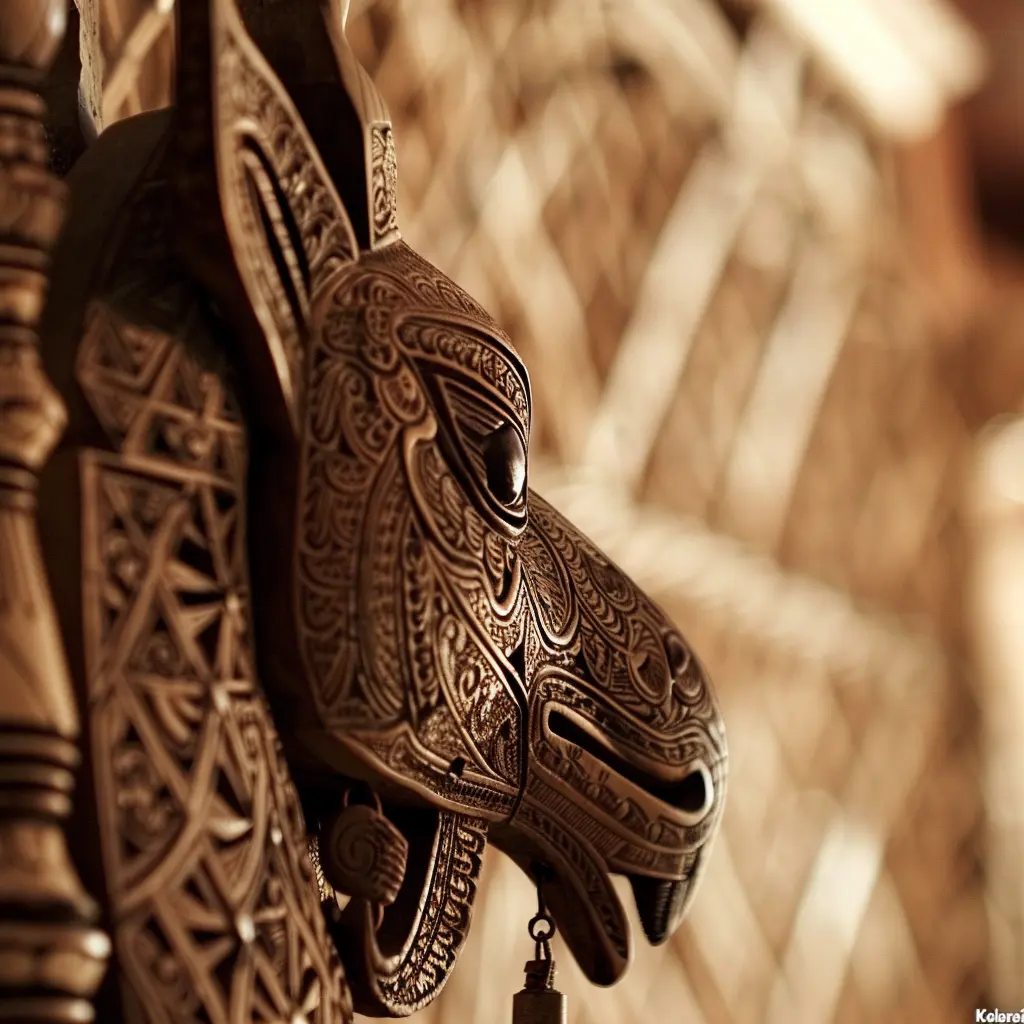
These are not staged tourist shows. Instead, they form part of a broader effort to maintain the intangible assets of the Langkasuka region. Puppets, carved from buffalo hide, mirror the same intricate filigree patterns found in the woodcarvings of the villas.
Strategic Sustainability
In an era of performative ESG metrics, Terrapuri offers a lesson in inherent sustainability. The height of the panggung (stilts) and porous timber walls reduce cooling energy by 60% compared to concrete buildings.
Using salvaged materials reduces the construction’s carbon footprint to nearly zero. Meanwhile, preserving Tukang skills ensures that the intangible heritage of Terengganu remains a viable economic asset for the local community.
The resort also serves as a training ground for the next generation of woodcarvers. By providing a commercial venue for these skills, Terrapuri prevents the “death of the apprentice” that so often plagues traditional trades in the face of rapid modernisation.
The Heritasian Verdict
Terrapuri is a survivor of a period where architecture was a reflection of the landscape rather than an imposition upon it.
While it lacks the manicured polish of a global hotel chain, it offers an encounter with the “Golden Age” that is academically rigorous and evocatively told. It stands as a refined example of how heritage conservation can be synthesised with luxury storytelling.
The property serves as a challenge to the modern hospitality industry: it proves that authenticity is the highest form of luxury. It is a sanctuary for those who value the historical narrative of a timber joint as much as the comfort of a linen sheet.
Beyond the architecture of Terengganu, regional hospitality enthusiasts should explore our archives on the Straits Eclectic mansions of Penang. Alternatively, consider investigating the Lanna Kingdom traditions of Northern Thailand.
This exploration of Malaysia’s Royal Towns is only the beginning. It serves as a broader audit into the sovereign identity of Southeast Asia.