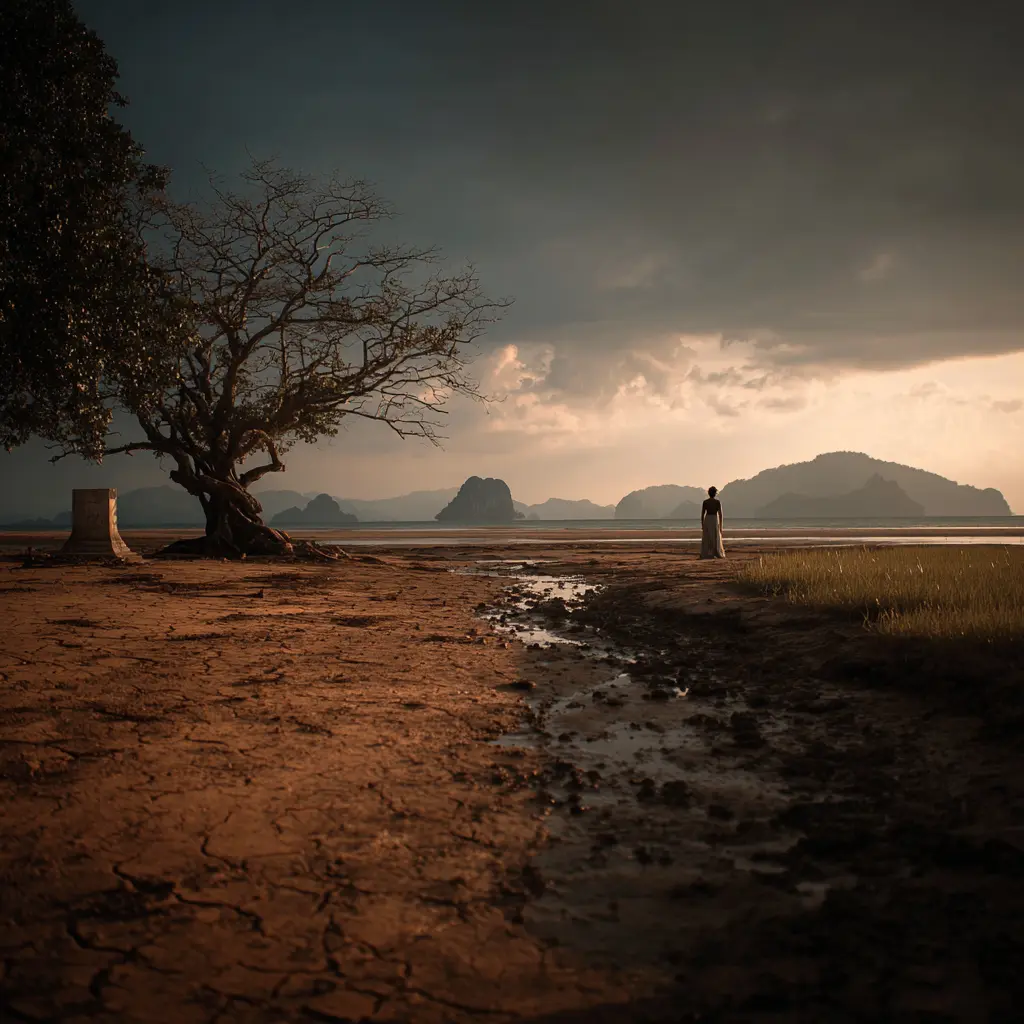

Let us travel south down the Andaman Sea coast and enter the spiritual capital of Banalistan. If you look at how Langkawi is packaged to the global luxury tourism market, the corporate destination marketing machine relies entirely on the language of absolute anesthesia.
Global travellers are sold “an idyllic archipelago of 99 islands,” “unspoiled duty-free sanctuaries,” and “ultra-luxury rainforest hideaways.” This commercial hospitality marketing treats the island as a tranquil, empty playground—a beautiful amnesiac void stripped of historic memory and local geopolitical context.
But Langkawi is not a blank canvas for luxury consumers or international hospitality brands. For nearly two centuries, the entire archipelago’s socio-economic development was defined not by tranquillity, but by a devastating, multi-generational economic isolation caused by a historic blood curse.
To design authentic destination storytelling and premium cultural tourism experiences, luxury travel curators must stop selling generic “paradise” branding. Instead, they must understand the economic reality of regional folklore: the legendary curse of Mahsuri, which shaped the island’s trade networks, agricultural output, and maritime isolation for seven generations.
The Plot: Jealousy and the Deep State of Padang Matsirat
The year was 1819. While Stamford Raffles was busy negotiating the foundations of British Singapore down south, Langkawi was a quiet, strategic outpost under the suzerainty of the Kedah Sultanate.
Enter Mahsuri, a young woman of Thai descent born on the island but with deep ties to Phuket. By all historical accounts, she was exceptionally beautiful, intelligent, and influential—attributes that, in a small, isolated island community, are highly dangerous. She married Wan Darus, a prominent warrior and the brother of the island’s chief.
When a regional war broke out, Wan Darus left the island to fight. Left alone, Mahsuri befriended a travelling troubadour named Deraman. It was an innocent friendship based on poetry and song, but it gave her bitter, envious mother-in-law, Mahura, the perfect political weapon.
Mahura accused Mahsuri of adultery – a capital offence. In the tight-knit, feudal power structure of the island, truth was secondary to status. Despite her desperate pleas of innocence, the tribal elders bound Mahsuri to a tree in Padang Matsirat and sentenced her to death by execution.
The Twist: White Blood and the Burned Rice Fields
This is where the story shifts from a local tragedy into an enduring curse.
According to Malay lore, the executioners tried to pierce Mahsuri with traditional daggers, but the blades repeatedly bent and shattered against her skin. Realising her fate was sealed by the malice of her community, she resigned herself to death and told them to use her family’s ceremonial heirloom dagger (keris).
When the blade finally pierced her chest, the blood that gushed from the wound wasn’t red. It was pure, pristine white – the ultimate, supernatural proof of her innocence.
As she took her final breaths, Mahsuri looked upon the elders and levelled a devastating curse upon the island:
“For this act of injustice, Langkawi shall know no peace or prosperity for seven generations to come.”
The curse manifested almost instantly. Within weeks of her execution, the Siamese army invaded Langkawi. In a desperate scorched-earth strategy to starve out the invaders, the village chief ordered the island’s entire rice supply to be collected and burned at Padang Matsirat.
The strategy failed spectacularly. The island was captured, the population slaughtered or enslaved, and the fields became a barren wasteland of charred earth. For over 150 years, locals could quite literally dig into the mud of Beras Terbakar (the Field of Burnt Rice) and pull up blackened, petrified grains—a physical, tactile reminder of a broken economy.
The Seven-Generation Timeline
This wasn’t just folklore; it was an empirical reality. While surrounding islands like Penang and Phuket boomed into major British and Thai trading ports during the 19th and 20th centuries, Langkawi remained completely stagnant—an isolated, impoverished backwater plagued by bad luck, failed crops, and economic obscurity.
The timeline is striking:
The island’s modern economic rebirth occurred in the exact decade that the curse was prophesied to expire.
The Destination Marketing Takeaway
When Banalistan markets Langkawi, it hands you a cocktail on a beach. When real storytelling markets Langkawi, it hands you a landscape that has suffered, paid its debt, and risen from the ashes.
Stop selling destinations as if they were sterile luxury products fresh off an assembly line. Find the tragedy, find the scars, and sell the redemption.