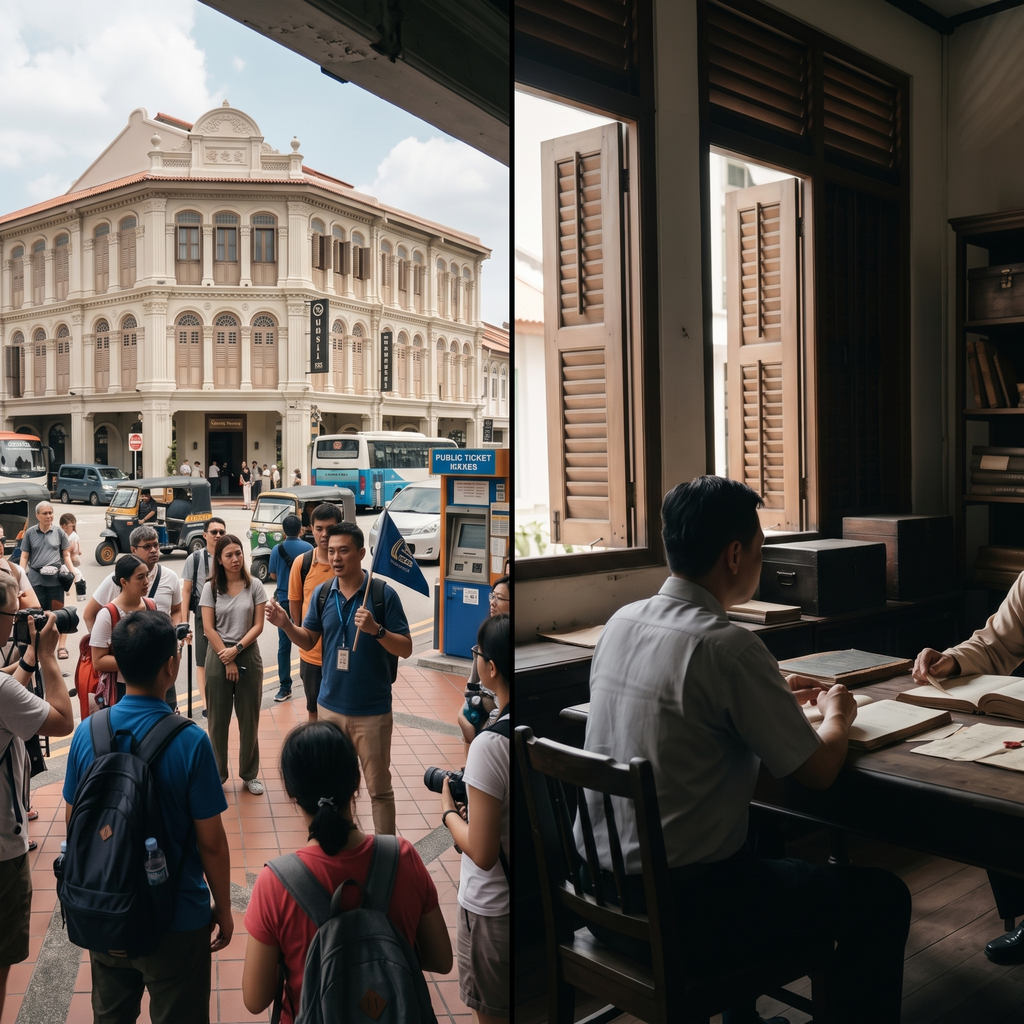

Treating historic commercial estates across Southeast Asia as atmospheric photo stops costs luxury inbound operators roughly 25 to 35 per cent in net margin yield. When an itinerary frames a 19th-century regional headquarters or merchant compound as mere architectural charm, it invites instant price transparency.
The client checks the address on a smartphone, finds the public admission fee or boutique room rate, and realises their travel designer marked up an open commodity asset by 40 per cent without adding operational value.
This packaging failure creates immediate client disintermediation. Top-tier private clients don’t push back on total invoices because they lack capital; they push back when they detect an unearned margin on accessible inventory.
Standard five-star ground itineraries in Southeast Asia are cannibalising their own pricing power by cycling clients through the same public-facing heritage sites, where the only defensible barrier between an ultra-high-net-worth booking and an independent traveller is an air-conditioned Mercedes van.
When an advisor relies on open-door inventory, an OTA or hotel concierge will undercut that quote by lunchtime.
Standard product design fails because it ignores the physical maintenance economics and balance-sheet reality of historical real estate. A private, non-commercialised timber or masonry compound requires immense ongoing capital just to counter tropical humidity, dry rot, and subterranean termite pressure.
Repairing lime-plaster brickwork along coastal and riverine trading ports demands traditional slaked lime mortars and master artisans, not commercial Portland cement that traps interior moisture and destroys structural brick integrity within five seasons.
Most multi-generational family trusts holding these properties face punitive estate-tax burdens, rising land valuations, and fragmented heir structures. When cash-flow yields dry up, trustees face two bad options: offload the property to mass commercial developers or board up the doors to minimise wear and tear.
When regional DMCs approach these estate trustees with standard contracted day-rate group allocations, the owners shut the doors. Family trusts managing authentic mercantile compounds don’t want busloads of travellers scuffing historic floorboards for a $15 head fee.
Meanwhile, operators try to paper over this friction by hiring licensed generalist tour guides. These guides memorise broad dates and dynastic names from public tourism ministry brochures, reciting memorised scripts about royal visits and decorative roof tiles. They don’t understand balance sheets, trade routes, or industrial history.
This operational blind spot triggers a fatal decay in guiding quality. When an outbound advisor books a UHNW private equity principal on an estate tour, handing that client off to a day-rate freelance guide destroys advisor credibility within fifteen minutes.
The client isn’t looking for mythological folklore; they want to understand the charter terms of the 1888 concessions, the labour arbitrage between regional ports, and the currency pegging that allowed these dynasties to dominate the trade trail. Generalist guiding commoditises irreplaceable physical capital into low-value tourism theatre.
Building an economic moat requires treating cultural provenance as an unindexed supply-chain asset. Behind the ornamental facades of Southeast Asia’s historic trading estates sat ruthless extraction engines.
Wealth wasn’t built by passive aesthetics; it was generated by cross-border commodity arbitrage, timber cartels, mineral syndicates, and maritime shipping lines. When you anchor an itinerary in this operational history, the product moves from leisure sightseeing to an analysis of trade flows, historical logistics, and merchant capital.
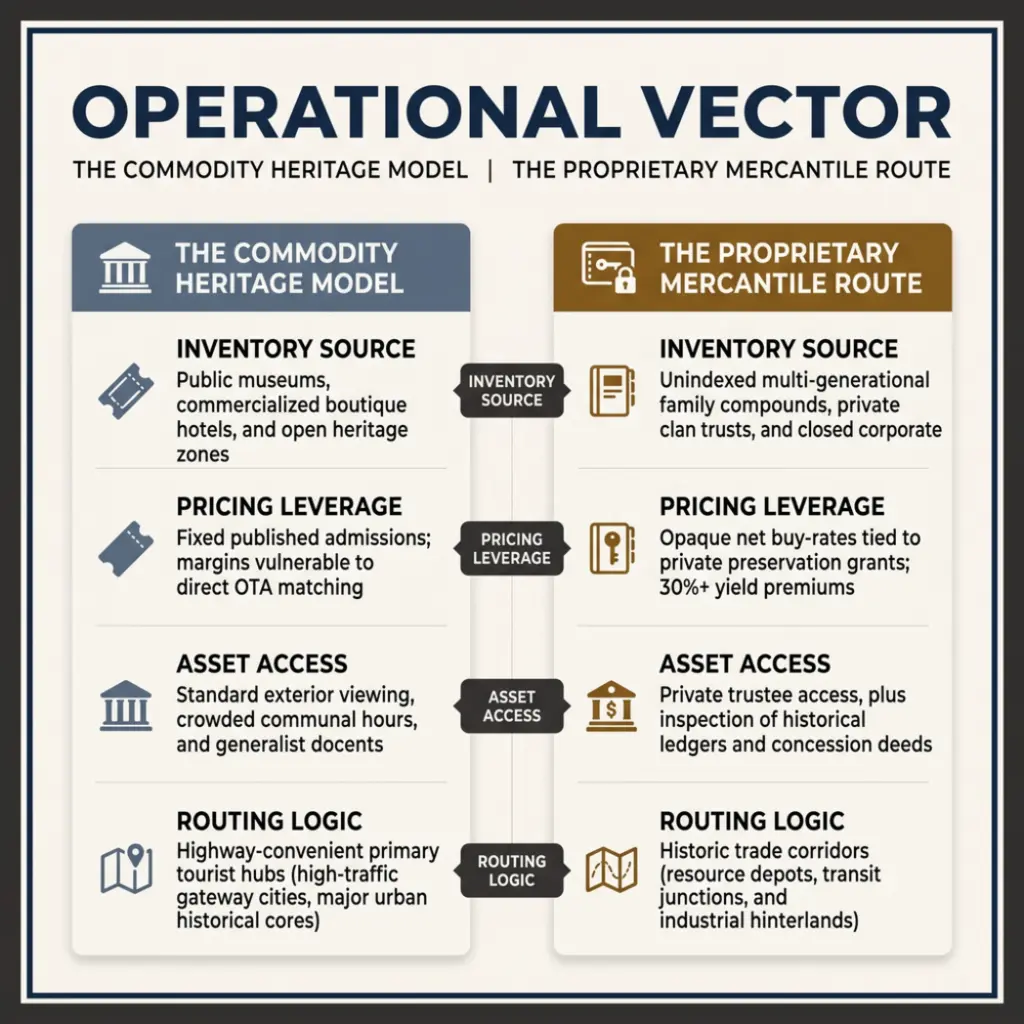
Advisors establish pricing power through five concrete product mechanics:
If your itineraries are mapped around convenient highway junctions and standard supplier contracts rather than the underlying economic logic that concentrated regional capital in the first place, your product is vulnerable to immediate disintermediation.
Audit your supply chain. Strip out the public photo stops, bypass the generic commercialised villas, and contract directly with the trusts that control the region’s merchant ledgers. Proprietary commercial access is the only defensible barrier between an irreplaceable inbound operator and an easily replaced booking agent.