
Key Insights
The Orang Minyak (Oily Man) is one of the most persistent and unsettling urban legends of the Malay Peninsula. A supernatural figure coated in black grease to evade capture, his story is a dark blend of ancient animist roots and mid-20th-century mass hysteria.
More than just a “ghost story,” the legend serves as a cultural mirror, reflecting deep-seated community fears and the enduring power of village folklore.
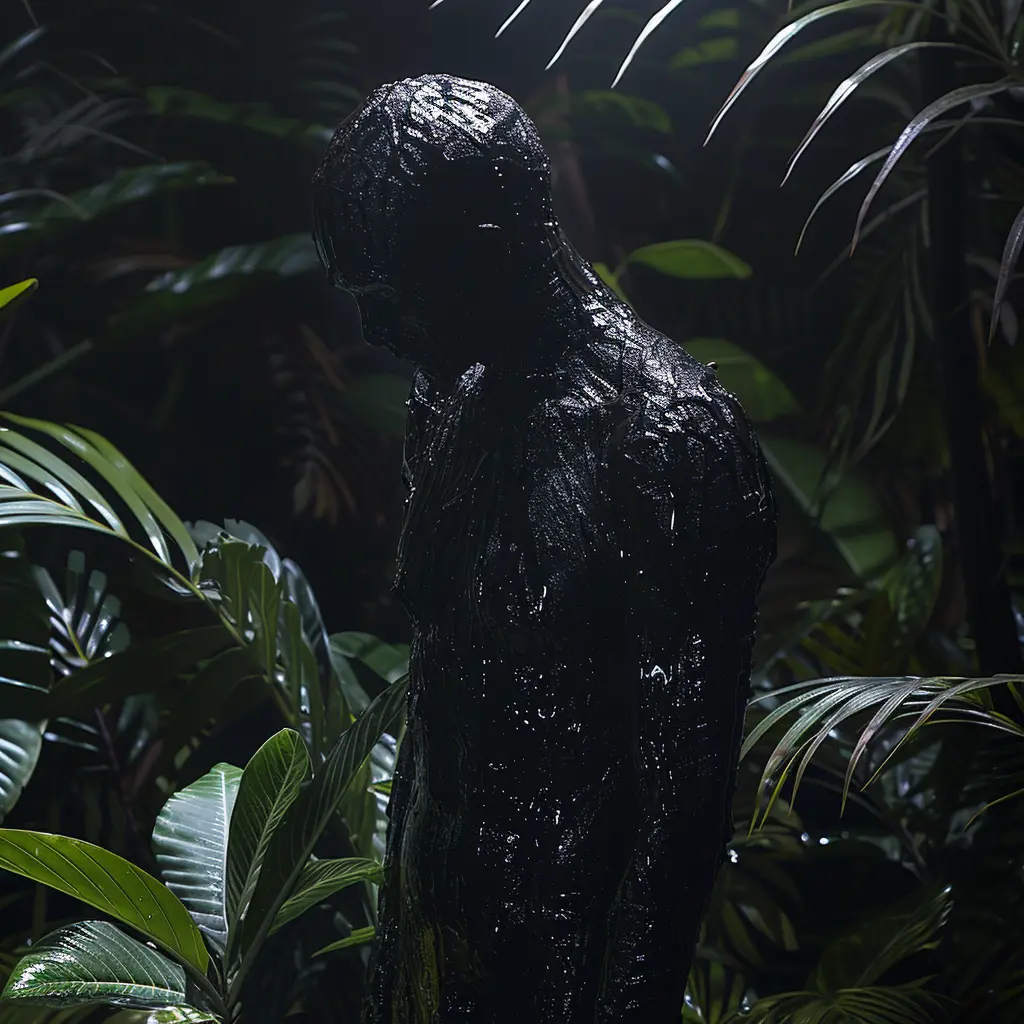
Orang Minyak (Oily Man): A naked Malay folklore entity coated in slick black grease. This coating enables him to evade physical capture by slipping out of any grasp.
Ilmu Hitam Pact (Black Magic): The occult framework underpinning the myth. A human practitioner undergoes a dark ritual to gain invisibility, wall-crawling, and stealth in exchange for their soul.
Kampung Porosity: The structural vulnerability inherent in traditional timber Malay houses. Natural ventilation features like loose floorboards and unlatched windows inadvertently ease stealthy entry.
Moral Panic Metaphor: The sociological interpretation of the legend. This recurring fear polices women’s quarters, enforces nocturnal modesty, and voices anxiety regarding external criminal threats.
Slick Evaded Captivity: The physical mechanics of evasion during encounters. Because grease nullifies physical grappling, villagers must rely on spiritual talismans or specialised cloth to trap him.
Cinematic Folklore Fusion: The mid-20th-century pop-culture institutionalisation of the myth. P. Ramlee’s iconic 1958 film permanently transformed an oral legend into a structured archetype of Malay gothic cinema.
In these 19th-century Straits Settlements, residential security was often a terrifying illusion. For decades, families across the Malay Peninsula whispered about a specific, localised urban legend: the Orang Minyak. The “Oily Man” left a distinct calling card: the wet thud of bare feet on clay roof tiles. Stripped naked and coated in black engine grease, this figure remains an enduring Malaysian folklore icon.
Modern pop culture occasionally reduces the Orang Minyak to a slapstick, slippery burglar caricature. However, the true provenance of this Southeast Asian myth reveals a far more sinister reality. He manifests post-war societal anxiety, structural architectural vulnerability, and acute male desperation.
The Faustian Shamanism of the Oily Pact
To understand the Orang Minyak, one must separate him from ordinary spirits like the pontianak or the toyol. He is not a ghost born of tragedy; he is a living man who has actively bargained away his humanity.
According to local lore, the transformation requires a transaction with a rogue bomoh or forbidden ilmu hitam. The motivations behind this dark pact are universally grounded in human frailty and desperate desires. Men seek unearned wealth, the acquisition of supernatural strength, or bitter revenge against a romantic rejection.
The spiritual price for these gifts is severe. The practitioner gains temporary invisibility and evades physical grips, but a horrific ritual quota binds him. To cement his powers and return to a normal state, he must slip into locked homes at night. He is traditionally bound to assault a specific number of young women, usually forty virgins.
The thick, black grease that coats his skin is the physical manifestation of this moral corruption. It functions as a brilliant, pragmatic armour. In a communal society reliant on physical intervention, the Orang Minyak turns the defender’s instinct against them.
Anyone attempting to tackle or restrain him finds their hands slipping uselessly off his limbs. Consequently, the oily predator glides effortlessly back into the shadows, leaving defenders helpless.
Heritage Highlight: The Architecture of Vulnerability
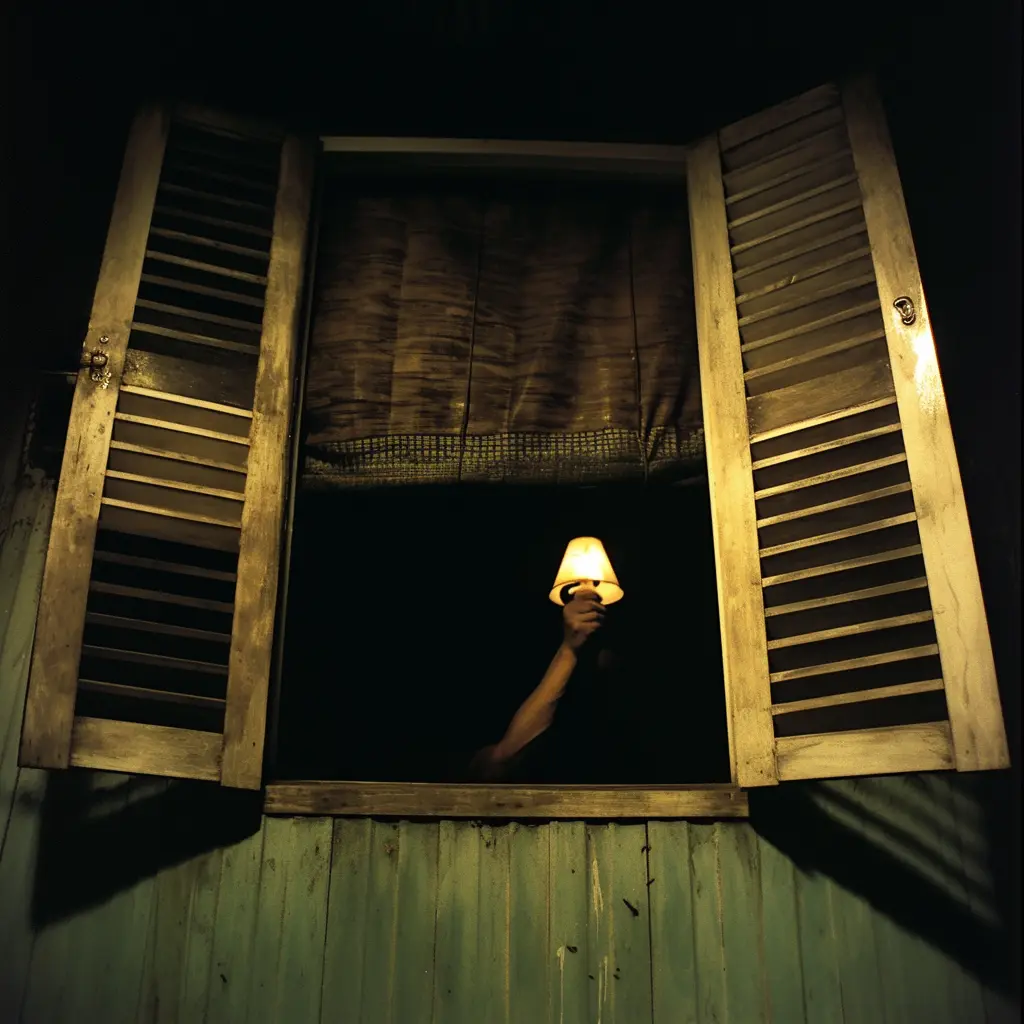
The terror of the Orang Minyak is deeply tied to the unique spatial layout of Straits Eclectic architecture.
Throughout George Town and Malacca, historical shophouses thrived by using specific design elements tailored to a tropical climate. However, these structural features also created a labyrinth of vulnerability, which a stealthy predator could easily exploit.
Traditional shophouses were built in continuous, tightly packed rows. Interconnected timber and tile roofs allowed agile intruders to traverse entire city blocks without ever stepping onto the street.
Furthermore, these long, narrow structures relied on an internal air well to draw down breezes and light. This central, open courtyard inadvertently provided a vertical highway, exposing the home’s private heart to the night.
For the Orang Minyak, the air well was a vertical highway. He never needed to pick heavy front-door iron locks or force his way through street-facing shutters. Instead, he could scale outer brickwork, traverse shared rooftops, and drop directly into the home’s intimate quarters.
This acoustic terror turned the home’s primary cooling mechanism into a psychological weapon against its inhabitants. Families listlessly tracked every overhead vibration, transforming the architectural marvel into a resonant chamber of dread.
Mid-Century Hysteria and the Camouflage of Crime
While the roots of the legend draw from ancient animist beliefs, the myth reached its absolute peak during the 1950s – a period of intense socio-political friction as British Malaya navigated its transition toward independence.
As rural populations migrated into expanding urban centres, traditional village safety nets began to fray. The local press, including vernacular newspapers, fanned the flames of public panic with sensationalised headlines of sightings across Penang and Selangor. Impromptu night watches (ronda malam) patrolled the narrow five-foot ways, armed with bamboo spears and parangs, effectively enforcing community curfews out of collective dread.
History reveals a pragmatic underbelly to this mass hysteria. Real-world criminals quickly recognized the utility of the urban legend. Burglars and predators realised that by stripping down and covering their skin in industrial axle grease, they could achieve two tactical advantages: they became physically difficult to capture, and they paralysed their victims with supernatural terror. The moniker of a folk monster provided the perfect camouflage for entirely human atrocities.
Domestic Counter-Spells: The Weaponisation of the Mundane
Faced with a predator that bypassed conventional locks and laws, traditional communities turned to subversive, domestic defenses. They weaponised everyday household items, turning ordinary utilities into cultural barriers.
The Modern Residue of a Counter-Myth
The legend of the Orang Minyak has survived the transition into the modern era, evolving from late-night village whispers to a recurring trope in early Malaysian cinema – most notably featured in P. Ramlee’s 1958 classic horror film, Sumpah Orang Minyak.
When stripped of travel-brochure sensationalism, the story emerges as an invaluable sociological window. It acts as an early cultural vocabulary for discussing real, often unspeakable domestic traumas: the vulnerability of women in changing urban landscapes, the terrifying violation of the domestic sanctuary, and the toxic desperation of men who reject communal structures in pursuit of personal power.
The physical grease may wash away, but the anxieties that engineered the myth remain embedded in the local history. For the traveller wandering the narrow lanes of George Town after the evening food stalls have closed, the remaining shadows against the lime-wash patina serve as a reminder: folklore is rarely just fiction. It is the archive of what a society feared most when the night was at its darkest.