
Key Insights
Raya Heritage is a “Living Lanna” sanctuary that replaces grand opulence with the quiet beauty of Northern Thai craftsmanship. Its design celebrates the “Architecture of Silence,” utilising hand-loomed textiles, local pottery, and low-impact riverfront structures to prove that true luxury is found in the preservation of ancient, artisanal techniques.
Raya Heritage: A luxury boutique resort situated on the banks of the Ping River, designed by architect Boonlert Hemvijitraphan as a structural homage to classic Lanna culture and rural northern living.
Artisanal Provenance: The deliberate design strategy of sourcing interior furnishings – such as hand-woven textiles, hardware, and pottery – exclusively from local village cooperatives, documenting and preserving traditional regional craft lineages.
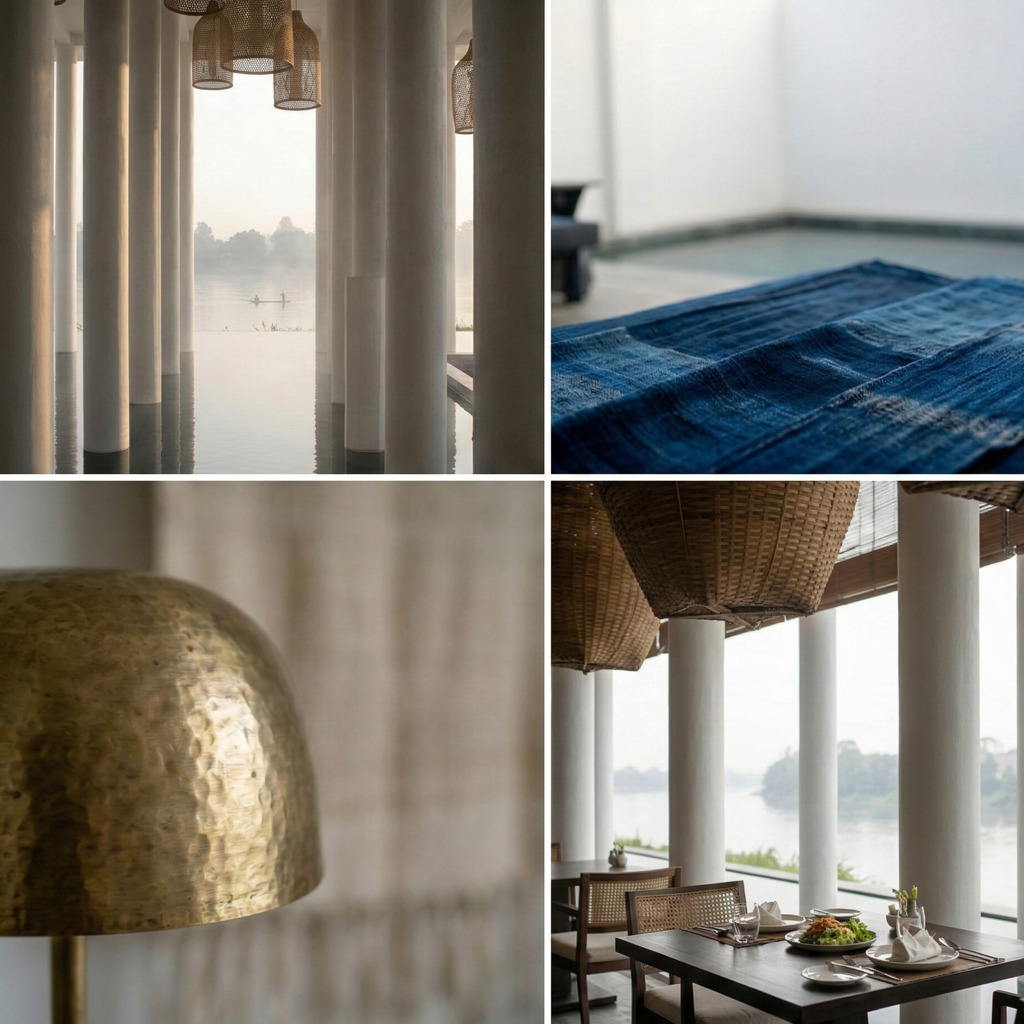
Monolithic Columns: High-impact structural pillars that anchor the resort’s open-air architecture. Their towering scale and clean lines mirror the stark grandeur of ancient Lanna monastic halls while maintaining a minimalist, contemporary aesthetic.
Ta-Kao (Basketry Pattern): The traditional northern Thai bamboo weaving technique integrated into the resort’s custom lighting fixtures and screens, transforming a functional agrarian utility into a high-end design motif.
Natural Pigment Ecology: A curated interior color palette derived entirely from organic northern materials, utilising localised shades of indigo (Mo Hom), unprocessed golden teak, and unbaked river clay to evoke a quiet sensory patina.
Somatic Slow Travel: A hospitality philosophy that leverages architecture, acoustic design, and traditional material textures to slow down a guest’s internal pacing, shifting the travel experience from passive leisure to deep cultural immersion.
I personally hand-pick every recommendation on Heritasian. To support my research into Southeast Asian heritage, some links in this review are affiliate links that may earn me a small commission at no extra cost to you.
The transit corridor out of Chiang Mai toward the Mae Rim valley operates as a high-density, motorised environment. Crossing the structural threshold of Raya Heritage, however, induces an immediate microclimatic and psychological shift, transitioning guests away from the intense regional heat into an open-air cathedral of deep architectural silence.
While its regional contemporary 137 Pillars House – functions as a monumental, timber-framed tribute to the 19th-century Victorian Teak Wallah era, Raya Heritage operates as its ethereal, minimalist cousin.
Constructed as a pristine white stone pavilion complex along the banks of the Ping River, this property bypasses the heavy, dark-wood narratives of Western colonial history. Instead, the resort draws its aesthetic and structural power from what designers classify as the “High Lanna” vernacular. This style prioritises raw, unlacquered hand-beaten brass, deep fermented plant indigo, and the soft, textured imperfections of local river-silt clay.
This is the evolution of the Vernacular Mansion for the modern era. While historical Lanna estates defined luxury through dense, intricate teakwood carvings, this contemporary architectural monument completely redefines the concept. Here, luxury is communicated through the raw, highly structured density of the weaver’s loom and the preservation of low-impact, regional material science.
The Architecture of the Vernacular Mansion
Silence defines this structure. Architect Lek Bunnag designed this masterpiece. His work bridges the celestial and the terrestrial. Bunnag abandoned dark, heavy traditionalism. He chose a “Crossroads” concept instead. This design honours the cultures of the Ping River.
The architecture abstracts the Lanna rice barn, or Khu Khao. Rice barns once held the community’s lifeblood. Bunnag elevated this humble functional form into a monument. Triple-height ceilings create a ventilation chimney. This is vernacular intelligence at work. The building draws the river breeze through the lobby. It reduces the need for artificial cooling. The space feels like it’s breathing. It feels like a secular temple to the air.
The Human Trace in the Brass
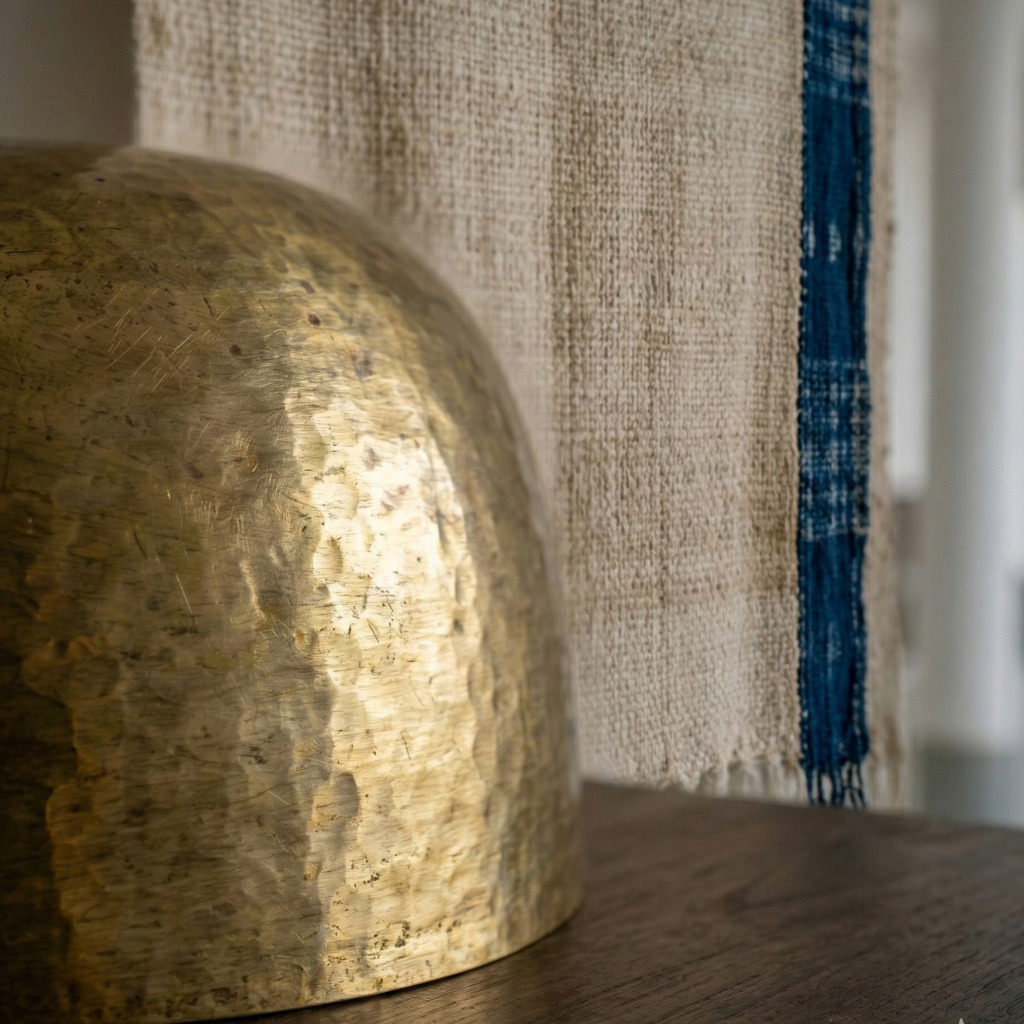
Run your hand along the bedside lamps. They’re not perfectly smooth. Artisans from Baan Tawai crafted this hand-beaten brass. Bunnag insisted these pieces remain unpolished. He wanted the “human trace” to remain visible. You see the rhythmic strike of a blacksmith’s hammer. Evening light gives these fixtures a soft warmth. This offsets the cool white walls. The property grew from thousands of individual hammer strikes. The building belongs to the local hands that made it.
A Vertical Map of Lanna
Raya Heritage avoids “standard” or “deluxe” labels. It organises the guest experience as a vertical journey. Each floor is dedicated to a specific craft. Walking to your room becomes a gallery tour.
Level 1: Kraam (Indigo)
The ground floor belongs to Kraam. This is the soulful blue of Northern Thai indigo. These suites are sanctuaries of shadow. Private plunge pools sit behind high white walls. They evoke the stillness of a forest retreat. The upholstery showcases the alchemy of the “Horm” plant. Indigo pits in Phrae produce a distinct, earthy smell. Weavers “feed” the indigo vats with lime and tamarind. You’re literally wrapped in a week of a weaver’s labour. This experience connects you to the soil.
Level 2: Kasara (The Weaver)
The second level features cream-on-cream elegance. Kasara suites focus on the “human pulse” of the loom. Rugs and wall hangings show slight irregularities. These are the marks of hand-spun yarn. These textiles celebrate the diversity of the hill tribes.
Designers chose raw, natural fibres over bright “tourist” colours. You appreciate the sheer complexity of the weave. The space creates a sensory vacuum. You hear only the wind in the trees.
Level 3: Rin (The River)
The top floor takes its name from the river. Rin suites offer the highest vantage point. You watch the Ping curve toward the city. The architecture frames a living landscape. Early mist often covers the water. You sit on the terrace and watch “Fishing Shadows.” Local villagers cast circular nets into the water. Their silhouettes match 19th-century sketches. You watch a 700-year-old trade route continue its work.
The Philosophy of the Long Table
The lobby features a massive, single-piece teak table. This serves as the “Village Square” of the mansion. Traditional Lanna life centred on communal platforms. Neighbours shared news and worked towards Lanna’s Creative Renaissance. The hotel recreates this social heartbeat.
One afternoon, a guest sat here to write. A local weaver arrived with new textiles. They sat at opposite ends of the table. The staff brought tea for both people. They shared a quiet moment of mutual respect. This table erases the typical barrier between guest and local. The mansion feels like a home because it functions like a village.
The Artisan Lounge: A Living Archive
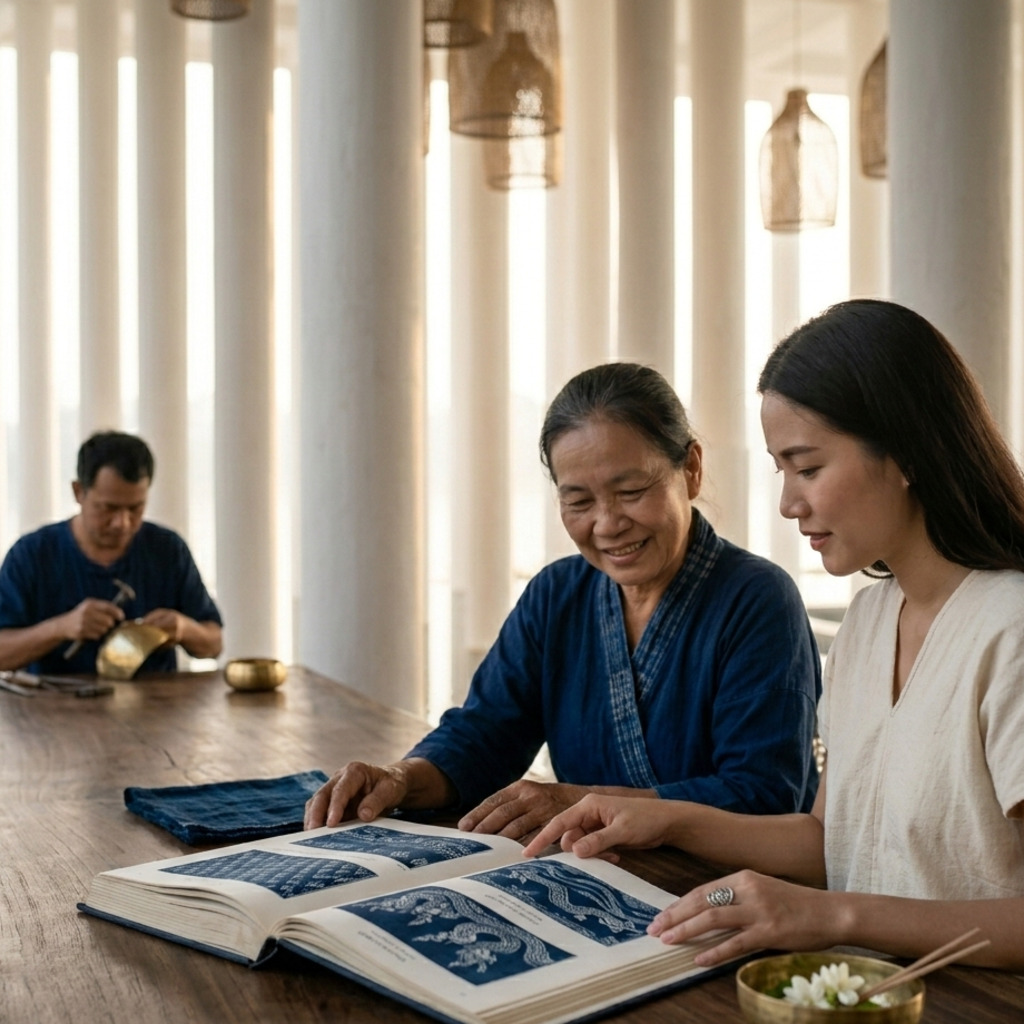
The hotel dedicated a specific space to local knowledge. This is the Artisan Lounge. It functions as a curated library of Northern Thai craft. You don’t just see finished products here. You’ll see the tools of the trade. You see the shuttles from the looms of Mae Chaem. You see the specialised chisels of the woodcarvers.
The Story of the Pattern Book
One shelf holds a thick, hand-bound book of textile patterns. These are the “ancient DNA” of Lanna weaving. Some patterns represent the flow of the river. Others mimic mythical nagas. The staff can explain the meaning of every line. One guest spent an entire morning studying these symbols. She realised her cushions told a story about harvests. The lounge turns the hotel into a classroom. You become a student of the landscape.
The Crossroads Culinary Heritage
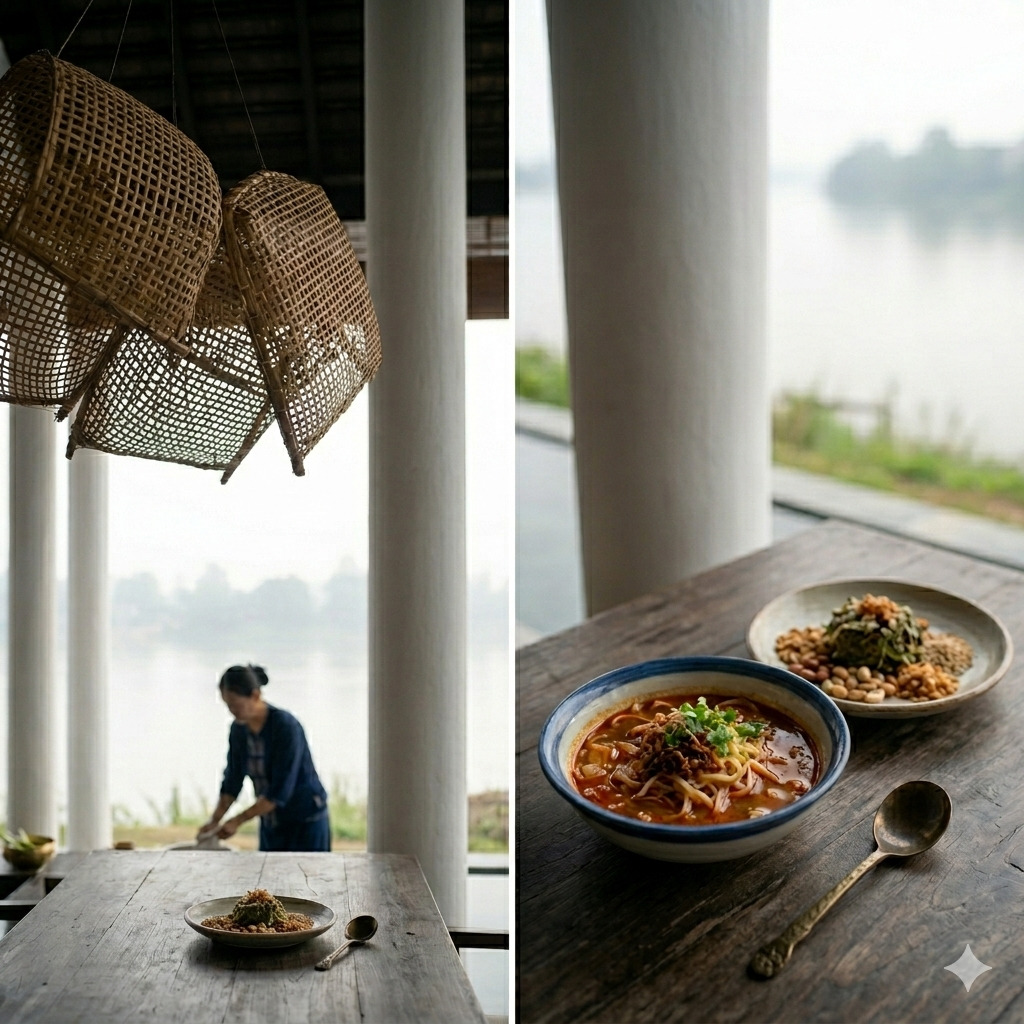
Most luxury resorts showcase imported wagyu. Khu Khao restaurant is a culinary map instead. Traditional rice threshing baskets hang from the ceiling. These sculptural installations define the space. The kitchen focuses on “Crossroads Cuisine.”
Northern Thai food didn’t evolve in a vacuum. Trade caravans and teak loggers shaped these flavours. The menu reflects this ethnic diversity. The Shan-style noodles highlight this history. Burmese-influenced curries use dry spices and pickled ginger. They use fermented tea leaves called Lahpet. Lahpet Thoke was once a “peace dish.” Warring tribes shared it to seal contracts. Raya serves it with refined elegance. You consume the history of the Golden Triangle.
The Him Khao Bar
Sunlight dips behind the Doi Suthep mountains. The action shifts to the Him Khao bar. White pillars meet the dark river water. Cocktails use local botanicals and wild highland honey. Kaffir lime comes from the hotel gardens. Herbs come from village medicine bags. The “Arrival Tonic” tastes like the forest after rain. It cools the blood. This traditional concept of Nam Jai welcomes the traveller.
The Lanna Apothecary
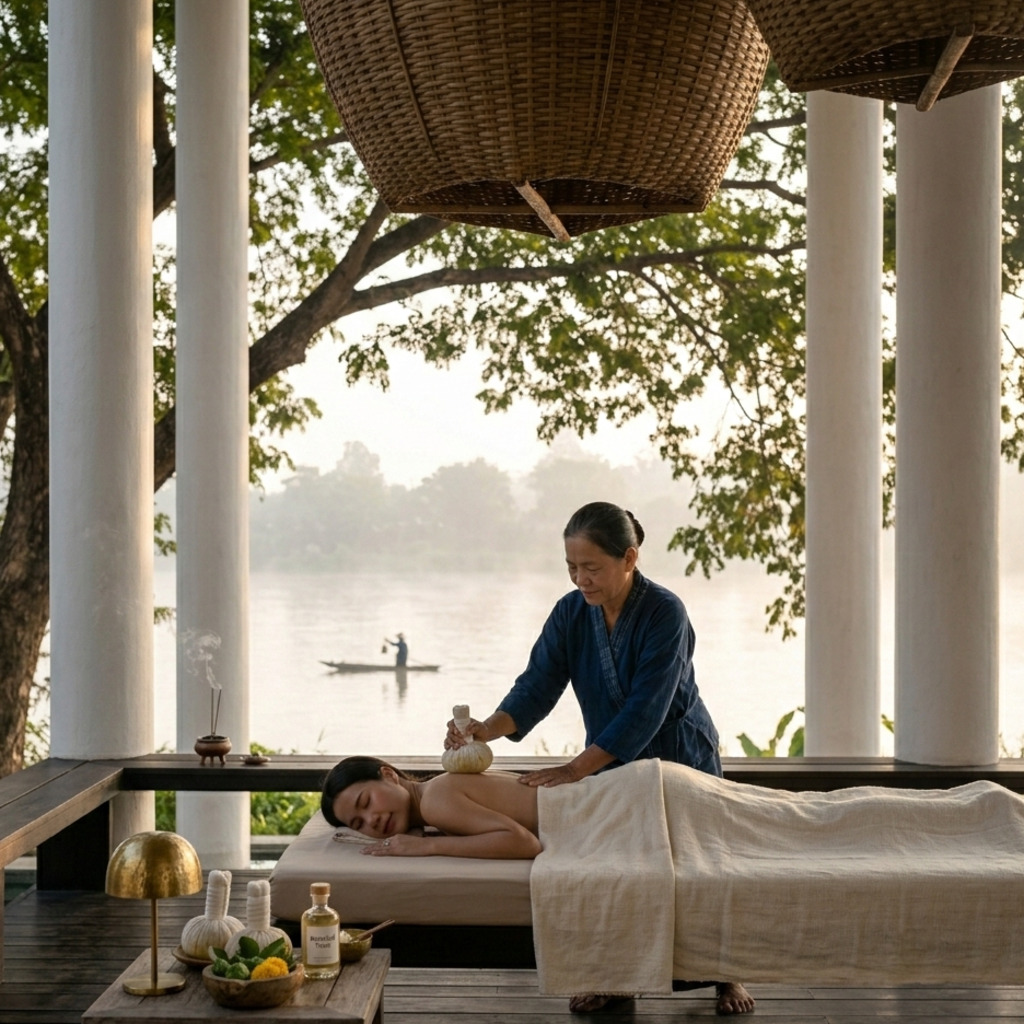
Traditional wellness in the North relies on the “Five Elements.” Raya Heritage applies this ancient medicine to its spa. They don’t use generic lavender or eucalyptus oils. Instead, they source herbs from high-altitude forests.
The Ritual of the Herbal Compress
Spa therapists use hand-tied compresses filled with turmeric and camphor. They steam these bundles over charcoal fires. The scent is sharp, medicinal, and deeply grounding. It’s the smell of a traditional Lanna home. This ritual releases the “wind” element in the body.
The Anecdote of the Forest Healer
The hotel consults with a local “village doctor” for recipes. This healer knows which roots to pull during specific moon phases. He taught the staff how to blend ginger for energy. One guest arrived with a heavy city cold. Therapists prepared a specific steam bath using forest herbs. By the next morning, the guest felt completely renewed.
The Botanical Heritage
The greenery follows the logic of the northern forest. Designers preserved the original trees on the site. Ancient Longan and Tamarind trees provide deep shade. These species defined the riverbank for generations. The gardens act as a living pantry. You find Lemongrass and Thai Basil growing near the kitchen. Gardeners follow the organic cycles of the river. They avoid chemical fertilisers to protect the soil.
A storm once knocked down a large Tamarind branch. Management did not haul the wood away as waste. They called a local village woodworker. He carved the branch into bowls for the guest rooms. The tree continues to live inside the mansion. This is the ultimate expression of sustainability.
The Artisan Cartography
Raya Heritage acts as a patron for local craft. It supports an ecosystem of at-risk traditions. The hotel is a physical map of the North.
Baan Tawai provides a metalworking heritage. The hotel revived “lost” smithing techniques. Every door handle carries an acoustic signature.
Weavers in Mae Chaem provide intricate textiles. They preserve the “Teen Jok” tradition. Raya requested raw cotton and charcoal tones. This gave weavers a new contemporary market.
Even the housekeeping follows this vernacular logic. Staff use natural oils extracted from local citrus. They fold linens to highlight hand-spun textures.
The Ping River: The Silent Architect
The mansion faces the river. For seven centuries, the Ping was the “Highway of the Lanna,” otherwise known as the Northern Thai Teak Trail. Logs floated down this water to British sawmills. The river connected the kingdom to the world. Lanna culture views water as a blessing. The hotel mimics traditional stilt construction. This allows the land to breathe. The Ping rises and falls with the seasons. Raya does not fight the river. It yields to the water. This lack of defensive architecture makes it a true mansion.
The Architecture of the Shadow
Lek Bunnag is a master of “Light and Shadow.” He designed the hotel to change as the sun moves. Massive white pillars act as a sundial for the day. In the morning, shadows are long and sharp.
The Dance of the Afternoon
By 3:00 PM, light reflects off the Ping River. It creates dancing ripples on the lobby ceiling. This effect is entirely intentional. Bunnag wanted the river to enter the building. You don’t need to look at the water to feel its presence. One architect visited to measure these light patterns. He called the building a “light trap.” It captures the specific atmosphere of the northern sky.
The Sensory Soundtrack
Most resorts block out the natural world. Raya Heritage uses the river as its primary soundtrack. Architecture acts as an amplifier for the water. You hear the Ping lapping against stone steps. You hear the rustle of bamboo groves.
Early mornings offer a specific sensory experience. Mist sits heavy on the water. The air smells of wet earth and jasmine. A local fisherman passes the hotel at dawn. He rings a brass bell to greet river spirits. Guests wake to this gentle chime. It reminds you that you are part of a living ecosystem.
The Heritasian Verdict
Raya Heritage honours the past without being its slave. It avoids “tourist” tropes like gold leaf; instead, it focuses on the power of the weave. It targets the “Thai-literate” traveller. This guest values the story of the maker. They appreciate the strike of the hammer.
Imagine standing on the teak terrace at dusk. White pillars glow as lanterns flicker. Geometric shadows stretch across the riverbank. A fisherman’s boat ripples the water. The boundary between ancient Lanna and the modern sanctuary disappears. The mansion is finally complete. The river breeze meets the hand-beaten brass.
Experience the Living History
Ready. Don’t just visit Northern Thailand; become a student of its landscape and a patron of its living crafts. Book Your Verandah Suite at Raya Heritage Trip.com