
Key Insights
Ban Chiang is Southeast Asia’s “Cradle of Civilisation,” a prehistoric UNESCO site that rewrote global history. Excavations revealed a sophisticated Bronze Age society practising advanced metallurgy and agriculture long before previously thought.
Today, its iconic red-on-buff pottery and ancient artifacts stand as a testament to indigenous ingenuity and the deep roots of Thailand’s cultural heritage.
Khorat Plateau: A vast, elevated land mass stretching across Northeast Thailand (the Isan region). Characterised by rolling low hills and fields prone to monsoonal flooding, this rugged landscape provided the ideal fertile soils and rich waterways to sustain the early Ban Chiang civilisation.
Wet-Rice Cultivation: An advanced agricultural practice of growing rice in flooded fields. The discovery of rice-husk fragments mixed into ancient Ban Chiang pottery proved that this prehistoric society relied heavily on an organised, self-sufficient farming economy rather than just foraging.
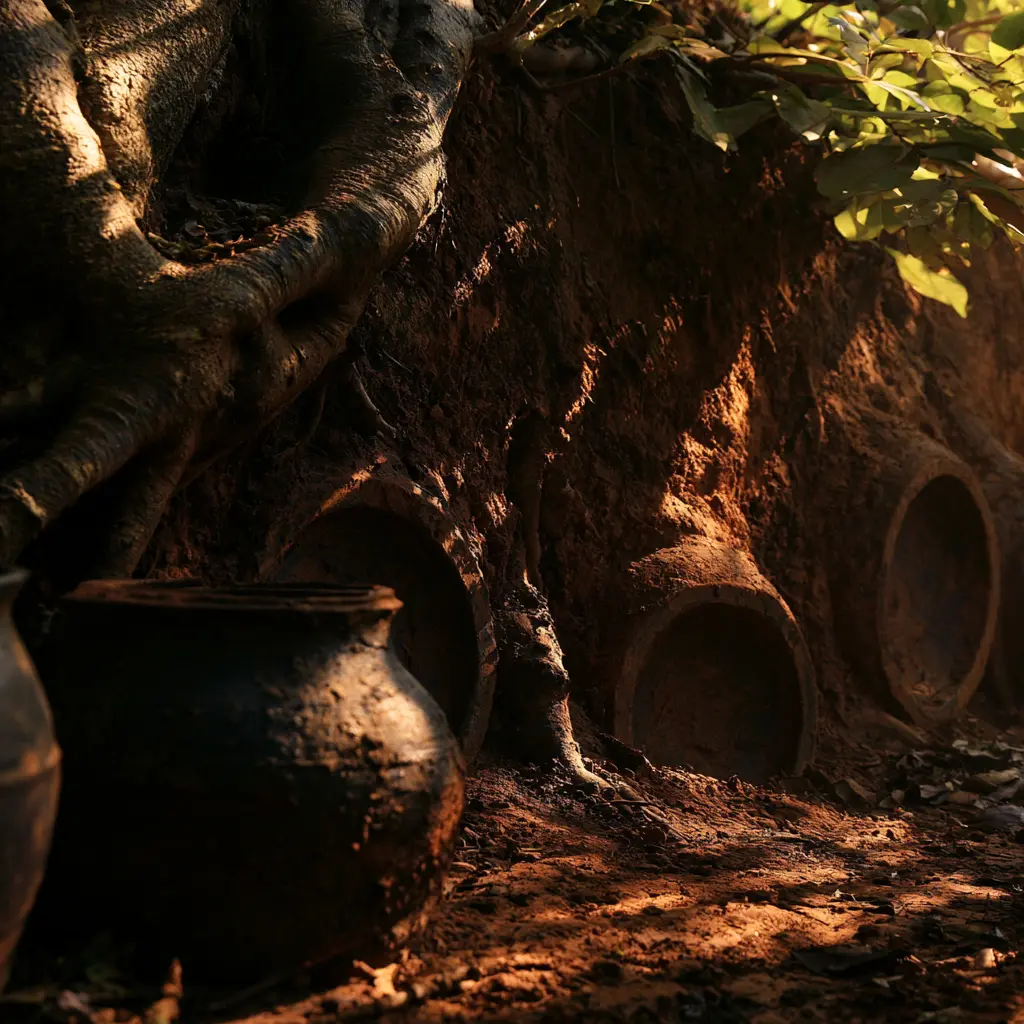
Residential Burial: The ancient cultural practice of burying the deceased directly beneath the floors of family homes. Excavations of these graves beneath Ban Chiang structures revealed that families maintained an intimate, spiritual connection with their ancestors, surrounding them with exquisite grave goods.
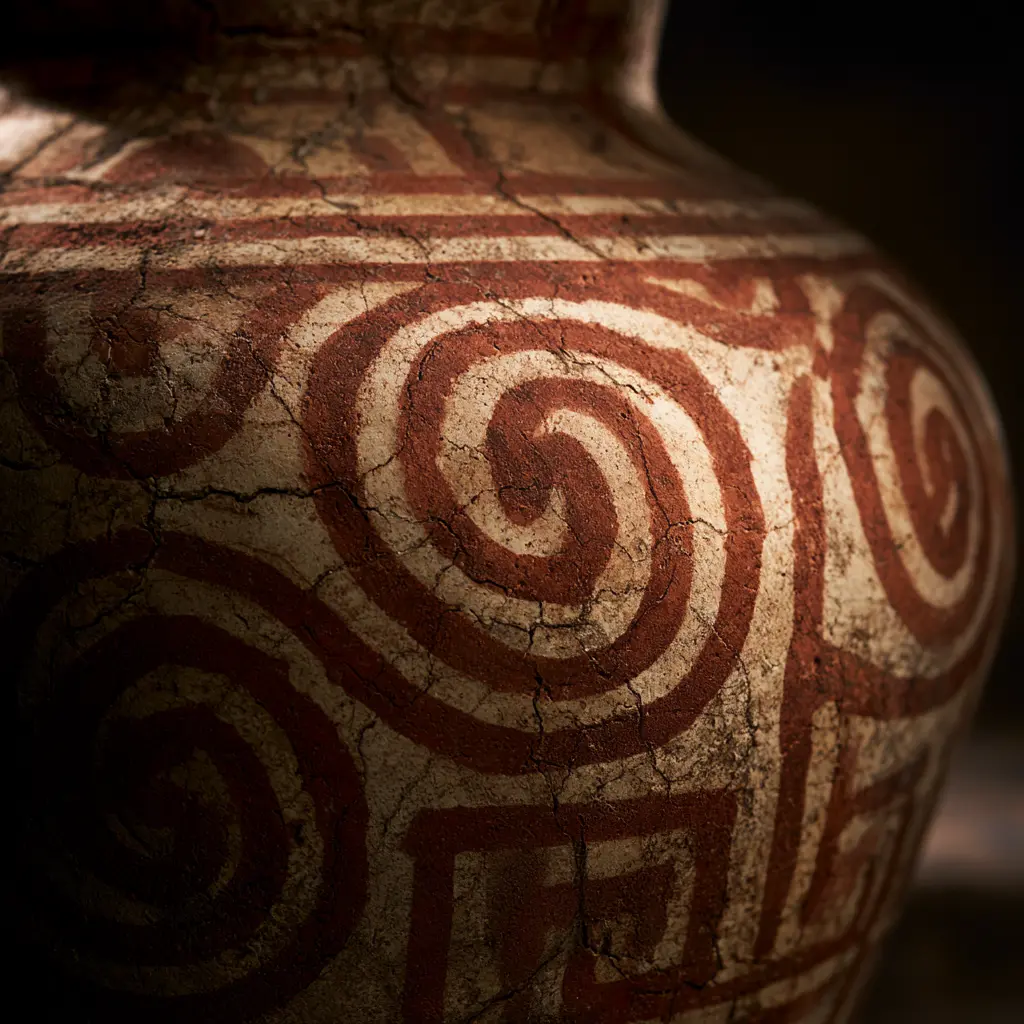
Red-on-Buff Pottery: The iconic, signature ceramic style of late-period Ban Chiang. Hand-coiled and smoothed with wooden paddles, these unglazed earthenware vessels feature striking, intricate crimson geometric spirals painted onto a pale, cream-colored surface.
Bronze Metallurgy: The technological process of smelting and casting copper-tin alloys. Finding crucible shards, clay moulds, and leftover metal slag proved that the Ban Chiang people were sophisticated, independent innovators of metalworking rather than simply acquiring it from neighbouring empires.
Sinocentric Paradigm: The traditional academic bias viewing China as the sole centre of technological innovation in East Asia. The independent development of bronze found at Ban Chiang shattered this belief, forcing global historians to look past this narrative when exploring Southeast Asian prehistory.
In the monsoon season of 1966, an anthropology student from Harvard University named Stephen Young arrived in the Nong Han district of Northeast Thailand to conduct fieldwork on local village politics.
During a walk along an eroded, muddy village path, Young accidentally tripped over the exposed root of a red kapok tree and fell. Upon clearing the mud from his face, Young identified the perfectly circular, baked-clay rims of ancient pottery jars protruding from the eroded earth.
This accidental stumble led to the discovery of Ban Chiang, a massive prehistoric settlement that would fundamentally disrupt the established academic timeline of human civilisation.
The Day the World Tripped Over the Bronze Age
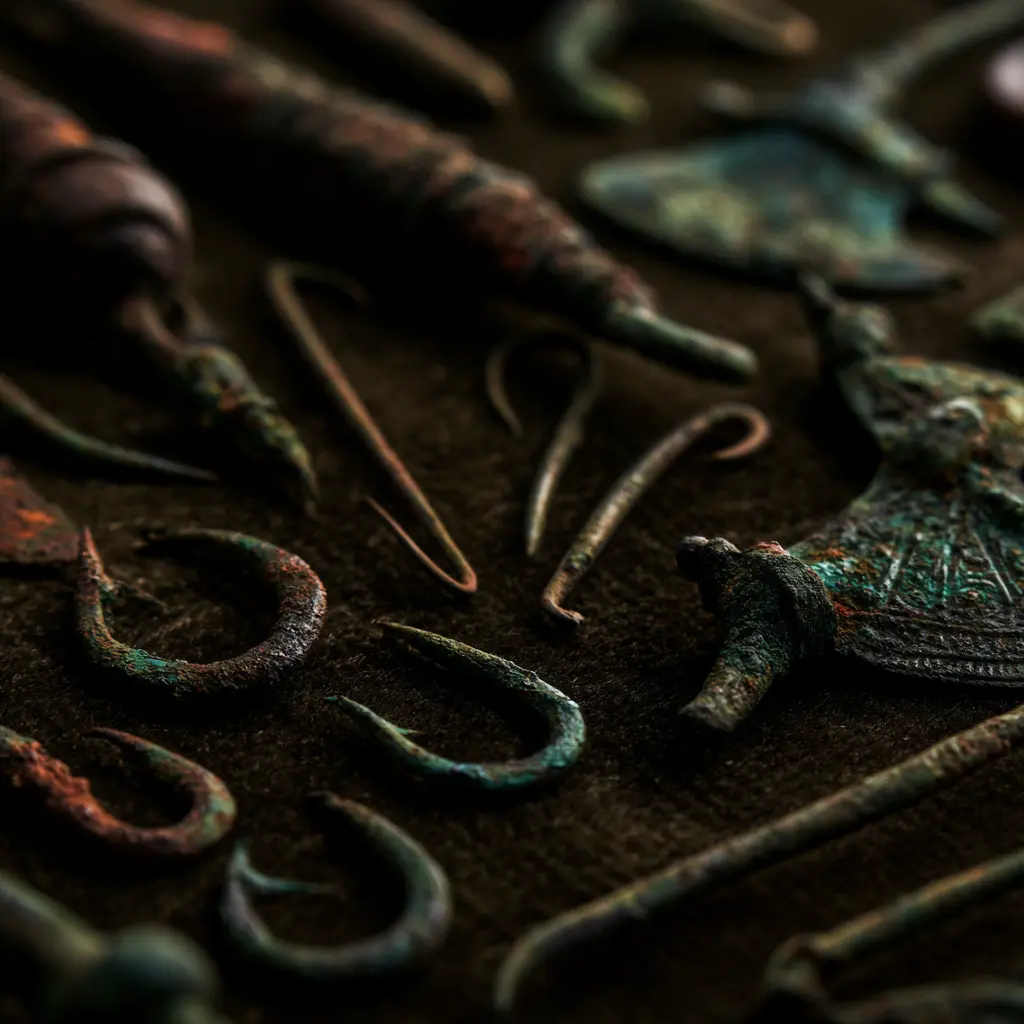
The discovery of the Ban Chiang archaeological site proved to be a critical turning point for global anthropology. Subsequent excavations revealed advanced bronze metallurgy alongside sophisticated pottery traditions.
Before Young’s discovery, mainstream historical consensus viewed prehistoric Southeast Asia as a culturally stagnant region. Experts assumed it had only adopted metalworking late in history. They believed this occurred through cultural diffusion from China and India.
The artifacts unearthed at Ban Chiang completely upended this paradigm. They proved that local prehistoric populations developed independent, highly advanced metallurgy and agricultural societies far earlier than previously believed. This discovery forced global historians to rewrite the timeline of the ancient world.
The Science that Shocked the Academics
For generations, Eurocentric and Sinocentric historical narratives were set in stone. Mainstream views held that advanced technology, like metallurgy and organised agriculture, only developed in Mesopotamia and the Yellow River. This technology supposedly filtered down to “primitive” areas like Southeast Asia. Consequently, the region was dismissed as a passive historical cul-de-sac.
When the University of Pennsylvania first ran thermoluminescence tests on the clay from Young’s pots, the results sent shockwaves through the scientific community: the dates came back as early as 4000 BCE.
If true, it meant these Thai villagers were smelting bronze long before the pyramids were even a thought, making Northeast Thailand the oldest Bronze Age civilisation on Earth.
Traditionalists revolted, refusing to believe civilisation could rise independently in the jungles of Thailand. Decades later, using advanced accelerator mass spectrometry (AMS) radiocarbon dating, scientists pivoted.
Instead of testing the unreliable clay, they extracted tiny fragments of carbonised rice chaff. Ancient potters had mixed this into the wet earthenware as a binding agent.
The new verdict? The site began around 2100 BCE. While not the oldest worldwide, the corrected timeline proved something far more revolutionary. Ban Chiang’s sophisticated metallurgy developed entirely independently. It arose concurrently with the world’s great empires, completely without external help.
Two Millennia Written in Clay
As archaeologists dug deeper through the eight-meter-high earthen mound, they discovered that people had occupied this exact spot for over two thousand years. Their evolution was recorded flawlessly across three distinct material eras:
1. The Early Period: Masters of Texture (ca. 2100 BCE – 900 BCE)
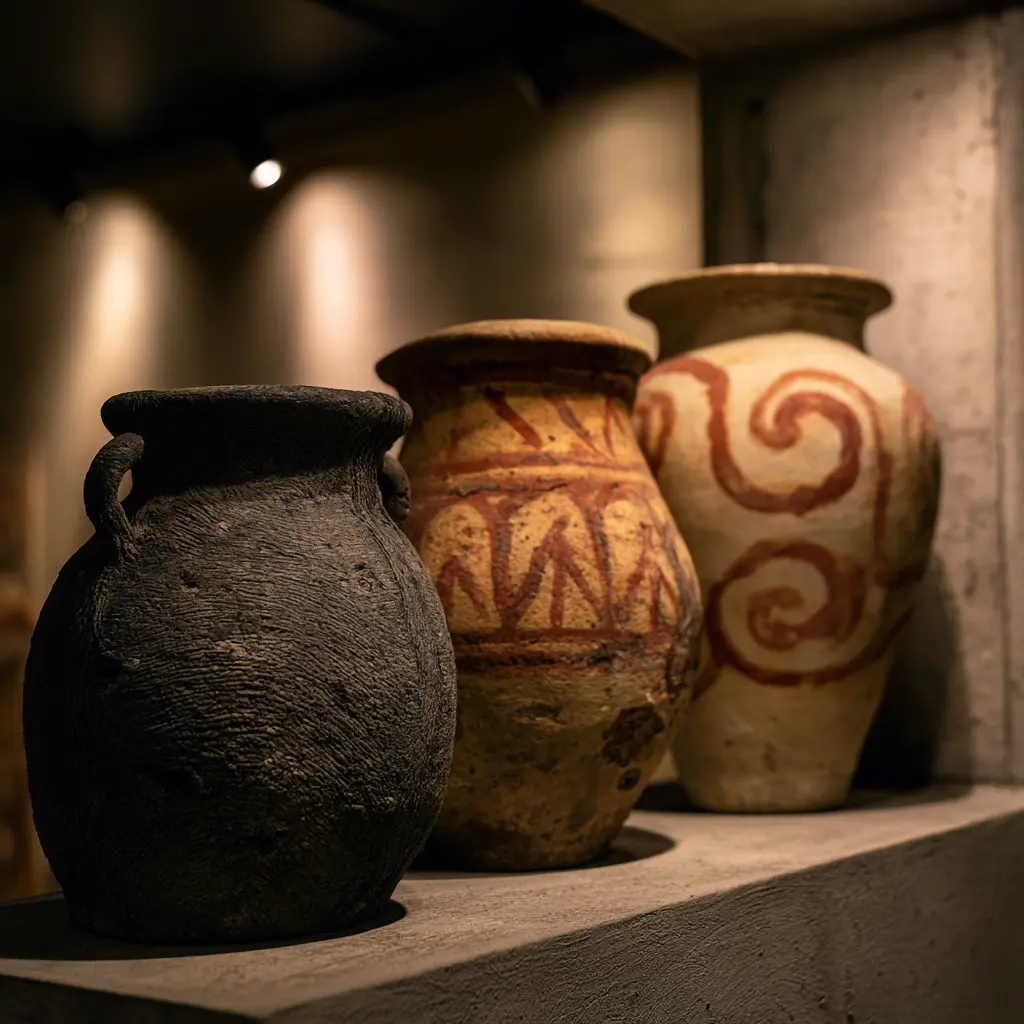
The foundational ancestors of Ban Chiang were deeply tactile artisans. Working without a potter’s wheel, they hand-coiled heavy, charcoal-black earthenware.
To finish the pots, they wrapped wooden paddles tightly in hand-spun hemp rope and struck the wet clay, leaving behind a dense, beautifully textured grid known as cord-marking. In these deep layers, the very first basic bronze bangles and axes make their appearance.
2. The Middle Period: The Leap into Colour (ca. 900 BCE – 300 BCE)
As kiln technology advanced, the villagers managed to achieve much hotter, more consistent firing temperatures. The pottery transformed into elegant, lightweight white and cream-colored vessels.
Artisans began scratching sharp geometric patterns into the damp clay, filling the grooves with iron-oxide red paint. This era also captured a massive metallurgical milestone: the sudden appearance of iron tools and rare bimetallic weapons. These featured iron blades cast directly into bronze handles.
3. The Late Period: The Golden Age of Spirals (ca. 300 BCE – 200 CE)
This is the era responsible for the globally iconic “red-on-buff” ceramics. Abandoning time-consuming scratching methods, late-period artists used fine brushes to paint freehand, undulating red swirls. They painted sweeping concentric circles across smooth, cream-colored clay.
These vessels were masterfully expressive, created not for daily cooking but as elite items placed over the bodies of the dead during elaborate burial rituals.
The Peace of the Khorat Plateau
They built wooden houses high on stilts, burying their ancestors directly beneath the living rooms. Tiers of beautiful pottery and jewellery surrounded the deceased. This created a touching, permanent connection between the living and the dead.
The Ban Chiang anomaly is entirely different. Over its 2,000-year history, there is a stunning absence of evidence of organised warfare. The village had no fortifications or defensive ditches.
Instead, the thousands of metal artifacts pulled from the soil are overwhelmingly peaceful, practical, and domestic:
The population was remarkably healthy for an ancient society. They pioneered using domesticated water buffalo to clear and till heavy, muddy lowlands for wet-rice cultivation, and complemented their diet by domesticating cattle, pigs, and chickens.
They built wooden houses high on stilts, burying their ancestors directly beneath the living rooms. Tiers of beautiful pottery and jewellery surrounded the deceased. This created a touching, permanent connection between the living and the dead.
The Modern International Art Heist
Because the late-period red-swirl pottery was so breathtakingly beautiful, the discovery of Ban Chiang immediately triggered a dark and destructive modern chapter. It sparked a massive, global antiquities gold rush.
Throughout the late 1960s and 1970s, international art syndicates descended on the quiet corner of Northeast Thailand. They paid local villagers a pittance to systematically dig up their own farmlands and ancestral burial mounds.
Thousands of irreplaceable ancient vessels were ripped out of the ground, shattering fragile skeletons and destroying vital contextual data forever. These artifacts were smuggled across borders, vanishing into private luxury living rooms and prominent Western museums.
The turning point came in 2008 during a massive, multi-year federal sting operation in the United States. Federal agents executed simultaneous raids on several prominent California museums. Targeted institutions included the Los Angeles County Museum of Art and the Bowers Museum.
The investigation pulled back the curtain on an elaborate tax-fraud ring. Illicit art dealers smuggled freshly looted Ban Chiang pottery into the US to donate to major galleries. They received highly inflated appraisals. This allowed wealthy donors to claim massive, fraudulent tax write-offs.
This historic crackdown permanently altered the ethics of global art collecting. Over the following years, a massive international repatriation effort took hold.
Hundreds of stolen vessels, bronze implements, and ancient ornaments have been formally returned home to Thailand. They reclaim their rightful place. They are no longer exotic anomalies in a foreign display case. Instead, they stand as a soaring monument to Southeast Asia’s independent, brilliant, and peaceful ancient heritage.