
Key Insights
The Bo Sang umbrella is an indigenous biopolymer composite, not just a decorative craft. Northern Thai artisans bonded long-chain mulberry cellulose with tannin-rich persimmon juice, curing the canopy with drying oils via oxidative polymerisation.
Supported by an elastic bamboo frame, this fully biodegradable, century-old design forms a waterproof, aerodynamic shield that rivals modern synthetic plastics in durability and sustainable engineering.
Sa (Paper Mulberry / Broussonetia papyrifera): A fast-growing tree whose inner bark yields exceptionally long-chain cellulose fibres. Unlike industrially sheared wood pulp, Sa fibres retain high tensile strength and form an omnidirectional, interlocked molecular scaffold during sheet formation.
Cross-linking Agent: A chemical compound that creates chemical bonds (bridges) between polymer chains. In the Bo Sang canopy, the polyphenol- and tannin-rich juice of the Ma-Khuea (wild ebony persimmon) acts as a natural cross-linker, binding cellulose chains together to prevent delamination and insect damage.
Oxidative Polymerisation: A chemical curing process where unsaturated fatty acids react with atmospheric oxygen to form cross-linked polymer networks. Rather than evaporating like synthetic solvents, applied drying oils (such as Tung oil or Nam Man Yang) cure into a durable, flexible, and hydrophobic film.
Hydrophobic Interface: A low-surface-energy barrier that repels polar water molecules. This non-polar surface causes rainwater to bead and roll off rather than penetrate the underlying porous cellulose scaffold.
Natural Composite: A structural material composed of two or more distinct biological substances working in synergy. In bamboo (Mai Phai), flexible cellulose fibres supply high tensile strength (analogous to steel rebar), while rigid lignin provides compressive strength (analogous to concrete).
Bio-Circular-Green (BCG) Economy: An economic model integrating sustainable biological resource utilisation, zero-waste lifecycle loops, and eco-friendly manufacturing. The traditional Bo Sang production cycle exemplifies BCG principles by relying exclusively on fast-regenerating, carbon-sequestering, and fully biodegradable components.
While modern travel narratives often minimise the iconic Bo Sang umbrella as a colourful decorative folk craft, its core construction is an advanced historical application of indigenous biopolymer engineering.
Long before the laboratory synthesis of petroleum-based plastics, Northern Thai artisans developed a rigorous method to cross-link plant-based glucose chains into a waterproof, highly flexible composite material. The resulting canopy can withstand the high-velocity hydro-saturation of a severe Southeast Asian monsoon.
To truly decode the Bo Sang umbrella is to understand the historical Lanna Kingdom’s material mastery over its three most abundant natural resources: structural bamboo, fibrous bark, and hydrophobic resins.
The Cellulose Scaffold: Sa Paper and Molecular Interlocking
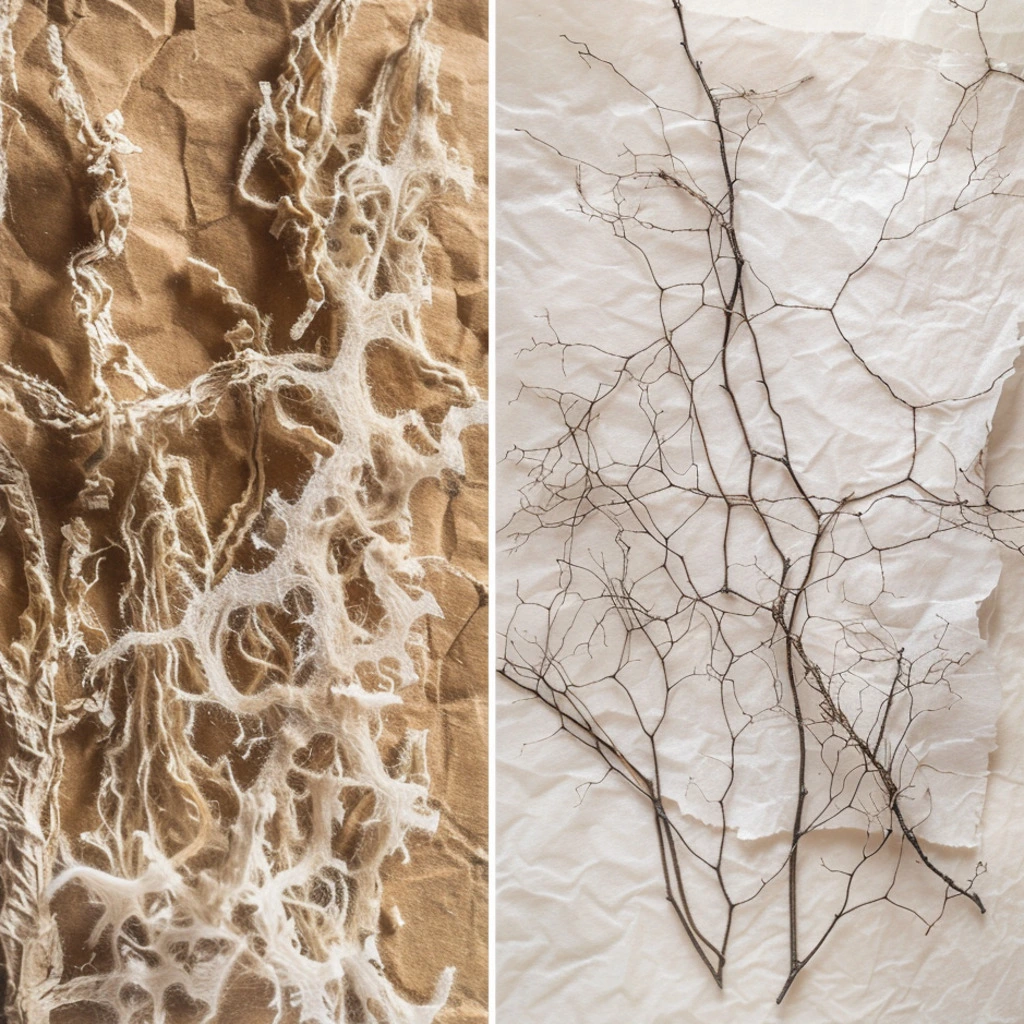
The process begins not with aesthetics, but with the high-cellulose content of the paper mulberry tree, or Sa. Unlike industrial wood pulp, which is often chemically shortened and stripped of its structural “memory” to facilitate mass printing, the Sa bark is harvested for its exceptionally long-chain fibres. These fibres are the “steel rebar” of the umbrella’s canopy.
During the maceration process, the bark is soaked in a high-pH solution—traditionally, wood ash water – to break down the lignins and pectins that hold the fibres together. Crucially, these fibres are physically separated through manual beating without shearing the molecular bonds.
As the pulp is distributed onto a submerged screen and lifted into the Northern Thai sun, a process of intensive hydrogen bonding occurs. At a microscopic level, these long-chain polysaccharides do not merely sit atop one another; they interlock in a random-orientation web.
This creates a “scaffold” that distributes mechanical stress evenly across the canopy, providing a strength-to-weight ratio that rivals modern synthetic textiles. This is why a Bo Sang umbrella does not tear along a straight line; the molecular “grain” is an omnidirectional lattice.
The Secret Ingredient: Persimmon Tannins as a Cross-linking Agent
While the Sa paper provides the form, its durability in a tropical climate is a result of a sophisticated chemical “bridge.” Before the final oiling, the artisans treat the paper surface with a viscous, dark extract from the Ma-Khuea (wild ebony persimmon). In the vocabulary of modern polymer science, this represents a natural cross-linking agent.
The juice of the Ma-Khuea is naturally rich in polyphenols and tannins. When applied to the cellulose fibres, these tannins act as a chemical mortar, binding the glucose chains into a reinforced matrix.
This prevents the paper from delaminating or “pilling” when exposed to the extreme thermal expansion of the tropical sun, followed by the rapid cooling of rain. Furthermore, the high tannin concentration acts as a natural biocide.
By rendering the organic fibres toxic to fungi and boring insects, the artisans ensured that an umbrella was not a seasonal purchase, but a multi-year investment – a hallmark of the “Slow Travel” philosophy that prioritised quality over the disposable nature of modern commerce.
The Structural Core: Bamboo as a Natural Composite

Supporting this polymer canopy is a skeleton of bamboo, which serves as nature’s version of reinforced concrete. The relationship between the paper and the frame is one of tension and compression, a principle that echoes the teak-frame architecture found throughout the Chiang Mai valley.
Bamboo itself is a sophisticated composite material. The cellulose fibres provide the tension (the “rebar”), while the lignin acts as the “concrete” (compression). In Bo Sang, the artisans specifically select Mai Phai (Bambusa) for its high modulus of elasticity.
Each rib is hand-shaved to a precise taper, ensuring that when the umbrella is deployed, the “Indigenous Polymer” of the paper canopy distributes the mechanical load evenly across the frame.
This allows the structure to flex in high winds – utilising the same aerodynamic principles as a modern aircraft wing—without snapping. The hinge points, often overlooked, are themselves a study in friction management, using hand-wound threads to create a soft-close mechanism that has remained unchanged for two centuries.
The Waterproofing Interface: Oxidative Polymerisation
The transition from a porous paper sheet to a hydrophobic shield is achieved through a controlled chemical reaction: oxidative polymerisation. The final application of natural resins and Tung oil (or local Nam Man Yang) does not “dry” in the traditional sense of solvent evaporation.
Instead, when exposed to atmospheric oxygen, the unsaturated fatty acids within the oil undergo a molecular curing process. This forms a solid, flexible, and entirely waterproof film over the cellulose scaffold. This cured layer creates a low-surface-energy barrier—a microscopic “plastic” derived entirely from the Lanna forest.
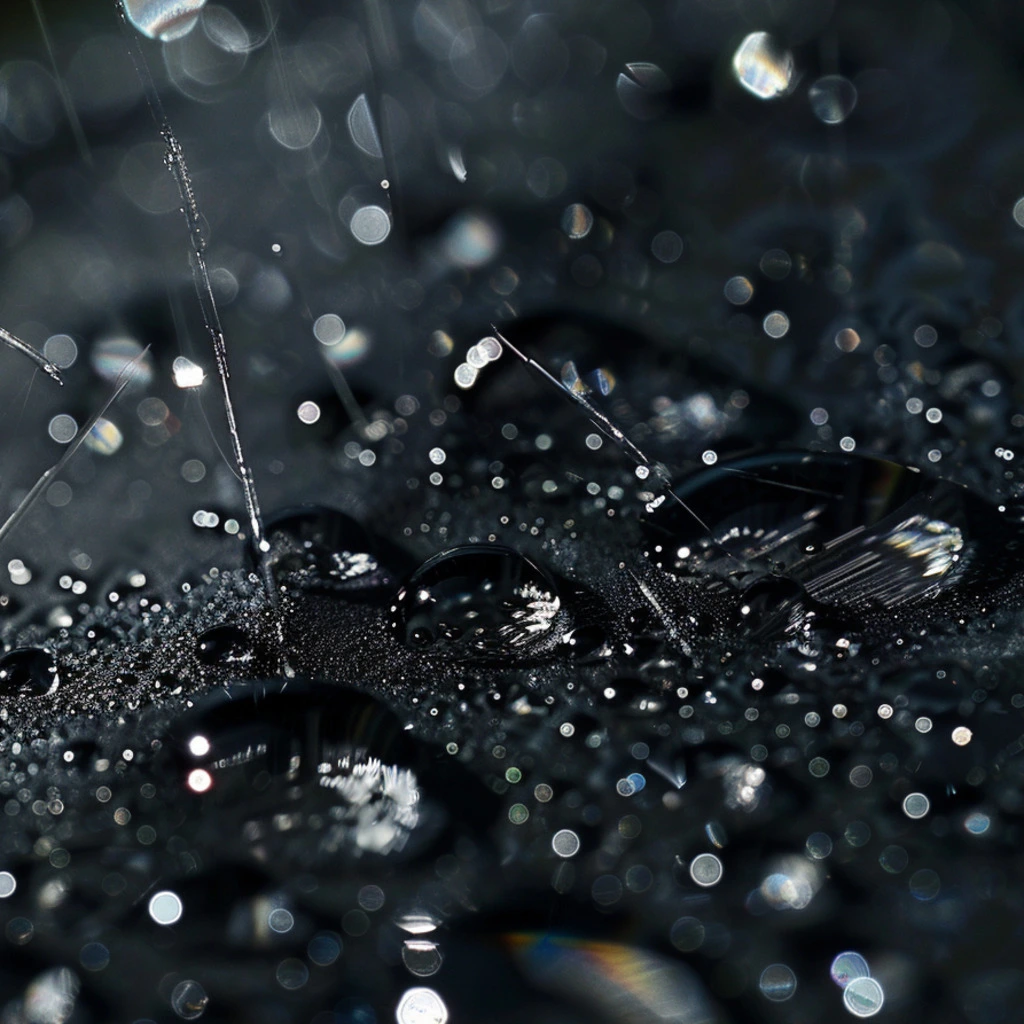
The chemistry of the “bead” is fascinating: the non-polar molecules of the cured oil repel the polar molecules of water ($H_2O$), forcing rain to form droplets and roll off a surface that was, only days prior, a collection of loose tree bark and fruit juice. This process is sensitive to the Northern Thai climate; the humidity and temperature of the valley act as the catalysts for the perfect cure.
Historical Context: The Suez Canal and the Rise of the Sunshade
To understand the global proliferation of Bo Sang craft, one must look toward the Suez Canal era. As the “Golden Age of Travel” opened Southeast Asia to the European elite, the demand for high-quality, lightweight sunshades skyrocketed. The Bo Sang umbrella, with its superior UV-blocking properties and sophisticated aesthetic, became a staple of the colonial-era traveller.
In the archives of the grand heritage hotels of Bangkok and Penang, one often finds references to these Northern Thai umbrellas being provided to guests as they embarked on “Grand Tours” of the teak forests.
It was during this period that the Bo Sang artisans began incorporating the vibrant pigments—derived from mineral earths and botanical dyes—that have since become their visual signature. However, for the discerning traveller, the beauty remains secondary to the technical provenance of the materials themselves.
Sustainability: The Green Polymer vs. The Grey Plastic
In the context of the contemporary “Circular Economy,” the Bo Sang umbrella is a relic of perfect efficiency. It stands in stark contrast to the mass-market alternatives constructed from petroleum-based nylon, chrome-plated steel, and non-recyclable adhesives that dominate the 7-Eleven era of tourism.
The Bo Sang model is carbon-sequestering, utilising fast-growing bamboo and mulberry trees that regenerate within years rather than decades.
Every component—from the cotton thread used for the hinges to the mineral pigments in the paint—is 100% biodegradable. This aligns seamlessly with the modern shift toward “Bio-Circular-Green” (BCG) economic models currently being championed by the Tourism Authority of Thailand (TAT).
By choosing a Bo Sang umbrella, the traveller is not just purchasing a souvenir; they are supporting a decentralised, zero-waste manufacturing system that has predated modern sustainability “trends” by several centuries.
The Heritasian Verdict
The Bo Sang umbrella serves as a functional archive of Lanna technical heritage. It is a reminder that the “Golden Age of Travel” was supported not just by the brute force of steam and steel, but by a deep, indigenous mastery of organic chemistry.
The artisans of Bo Sang were chemists long before they were painters, manipulating molecular structures to create a product that is as relevant in the 21st century as it was in the 19th.
For the modern traveller exploring the “Teak Trail” of Northern Thailand, the Bo Sang umbrella is an essential artifact. It represents a syncretic blend of botanical intuition and material science – highlighting the enduring creativity of the Lanna people. To hold one is to hold a 200-year-old experiment in sustainability, one that remains the definitive answer to the challenges of the tropical monsoon.