
For nearly two decades, Chiang Rai’s tourism narrative has been anchored by a gleaming, singular archetype: Chalermchai Kositpipat’s Wat Rong Khun. As a piece of visionary pop-art architecture, the White Temple succeeded brilliantly at its primary directive, effectively dragging the province out of Chiang Mai’s shadow and cementing it on the global sightseer checklist.
Yet, for the modern traveller and the destination designers who curate for them, this monument represents an era of travel that is rapidly aging out.
The temple run – bounding between the White Temple, the Blue Temple, and the Black House – has become an exercise in high-velocity transit. It’s the pinnacle of the visual spectacle economy: forty-five minutes in a sun-baked parking lot, a crowded photograph across the Bridge of Rebirth, and a quick retreat to the air-conditioned confines of a tour van.
It delivers massive footfall, but generates minimal local economic yield and virtually no deep cultural immersion. It’s tourism designed for the lens, not for the senses.
But Chiang Rai is far richer, and far more complex, than its roadside monuments. The province’s true luxury isn’t constructed from plaster and mirrored glass on the valley floor. It’s rooted in elevation, complex migration histories, and a quiet, world-class agro-ecological revival happening high above the cloud line.
Moving from Visual Consumption to Terroir-Driven Provenance
To build high-value, regenerative itineraries, luxury travel strategists must look upward, specifically above the 1,200-meter mark. Here, the humid lowlands give way to crisp mountain air, and the narrative shifts from visual consumption to terroir-driven provenance.
The true frontier of Northern Thai tourism lies in the mist lines of Doi Mae Salong and Doi Chang, where agro-forestry, mid-century geopolitical displacement, and indigenous stewardship intersect to produce legitimate, highly coveted microclimates.
By designing agricultural circuits around these twin peaks, we move travellers out of the realm of passive observation and into somatic, geographical immersion. We invite them to taste the topography.
Doi Mae Salong and the Geopolitics of the Teacup
Our first anchor lies on the steep, winding ridges of Doi Mae Salong. To understand the terroir here is to understand a fascinating, turbulent slice of Cold War history.
Settled in the early 1960s by the lost 93rd Division of the Chinese Nationalist Army – the Kuomintang – who were pushed out of Yunnan during the communist revolution, Mae Salong is a geographical anomaly. For decades, it was a remote outpost funded by the illicit opium trade of the Golden Triangle.
Today, that violent history has been overwritten by one of the most successful agricultural transformations in Southeast Asia. Through royal crop-substitution initiatives, Taiwanese tea cultivars – specifically Chin Shin Oolong and the prized TTES No. 12 and 17 – were introduced to the mountain’s cool, mist-shrouded slopes.
For the luxury traveller, this isn’t a cursory village tour; it’s a structured lesson in high-elevation agronomy. The experience circuit shifts the story entirely. Imagine a morning harvest walking alongside tea masters through terraced fields that seemingly drop off the edge of the earth.
This is followed by a private gongfu tea ceremony inside century-old, wood-fired drying barns, where the tightly rolled, oxidised leaves release notes of orchid and roasted chestnut.
The day culminates in pairing these high-mountain oolongs with hyper-regional Yunnanese heritage cuisine – braised pork belly, shiitake, and wild mountain herbs – recipes preserved by the diaspora for over half a century. It’s a tasting menu where every ingredient speaks to survival, migration, and the healing of a landscape.
Doi Chang and Indigenous Agro-Forestry
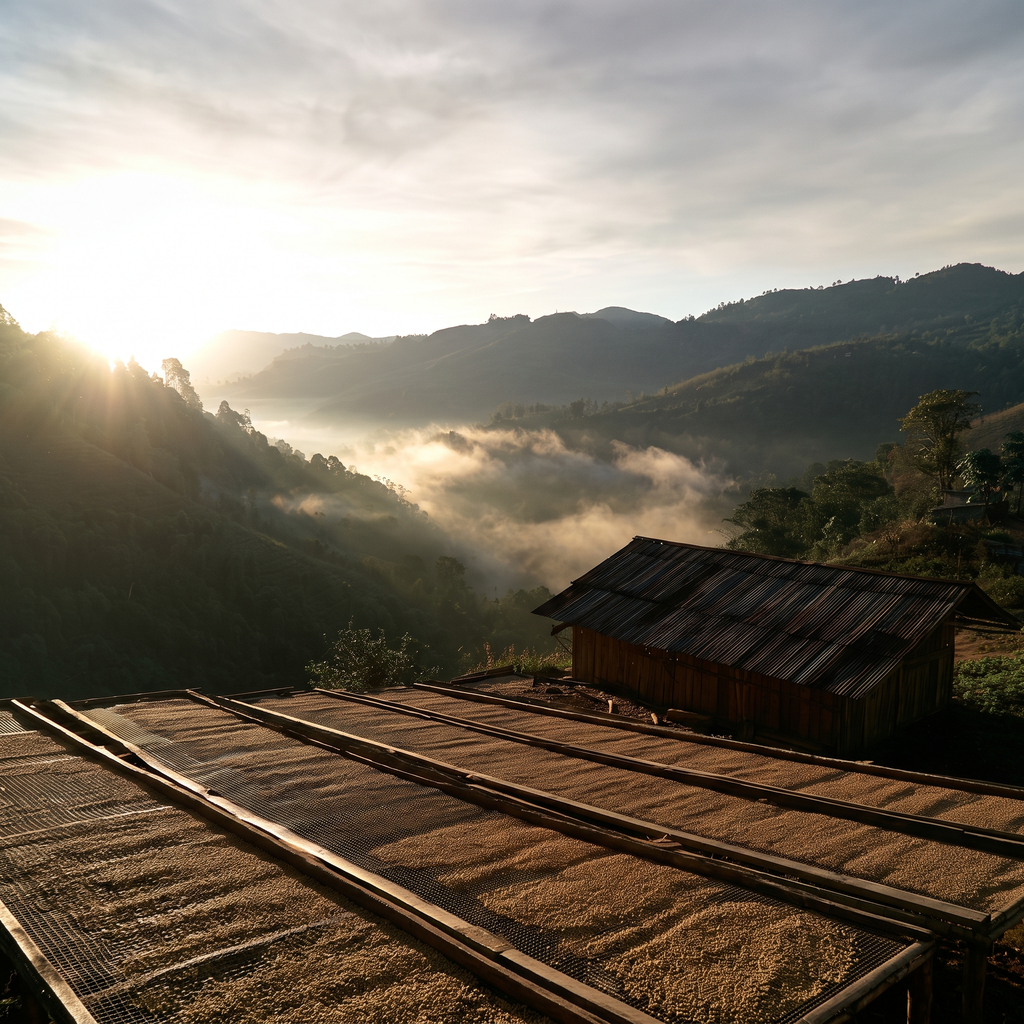
Across the province, rising 1,500 meters above sea level, lies Doi Chang. If Mae Salong is defined by its Yunnanese diaspora, Doi Chang is defined by Akha indigenous custodianship.
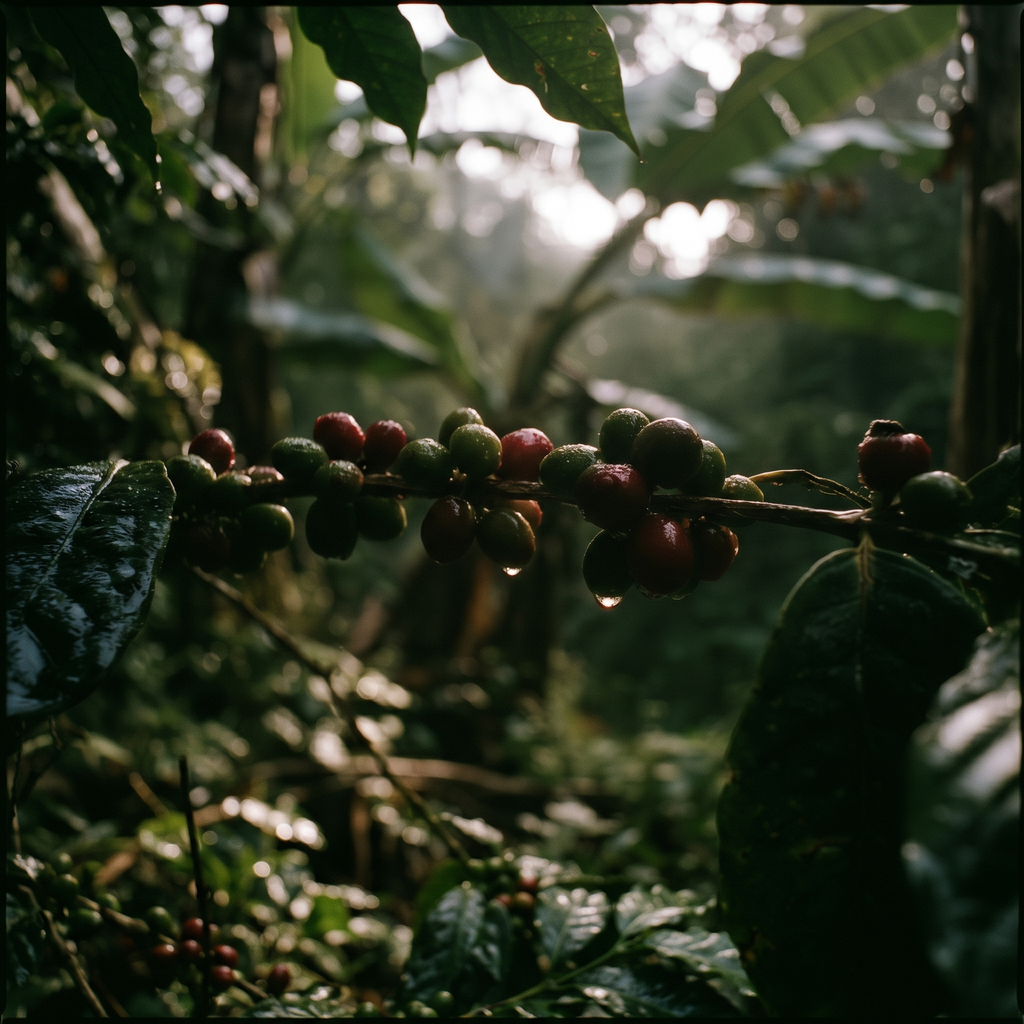
The volcanic loam, the heavy shade – canopy microclimate, and the extreme elevation provide the absolute perfect storm of conditions for growing specialty Arabica, including Catimor, Catuai, and increasingly, delicate Geisha varietals.
But the most compelling narrative on Doi Chang isn’t just the quality of the soil; it’s the economic sovereignty of the people working it. For generations, the Akha and other indigenous groups were heavily marginalised, relegated to contract farming or subjected to extractive “hill tribe” tourism models that bordered on human zoos.
Today, a new generation of Akha agriculturalists has reclaimed the supply chain. They’re not just picking cherries; they own the fully integrated wet mills, they manage the anaerobic fermentation tanks, and they’re certified Q-Graders evaluating micro-lots for global export.
An itinerary designed around Doi Chang treats these indigenous producers with the reverence normally reserved for European winemakers. Experiential cupping sessions are hosted in minimalist labs overlooking the valleys. Travellers engage in hands-on fermentation workshops, learning the nuanced flavour profiles of honey-processed versus natural coffees.
They embark on deep-dive treks through polycultural forest canopies, observing firsthand how coffee thrives not in cleared plantations, but beneath the shade of native wild fruit, macadamia, and plum trees. It’s an education in regenerative permaculture, delivered by the people who have guarded the forest for centuries.
Designing the High-Yield Circuit
The strategic takeaway for Destination Management Companies and travel designers is clear: high-yield hospitality requires slowing the traveller down. We must replace the frantic day-trip from Chiang Mai with a multi-day ridge line circuit.
This means pulling guests out of the valley floor and anchoring them in boutique eco-lodges and converted tea bungalows perched in the mountains. It requires elevating tea masters, Akha roasters, and indigenous botanists, positioning them not as background staff, but as the lead sommeliers and narrators of the landscape.
Most importantly, it means contextualising every cup poured with the living history of the Golden Triangle’s transition from cash-crop narcotics to micro-lot gastronomy.
Chiang Rai doesn’t need another selfie pavilion. Its mountains already hold one of the most compelling, resilient stories in Southeast Asia. We just have to design the roads that lead up to it, and trust that the modern traveller is finally ready to sit down, steep the leaves, and listen.