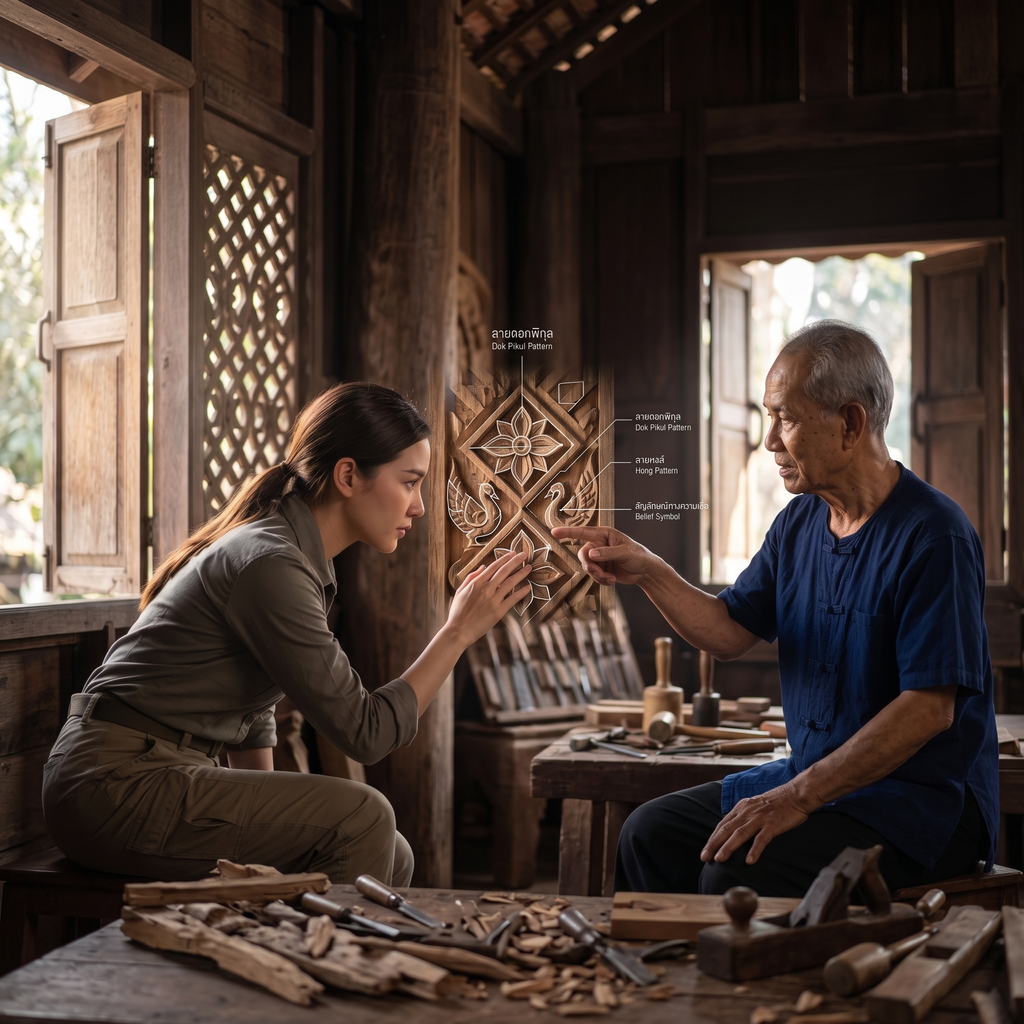

Tourism boards and municipal authorities across Southeast Asia do an exceptional job marketing craft festivals, creative city designations, and regional souvenirs. They drive foot traffic, generate broad media coverage, and fill weekend market stalls.
For luxury travel designers, boutique hoteliers, and heritage curators, that surface-level framing presents a commercial problem.
Affluent, culturally curious travellers paying $800 a night aren’t looking for a basic DIY pottery workshop or a mass-market textile market. They aren’t travelling halfway around the world to tie-dye a cotton shirt or carve a decorative block of soap.
They want cultural semiotics – the ability to decode the visual language, hidden cosmology, and spatial history of the physical world around them.
What Is Semiotics (And Why Does It Matter in Travel and Design for Thailand)
At its core, semiotics is the study of signs, symbols, and how meaning is created and communicated.
In classical semiotics, every sign contains two working components:
When applied to physical craft, architecture, and material culture, semiotics reveals that traditional objects are never merely decorative. They are functional, encoded languages.
A specific diamond pattern in a hand-loomed cloth is not just an arbitrary aesthetic choice; it’s an animist signifier communicating a spirit protection ward, water cosmology, or family lineage. The angle of a timber gable or the placement of an ancestral house pillar is an architectural signifier marking boundaries between the sacred realm and the human world.
Mass tourism focuses exclusively on the physical souvenir. Semiotics focuses on the unspoken message built into the object.
The Commodity Trap vs. The Intellectual Asset
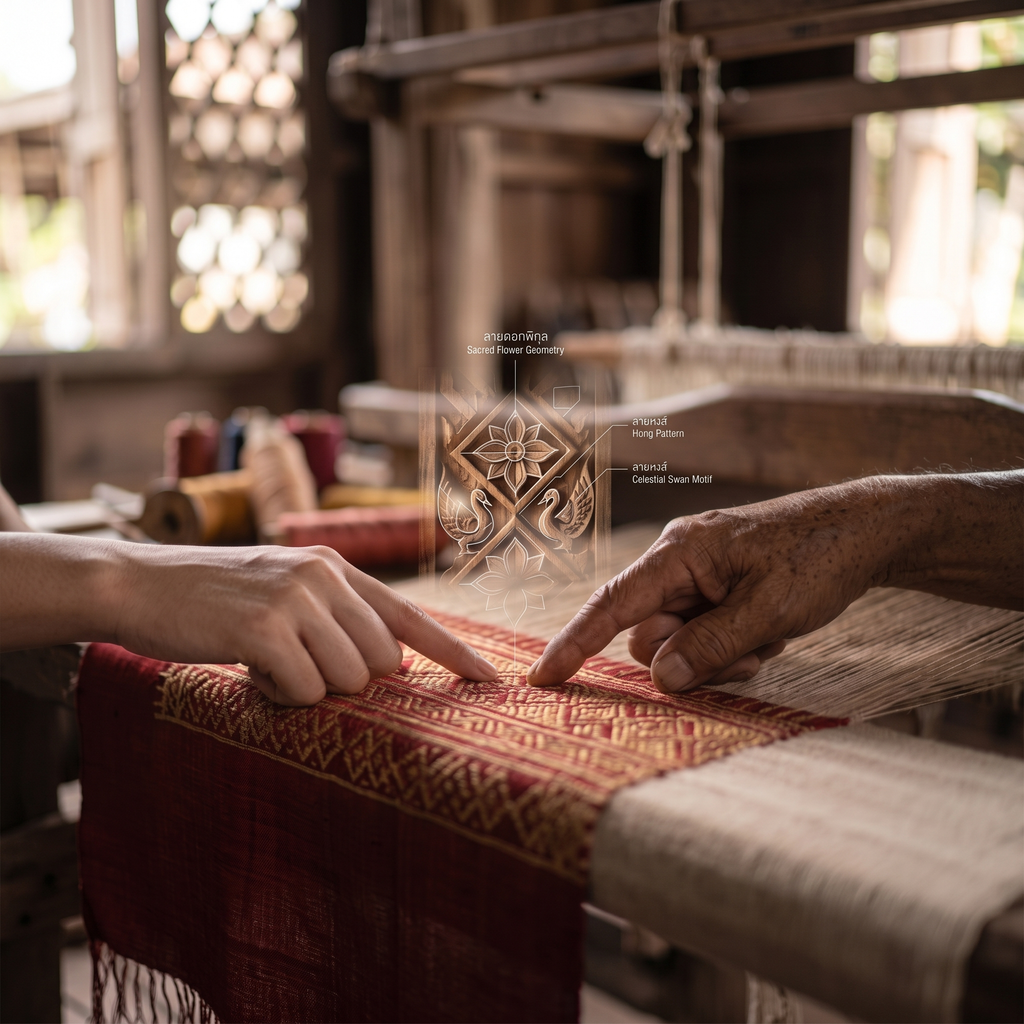
When regional tourism markets are crafted solely as aesthetic decor or a casual hobby, it falls into a commodity trap:
One approach delivers a predictable sightseeing stop that ends in a gift shop. The other provides information gain that justifies high planning fees, private curatorial retainers, and extended stays.
Why Northern Thailand Holds an Unfair Advantage
While rich semiotic traditions exist across the globe, Northern Thailand occupies a rare global position: it pairs dense, living material culture with an exceptionally mature luxury hospitality and transport infrastructure.
In many global destinations where traditional semiotics run deep—such as remote parts of the eastern Himalayas, rural Laos, or outer Indonesian islands—the luxury supply chain breaks down. Roads are fragile, reliable luxury accommodations are non-existent, and high-net-worth logistics become high-risk operations.
Northern Thailand solves this operational friction completely:
The Commercial Upside for Luxury Operators, Hoteliers, and Curators
Embracing semiotics isn’t an academic indulgence; it transforms how high-end operators capture value across the entire luxury ecosystem:
Elevating the Maker from Vendor to Cultural Custodian
Mass tourism promotes the product. Cultural semiotics decodes the signifier.
To preserve and elevate traditional material culture, we must stop treating master artisans as souvenir vendors and start recognising their work as what it has always been: a sophisticated visual language of cosmology, sacred geometry, and living regional history.