
Key Insights
Doi Nang Non, the “Mountain of the Sleeping Lady,” is a hauntingly beautiful karst formation in Chiang Rai steeped in tragic folklore. Legend tells of a princess whose forbidden love led to a heartbreaking end, her body transforming into the mountain range.
This sacred landscape serves as a powerful symbol of devotion and the deep spiritual connection between nature and Lanna myth.
Nang Non: Meaning “Sleeping Lady”; the collective regional name for the limestone karst mountain range in Chiang Rai, whose undulating ridge silhouette naturally mirrors the form of a reclining pregnant woman.
Tham Luang: The deep, labyrinthine limestone cave system located beneath the “belly” of the mountain silhouette, which is culturally viewed in local animist belief as both a sacred womb and a treacherous subterranean underworld.
Jao Mae Nang Non: The guardian goddess or tutelary spirit of the mountain range, believed to be the spiritual manifestation of the tragic Chiang Rung princess from the founding myth, who demands respect and ritual offerings from those entering the caves.
Tai Lue: The distinct Tai ethnic group indigenous to the surrounding valleys of the Golden Triangle, whose specific oral traditions and weaving motifs have historically preserved and localised the animist folklore surrounding the mountain’s origins.
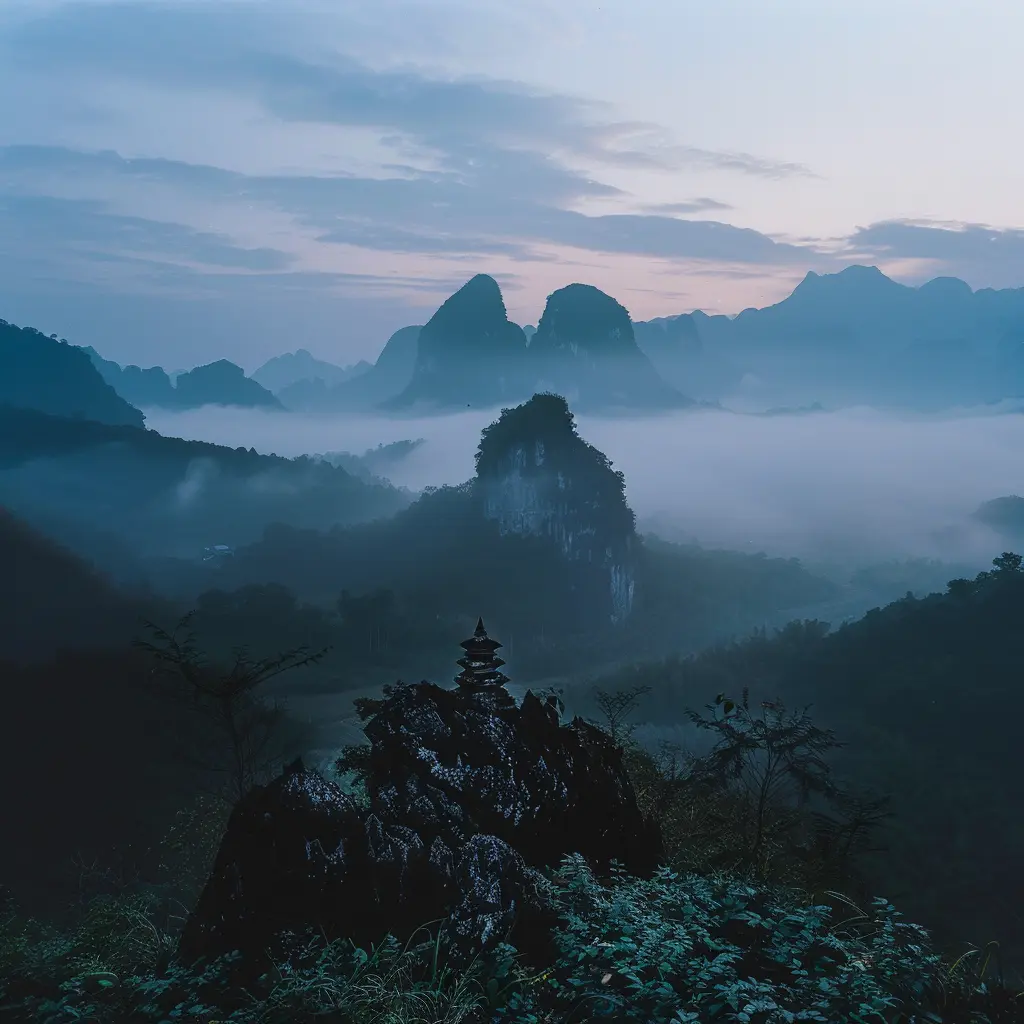
The morning mist clings to the limestone ridges of Mae Sai in Chiang Rai, Thailand, veiling a landscape defined by both karst geology and profound human history. This is Doi Nang Non – the “Mountain of the Sleeping Lady” – a site globally recognised for the 2018 Tham Luang cave rescue. To the discerning traveller, this mountain serves as a masterclass in sacred topography, acting as a physical and spiritual bridge between the local Lanna culture and the northern Thai landscape.
The Provenance: The Lanna Kingdom and Courtly Order
To understand the tragedy of the Sleeping Lady, one must first inhabit the world of the ancient Chiang Saen and Lanna principalities. This was a realm defined by “Mandala” politics, a system where hard borders did not define power, but by circles of loyalty radiating from a central god-king. In this socio-political structure, a princess was a vital diplomatic asset and a living link between dynasties.
Her life was governed by the Khum (court) protocols – a rigid hierarchy that prioritised lineage and ritual purity above all else. When she fell in love with a humble woodsman, it was a radical defiance of the cosmic order. By fleeing the palace, the pair exited the “civilised” world and entered the Muang. This was the wild forest where the ancient, unpredictable laws of spirits replaced the laws of men.
The Narrative: A Gist of Forbidden Love
For those unfamiliar with the legend, it is a quintessential tragedy of cosmic sacrifice. The Princess, pregnant and desperate, fled toward the rugged northern mountains to escape her father’s certain wrath. While they hid in the dense foliage, the woodsman left their shelter to forage for food. He was intercepted and executed by the King’s pursuers.
Stricken with grief and realising her lover would never return, the Princess took a silver hairpin – a final vestige of her royal status – and drove it into her heart. As she fell, her body began to expand, her silhouette merging with the horizon to create the mountain range we witness today.
The Science of the Sacred: Karst Geology as a Narrative Canvas
From a technical perspective, the “Sleeping Lady” is a spectacular example of Tower Karst topography. These limestone formations are composed of calcium carbonate deposits laid down millions of years ago in ancient shallow seas. Over eons, acidic rainwater dissolved the rock, carving out the jagged peaks and labyrinthine cave systems.
However, for the Lanna people, these geological processes are secondary to the narrative. The sharp “nose” of the princess and the sloping “chest” of the range are not accidents of erosion; they are the fossilised remains of a broken heart. This is the essence of Landscape Psychology: the human need to project our internal dramas onto the external world. The karst landscape acts as a literal “archive” of local folklore.
Heritage Highlight: The Architecture of the Lanna Khum
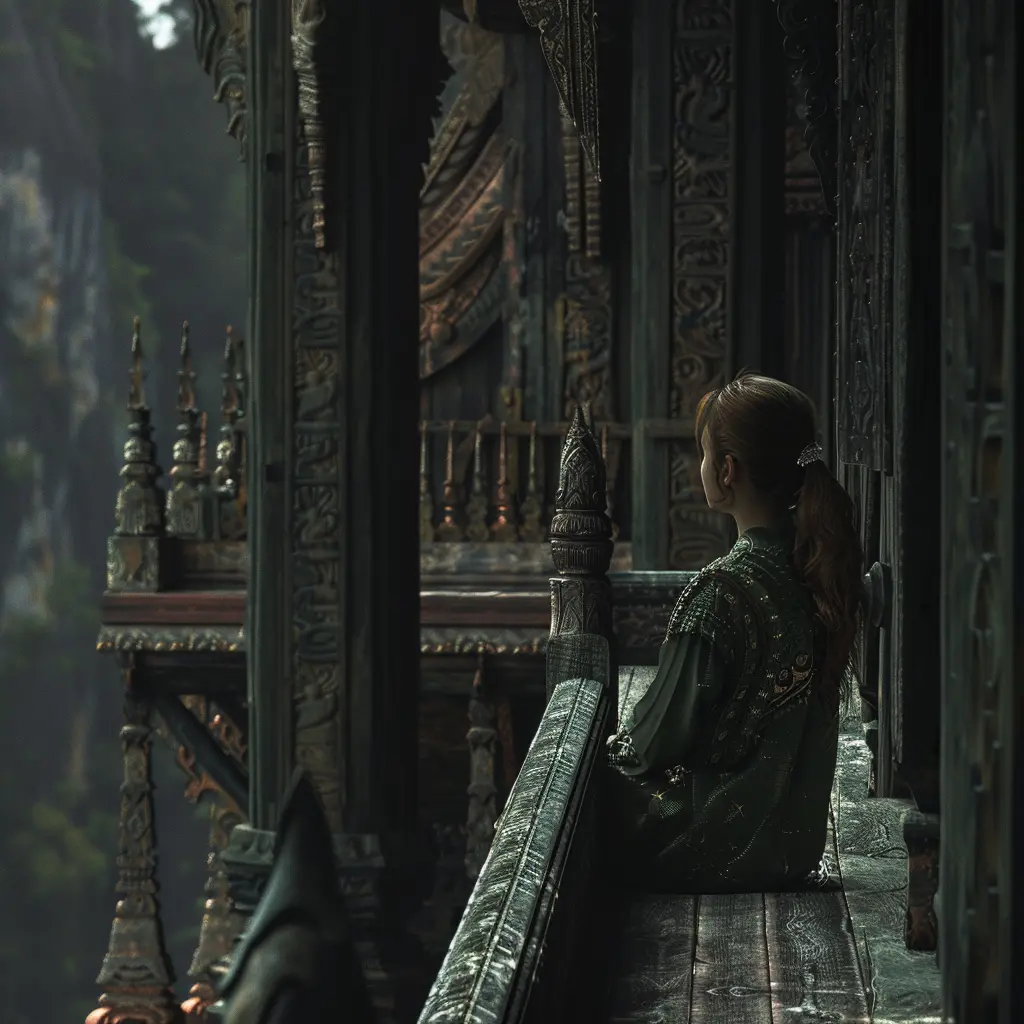
The royal residences of this era were masterpieces of teakwood craftsmanship. These structures featured high, tiered roofs designed to mirror the celestial levels of the Buddhist cosmos. Intricate carvings of Naga and Kala protected every threshold from malevolent entities. To inhabit a Khum was to live within a physical manifestation of divine order. The Princess’s flight was, therefore, an architectural rejection of her own station – a move from ordered teak pillars to the chaotic, living pillars of limestone caves.
Transmogrification: From Flesh to Stone

The flight of the lovers into the Golden Triangle was a study in sensory weight. Imagine the scent of damp teak, the oppressive humidity of the monsoon, and the rhythmic drone of cicadas. Through the process of transmogrification, the Princess’s grief was etched into the earth forever.
The Modern Experience: Genius Loci and the Tham Luang Legacy
When talking about cultural traditions, we speak of Genius Loci – the “Spirit of Place”. Doi Nang Non is a premier example. Residents don’t view the mountain as a geological formation, but as a living ancestor. This sacredness was thrust into the global spotlight during the 2018 Tham Luang cave rescue.
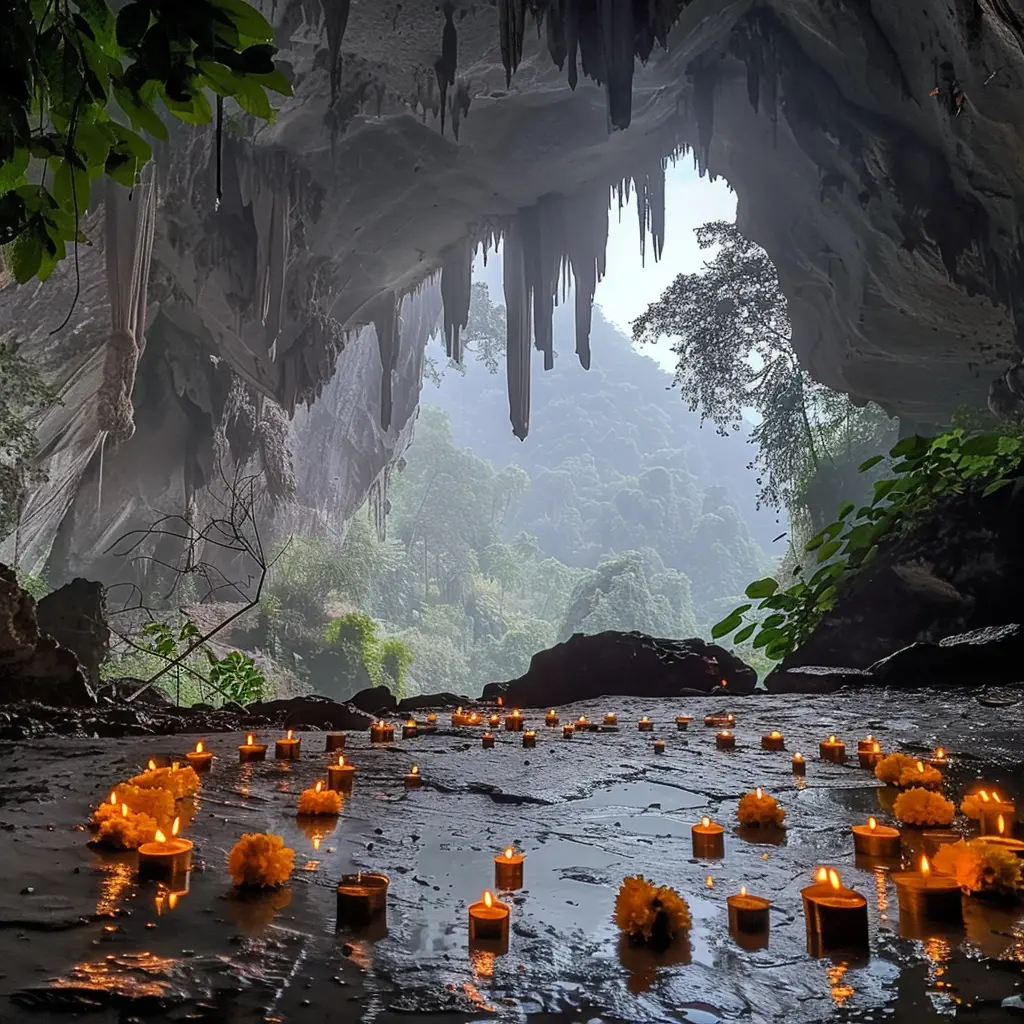
While the world focused on engineering, the local community saw the event through the lens of the legend. Offerings were made to the “Sleeping Lady” to petition for the boys’ release. This intersection – where hyper-modern technology meets ancient animist belief – is where the “Intellectual Luxury” traveller finds true depth. It proves that the mythic power of the landscape remains absolute.
A Regional Tapestry: The “Sleeping Lady” Motif
The Doi Nang Non legend doesn’t stand alone. Throughout Southeast Asia, diverse cultures share similar motifs. Humans transform into the physical landscape—a phenomenon known as anthropomorphism.
These communities don’t view mountains or rivers as mere geological features. Instead, they see them as ancestors, lovers, and historical figures etched into the earth.
These stories represent a collective effort to harmonise human existence with a volatile natural world.
Aesthetic Melancholy: The “Sabi” of the North
There is a specific aesthetic in Southeast Asian lore that mirrors the Japanese concept of Wabi-Sabi – a deep appreciation for “beautiful sadness”. The tragedy of the Sleeping Lady is not a puzzle to be solved, but a melancholy to be felt. For the traveller who values slow journalism, this mountain serves as a monument to grief transformed into a physical masterpiece. This “atmospheric heritage” offers a sense of provenance that no modern development can replicate.
The Contemporary View: A Sentinel on the Border
Looking at the mountain today from the Mae Sai border provides a powerful perspective. The silhouette stands as a silent sentinel over the border between Thailand and Myanmar, reminding us that nature ignores artificial boundaries. Discerning travellers should approach the massif during the soft light of dawn, when the “Sleeping Lady” is most visible through the rising vapours.
The Heritasian Verdict
Doi Nang Non is more than a silhouette; it’s a psychological foundation for the Northern Thai identity. As we pivot toward an authority model of heritage travel, we must champion these narratives as the bedrock of cultural tourism. To travel here without knowing the story is to see the mountain but miss the soul.