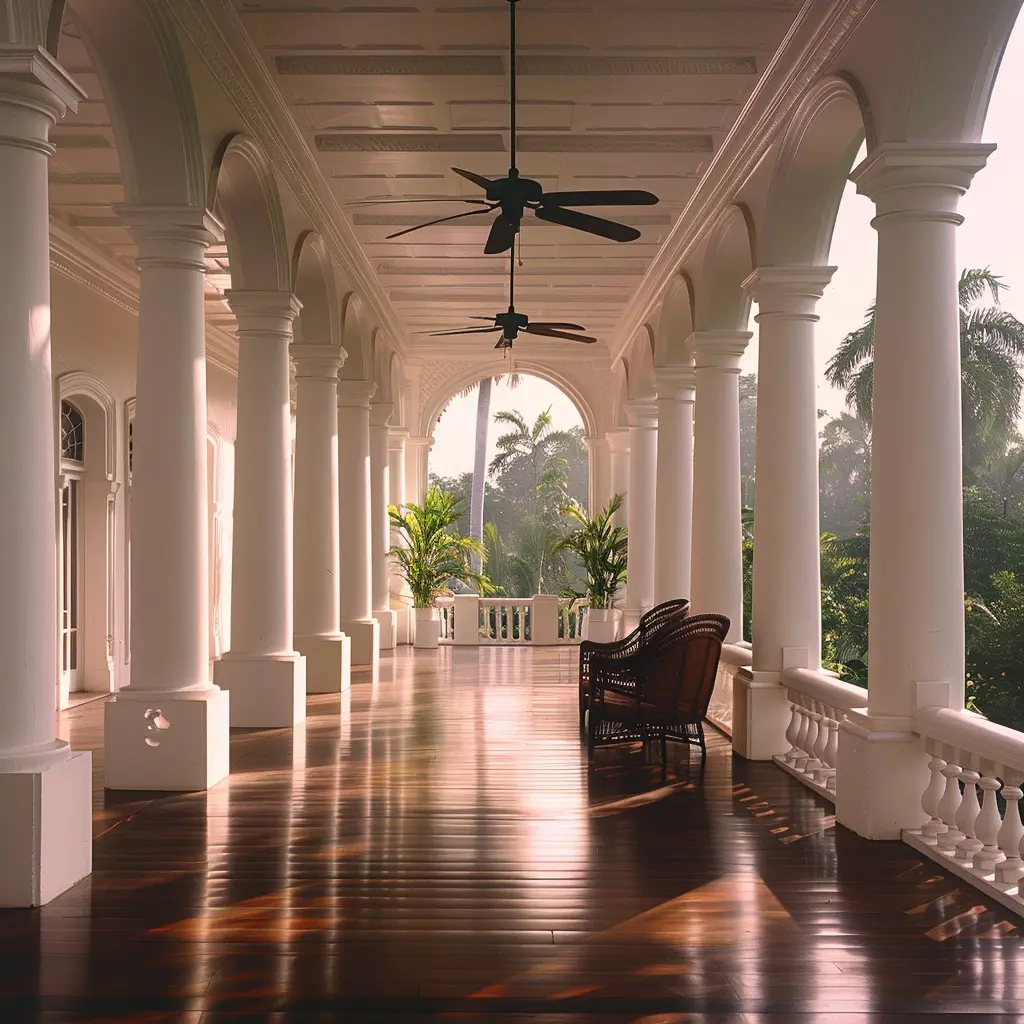

When you step onto the polished marble floors of a Raffles hotel, under the quiet, rhythmic whir of the overhead fans, you are surrounded by the ultimate global benchmark of effortless, white-glove luxury.
The name “Raffles” has become a sovereign premium brand—an entry ticket to a world of immaculate, aristocratic calm.
But global brands have a way of erasing the ghosts that built them.
The Anatomy of Luxury Heritage: Why Backstory Beats Marketing
Most people lounging in those legendary courtyards have completely forgotten the man behind the gold lettering. They assume the name was chosen because it sounded safely elite.
They don’t realise that this ultimate icon of global luxury was actually forged on the broken back of a penniless, manic obsessive who was completely chewed up and spit out by the corporate machine.
The Founder’s Imprint: Translating Personal Legacy into Asset Equity
Sir Thomas Stamford Raffles was not a creature of inherited privilege. Born poor on a rolling ship deck, he entered the corporate machine of the East India Company at fourteen as a low-level clerk drowning in London ink. He had no lineage, no Oxford degree, and no safety net.
While his fellow colonial bureaucrats spent their days drinking themselves into a stupor to survive the humidity of the Straits, Raffles ran a frantic, exhausting sprint against obscurity:
He locked himself in a room for 12 hours a day, surrendering his eyesight to candles to master the classical Malay language.
He rejected a life of colonial leisure, mounting a gruelling, mud-soaked expedition into the interior of Java to hack through dense jungle and unearth the long-buried tiers of Borobudur, rescuing the world’s largest Buddhist monument from oblivion.
He translated ancient manuscripts, mapped regional geography, and built massive intellectual archives—only to watch decades of his research vanish into the Indian Ocean in less than twenty minutes when his return ship caught fire.
But the true cost of his obsession wasn’t paid in ink or archives; it was paid in blood. While stationed in the brutal tropical climate of the East Indies, Raffles lost four of his young children to illness, burying his heart in the jungle soil long before he ever returned to Europe.
He gave his corporate employers a multi-billion-dollar global asset in Singapore, and they rewarded his relentless output by denying him a pension and suing him for £22,000 in “unauthorised expenses”. He died bankrupt on his 45th birthday, buried in an unmarked vault beneath a London church, completely rejected by the elite he spent his life trying to impress.
He died penniless, but his intellectual framework remained the ultimate blue-chip asset.
Corporate Mythmaking vs. Authentic Legacy
Decades after his tragic death, a pair of brilliant Armenian hoteliers—the Sarkies brothers—set out to build the grandest hotel in Southeast Asia. They needed a brand name that conveyed immediate, peerless authority to elite global travellers.
They didn’t choose a generic British royal title; they chose Raffles. Why? Because in the 1880s, the name Raffles was already legendary shorthand for the ultimate romantic pioneer—a name synonymous with deep regional provenance, maritime mastery, and the very birth of modern global trade.
By anchoring their luxury destination node to his identity, the Sarkies brothers commercialised his ghost. But they also did something deeply poetic.
The B2B Strategic Takeaway: Capitalising on the Sovereign Story
This is not a critique of the luxury of the Raffles brand. If anything, it is the ultimate vindication of it.
The immaculate elegance of Raffles hotels today is the ultimate, hard-won homage to the man who birthed their legacy. He never got to sit in the shade of the verandas he envisioned. He never achieved the aristocratic acceptance he craved in his lifetime.
But through the sheer, unadulterated power of his story, the interloper won in the end. The empire that rejected him is gone, the corporate clerks who audited him are entirely forgotten, but his name remains the global gold standard of luxury.
The next time you order a drink under those white-washed arches, look past the gold lettering. Remember the jungle mud, the burning ship, the four lost children, and the frantic clerk who paid for every single inch of that pristine marble floor.