

Key Insights
Sir Stamford Raffles was a self-taught polymath who rose from an impoverished clerkship to become the strategic visionary of the British Empire in the East. Driven by an “intellectual inferno,” he recovered the lost monuments of Borobudur and Prambanan before founding Singapore as a defiant free port.
His legacy is one of brilliant social reform and immense personal tragedy, leaving behind a blueprint for the multicultural, global hub that remains the “Grand Anchor” of Southeast Asia.
Explore the complete Geopolitical Chessboard topic.
Interloper: An outsider who enters a domain or social class where they are considered not to belong. Lacking an aristocratic lineage or an Oxford degree, Raffles operated as a structural interloper – a self-made man from a debt-ridden background who navigated the rigid hierarchies of the East India Company through sheer intellectual mania.
Patina: The visible, weathered signature of time and exposure on a physical surface. In the regional archive, it represents the antithesis of sterile modern development. It manifests as the deep layer of volcanic ash and jungle moss encrusting the stones of Borobudur, or the damp, ink-stained pages of classical manuscripts surviving the tropical humidity.
Syncretic: The seamless blending or synthesis of distinct cultural, religious, or political systems. Raffles encountered a deeply syncretic landscape in Java and the Straits, where ancient Hindu-Buddhist monuments lay embedded within Islamic sultanates , and local Adat (customary law) operated alongside colonial corporate frameworks.
Provenance: The documented history of the origin, custody, or ownership of a historical artifact or site. For Raffles, collecting and proving the provenance of thousands of Malay and Javanese manuscripts, drawings, and biological specimens was a primary obsession – one tragically lost to the Indian Ocean when his return ship caught fire.
Crucible: A severe test, or a place where powerful forces interact to forge something entirely new. The Straits Settlements served as a volatile political and cultural crucible, forcing an impoverished English clerk into close contact with elite local scribes, regional rulers, and aggressive Dutch monopolies.
Vestige: A visible trace or residual sign of something that no longer exists. The history of Raffles is a narrative built upon fragments and vestiges: the ruined fort of A Famosa in Melaka, the long-buried tiers of Borobudur, and the lonely, unmarked grave beneath the floorboards of a London church.
The Atlantic gale of July 1781 pounded the hull of the merchant ship Ann off the coast of Jamaica, its timber groaning against the waves as Thomas Stamford Raffles was born into the maritime routes. He was ungrounded from his first breath, entering the world not via the manicured estates of the British gentry, but on a rolling deck in international waters.
Forty-five years later, on the morning of July 5, 1826, that same restless pulse came to a sudden halt on the floorboards of Highwood House, London, his body ruined by years of tropical fevers and a suspected brain tumour.
The Price of Defiance: Institutional Exile
In a final act of bureaucratic malice, the local vicar of St. Mary’s Church, Hendon – whose family held lucrative slave plantations in the West Indies – refused to allow the vocal abolitionist a proper gravestone or burial within the church walls. For decades, the architect of Singapore lay in an unmarked vault under the floorboards, completely forgotten by the establishment he enriched.
The Interloper Archetype
Raffles was a structural interloper in the age of aristocracy. Lacking an elite lineage or an Oxford degree, he entered the East India Company (EIC) at fourteen as a deskbound clerk drowning in London ink. What saved him from obscurity was an insatiable intellectual mania:
The Straits Crucible and the Linguistic Obsession (1805–1811)
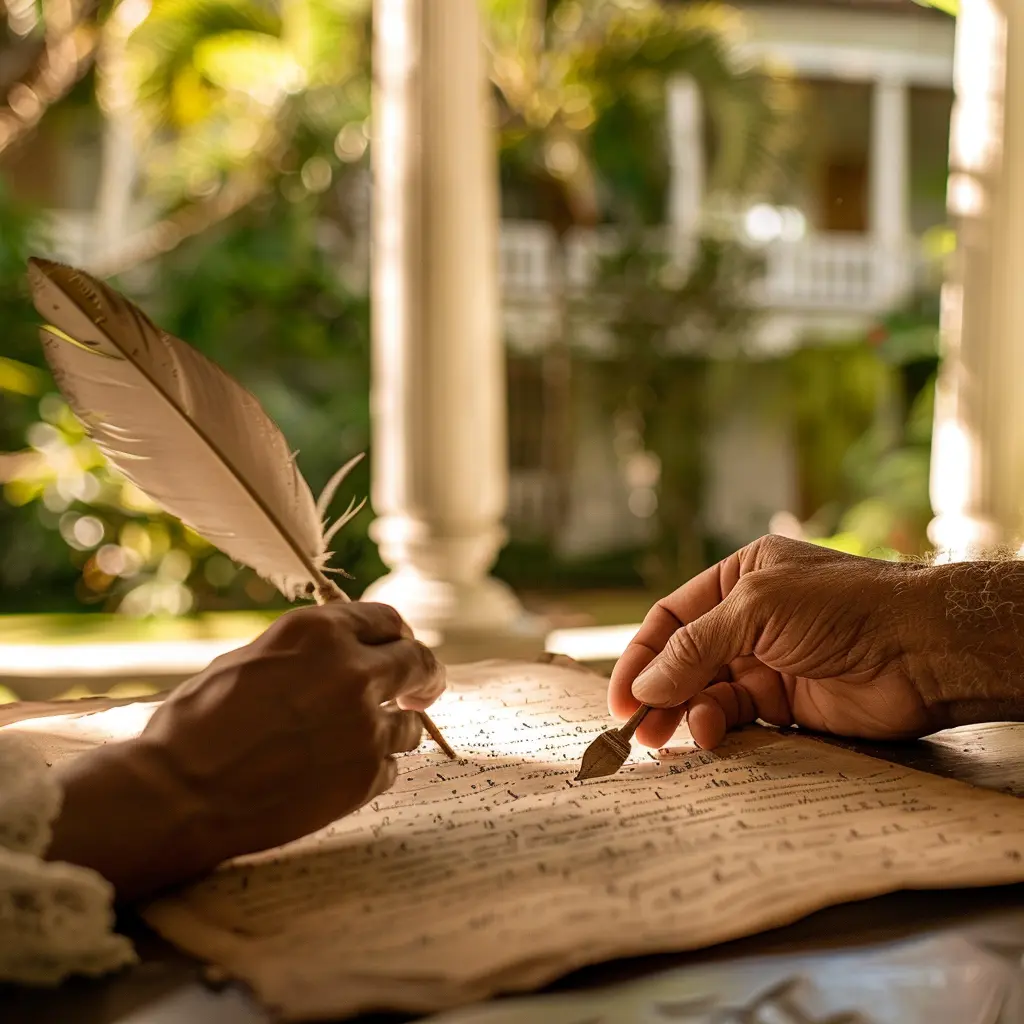
In 1805, the EIC dispatched Raffles to Prince of Wales Island (Penang) as an assistant secretary. The settlement was a humid, chaotic frontier where colonial officials routinely retreated into heavy drinking, gambling, and isolation to escape the climate. Raffles took a different path. He locked himself in a room for ten to twelve hours a day, surrendering entirely to the study of the Malay language.
By 1808, his linguistic mastery transformed from an eccentric hobby into a critical geopolitical asset. The EIC Court of Directors had issued a draconian order to abandon Melaka, demolish its historic Portuguese-Dutch fortress (A Famosa), and forcibly relocate its population to Penang to eliminate commercial competition. Raffles intervened.
Drawing on his direct communication with local rulers and his reading of classical manuscripts, he penned a brilliant, deeply researched memorandum to Calcutta. He argued that abandoning Melaka was an act of strategic self-mutilation that would surrender the vital Malacca Strait to Dutch monopolies. He saved the historic town by demonstrating an understanding of regional prestige that his superiors entirely lacked.
During this period, Raffles formed a profound intellectual alliance with Munsyi Abdullah (Abdullah bin Abdul Kadir), a brilliant young scribe of mixed Arab, Tamil, and Malay descent. In his memoir, the Hikayat Abdullah, the scholar captured Raffles’s manic, unhurried energy, noting that the Englishman was always studying, writing, or collecting old things.
Raffles didn’t merely memorise vocabulary; he collected fragments of the Sejarah Melayu (The Malay Annals). He recognised that the Indo-Malay world was not a primitive vacuum waiting for Western enlightenment, but a highly sophisticated maritime empire governed by Adat (customary law) and centuries of literary tradition.
Java: The Romantic Iconoclast and the Ghost of Borobudur (1811–1816)

When the Napoleonic Wars turned Java into a Franco-Dutch stronghold, Raffles’s intelligence networks proved indispensable. In 1811, a massive EIC armada seized the island, and at the age of thirty, Raffles was appointed Lieutenant-Governor of Java, establishing his court at the palace of Buitenzorg (Bogor).
Driven by Enlightenment ideals, he attempted to dismantle centuries of feudal governance overnight. He sought to abolish the Dutch system of forced agricultural contingencies and replace it with a direct land-rent system, attempting to convert Javanese peasants into free cash-tenants.
The experiment was a spectacular, chaotic failure. Raffles misread the intricate village hierarchies, the local economy lacked the currency liquidity required for cash rents, and the colonial ledger descended into a fiscal nightmare.
Yet, where his economics failed, his romantic obsession with antiquity left a permanent mark. In 1814, acting on rumours of a colossal stone structure buried deep within the jungles near Kedu, Raffles dispatched the Dutch engineer H.C. Cornelius with an expeditionary force of two hundred labourers.
Heritage Highlight: The Exhumation of Borobudur
For six gruelling weeks, the jungle canopy echoed with the sound of axes and fire as teams cut back centuries of dense vegetation and shifted thick layers of volcanic ash. What emerged from the dirt was the massive, nine-tiered Buddhist stupa of Borobudur.
For Raffles, unearthing these thousands of narrative relief panels and stone Buddhas was not an act of detached archaeological preservation. It was a calculated political weapon.
By publishing the monumental, two-volume History of Java in 1817, complete with detailed architectural plates, Raffles presented the Indo-Malay past as a golden age degraded by Dutch colonial neglect. The book was his passport to London high society, forcing the British aristocracy to view an impoverished clerk as a peer of the Royal Society.
The Rogue Coup: Conjuring Singapore (1819)
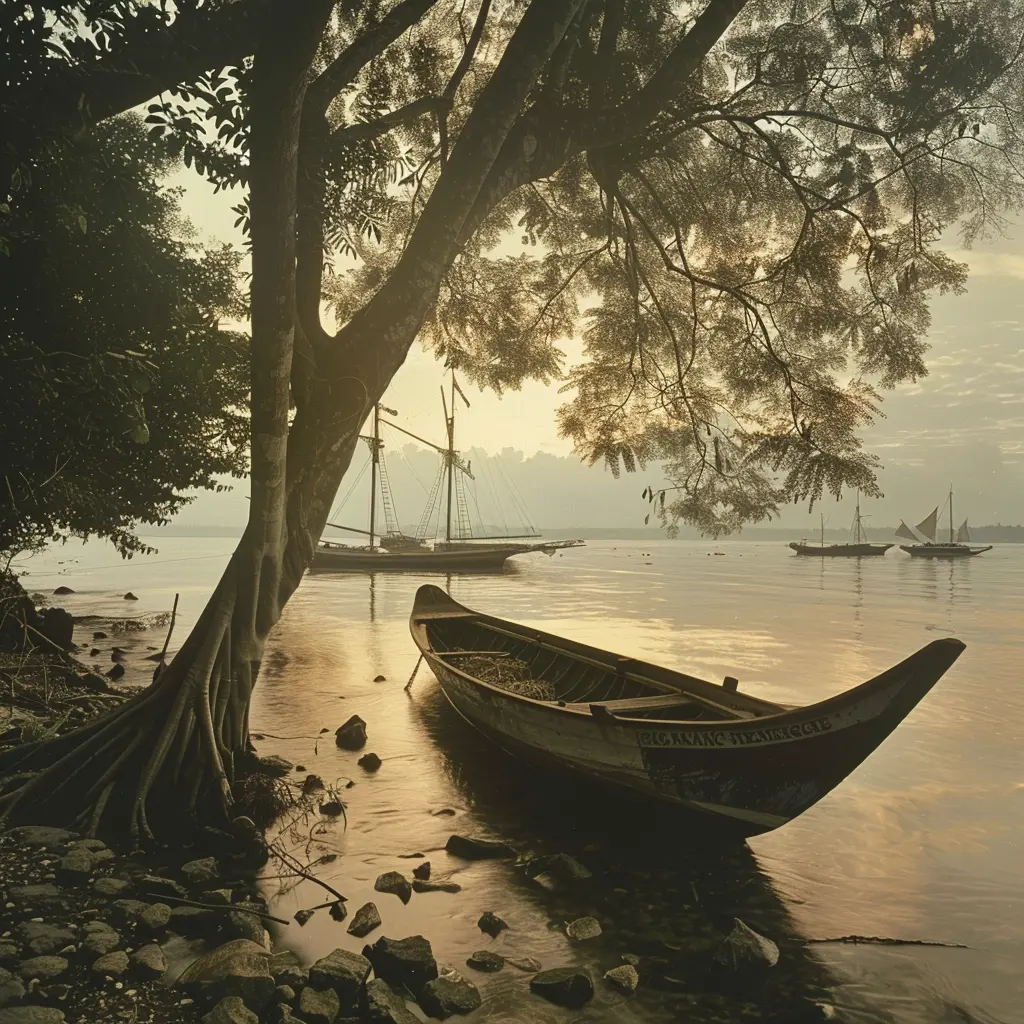
The restoration of European peace after Waterloo shattered Raffles’s Javanese dream. The Treaty of Vienna returned Java to the Netherlands, and Raffles was banished to the remote, malarial outpost of Bencoolen (Bengkulu) on Sumatra’s isolated west coast.
He called it a “wretched place” of stagnation. From this exile, he watched the Dutch re-establish a commercial chokehold across the Straits, threatening the vital trade routes to China.
In late 1818, Raffles extracted vague, conditional permissions from the Governor-General in Calcutta, Lord Hastings, to search for a defensive station at the southern tip of the Malay Peninsula. He was explicitly warned not to provoke a diplomatic conflict with the Netherlands. He chose to ignore the caution.
On January 29, 1819, his ship, the Indiana, anchored off Singapore Island. Raffles encountered a small settlement of Orang Laut and a Malay village under the local authority of Temenggong Abdul Rahman. The wider political reality was precarious: the entire Johor-Riau Sultanate fell within the Dutch sphere of influence.
Raffles discovered a rift in the royal lineage. The ruling Sultan, Tengku Abdul Rahman, was a younger son placed on the throne via a palace faction supported by the Dutch. The rightful elder brother, Tengku Long (Hussein Shah), lived in obscure poverty in the Riau Islands.
Moving with speed, Raffles orchestrated a political coup. He had Hussein smuggled onto Singapore island, recognised him as the sole legitimate Sultan of Johor, and signed the Treaty of Singapore on February 6, 1819. It was a masterclass in political piracy.
The Dutch threatened war; the Governor of Penang refused to send defensive troops; and Calcutta prepared to disavow the entire operation. Raffles countered by declaring Singapore a free port.
By abolishing all customs duties and tariffs, he ensured that hundreds of merchant vessels deserted Dutch ports within months. The immediate economic success made it politically impossible for London to abandon the station.
This desperate scramble to secure the southern entry to the Malacca Strait was not an isolated crisis; the entire maritime corridor had been highly volatile for decades.
Further up the Andaman coast, the northern approaches to the shipping lanes had already been violently contested during the 1785 Burmese invasion of Junk Ceylon, a geopolitical flashpoint that proved how fragile Western trade security truly was without strong local resistance.
The Price of the Anchor: The Ledger of Tragedy (1821–1824)
The creation of the “Grand Anchor” demanded a brutal personal toll. Between 1821 and 1823, the damp, endemic climate of Bencoolen claimed four of his children – Leopold, Stamford Marsden, Charlotte, and Ella – in rapid succession. His wife, Sophia Hull, succumbed to a consuming grief, and Raffles’s own health deteriorated.
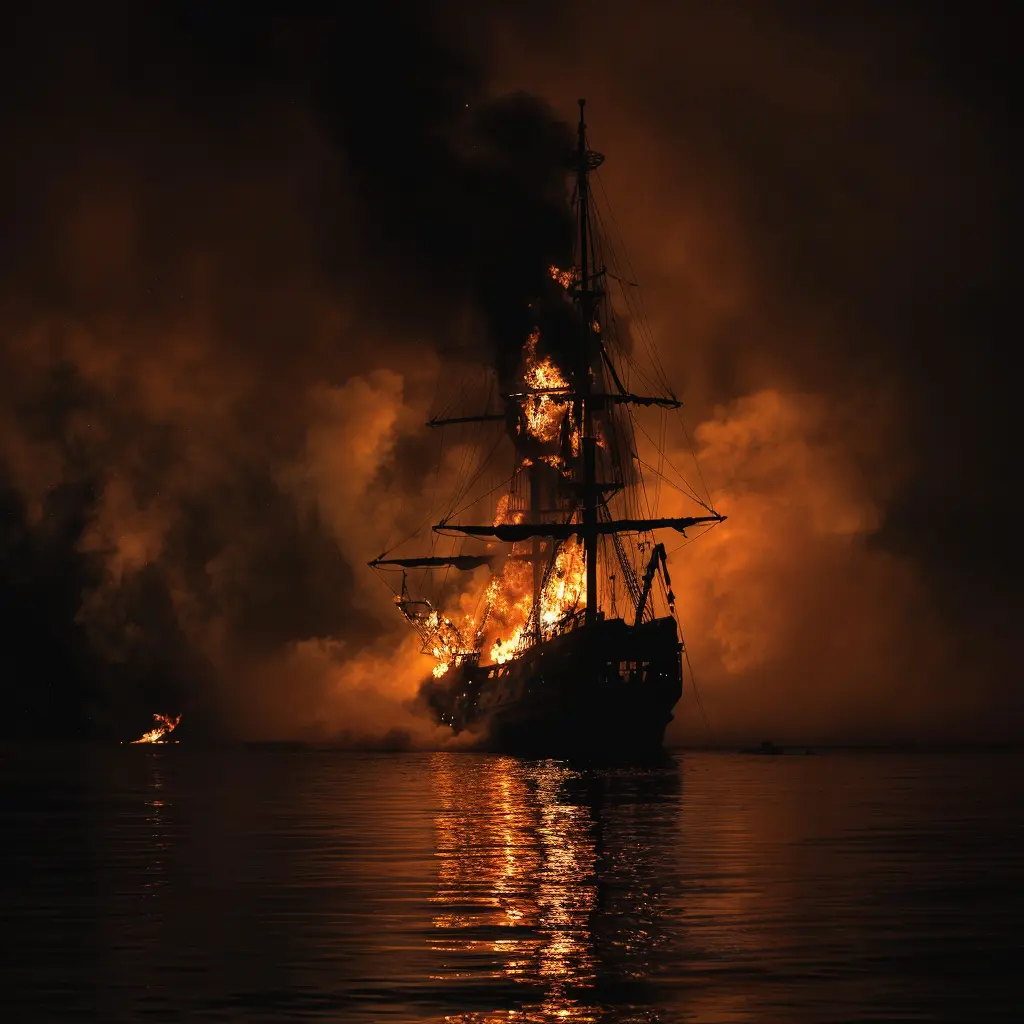
The absolute climax of his misfortune occurred on February 2, 1824, when he boarded the East Indiaman Fame to return to England. Packed within the hold was his life’s work: over two thousand precise architectural and botanical drawings, an irreplaceable collection of original Malay and Javanese historical manuscripts, dictionaries, genealogies, and dozens of live and preserved animal specimens.
Fifty miles out to sea, a kitchen fire engulfed the ship. Raffles and his wife escaped in an open lifeboat with nothing but their nightshirts. Decades of original research and the physical evidence of his intellectual genius vanished into the Indian Ocean in less than twenty minutes.
Upon his return to London, broken and childless, the Court of Directors of the EIC delivered its final assessment. They denied him a pension, holding him personally liable for £22,000 in back-dated administrative discrepancies and unauthorised expenses incurred while establishing Singapore. He died deep in debt, the morning before his forty-fifth birthday.
Modern Reflections: The Permanent Pedestal
While statues of nineteenth-century imperial figures are removed from public spaces worldwide, Raffles’s white polymarble statue still stands along the Singapore River.
This preservation was a deliberate, pragmatic choice made by Lee Kuan Yew and his economic advisors upon Singapore’s independence in 1965. By retaining the colonial founder on his pedestal, the new nation signalled to global capital that it respected historical continuity, institutional contracts, and the rule of law.
Raffles’s real legacy is not a grave or a collection of salvaged manuscripts. It is the structural realisation of his regional thesis: that an island devoid of natural resources could dominate global commerce simply by positioning itself as the open, tariff-free pivot point between east and west.