
Key Insights
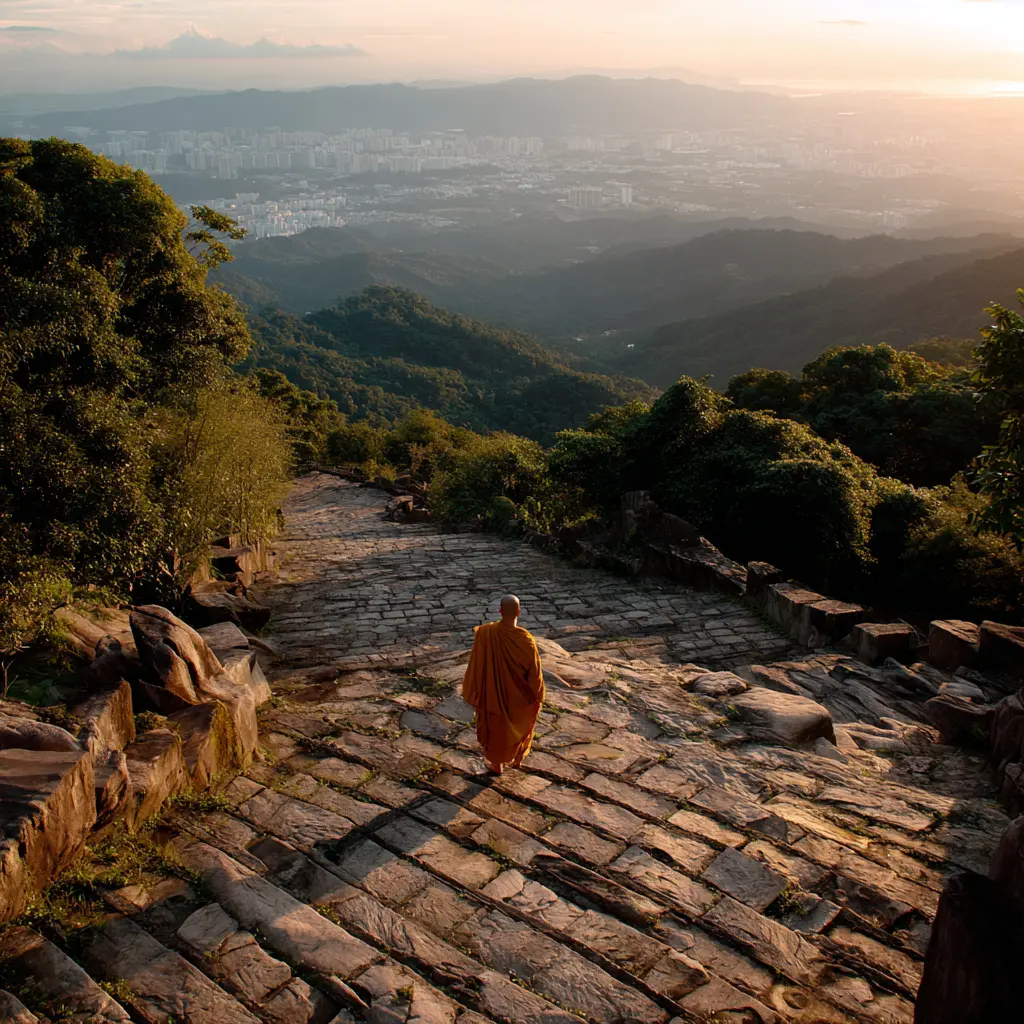
Kek Lok Si, the “Temple of Supreme Bliss,” is Malaysia’s largest Buddhist complex. Founded in 1891, it features the iconic Pagoda of Ten Thousand Buddhas, a unique fusion of Chinese, Thai, and Burmese architecture. From the 120-foot bronze Kuan Yin statue to its thousands of Chinese New Year lanterns, the temple remains a global centre for spiritual pilgrimage.
Ban Po Thar: Literally translating to the “Pagoda of Ten Thousand Buddhas,” this is the landmark seven-story tower at Kek Lok Si that acts as a structural treaty, vertically stacking Chinese, Thai, and Burmese architectural styles.
He Shan: “Crane Hill,” the specific granite formation within the Ayer Itam hills chosen for the temple site. In classical Feng Shui, its topography mimics a kneeling or nesting crane, which geomancers believe pins down and cradles volatile cosmic energy.
Hti: The umbrella-shaped, heavily ornamented finial or spire that crowns traditional Burmese pagodas. At Kek Lok Si, a gilded brass hti forms the absolute pinnacle of the main pagoda, representing spiritual ascension and Theravada Buddhist cosmology.
Dougong: A complex structural system of interlocking wooden brackets used in traditional Chinese architecture. These brackets allowed the massive, sweeping eaves of Kek Lok Si’s main prayer halls to be supported without the need for mortar or nails, distributing weight directly to the pillars.
Pure Land: A celestial realm or paradise in Mahayana Buddhism created by a Buddha (specifically Amitābha). The spatial layout of Kek Lok Si was intentionally engineered to mimic this paradise on Earth, transitioning the devotee from the chaotic, secular world below to a structured cosmic order.
Qi: The foundational life force or energy that flows through the landscape in Chinese geomancy. The early builders of Kek Lok Si chose the site specifically because the surrounding mountain ridges prevented this energy from dissipating, channelling it directly into the monastic citadel.
To experience Kek Lok Si is to witness an architectural act of supreme hubris. Rather than merely sitting upon the granite foothills of Ayer Itam, Penang, the complex has systematically dismantled, terraformed, and reassembled the landscape into a multi-tiered fortress of devotion.
Founded in 1891, Kek Lok Si – the Temple of Supreme Bliss – was never intended to be a passive sanctuary for quiet contemplation. Instead, it was conceived as an intentional terrestrial manifestation of the Western Pure Land (Sukhavati), engineered directly onto a rugged, volatile Malayan frontier.
The Geography of Ecstasy: Topography as Destiny
The spatial logic of Kek Lok Si cannot be understood from its modern tourist entrance; it must be read through the ancient grammar of Feng Shui (geomancy). In the late 19th century, Venerable Beow Lean, a Buddhist monk of the Chan tradition from Fujian, scoured the forested interior of Penang looking for a landscape that mirrored the classical archetypes of sacred Chinese geography. He found it on the slopes of Ayer Itam, specifically a formation known as He Shan, or Crane Hill.
In the vocabulary of landform geomancy, Crane Hill represents a cosmic bird preparing for flight. Its wings fold inward to cradle and protect a deep well of qi. For Beow Lean, this wasn’t merely a beautiful vista; it was a volatile spiritual nexus that needed to be anchored.
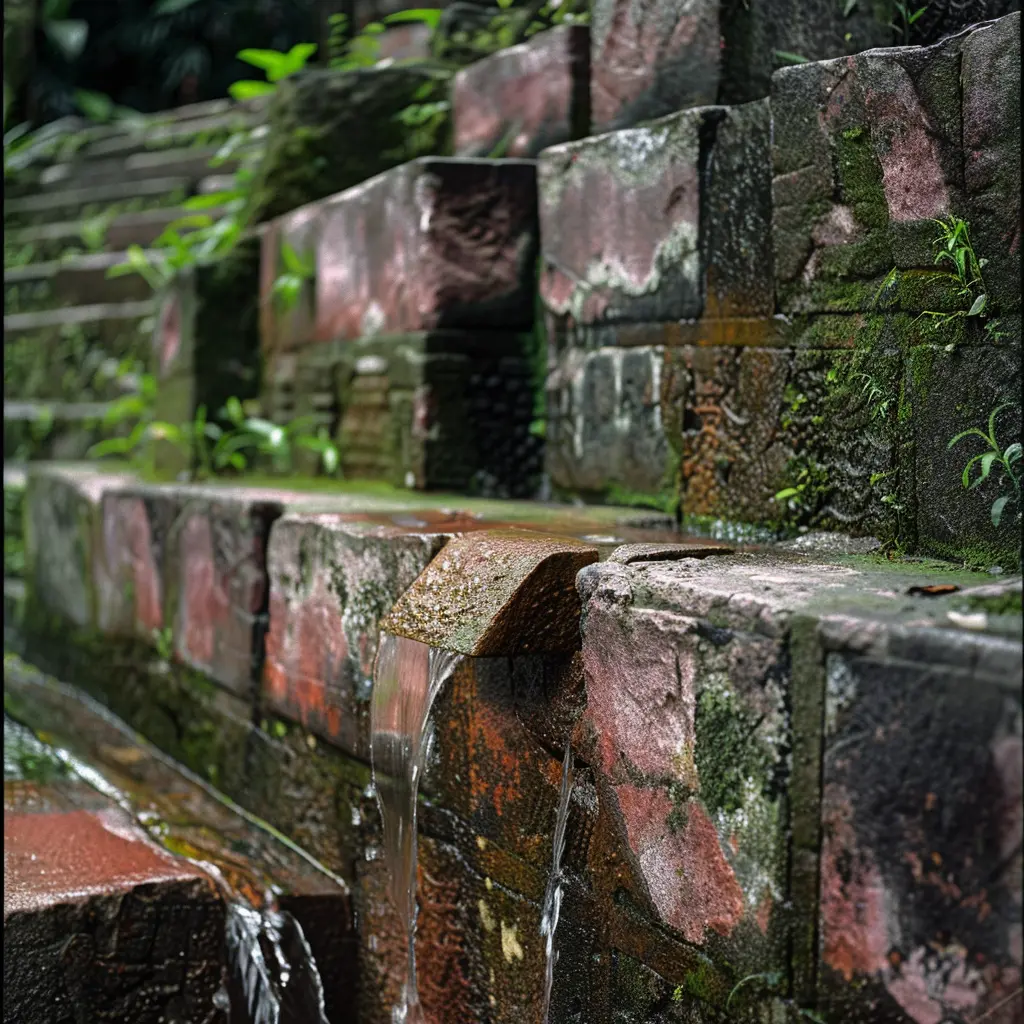
The construction of the temple was an agonising exercise in heavy masonry. The builders imported armies of Hakka and Hokkien stonemasons to quarry the local pink granite. They cut deep terraces directly into the cliffside, building massive, mortarless retaining walls. Their raw gravitational mass holds back monsoonal mudslides.
When you walk through the lower grounds today, you’re walking through an engineered mountain. The sacred tortoise pond at the base acts as a hydraulic buffer, catching and slowing mountain runoff. This mimics the deliberate transition from the profane, chaotic world below to the structured celestial realms above.
The Imperial Blessing: Sovereignty on the Frontier
The defining pivot point in Kek Lok Si’s history occurred in 1904. Recognising that a project of this scale required more than local donations, Beow Lean journeyed to Beijing’s Forbidden City. Rather than mere financial aid, he sought political legitimacy.
He stood before the fading court of the Qing Dynasty during its final, desperate decade of existence. In a brilliant diplomatic maneuver, he framed the Penang monastery not as a distant colonial anomaly under British rule. Instead, he positioned it as a vital cultural vanguard. He cast it as a permanent anchor of Chinese spiritual sovereignty in the Nanyang.
The response from the throne was unprecedented:
Emperor Guangxu and the formidable Empress Dowager Cixi bestowed upon Kek Lok Si the ultimate symbols of imperial favour. They gifted a complete, 7,000-volume imperial edition of the Buddhist Sutras alongside handwritten plaques bearing the imperial seal.
When these relics arrived in Penang, the British colonial authorities had to grant the temple an official imperial reception. Artisans carved the calligraphic scripts into heavy camphor wood and granite lintels, permanently embedding the political anxieties and dynastic authority of the Qing court into the tropical architecture.
Kek Lok Si was no longer just a temple; it was a recognised daughter house of the Chinese Empire, vibrating with the authority of the Forbidden City.
Ban Po Thar: The Structural Treaty of Rama VI
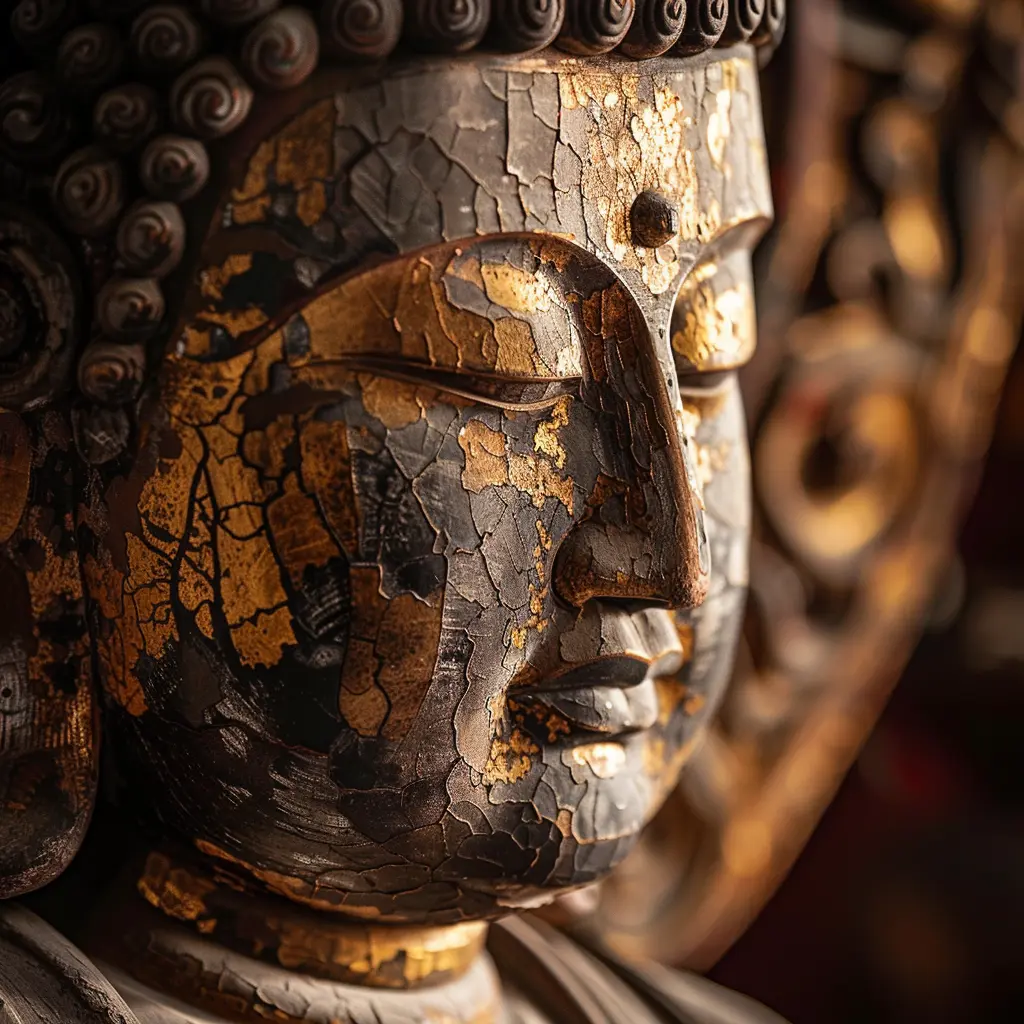
The architectural spine of the complex is the Ban Po Thar, the Pagoda of Ten Thousand Buddhas. Completed in 1930, it is an architectural anomaly that defies conventional historicism. It is a three-tiered monument that compresses the entire geographical and theological trajectory of Southeast Asian Buddhism into a single vertical axis.
▲ THE PINNACLE
[The Crown] * Style: Gilded Burmese Hti (Sacred Umbrella Spire)
❙ THE CORE
[The Torso] * Style: Whitewashed Thai (Lanna/Central Bell shape)
■ THE FOUNDATION
[The Base] * Style: Octagonal Chinese Footprint
Anchoring the building to the granite hillside, the octagonal Chinese base utilises heavy masonry and sweeping eaves. It also features the intricate bracket sets of Southern Min architecture. Symbolising the earth and ancestors, it reflects the foundational wealth of the Straits Chinese diaspora.
From this Chinese base rises a slender, whitewashed Thai midsection, featuring clean lines and indented corners. Its delicate stuccowork beautifully recalls the Ayutthaya period. Funded partly by King Rama VI of Siam, this tier marks a rare moment of cross-border state patronage.
The structure terminates in a shimmering, golden Burmese spire, an authentic hti that pierces the tropical sky like an ornamental needle.
This wasn’t an accidental mashup or a kitsch design choice. It was a calculated, pan-Buddhist manifesto. By stacking these three distinct architectural heritages atop one another, the builders created a physical ladder of ascent. This implies that while devotion remains culturally specific and earthbound, enlightenment speaks a singular, transcendent language.
The Bronze Titan: The Mechanics of Mercy
High above the pagoda, a true titan stands on an upper plateau commanding Penang’s entire eastern coastline. This 120-foot bronze colossus depicts Kuan Yin, the Bodhisattva of Infinite Mercy. Completed in 2002, the statue represents a superb example of modern structural engineering disguised as ancient iconography.
To understand the scale of this achievement, one must look at the structural framework. Workers composed the statue of hundreds of individual bronze plates, casting them in China and assembling them on-site over an internal skeleton of high-tensile structural steel.
Standing on an exposed ridge, she faces violent monsoonal winds blowing off the Straits. Therefore, a monumental, three-tiered pavilion, supported by sixteen massive granite pillars, shelters her.
The bronze plates of her robes feel smooth, hard, and industrial. Yet, they curve with such fluid grace that they mimic the weightlessness of silk.
Her face bears an expression of hyper-focused, quiet interiority – a sharp contrast to the immense, crushing weight of the metal that built her. She watches the Strait of Malacca below, a silent guardian placed at the edge of a historical landscape defined by migration, maritime trade, and survival.
The Grid of Fire: The Architecture of Light
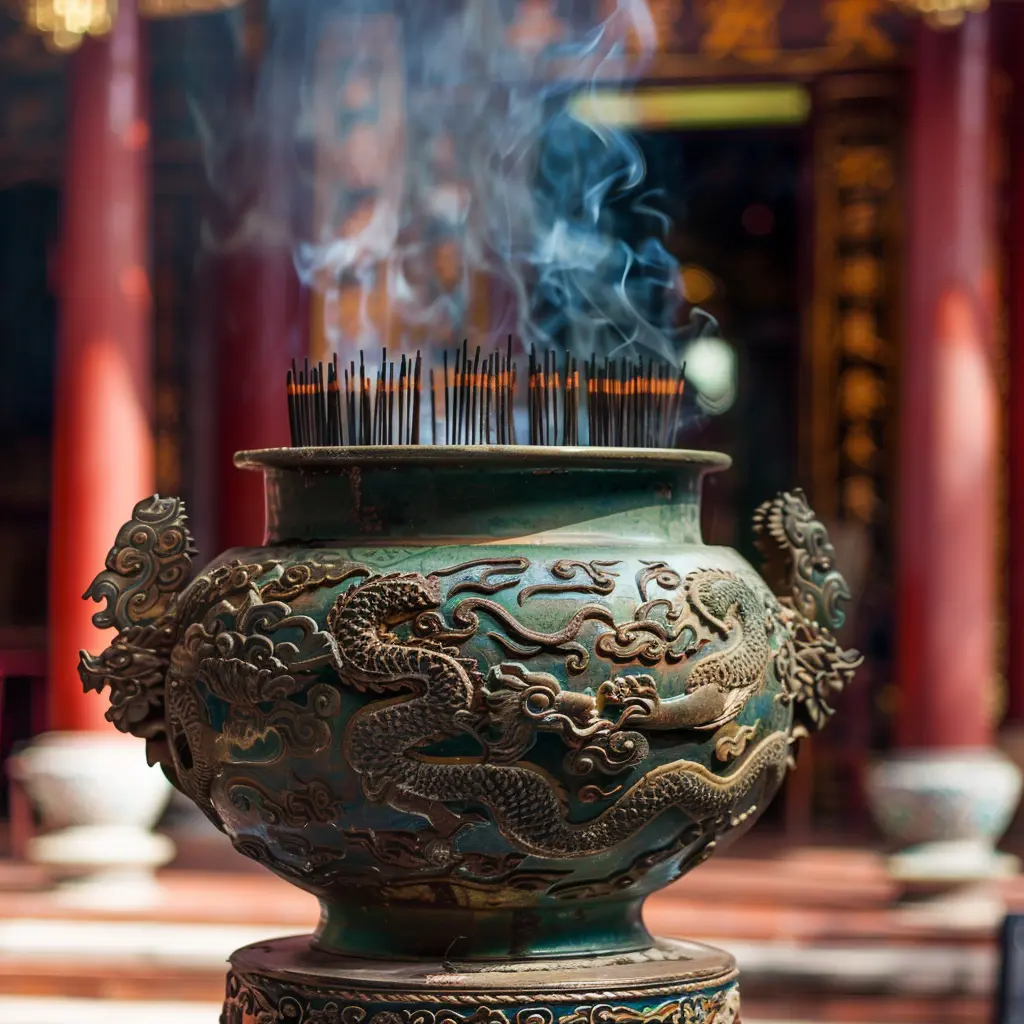
For eleven months of the year, Kek Lok Si is a monochromatic kingdom of grey granite, white plaster, and heavy incense smoke. But during the annual Lunar New Year, the entire mountainside undergoes a spectacular, almost theatrical transmutation.
For thirty nights, the temple abandons its stone sobriety and becomes a living grid of light. Over 100,000 traditional Chinese lanterns and miles of neon piping are illuminated simultaneously, tracing the exact geometric outlines of every pavilion, pagoda, and terrace wall.
This is not mere festive decoration. It is a temporary, luminous mapping of the temple’s hidden qi. The lines of light reveal the skeletal structure of the mountain-engineering that is normally hidden by darkness or jungle foliage.
Furthermore, individual families or pilgrims sponsor every single lantern, turning the glowing grid into a collective canvas of human desire, prayer, and devotion.
For those thirty nights, Kek Lok Si stops looking like an antiquity frozen in the 19th century; it becomes a dynamic, pulsing machine of light – a neon Dharma that blazes out across the dark waters of the Malacca Strait, visible to ships miles away from the coast.