
Key Insights
Chiang Mai’s Nimmanhemin district has transformed traditional Northern Thai indigo into a globalised, “New Lanna” luxury aesthetic. Blending ancient fermentation science with modern shibori and Mud-Yom resist architecture, local innovators are elevating this rural craft into sustainable slow fashion. For the discerning traveller, Nimman serves as a high-design gateway to Thailand’s living, unpredictable textile heritage.
Hom: The native Northern Thai plant (Baphicacanthus cusia) that gives this region’s indigo its unique, cool-toned blue.
Mo Hom: Literally “blue pot.” It refers to the living, fermenting dye vat that artisans must “feed” daily with alkaline ash and sweet fruits.
Leuco-Indigo: The magic trick of chemistry. It’s the yellowish-green, oxygen-free state of the liquid before it hits the air and oxidises into brilliant blue.
Mud-Yom: The traditional Thai art of tie-dye and resist-dyeing, now being mixed with sharp, Japanese geometric folding (Shibori).
Resist Architecture: A modern design term for using industrial clamps and heavy twine to force fabric into sharp, high-fashion fractal patterns.
Crocking: The slight rub-off of blue pigment onto your skin. In mass production, it’s a flaw; in luxury heritage, it’s proof the dye is natural and alive.
The sensory profile of Nimmanhemin is shifting. Between the roasted, acidic aroma of specialty Arabica coffee and the sterile, climate-controlled air of contemporary art galleries, a grounding olfactory presence has emerged: the sharp, vinegary tang of an active indigo fermentation vat.
In the shadow of Doi Suthep mountain, this district – once a quiet residential fringe of Chiang Mai, Thailand – has evolved into a premier design hub for the “New Lanna” Creative Renaissance. Here, the traditional Mo Hom blue of the Northern Thai agrarian worker is being stripped of its utilitarian associations and repositioned as a sophisticated, globalised luxury textile.
This movement represents a modern textile frontier where ancient fermentation chemistry meets 21st-century artisanal design. For the discerning heritage traveller, the Nimmanhemin district serves as an urban bridge between the rural Hôm (Baphicacanthus cusia) production houses of the Phrae province heartlands and a global sustainable fashion movement that prioritises organic provenance over synthetic production.
The Blue Heart of the North: From Forest to Flagship
To understand the remix, one must first understand the raw material. Unlike the Indigofera tinctoria prevalent in India or Africa, Northern Thai indigo is primarily derived from Baphicacanthus cusia.
This plant thrives in the cooler, mountainous limestone soils of the North, producing a pigment that carries a distinct, cool-toned resonance. Traditionally, this was the “colour of the people,” a durable, anti-bacterial shield dyed into heavy cotton to protect farmers from the sun and soil.
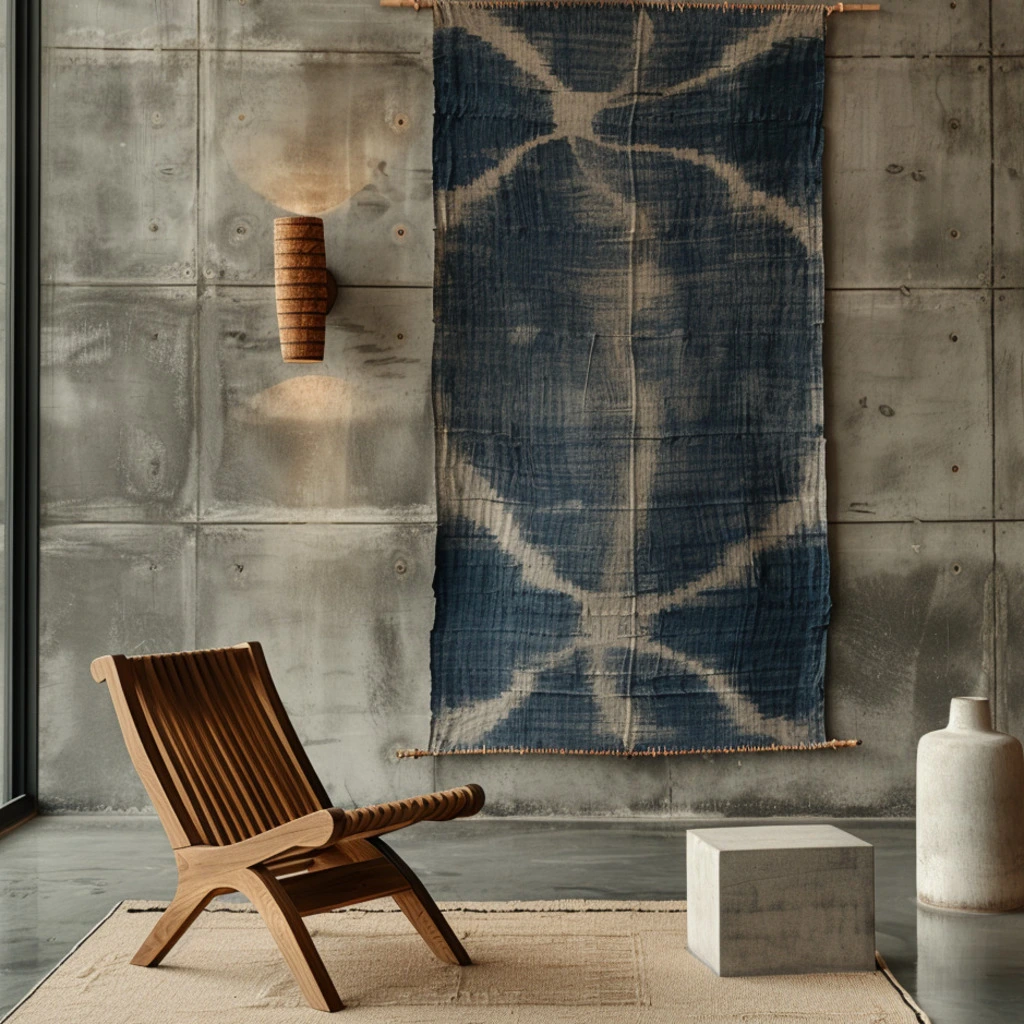
In the boutiques of Nimman, however, the context has shifted. Indigo is no longer confined to the fisherman’s pants or the village sarong. It now appears on raw-edged linen blazers, structured tech-wear, and oversized canvas wall hangings that anchor the minimalist interiors of boutique hotels.
This transition from forest to flagship represents a “Soft Power” heritage – taking a functional tradition and refining it with the precision of a high-end design house without losing its spiritual marrow.
The Science of the “Living Vat”: A Heritage Chemistry
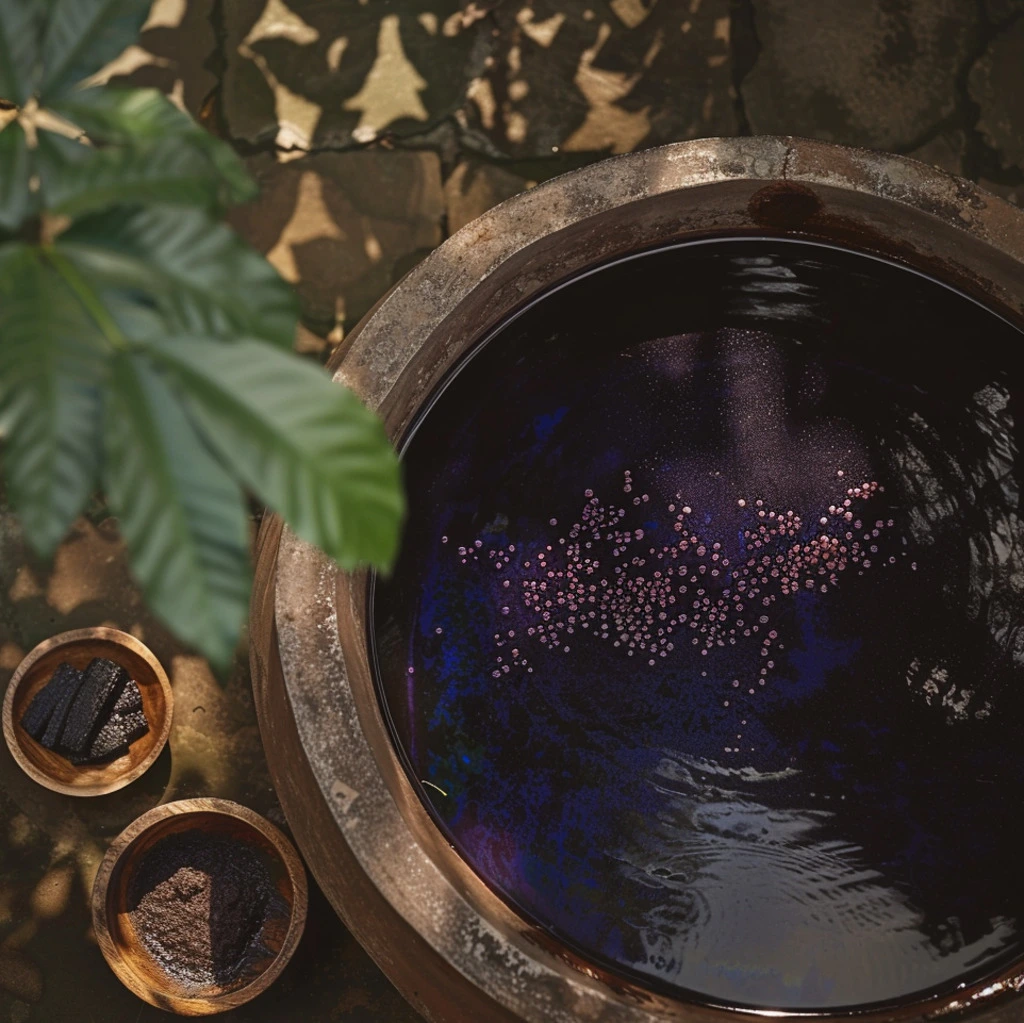
The luxury of indigo lies in its biological complexity. Unlike synthetic dyes, which are static and predictable, a traditional indigo vat is a living ecosystem – a “Mo Hom” that requires daily “feeding” and temperature control.
The fermentation code of a Lanna vat is a masterpiece of indigenous chemistry. It requires a balanced environment: a base of alkaline ash water, lime to regulate pH, and a sugar source – traditionally tamarind or mashed bananas – to nourish the bacteria. These bacteria consume the oxygen in the liquid, reducing the indigo into a soluble, yellowish-green state known as “leuco-indigo.”
The alchemy occurs during the “reveal.” When emerging from the yellow-green depths, the translucent fabric appears alien. Upon hitting the tropical air, it hungrily pulls in oxygen.
The colour then “blooms” into a deep, resonant navy before the viewer’s eyes. This rapid oxidation represents the “Golden Age” of the process. It captures a chemical record of atmospheric conditions, humidity, and the vat’s strength on that specific day. In an era of mass-produced uniformity, this chromatic fingerprint is the ultimate marker of exclusivity.
Heritage Highlight: The Architecture of Resist and the “Trishula” Fold
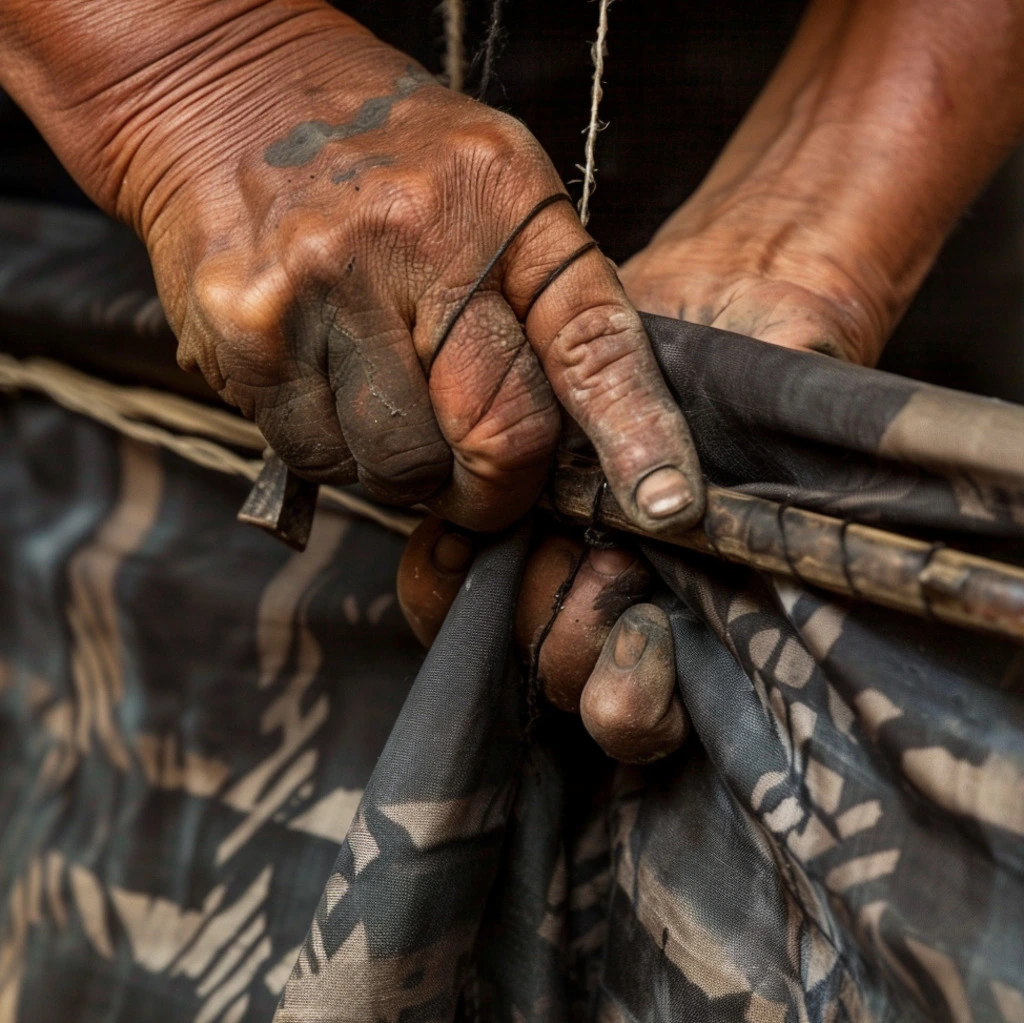
While the term Shibori is Japanese, Northern Thailand possesses an ancient resist-dyeing lineage known as Mud-Yom. The Nimman Remix is a syncretic blend of these two traditions. Designers here are moving beyond simple “tie-dye” into what can be described as Resist Architecture.
This involves the Trishula (three-point) fold or the Arashi (pole-wrapping) technique applied to high-thread-count Thai silk or hand-spun cotton. By compressing the fabric with industrial clamps or heavy twine, the artisan creates a “fractal patina.”
This intricate pattern mimics lightning, cracked marble, or organic leaf veins. The luxury resides entirely in each unrepeatable stroke. Because the vat’s potency fluctuates constantly, no two dips yield an identical shade of “Midnight Lanna Blue.” Ultimately, this is a textile that breathes.
The Nimman Creative Collective: Ateliers and Innovators
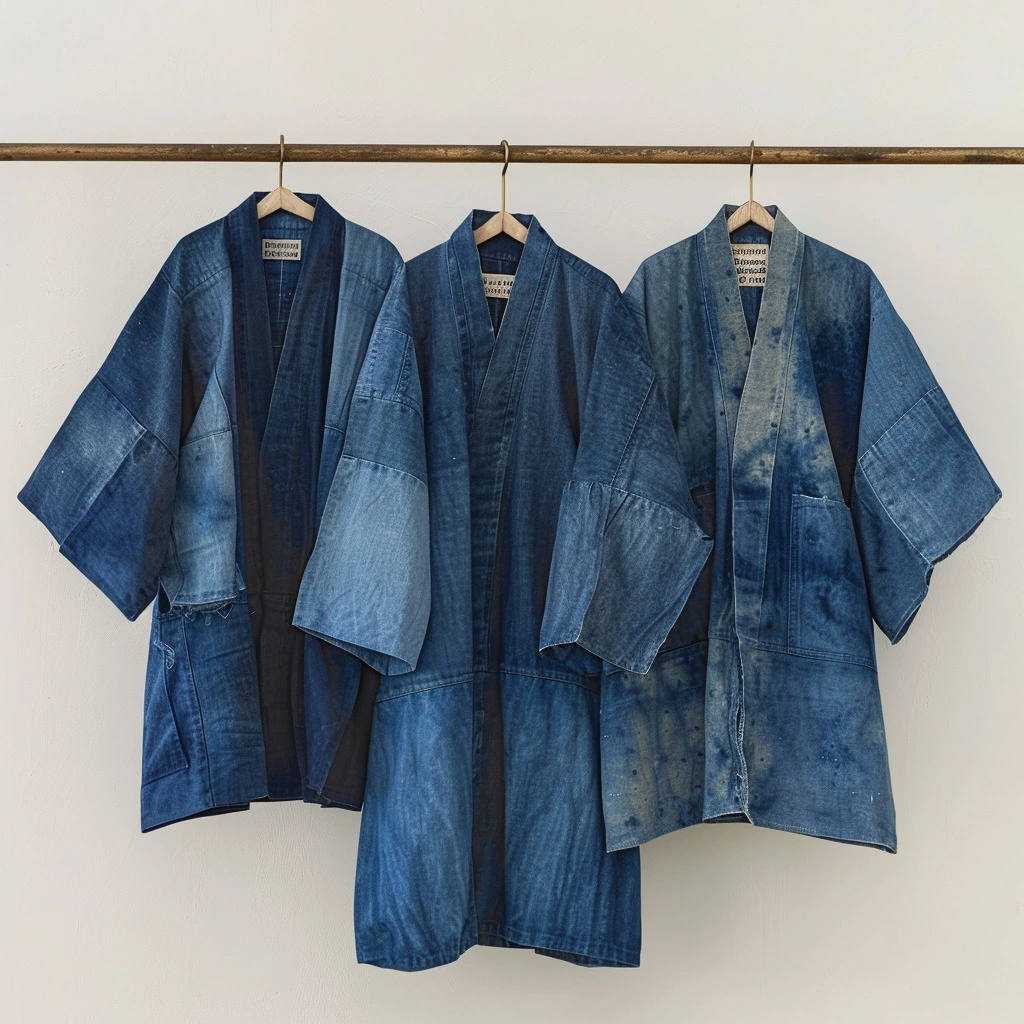
The “Sois” (side streets) of Nimman have become a sanctuary for this blue frontier. The shift is led by a collective of “Heritage Entrepreneurs” who have moved away from the “Elephant Pant” mass-market tropes of the 1990s.
Instead, we see limited-run ateliers producing indigo-dyed laptop sleeves, minimalist kimonos, and even indigo-tinted leather. These spaces function as both boutiques and laboratories.
The rise of “high-intent” maker spaces allows the traveller to spend days learning the titration of ash water and the geometry of the fold. Here, the “souvenir” is transformed into a record of acquired skill – a physical manifestation of the traveller’s own participation in the Lanna archive.
Furthermore, we are seeing a “Global Lanna” collaboration. Local indigo masters are increasingly providing the raw colour for Japanese streetwear brands and European interior designers. This proves that the Northern Thai vat is not a provincial relic, but a world-class resource for sustainable, high-concept luxury.
Migration and the Blue Patina
Indigo also serves as a resilient archive of Lanna identity. The specific shades of blue and the methods of resist-dyeing often trace back to the migration patterns of the Tai Lue and Tai Yuan people. While Nimman is the modern showcase, the “source code” remains in the village of Ban Pa Pao in Phrae, where the Baphicacanthus leaves are still harvested by hand.
For the true enthusiast, Nimman is the gateway. A journey from the sleek glass facades of the city to the muddy indigo pits of Phrae completes the narrative of the “Blue Frontier.” It allows the traveller to witness the full lifecycle of the colour—from the limestone-rich soil of the forest to the structured elegance of a Nimman flagship.
The Discerning Traveller’s Indigo Map: Navigating Nimman
To navigate this frontier, one must look for the sensory indicators of authenticity. True Hôm has a specific earthy, fermented scent, reminiscent of a damp forest floor or a well-aged wine. Synthetic indigo, by contrast, carries a flat, chemical, or metallic odour.
When seeking a “Remix” piece, look for:
The Heritasian Verdict: The Future is Blue
The Indigo Remix is the pinnacle of “Soft Power” heritage. It takes a functional, rural tradition and refines it with the aesthetic rigour of a high-end design house. It proves that heritage is not a static museum piece; it is a living, breathing chemistry that evolves to meet the needs of the modern world.
Nimman’s modern shibori frontier offers something money rarely buys in the digital age: unpredictability. In a world of “perfect” synthetic dyes, the slight irregularity of an indigo-dyed silk is a rebellion against the machine. It is a reminder of the “Slow Travel” philosophy – that the most beautiful things are those that take time to grow, ferment, and bloom.