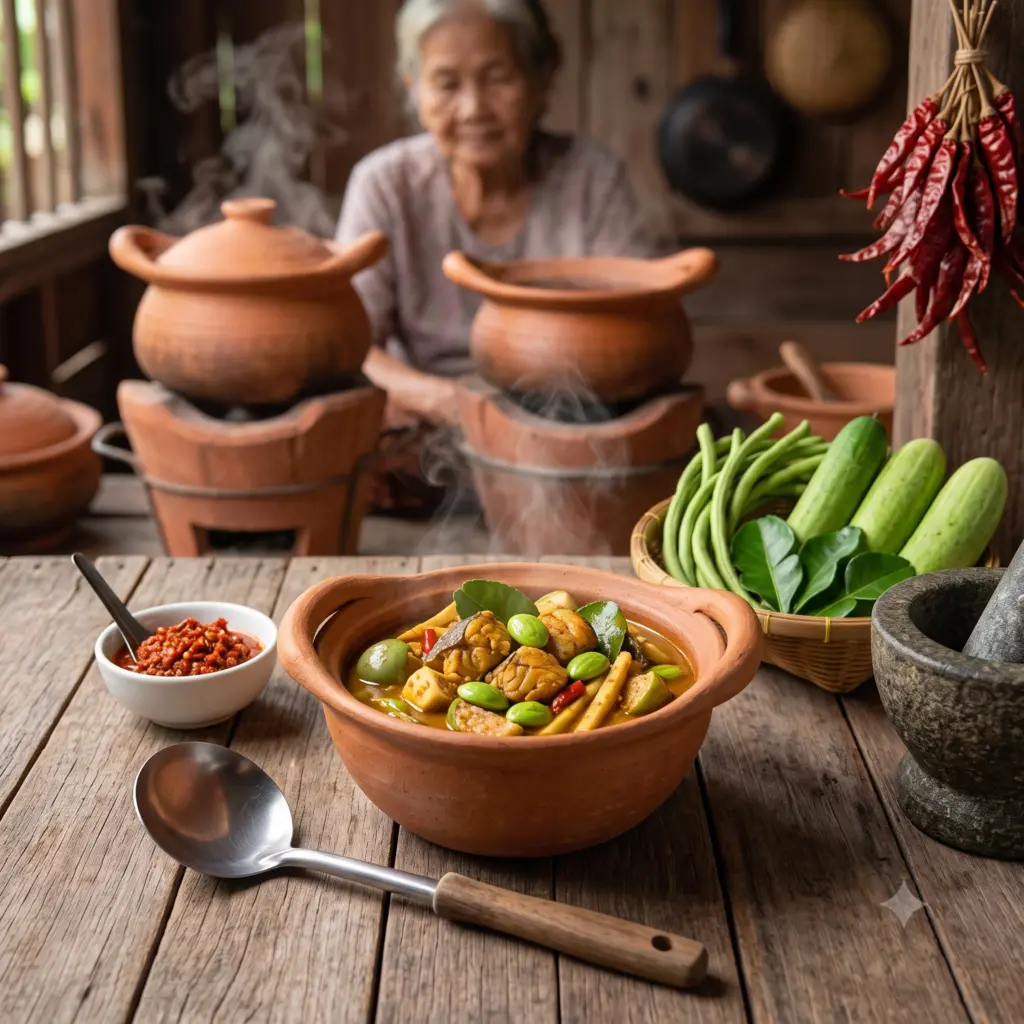

When the global food atlas TasteAtlas published its crowd-sourced list of the “World’s Worst Rated Foods,” an intense, unyielding Southern Thai fish curry called Kaeng Tai Pla sat at the very top of the list.
The internet did what it does best: it memed it, debated it, and treated it as a viral anomaly. But for food and beverage executives, culinary entrepreneurs, and hospitality strategists, this ranking shouldn’t be dismissed as a joke. It is a masterclass in market positioning, regional identity, and the modern consumer’s demand for hyper-authenticity.
Here is the strategic business perspective on why a polarising food profile represents the future of premium regional gastronomy, and how the broader Southern Thai culinary ecosystem is rewriting the rules of the premium F&B market.
1. The Dilution Trap vs. Uncompromising Identity
For decades, mass-market international Thai cuisine has relied on a predictable, Western-friendly formula: a precise balancing act of sweet, sour, salty, and mild heat found in commercial favourites like Pad Thai or Green Curry. It is a highly successful, mass-market export model (read How Do You Rebrand an Entire Nation?), but it is also a commoditised one.
Southern Thai cuisine completely subverts this framework. Built on heavy use of fresh turmeric, bird’s eye chillies, black pepper, and complex fermentations, it features punchy, uncompromised flavour profiles.
Kaeng Tai Pla is the apex of this philosophy. Its base utilises tai pla—fermented fish entrails—yielding an intensely pungent, fiercely spicy, and deeply umami-rich broth. It does not apologise for its intensity. It does not include palm sugar just to appease an uninitiated palate.
The B2B Takeaway: In a hyper-competitive global food market, trying to please everyone is a fast track to irrelevance. The polarising nature of Southern Thai food is its core asset. It creates fierce, cult-like brand loyalty among culinary purists and adventurous diners—a demographic that drives significant word-of-mouth marketing and premium spend.
2. The Power of “Micro-Flavour Profiles” as a Market Differentiator
To understand why this works commercially, we have to look past a single curry and analyse how Southern Thai cuisine uses “extreme” flavour profiles to command attention.
Consider two other staples of the region that are rapidly gaining traction in high-end culinary circles:
For an F&B developer, these dishes represent a shift away from “safe” food toward experiential dining. Modern consumers are increasingly viewing intense, localised flavours as a challenge and an achievement, transforming a meal into a highly shareable, socially driven event.
3. Portfolio Balancing: The “Moo Hong” Strategy
From an operational and menu-design standpoint, a successful heritage concept cannot survive on pure, unrelenting intensity alone. It requires structured counterweights to manage the diner’s palate and journey.
In Southern Thai gastronomy, this operational balance is achieved through its unique cross-cultural history. Because the region served as a historic maritime trading hub, it absorbed deep Peranakan and Hokkien Chinese influences.
Enter Moo Hong—a rich, comforting dish of pork belly slow-braised in a sweet, dark soy sauce seasoned with garlic, black pepper, and star anise.
By placing a rich, sweet, and comforting dish like Moo Hong alongside a nuclear-level Kua Kling or Kaeng Tai Pla, operators create a rhythmic dining experience. This clever portfolio balancing allows restaurants to preserve the raw integrity of their spiciest dishes while ensuring the overall meal remains accessible, satisfying, and premium.
4. Riding the “Hyper-Regional” Macro Trend
According to current hospitality insights, consumer behaviour is shifting rapidly away from generalised national cuisines toward hyper-regional, origin-verified dining. Modern affluent travellers and diners are no longer satisfied with generic “Thai food”; they want to understand the unique geography, history, and seasonal ecosystem of a specific province like Phuket, Songkhla, or Nakhon Si Thammarat.
We are seeing luxury properties and fine-dining establishments successfully capitalising on this shift:
The Bottom Line for F&B Innovators
The TasteAtlas ranking didn’t prove that Kaeng Tai Pla is a bad dish; it proved that it possesses a flavour profile so distinct and unyielding that it challenges conventional global assumptions.
As F&B professionals, our goal should not always be to smooth out the rough edges of a cultural product to achieve mass consensus. Sometimes, the most sustainable, high-margin business model lies in defending the authentic, localised complexity that makes a culinary region entirely unforgettable.