
Key Insights
The Khoo Kongsi is the pinnacle of Chinese clan architecture in Southeast Asia. This “Dragon Mountain Hall” was built by the Khoo family to showcase their immense wealth and spiritual devotion.
Hidden behind shophouses in George Town, its intricate stone carvings and gilded wood represent a “miniature palace,” serving as a timeless sanctuary of kinship and ancestral heritage.
Khoo Kongsi: Established in its current monumental form in 1906, this is the most architecturally opulent clan association (kongsi) complex in Southeast Asia, acting as a historical fortress, administrative court, and ritual theater for the wealthy Khoo lineage.
Lineage Hegemony Typology: A grand architectural layout designed to declare absolute clan dominance. It features an elevated temple-palace complex facing a massive open-air courtyard (thinn-kha) and a permanent granite opera stage, deliberately mirroring the grandeur of imperial palaces in China.
Defensive Urban Enclave: The intentional urban planning configuration where the grand palace is completely hidden behind a dense protective ring of ordinary, uniform terrace houses, accessible only through easily blockaded narrow alleyways to secure the clan from outside threats.
Sweeping Swallowtail Ridge: The dramatic, highly curved southern Chinese roof geometry (minnan) characterised by soaring, upturned split ridges resembling a swallow’s tail, heavily loaded with intricate ceramic ornamentation to project spiritual authority.
Chuan-Dou Structural Framing: The traditional Chinese timber carpentry system utilises a network of interlocking wooden pillars, crossbeams, and specialised brackets (dougong) that distribute weight dynamically without requiring a single metal nail.
Gold-Leaf Relief Carving: The intense interior ornamentation methodology where master craftsmen deeply carved solid teakwood beams into intricate three-dimensional mythic scenes, coating the entire surface in authentic gold leaf to broadcast the lineage’s immense mercantile fortune.
The Architecture of Hubris: When Stones Challenge the Heavens
The story of Leong San Tong Khoo Kongsi begins not with a formal opening, but with a catastrophic fire. In 1894, as the initial structure of this elaborate Chinese clan association complex neared completion in Penang, a mysterious blaze completely destroyed the hall.
To the immigrant residents of colonial George Town, the cause was clear: the Khoo lineage had committed architectural hubris. By constructing a hall that directly mirrored the imperial palace architecture of the Qing Dynasty, they had invited celestial misfortune.
Rather than viewing the site merely as a standard historic temple, the 1906 reconstruction must be understood as an act of defiant socio-economic persistence. The Khoo clan did not diminish their architectural ambitions; instead, they successfully rebuilt the complex with dense Confucian symbolism, imported Fujian granite, and intricate gold-leaf woodcarvings.
This physical structure served as a permanent institutional anchor for a maritime diaspora. This architectural expression of wealth and ambition declared the clan a self-governing, highly structured network rather than a transient community of displaced labourers within the British Straits Settlements.
The Topography of Secrecy: Defensive Urbanism in Cannon Square
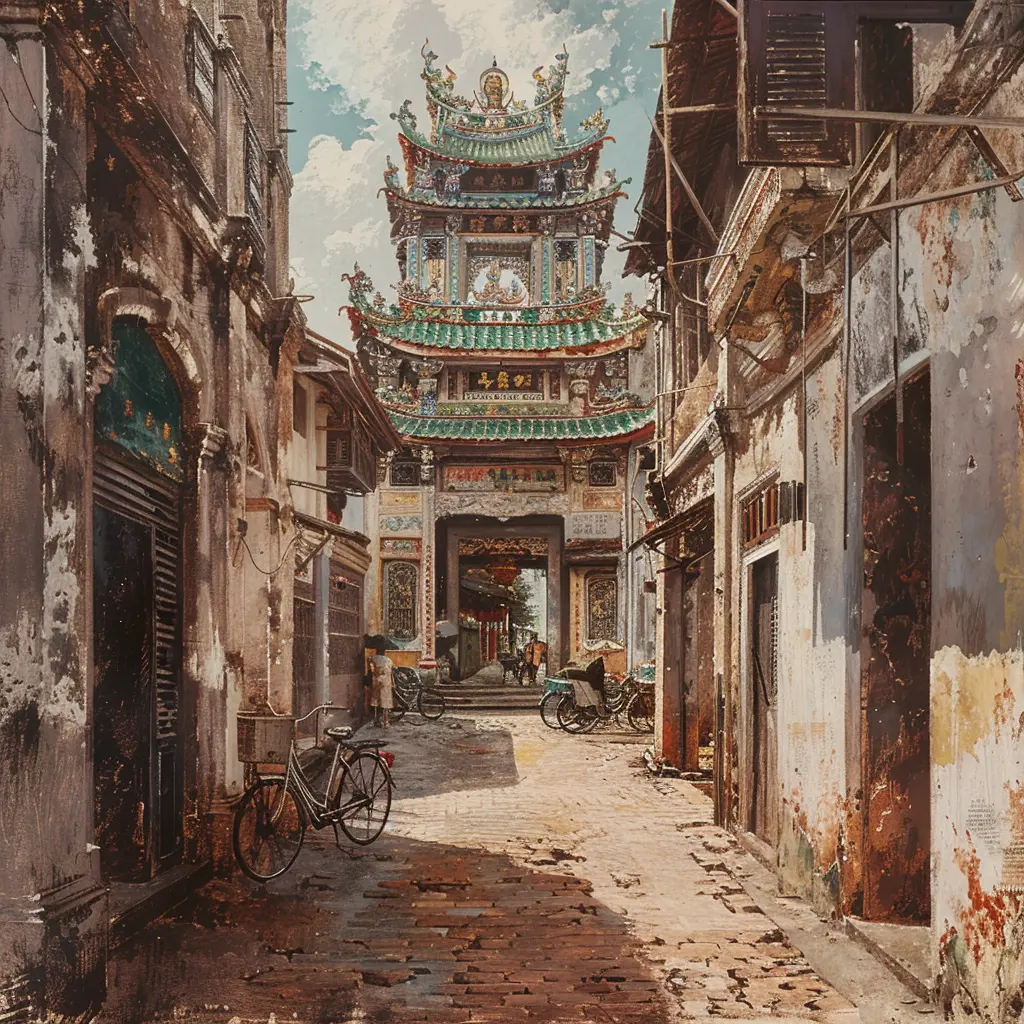
One does not simply “stroll” into Khoo Kongsi; one must navigate a tactical landscape. The site is famously tucked away behind a perimeter of mundane 19th-century shophouses, accessible only through narrow, easily defensible “mouths” or alleys.
In the 1800s, this was defensive urbanism rather than an aesthetic choice. The Kongsi functioned as a “state within a state”. The British controlled the legal bureaucracy, but the clan controlled the lives and loyalties of their kin. The architecture reflects a “fortress mentality,” creating a private universe. Internal clan laws superseded colonial edicts within this enclave.
Walking through the narrow entry marks a transition into a private, ethnic sanctuary. This spatial representation shows an identity both integrated into and isolated from the British Empire.
The Ancestral Ledger: The “Invisible” Economy of the Clan
To understand the gold, we must understand the salt. The Khoo lineage traces back to Sin Kang village in Fujian – a community of seafarers. By the time they established their foothold in Penang, they had successfully translated their maritime resilience into a corporate powerhouse.
The Kongsi functioned as a primitive, yet highly sophisticated, social-security system. For a newly arrived migrant, the Kongsi was his bank, his school, and his court of law. This was the “Invisible Economy” of the 19th century. Every Khoo successful in Perak’s tin mines or Penang’s spice warehouses paid a “heritage tax.” This contribution flowed directly back into the clan’s central fund.
This wasn’t merely charity; it was an investment in collective power. This capital did more than build the temple; it funded a self-sustaining real estate portfolio. The purchase of surrounding shophouses continues to fund the Kongsi’s maintenance today. Gold leaf represents more than simple wealth. It signifies the compounded interest of a clan’s enduring loyalty.
The Semiotics of the Roofline: Southern Fujianese Defiance
The roof of the Khoo Kongsi is a masterclass in the Southern Fujianese (Min Nan) “swallowtail” style. Most visitors look at the roof and see “decoration,” but an intellectual traveller sees semiotics.
The extreme curvature and dense porcelain ornamentation serve a specific purpose: Visual Noise as Prestige. In Imperial China’s rigid hierarchy, certain architectural flourishes were reserved for royalty or literati. By recreating these forms in the Straits Settlements, the Khoos practised extra-territorial social climbing.
They built a reality in Penang that was legally barred in their homeland. The roof shouts “We have arrived” toward the ancestors and emperors they left behind.
Deconstructing the Craft: A Grammar of Prestige
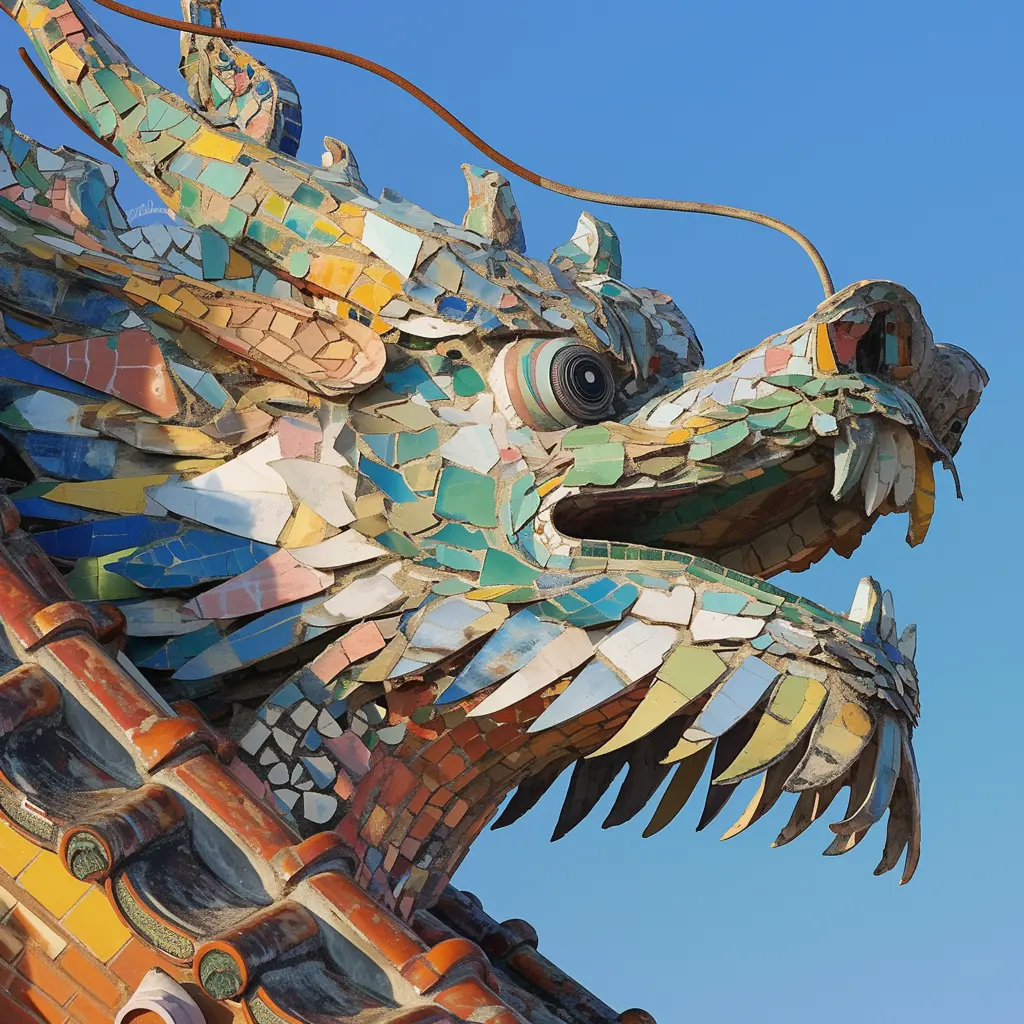
We must look at the Chien Nien technique not as “decoration,” but as recycled prestige. This technique, involving the meticulous shaping of broken ceramic bowls into mythical figures, represents a quintessentially Southern Fujianese frugality turned into high art.
The Shadow of the 1867 Riots: Blood on the Granite
The “Banalistan” version of Khoo Kongsi ignores the blood. In 1867, the Penang Riots turned George Town into a war zone. The Khoo Kongsi was a headquarters for the “Khoo” faction during the Ghee Hin vs. Hai San conflicts.
Cannon Square earned its name when the British literally fired a cannon into the square to disperse the secret societies. The granite courtyard we see today was once a staging ground for clan militia. Understanding this friction—the gap between the serene, incense-wafting temple of today and the smoke-filled war room of the 19th century – is vital.
The eventual pivot to “respectability” in the early 20th century was a conscious rebranding. The Khoos moved from being frontier “big men” to “Straits Gentlemen,” and their architecture evolved to reflect this new, polished status.
The Acoustic and Olfactory Landscape: A Sensory Provenance
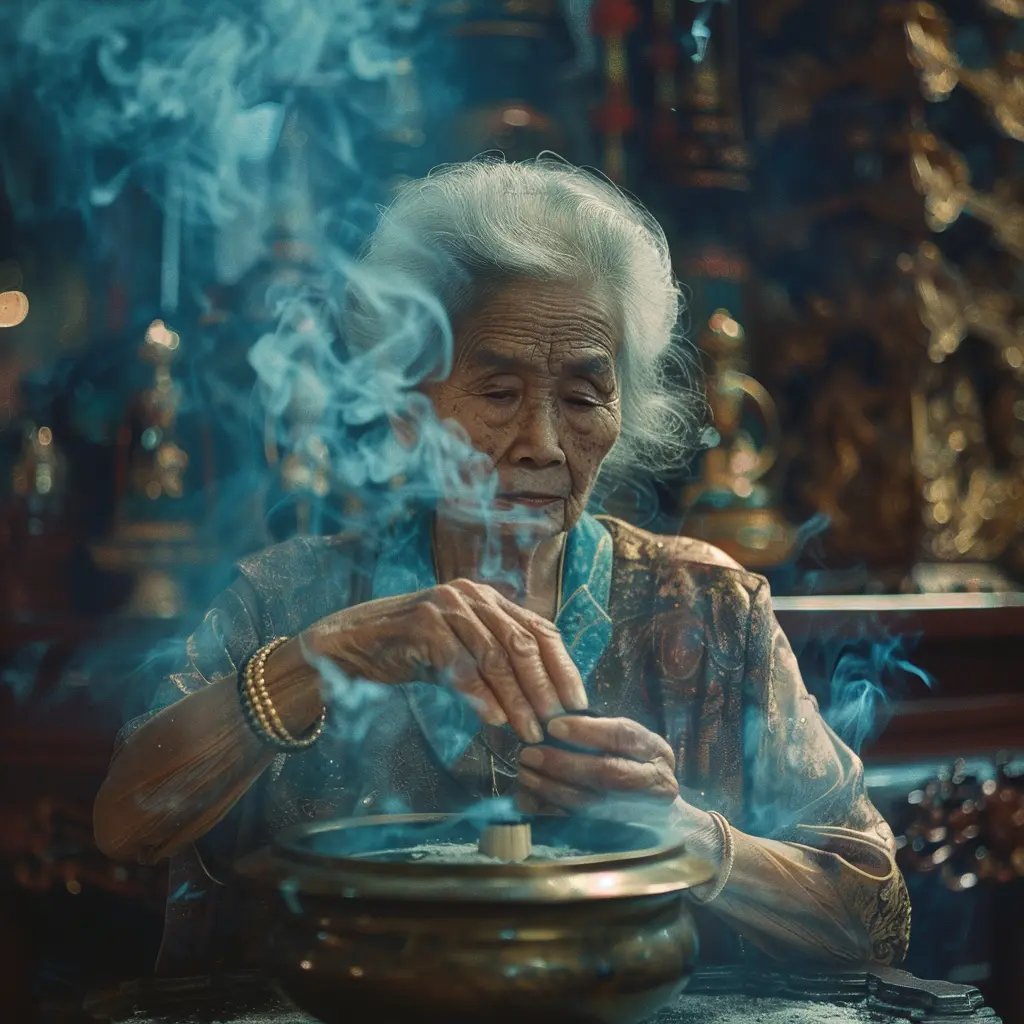
A “Slow Journalism” perspective focuses on the environmental friction that photos cannot capture.
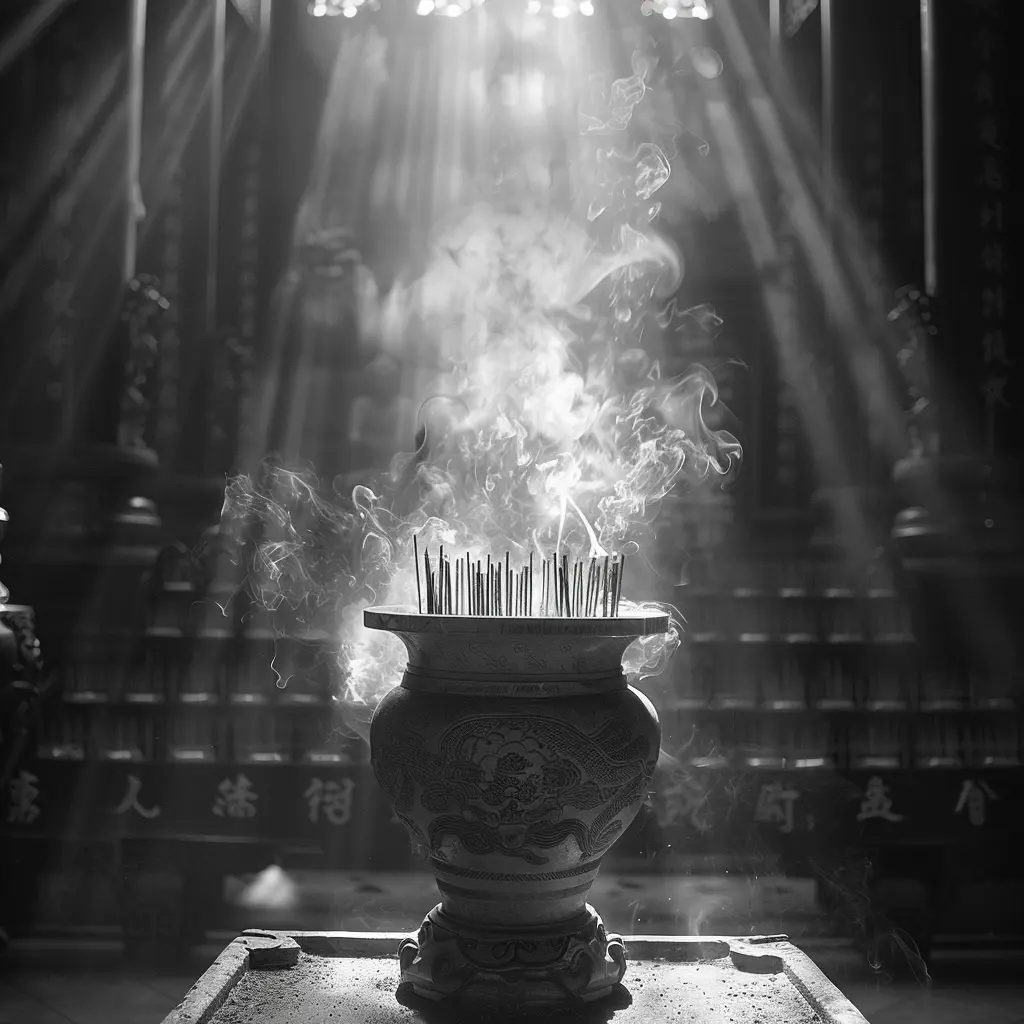
The acoustics of the courtyard are designed to swallow the modern world. The heavy granite paving stones dampen the chaotic roar of George Town’s traffic, creating a vacuum of silence that forces a shift in the visitor’s internal tempo. This is paired with the olfactory anchor: the specific, heavy aroma of sandalwood and agarwood.
During the 1800s, this scent signified purity and permanence within a tropical port city. It contrasted sharply with the surrounding odours of open sewers and salt fish. The Kongsi served as an olfactory sanctuary, providing air curated for “Intellectual Luxury”.
The Gendered Silence: The Hidden Social Map
To reach the full depth of the Kongsi, one must address the gendered silence. The Khoo Kongsi is a patriarchal map; the names etched into the marble tablets are male, and the lineage is strictly agnatic.
However, the survival of the clan was a domestic, multi-generational effort led by women. While the architecture celebrates the male lineage, the wealth that built it often came from alliances with local Peranakan families who understood the nuances of Malay trade and British bureaucracy.
Recognising this “silent architecture” adds a necessary layer of human complexity – the building is a stage for the men, but it was supported by the invisible social infrastructure managed within the family homes.
Conclusion: The Persistence of Dragon Mountain
Today, the UNESCO status of George Town threatens to turn sites like Khoo Kongsi into “heritage taxidermy” – static objects for the tourist gaze. However, for the Khoos, it remains a functional site of spatial memory.
It is “Leong San Tong” – the Hall of the Dragon Mountain. – a piece of Fujianese soil that was surgically grafted onto the Malay Peninsula, a reminder that heritage is not about the past; it is about the persistence of identity against the erosion of time and globalisation.
It asks us if we are capable of building anything today that will still be relevant = and still be owned by the same family in 150 years. When you stand in the centre of the courtyard, you aren’t looking at a “tourist attraction.” You are standing inside the ego of a clan that refused to be forgotten.