
Key Insights
The Clan Jetties are living monuments to Penang’s maritime history, established by Chinese immigrants in the late 19th century. These wooden stilt villages, each belonging to a specific clan, represent a resilient “floating” community that bypassed land taxes by living over the water. Today, they remain a vital part of George Town’s UNESCO heritage, reflecting centuries of kinship and trade.
Clan Jetties Typology: A series of floating, stilt-raised Chinese water villages extending over the tidal mudflats of George Town, established in the late 19th century by Hokkien labourers who organised their settlements strictly by shared family surnames and ancestral villages.
Weld Quay Reclamation: The monumental 1882 colonial engineering project that reclaimed George Town’s shallow seafront. This intervention formalised the city’s coastline, creating a baseline where different family clans built extended wooden piers to capture the shipping trade.
Ghaut Terminus: The street ends or maritime landing paths that run perpendicular to the coastline. These pathways historically served as the physical foundations from which specific clans extended their residential walkways out into the sea.
Foreshore Floating Population: The historical demographic designation for the thousands of migrant dock workers, coolies, and sampan operators who lived permanently in stilt houses over the water, operating completely outside conventional land-based real estate frameworks.
Double-End Temple Bastion: The strategic layout of a clan jetty where distinct Taoist shrines anchor both ends of the central walkway, with the entrance temple guarding the community against terrestrial diseases and the sea-facing temple ensuring water safety.
Structural Timber Splicing: The continuous maintenance practice unique to the jetties, where submerged hardwood support pillars (sao) are systematically cut, repaired, or completely replaced every few years to counteract marine rot, salt erosion, and shifting tides.
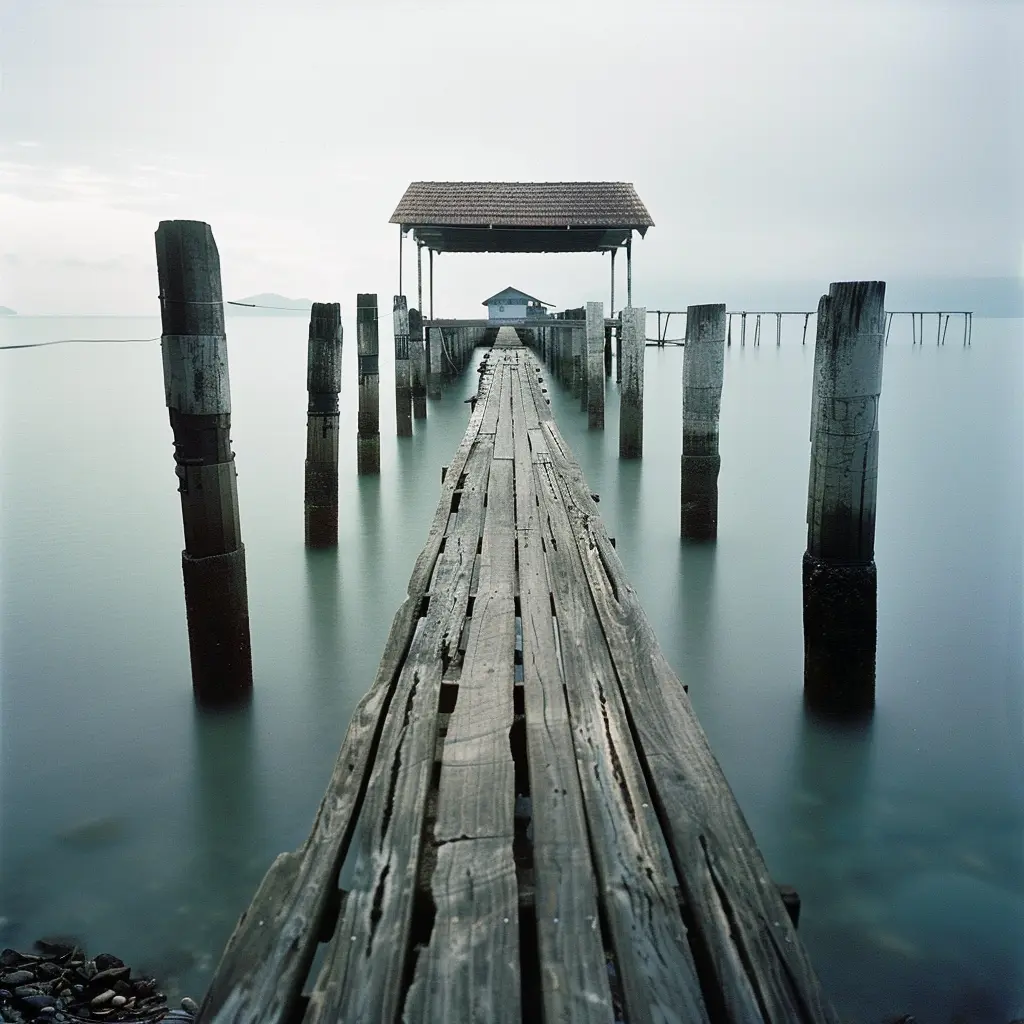
Beneath creaking timber planks, the Andaman Sea laps against barnacle-encrusted stilts, a sound that has remained unchanged since the late 19th century. While many of George Town’s historic Straits Eclectic shophouses have been restored as boutique hotels and commercial properties, the Weld Quay Clan Jetties remain living maritime vestiges of the city’s early immigrant history. Today, these stilt-house communities face dual pressures from modern urban development and climate-induced rising sea levels.
This guide examines the socio-economic evolution of these waterfront settlements, tracing their transition from transient labourer outposts founded by Hokkien Chinese immigrants into permanent bastions of Peranakan and Penang heritage along the Straits of Malacca.
Historical Context: The Golden Age of the Stevedore
The Port of Penang’s Gravity: The story of the jetties begins with the 1826 formation of the Straits Settlements. As a free port, Penang became a magnetic pole for the global spice and tin trades. Weld Quay was once a chaotic shoreline of mudflats before transforming into a high-stakes maritime hub. It became a place where British Empire wealth met the labour of the Hokkien diaspora.
The Suez Canal Effect and the Rise of the Kongsi: The 1869 opening of the Suez Canal acted as a catalyst, accelerating steamship travel and demanding a more efficient logistics network.
This boom necessitated the rapid expansion of landing points. Immigrants from the Fujian province arrived to find a city already subdivided by clan loyalties. These clans, or Kongsi, functioned as shadow governments, providing social welfare, physical protection, and employment.
By claiming the waterfront, these clans – the Chew, Tan, Lim, Yeoh, and Lee – secured their own economic sovereignty. They served as the essential link between deep-water cargo ships and land-based warehouses. These labourers controlled the flow of goods with a precision that rivalled the colonial authorities.
Architectural Anatomy: The Marine Vernacular
Material Provenance and Survival: The engineering of these “floating villages” is a marvel of indigenous adaptation. Builders utilised a system of hardwood piles – traditionally bakau (mangrove wood) or chengal – driven deep into the seabed.
These woods were prized for their natural resistance to the corrosive salinity of the Andaman Sea and the persistent threat of shipworms. Over decades, these timber stilts have acquired a dark, salt-cured patina that serves as a visual record of their resilience.
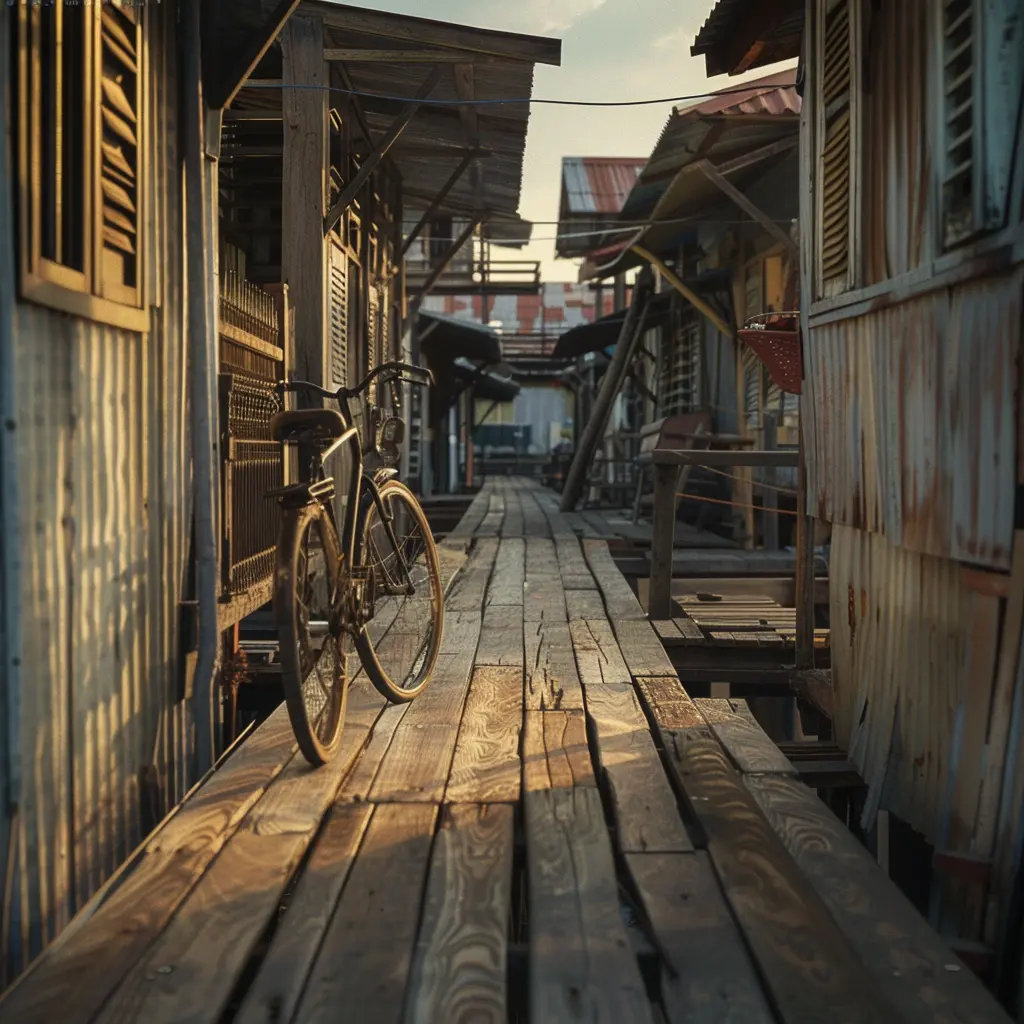
The Spine and Rib Logic: The layout of a jetty follows a rigorous social and functional geometry. A central timber walkway, or the “spine,” extends into the sea, acting as a communal thoroughfare. From this spine, the houses branch off like “ribs”.
Historically, the proximity of a house to the shoreline often mirrored the family’s seniority or economic standing within the clan hierarchy, with the most established elders situated closest to the terrestrial entrance. At the same time, newer arrivals pushed further out into the deeper, more exposed waters.
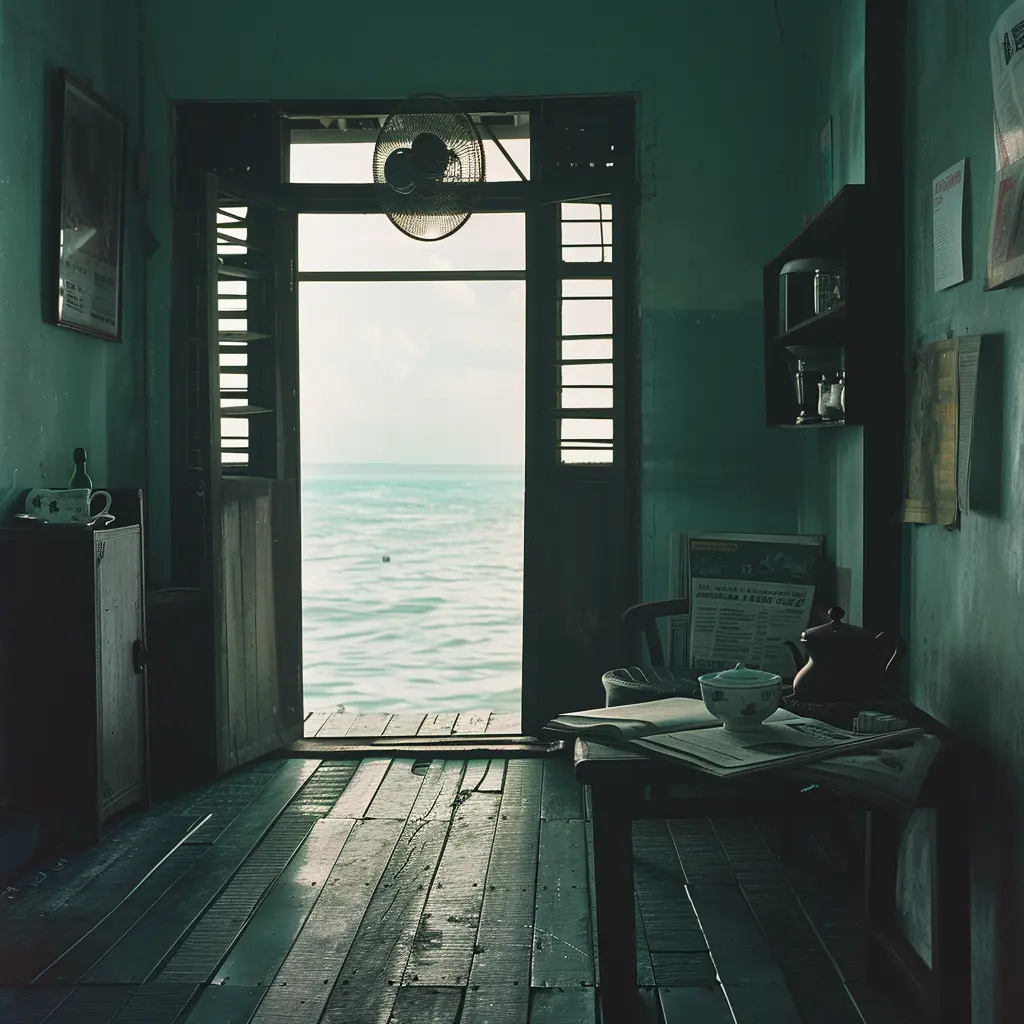
The Interior Layout. Inside these dwellings, the architecture is a study in space optimisation. Floorboards feature slight gaps for ventilation and easy disposal of wash water into the sea.
The “front room” serves as a reception area and the site of the ancestral altar. Family lineage is meticulously documented and venerated at these sacred altars. Private quarters lie behind, partitioned by thin timber walls that hum with community sounds. The rhythmic shifting of tides beneath the floor creates a constant, living soundtrack.
The “Liquid Border”: Tax Resistance and Independence
One of the most compelling aspects of the jetties’ history is their unique legal status. Because these homes were built over water, residents were historically exempt from land tax, as they technically occupied no “land”. This created a “liquid border” between the residents and the municipal authorities of George Town.
This autonomy fostered a fierce sense of independence and communal grit, which was vital during the turbulent periods of the 19th-century clan rivalries. During the “Great Penang Riots” of 1867, these jetties functioned as defensive enclaves, where the narrow walkways and over-water positioning made them difficult for external forces to penetrate. While the city around them modernised into a grid of colonial order, the jetties remained organic, self-governing bastions of Hokkien tradition.
Heritage Highlight: The Sacred Maritime

The Sky God and the Sea: The spiritual life of the jetties is inextricably linked to the water. One of the most significant cultural markers is the presence of the Thnee Kong (Sky God) altar at the threshold of every home. This placement marks the spiritual boundary between the chaotic, unpredictable sea and the domestic sanctuary.
The Ritual Landscape: During the Thnee Kong Seh (the Jade Emperor’s Birthday), the jetties undergo a dramatic transformation. Altars hold sugarcane, cakes, and roasted meats, while temporary opera stages rise over the water. These rituals are vital acts of syncretic faith, blending Taoist, Buddhist, and local animist traditions.
This spiritual mix ensures the safety of those who make their living from the tides. For maritime Hokkien, Datok Kong guardian spirits reside in small red shrines at the jetty’s foot. These shrines bridge the gap between the Chinese spiritual world and the Malay landscape.
The Modern Experience: Slow Travel and Preservation
The Conservation Dilemma: The 2008 UNESCO World Heritage listing saved the jetties from the threat of modern redevelopment, but it introduced a new challenge: “museumification”. The Chew Jetty has become a focal point for tourism, adorned with murals and kiosks.
In contrast, the smaller settlements, such as the Tan or Mixed Clan Jetties, retain a quieter, more utilitarian atmosphere. Here, the whir of overhead fans and the rhythmic “clack-clack” of motorbikes on timber planks remain the dominant soundtrack.
Visitor Insights for the Discerning Traveller: Experience the “Golden Age of Travel” by arriving at Tan Jetty during the blue hour before sunrise. The silhouetted wooden walkways offer profound stillness before the city wakes. Weld Quay reveals the Baba Nyonya and Hokkien influences defining Penang’s palate. Salt-dried goods and seafood broths originated in these historic dwellings.
Cultural Etiquette: It is vital to remember that these are active homes, not open-air museums. Respect the privacy of the residents and avoid intrusive photography in private living quarters. The beauty of the jetties lies in their status as a living heritage site; your role as a traveller is to observe this “slow” way of life without disrupting its cadence.
Heritasian Summary
The Clan Jetties are more than a picturesque waterfront; they are a survivor of Penang’s liquid history, representing the grit and communal cohesion of the Hokkien diaspora. Their presence serves as a physical reminder of the port’s foundational role in global trade and the enduring strength of clan identity.