
Key Insights
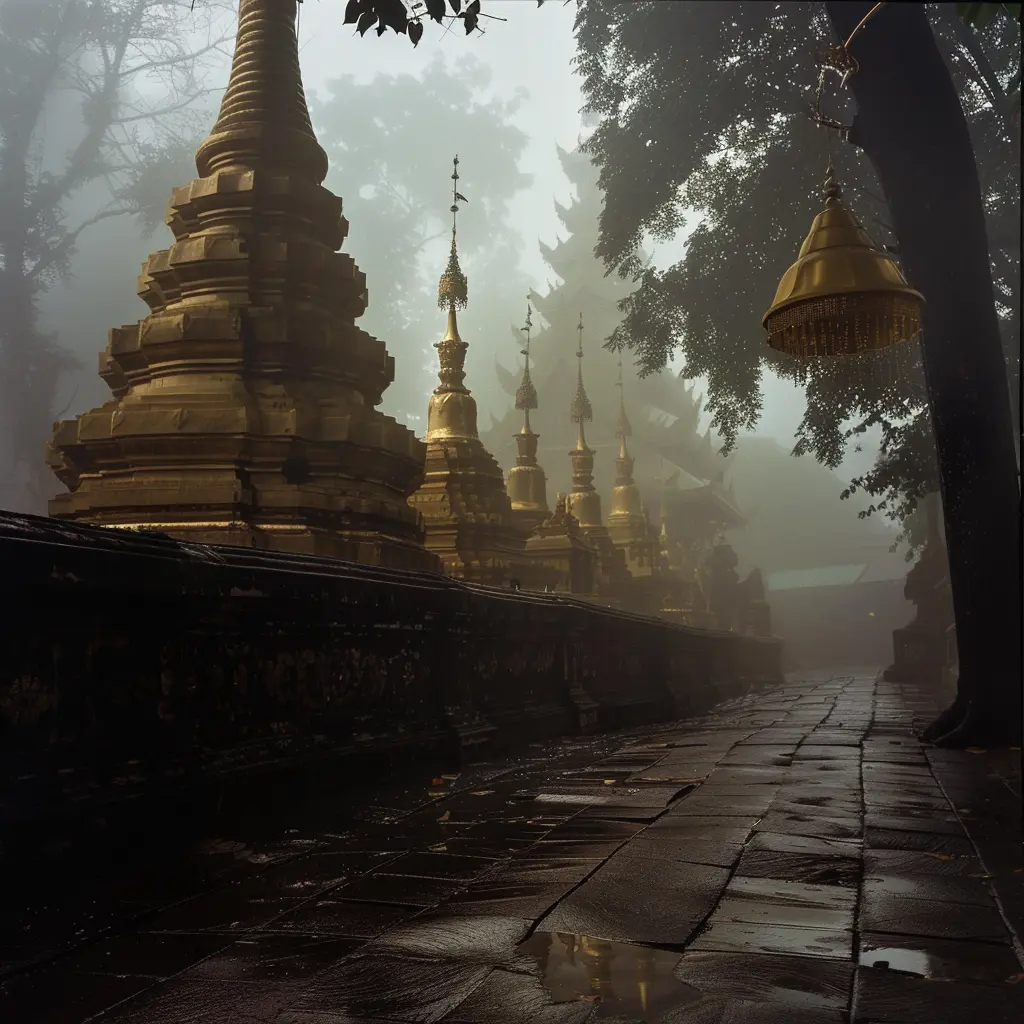
Doi Suthep is no mere tourist checklist day-trip or scenic viewpoint. It is Chiang Mai’s living sentinel, a sacred monument forged at the intersection of 14th-century geopolitical statecraft, indigenous animist spirit survival (phi), and fierce regional defiance led by the rebel monk Kruba Srivichai. To look up is to see the spiritual anchor of Lanna identity.
Axis Mundi: The central pivot or axis between heaven and earth where different spiritual planes intersect. In Lanna cosmology, the peak of Doi Suthep is this exact geographic crossroads, linking the human and celestial realms.
Barami: The accumulated karmic merit and spiritual charisma that justifies a ruler’s right to govern. This concept drove the 14th-century relic crisis; the lowland king lacked the barami to activate the bone, forcing its flight north.
Phi: The indigenous animist spirits of the land, nature, and ancestors that predated organised religion. Long before Buddhism arrived, the mountain belonged to these spirits, most notably the hermit guardian Wasuthep.
Kruba Srivichai: A legendary 20th-century northern monk celebrated as the “engineer monk” or saint of Lanna. He became a symbol of regional independence by rallying thousands of volunteers to build the 12-kilometre mountain road in 1935, completely defying central authority.
Thong Changko: Traditional sheets of beaten brass alloy, heavily gilded with gold leaf, used to encase northern stupas. This distinct metalcraft forms the gleaming outer skin of the main chedi, catching high-altitude light with blinding intensity.
Anda: The large, bell-shaped architectural core of a traditional Buddhist stupa. Resting on the heavy brick base, the anda forms the physical heart of the monument, enclosing the sacred relic within its solid centre.
In Chiang Mai, geography is theology. Long before King Mangrai laid the first brick of the city’s moated walls in 1296, the massive granite spine of Doi Suthep dominated the Ping River valley. It is not a commercial viewpoint or a generic day-trip itinerary checkbox; it is the living sentinel and spiritual anchor of Lanna identity.
To understand Doi Suthep, one must look beyond the banal travel brochures that reduce it to a shallow photo opportunity. It is a monument forged at the intersection of three distinct forces: 14th-century geopolitical drama, indigenous animist survival, and historic regional defiance against centralised rule.
The Fragmented Relic: A 14th-Century Political Thriller
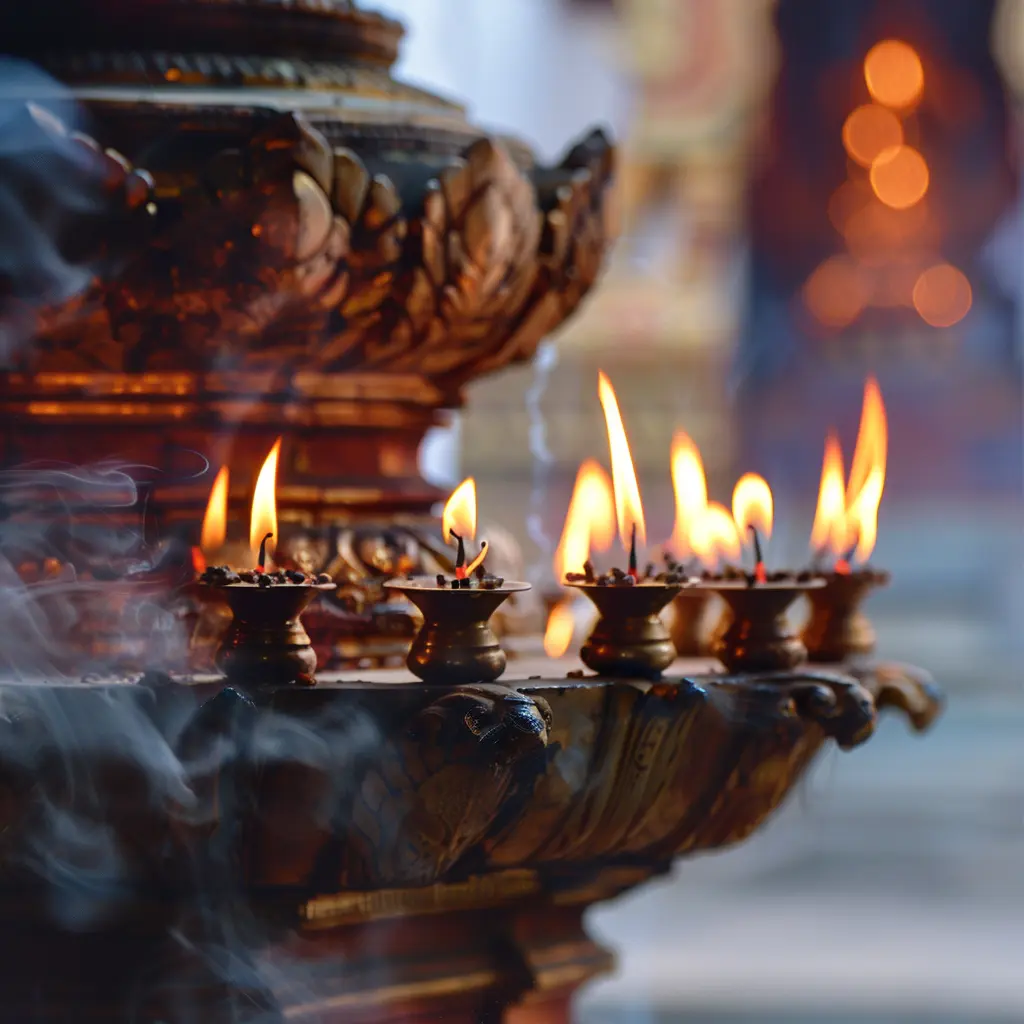
The foundational myth of Doi Suthep is usually sanitised into a quaint fairy tale about a magical bone. The historical reality is a gritty 14th-century political thriller involving competing kingdoms, spiritual legitimacy, and regional statecraft.
In the 1370s, a visionary monk named Sumana Thera from Sukhothai discovered a sacred relic – believed to be a shoulder bone of the historical Buddha. In the context of medieval Southeast Asia, such an object possessed immense spiritual and political capital.
It was the ultimate legitimising tool for any ruler. King Dhammaraja of Sukhothai, the reigning superpower to the south, naturally claimed it. Yet, when placed before his court, the relic refused to perform; it remained entirely inert, defying the royal rituals.
In Southeast Asian statecraft, the King lacked barami. He lacked the accumulated karmic spiritual charisma necessary to command such a holy object. The relic had effectively rejected his sovereignty.
Hearing of this spiritual stalemate, King Nu Naone of Lanna recognised a massive opportunity to elevate his northern kingdom. He invited Sumana Thera and the relic up to Chiang Mai. Upon its arrival in the north, the relic did something extraordinary: it spontaneously fractured into two distinct pieces.
This was not a mere magic trick. The splitting of the bone mirrors a deliberate political and religious compromise orchestrated by the Lanna crown. One half was enshrined in the lowlands at Wat Suan Dok to bless the royal court and the urban populace.
The other half, however, required a sanctuary completely untouched by lowland politics—a place where human authority ended and the divine realm began.
The White Elephant’s Final March: Animism Clothed in Buddhism
To choose this untouchable site, King Nu Naone deferred to a white elephant. This shrewd Lanna monarch respected the animal’s deep cosmic significance in Buddhist kingship. The sacred relic was strapped to the royal beast’s back. The elephant was then released into the untamed jungle at the foot of the mountain.
The elephant did not wander. Driven by an unseen directive, it began a gruelling, vertical ascent up the dense, unforgiving slopes. The mountain was then known to locals as Doi Aoy Chang, or Sugar Elephant Mountain.
The beast climbed for days, piercing the thick jungle canopy and ascending into the misty highlands. Upon finally reaching the rugged peak, the animal trumpeted three times. It turned in a deliberate circle and collapsed dead from sheer exhaustion.
⛰️ THE REALM OF THE SACRED (The Peak)
─── ▲ ─── THE VERTICAL ASCENT ─── ▲ ───
🏙️ THE SECULAR VALLEY (The City)
This tragic, triumphant moment marks the exact point where animism—the ancient, deeply rooted worship of mountain spirits (phi)—seamlessly fused with Theravada Buddhism. The elephant was acting as a divine surveyor, identifying the mountain’s axis mundi (the central pivot between heaven and earth).
By dying on that exact patch of earth, the beast transformed a wild, spirit-haunted jungle peak. It became the literal crown jewel of the Lanna Kingdom. The mountain was renamed Doi Suthep to honour the legendary hermit Wasuthep. This ancient, indigenous guardian spirit allegedly meditated on these slopes for centuries.
The white elephant’s fateful ascent up Doi Suthep is not an isolated piece of local folklore. Instead, it mirrors a broader regional pattern in which landscape features are imbued with profound spiritual and cosmic meaning. To understand how these principles function across Southeast Asia, read our comprehensive study on indigenous myths and sacred geography. Across these diverse cultures, natural terrain actively shapes religious devotion, ancestral veneration, and statecraft.
The Ascent: Defying Gravity and Monotony
The spatial layout of this high-altitude sanctuary directly reflects the complex cosmological architecture of the Lanna state. To understand how these physical structures map onto spiritual hierarchies, explore our deep-dive analysis of Lanna’s sacred architecture and heritage. The physical ascent up the mountain prepares the pilgrim for an encounter with the divine. It transforms a gruelling geographical journey into a profound inner transition.
To reach the shrine today, visitors must confront the famous 306-step ceremonial staircase. It is a brilliant piece of spatial psychology and religious architecture.
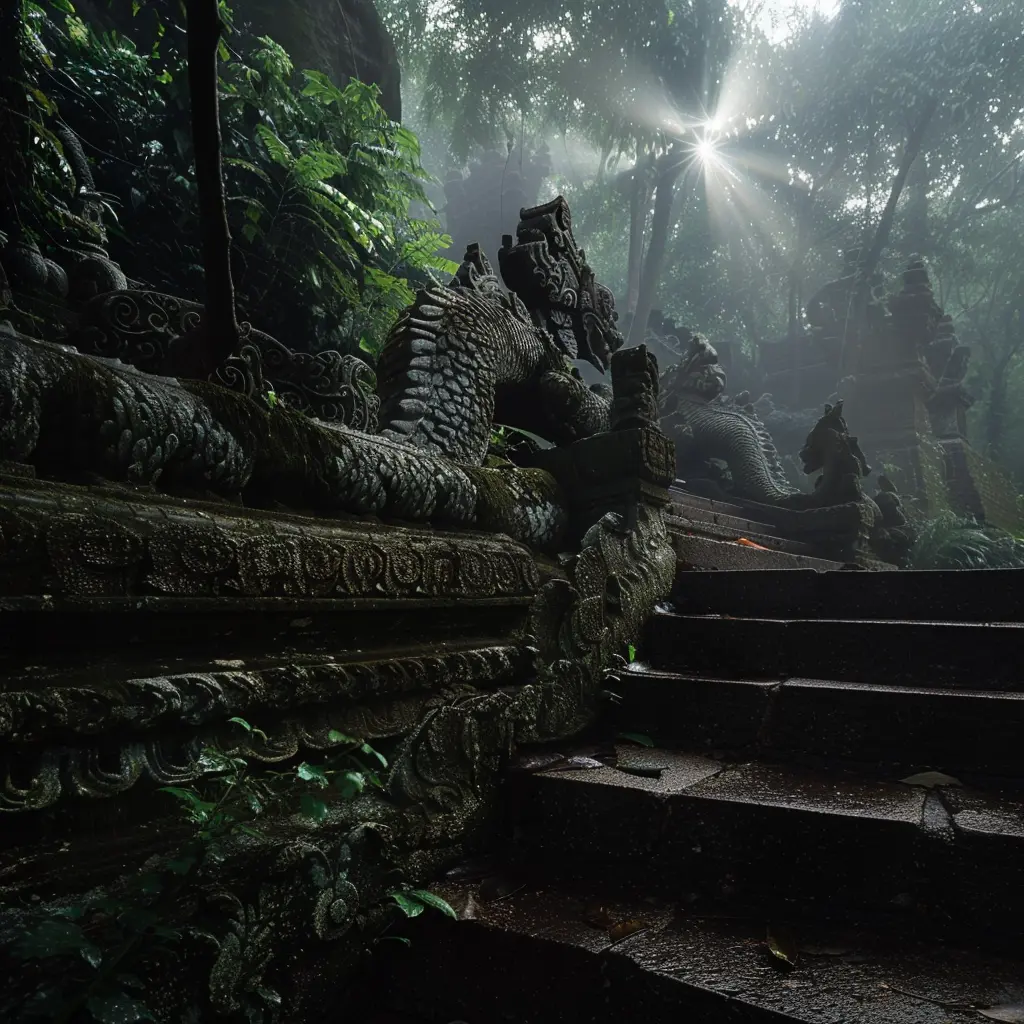
Flanked by massive, mosaic-tiled Naga balustrades undulating down the steep mountainside, the staircase acts as a physical conduit between worlds. The multi-headed stone serpents emerge directly from the jungle floor. Their bodies guide your eyes upward into a dense green canopy.
This is not a casual walk; it is a deliberate, exhausting transition designed to force the pilgrim to shed the dust and distractions of the secular valley before entering the sacred tier.
The Rebel Monk of 1935
Until the mid-1930s, accessing this sacred peak required a brutal, perilous five-hour trek through untamed mountain jungle. The winding, asphalt road that exists today is not a triumph of modern state engineering, but rather a monument to northern independence and religious defiance.
It was built under the leadership of Kruba Srivichai, a rogue “engineer monk” revered as the saint of Lanna.
Srivichai constantly conflicted with the central Sangha authorities in Bangkok. These officials sought to centralise, standardise, and control Thai Buddhism. In doing so, they stripped northern temples of their unique regional traditions. Defying central government commands, Srivichai called on northern people to build a road to the mountain temple.
Relying entirely on volunteer faith, homemade tools, and zero state funding, tens of thousands of villagers, hill tribe communities, and monks descended on the mountain. They cleared 12 kilometres of rocky, mountainous terrain in just five months and twenty-two days. Every curve driven on that road today is a legacy of local autonomy and spiritual resistance against centralised rule.
Inside the Golden Ring: The Sensory Reality
Stepping off the final stair and through the low threshold into the inner cloister is an immediate shock to the nervous system. The architectural layout is intentionally tight, vertical, and overwhelming, offering no visual release to the horizon. You are forced to look inward and upward.
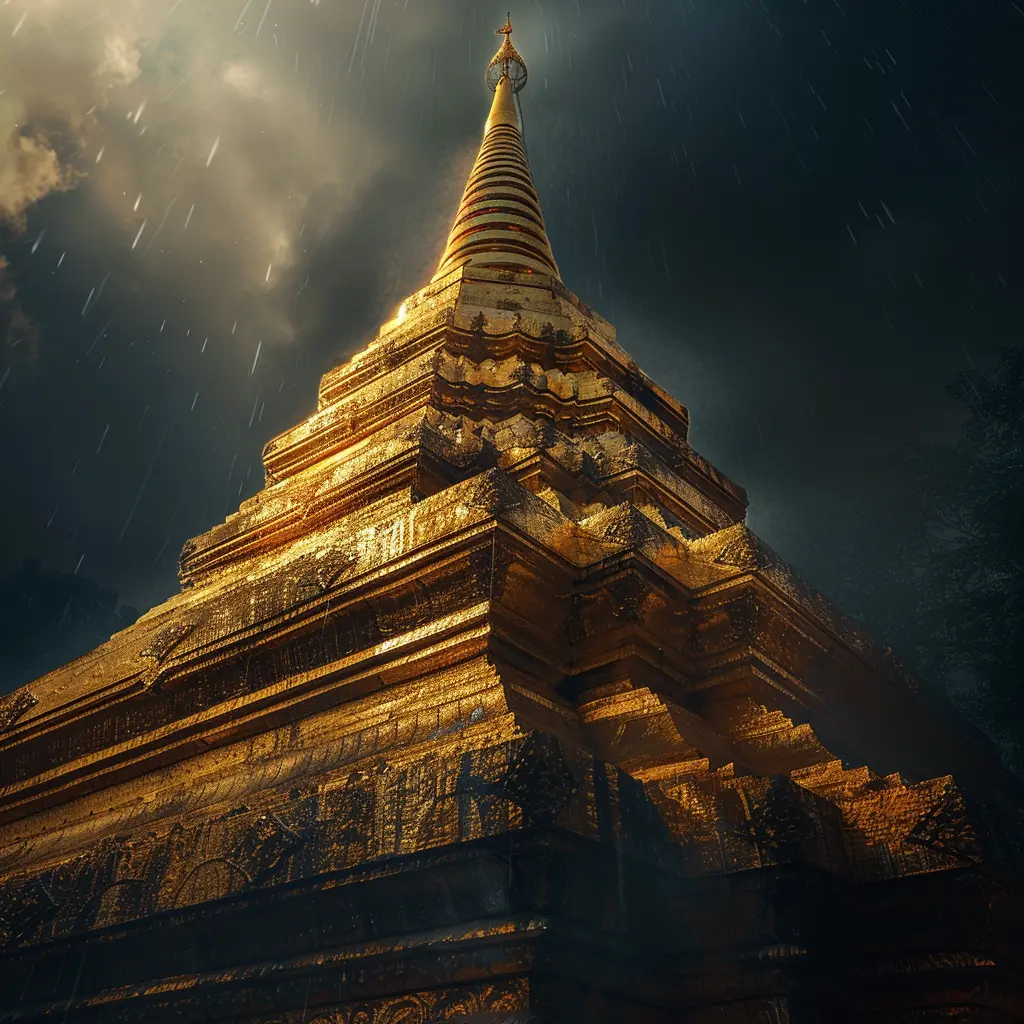
The polished marble courtyard features a massive, gold-plated chedi. It is wrapped in traditional sheets of beaten brass heavily gilded with gold leaf. At this high altitude, the mountain light strikes the gold with a blinding, almost liquid intensity. This brightness shifts dramatically from dawn to dusk.
Surrounding the central spire are four ornate, filigreed golden umbrellas (chhatra), which signify royal protection over the relic. The entire compound operates as a dense sensory engine, designed to jar the mind out of mundane thoughts and into a state of absolute presence.
The Sensory Anatomy of the Cloister
This is not a museum, a scenic overlook, or a casual photography backdrop. It is a centuries-old engine of merit-making operating at the cloud’s edge. Loud and bright, it stands entirely indifferent to the modern metropolis humming far below.