
Key Insights
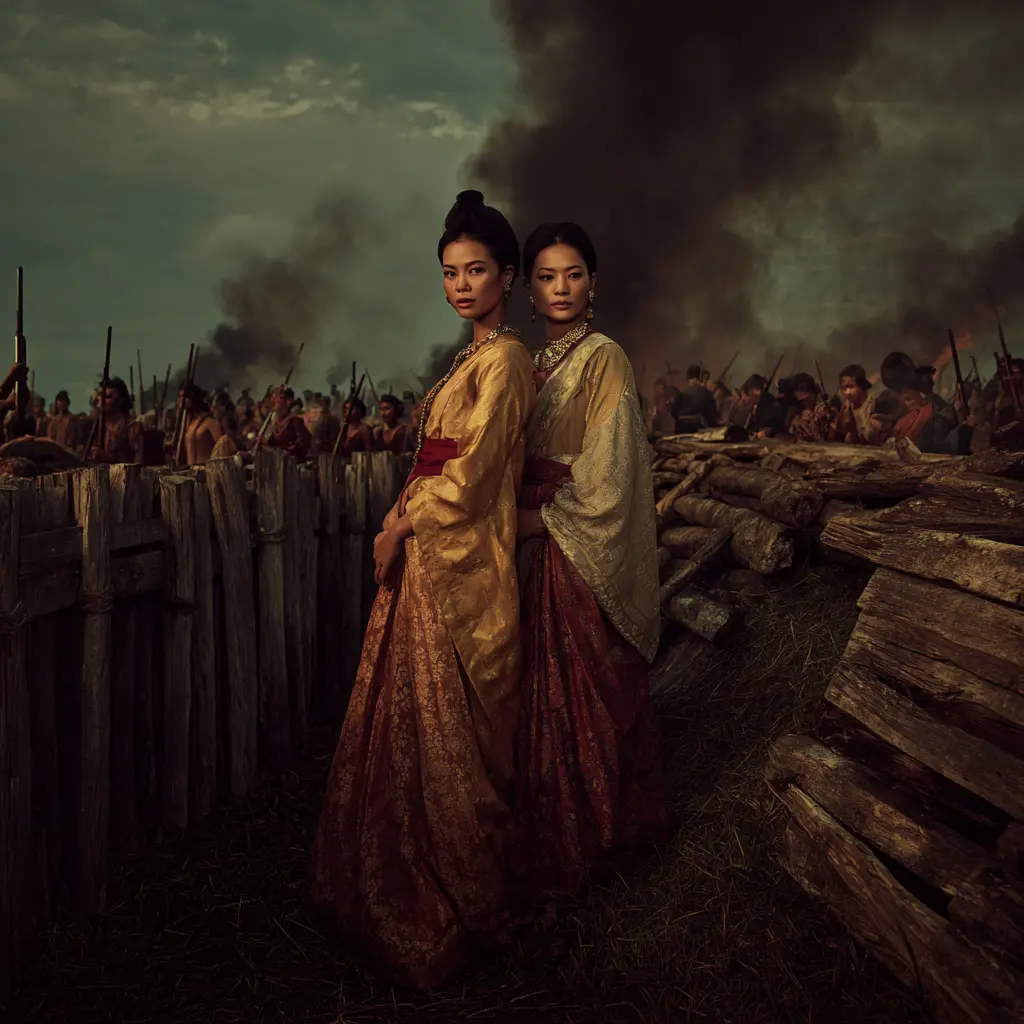
The History of Phuket is defined by the Heroines of Thalang, Chan and Mook, who repelled a massive Burmese invasion in 1785. By disguising women as soldiers, they used tactical ingenuity to defend the island’s strategic tin-rich lands. Their leadership remains a cornerstone of Phuket’s cultural identity and a testament to the resilient spirit of Southern Thailand.
Explore the complete Geopolitical Chessboard topic.
Junk Ceylon: The historical cartographic name used by European mariners for Phuket Island, derived from a Western corruption of the Malay term Ujung Salang (Salang Cape).
Song Phom Mahatlek: The traditional Siamese close-cropped hairstyle worn by male infantrymen, famously adopted by the women of Thalang as a psychological ruse.
Chao Muang: The traditional title for a Siamese provincial governor who held absolute centralised administrative and military authority over his territory.
Konbaung Dynasty: The expansionist Burmese ruling house (1752–1885) that launched the massive, multi-pronged, multi-army invasion of Siam in 1785.
Rattanakosin Kingdom: The era and polity established in 1782 by King Rama I, centring the new Siamese capital along the Chao Phraya River in Bangkok.
Arquebus: An early type of muzzle-loading firearm that preceded the musket, delivered via private maritime networks to aid the Thalang garrison.
Outside Siam’s westernmost timber-and-earthwork ramparts, a Burmese fleet bobbed in the Andaman tides. Its hulls carried 3,000 battle-hardened troops fresh from annexing Arakan. Inside the fort, a dying governor lay silent. His impending death left the island’s vast tin deposits entirely unguarded.
The defence of Junk Ceylon – the contemporary European cartographic name for Phuket – did not fall to a brilliant Bangkok general. Instead, two aristocratic sisters stepped into the vacuum. They transformed a desperate siege into a masterclass of psychological warfare and strategic resource denial.
This architectural and geopolitical guide explores the 1785 defence of Thalang during the Nine Armies War. It examines how local resource networks and structural deceptions ultimately preserved Siam’s maritime frontier.
The Origin Story of Junk Ceylon
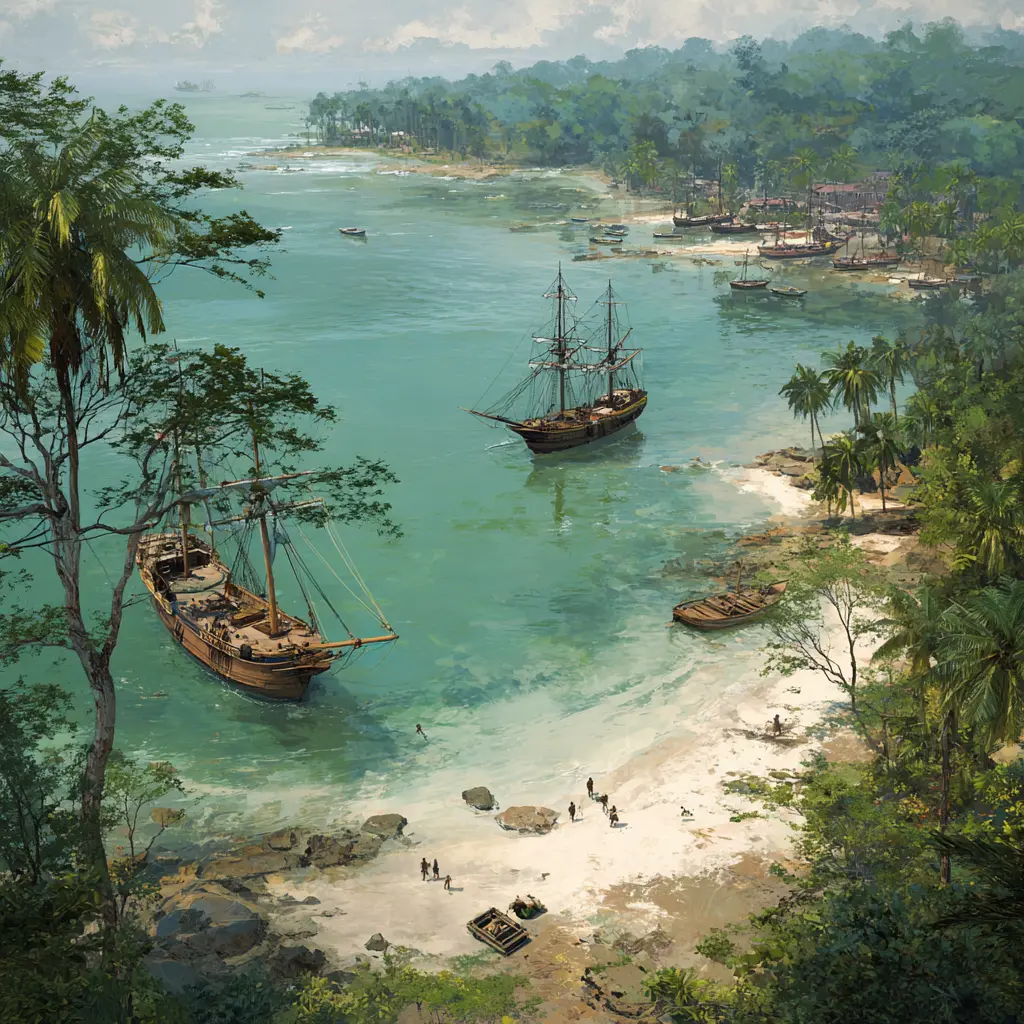
Long before Phuket evolved into a landscape of modern luxury retreats, it existed in the European consciousness as Junk Ceylon. This cartographic name was a distortion of the Malay Ujung Salang, meaning Salang Cape.
The island was a wild, malaria-prone territory. Yet, its unique geography made it an unavoidable node for global maritime commerce.
Situated at the northern mouth of the Malacca Straits, it served as a crucial maritime sanctuary. Here, sailing ships could safely careen their hulls. Crews also replenished fresh water stores while awaiting the shifting winds of the Indian Ocean monsoons.
The primary driver of the island’s geopolitical gravity was its shallow-water alluvial tin mines. In the late 18th century, tin was a high-value commodity. The British East India Company coveted it for industrial preservation.
Furthermore, merchants traded the metal heavily with Qing Dynasty China. The Chinese utilised it for ritual joss paper and metal alloys.
The Konbaung Blitzkrieg and the Rattanakosin Vulnerability
The year 1785 was an era of profound vulnerability for Siam. The old capital of Ayutthaya had been utterly sacked by the Burmese Konbaung Dynasty in 1767, ending a four-century golden age. Though the country was unified under King Taksin, his reign ended in a palace coup.
By 1782, King Rama I had just ascended the throne, establishing the new Rattanakosin Kingdom along the mudflats of the Chao Phraya River in Bangkok. The state administration was raw, the treasury depleted, and the army exhausted.
Sensing this fragility, King Bodawpaya of Burma launched the Nine Armies War. This multi-pronged invasion aimed to fracture Siam across five distinct operational fronts. The southern prong, commanded by Maha Thiri Thihathu, swept down the Kra Isthmus. This strategic maneuver cut off Bangkok completely from its wealthy southern tributary states.
A specialised amphibious strike force of 3,000 troops advanced specifically to capture Junk Ceylon, enslave its population, and seize the lucrative tin revenues.
The Power Vacuum and the Prison Paradox
When the Burmese vanguard struck the mainland territory of Phang Nga, the shockwaves triggered an immediate administrative collapse on Phuket. The Chao Muang (Governor) of Phuket died suddenly from illness amidst the opening skirmishes.
Because the Siamese provincial system centred entirely on the governor’s persona, his death left the defences leaderless. Furthermore, the formal garrison comprised only a few hundred provincial soldiers. The remaining 14,000 residents were farmers, fishermen, and tin miners, completely unequipped for total war.
Leadership was unexpectedly seized by Than Phu Ying Chan, the widow of the deceased governor, and her younger sister, Mook. Lady Chan possessed deep local prestige and an intimate understanding of the island’s factional politics.
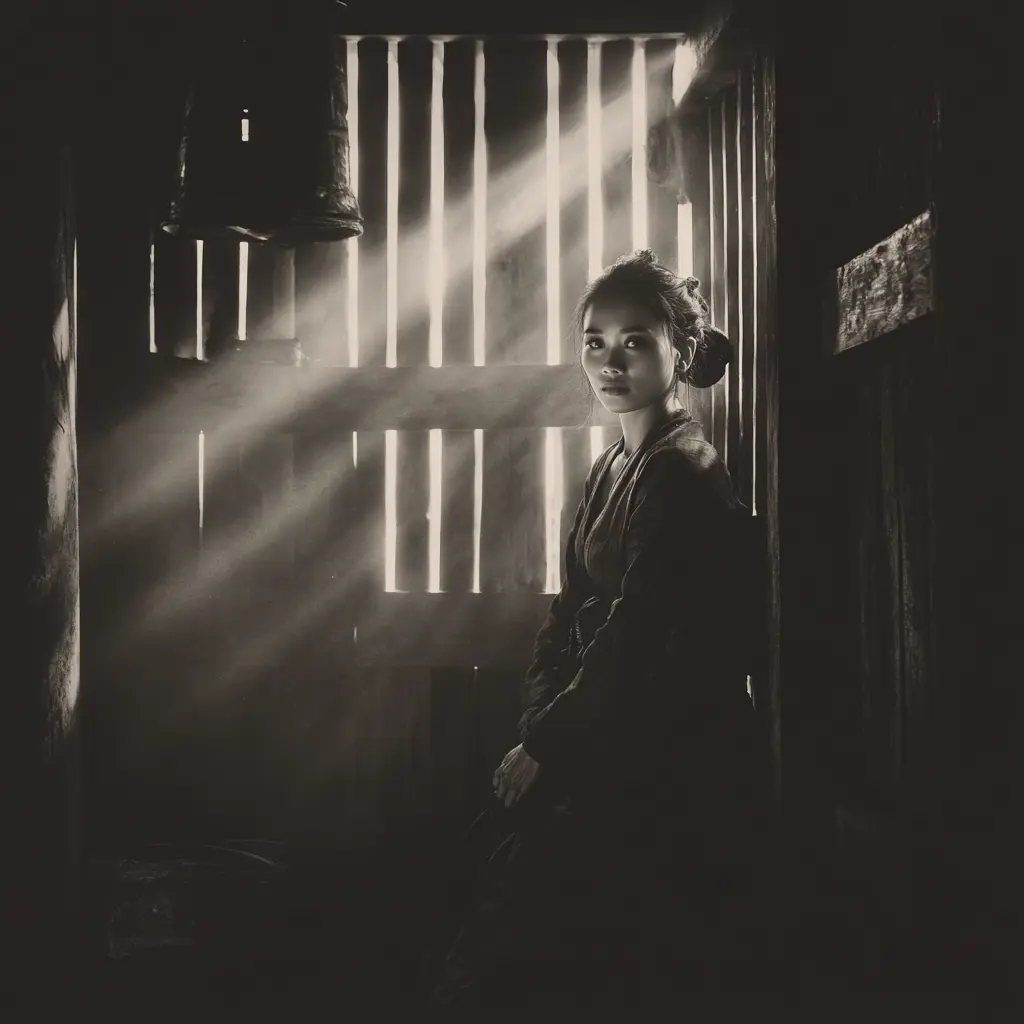
Local archives reveal a messy twist. Shortly before the invasion, authorities arrested Lady Chan and placed her in a Thalang holding cell. This detention stemmed from internal administrative disputes. Competing mainland families challenged her over tax revenues and lucrative tin monopolies.
As the Burmese fleet appeared off the coast, local officials realised Chan was the only figure with the authority to command the population. They released her from her cells out of pure survival instinct.
Heritage Highlight: The Phalanx of the Bamboo Musketeers
Facing a 3,000-man professional army with fewer than 500 able-bodied men, Lady Chan implemented a brilliant psychological ruse. She targeted the mind of the Burmese commander directly.
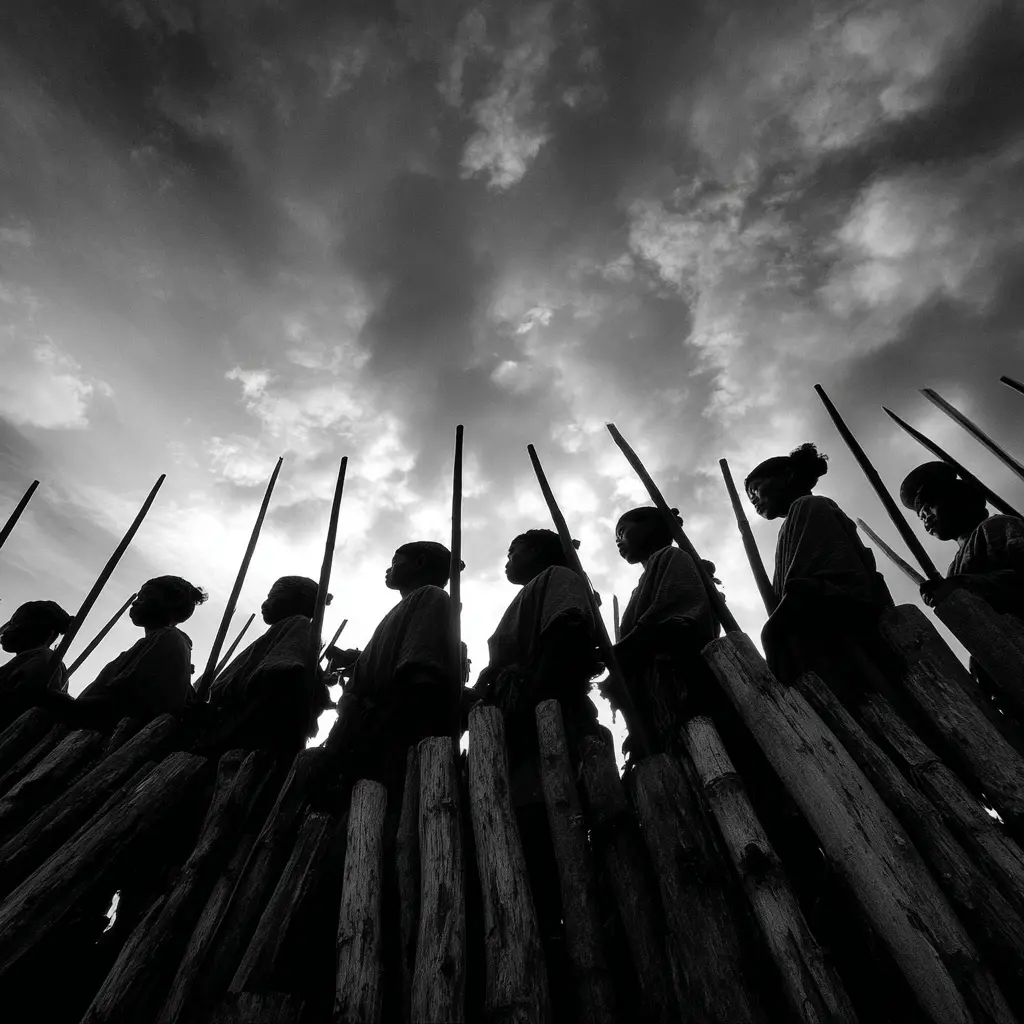
Specifically, she ordered hundreds of civilian women inside the Thalang fort to crop their hair short. They adopted the Song Phom Mahatlek style. This close-crop cut was traditionally worn exclusively by Siamese male infantrymen.
The women donned men’s military tunics and carried long pieces of local bamboo that had been carved, hollowed, and charred over open fires to mimic heavy European muskets. Chan organised a rigorous schedule of deceptive maneuvers along the timber and earthwork ramparts. Throughout the day, these disguised battalions paraded along the walls in plain view of the Burmese scouts.
Once out of sight, they would swap banners, alter their uniforms, and march past again. This illusion convinced the invaders that Bangkok had somehow funnelled thousands of heavy reinforcements into the Thalang garrison via inland jungle tracks.
The Logistical Siege and the Scorched Earth
The Burmese forces landed on the white sands of Nai Yang Beach, utilising shallow-draft boats to navigate the inland river networks toward the fortified town of Thalang. The invaders quickly surrounded the fort, digging trenches just beyond the range of the town’s few heavy brass cannons.
However, the Burmese lacked heavy siege artillery; they had anticipated a rapid, predatory raid rather than a prolonged investment of a fortified position.
Lady Chan countered the enemy’s numerical superiority with a scorched-earth policy. She ordered the immediate evacuation of all coastal settlements, directing civilians to destroy any standing rice crops, burn outlying granaries, and slaughter or drive off livestock.
When the Burmese advanced, they found a barren landscape devoid of forage. They were forced to rely entirely on the rations carried by their fleet, putting their campaign on a strict survival clock.
The Francis Light Connection
The defence was augmented by an English country captain and private merchant named Francis Light. Light, who spoke fluent Thai and Malay, had traded in Junk Ceylon for over a decade and was acting as an intelligence asset for the British East India Company.
Light used his maritime network to send Lady Chan early warning dispatches detailing the exact size and trajectory of the Burmese fleet.
More importantly, Light delivered a critical shipment of European flintlocks and arquebuses directly to the Thalang garrison. For 25 gruelling days, the Burmese launched infantry assaults against the fort. However, disciplined volleys from Light’s muskets and intermittent blasts of grapeshot from the ramparts repelled them.
Inside the Burmese trenches, starvation, dysentery, and malaria decimated the invading forces.
On March 13, 1785, the Burmese commander believed the fort was too heavily garrisoned to break. Consequently, he ordered a full retreat. His troops boarded their remaining ships and sailed back toward the Mergui Archipelago.
Realpolitik and the Aftermath
The defence of Thalang preserved Siam’s western maritime border while the central government fought for survival. When news of the victory reached King Rama I, he elevated both sisters into the highest Siamese nobility. Lady Chan was granted the title Thao Thep Kasattri, meaning “Divine Warrior of the Kingdom.”
Meanwhile, Lady Mook became Thao Si Sunthon, translating to “Illustrious Grace.” The human and economic cost to the island, however, was severe. The scorched-earth strategy left the agricultural landscape devastated.
Crowded, unsanitary conditions inside the fort during the twenty-five-day siege sparked a severe malaria outbreak. This epidemic claimed hundreds of additional lives long after the smoke cleared.
To add to the woe, hundreds of coastal residents captured during the initial Burmese landings were carried away into domestic slavery in Burma. The vulnerability exposed by the siege altered the regional balance of power. Francis Light recognised a critical weakness. The Siamese court lacked the naval infrastructure to protect its southern dependencies consistently.
Light turned his attention southward. Just one year later, in August 1786, he used his influence strategically. He negotiated the lease of Penang Island from the Sultan of Kedah for the East India Company.
Penang quickly eclipsed Junk Ceylon. It became the premier British commercial and naval port in the northern straits. This transition permanently shifted the economic centre of gravity away from Phuket’s rich tin fields.
The Modern Experience
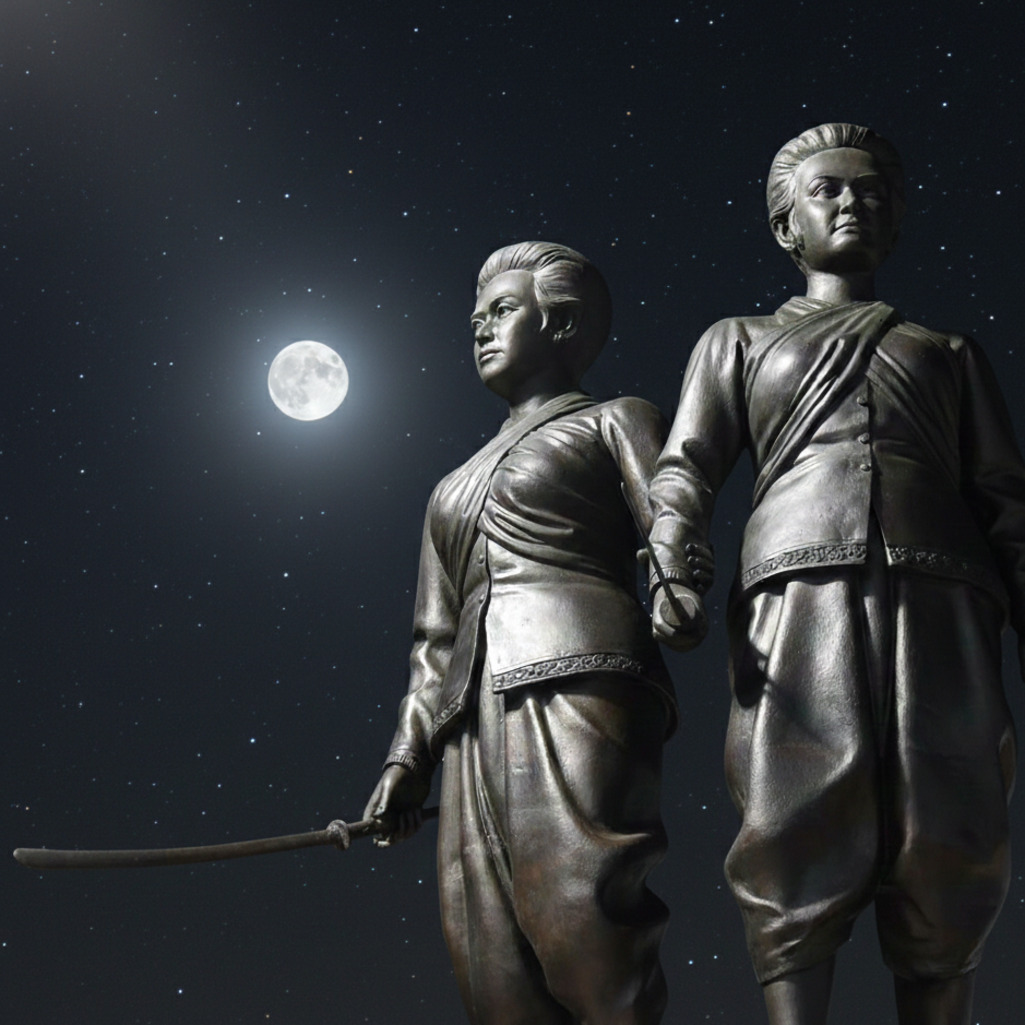
The memory of the 1785 siege remains a central component of Phuket’s local identity, transitioning from an improvisational survival action by a localised elite into a foundational narrative of provincial pride.
Visitor Insights for the Discerning Traveller
For those wishing to trace the physical parameters of the 1785 conflict, the journey begins at the Heroines Monument, located at a prominent traffic roundabout in central Phuket. The bronze statues depict the sisters in traditional late-Ayutthaya period garments, their hair cropped short in the wartime style.
The Heritasian Summary
The preservation of Thalang in 1785 demonstrates the power of psychological strategy over material superiority. By understanding the logistical limits of their invaders and using structural deception, Lady Chan and Lady Mook secured Phuket’s position within the emerging Thai state.
To discover how the shifting tides of the Andaman trade affected neighbouring European trade settlements in the Malacca Straits, read our archival analysis of The Maritime Node: A Geopolitical History of Penang.