
Key Insights
Moving past standard luxury clichés, The Oriental functioned as a critical Destination Node where empires and local sovereignty collided.
This long-form analysis deconstructs how Siam weaponised neoclassical architecture as a defensive shield against 19th-century colonisation, curated an exotic literary mythos, and served as a crucial post-war intelligence hub for American Cold War containment
Destination Node: A highly curated, socio-political friction point where global empires, local sovereignty, and intelligence networks intersect, rather than a passive site of leisure.
Sovereignty Shield: The strategic deployment of Western modernisation, technology, and architectural styles by the Siamese Crown to project civilizational parity and deter European colonial invasion.
Bowring Treaty (1855): An unequal treaty forced upon Siam by Great Britain that abolished state trade monopolies, capped tariffs, and ignited a hyper-capitalist maritime rush in Bangkok.
Architectural Translation Device: A structural skin – such as the neoclassical Authors’ Wing – used to communicate capability, modernity, and political stability to Western envoys in their own aesthetic language.
Western Orientalism: The literary and cultural practice of flattening, romanticising, and packaging complex Eastern realities into exotic, manageable narratives for Western consumption.
Monetisation of Provenance: The corporate process of scrubbing a site’s volatile, espionage-laden, or politically fractured history and repackaging it as clean, hyper-luxurious “Heritage”
To step into the Authors’ Wing of the Mandarin Oriental, Bangkok, is usually framed as an act of pure historical romanticism. Standard luxury histories treat the property like an expensive vacuum seal – a space of isolated interiority, decoupled from the world, pretending the champagne flowed simply because a succession of visionary managers possessed an impeccable work ethic.
This narrative tradition reduces over a century of civilisational friction to a lazy laundry list of celebrity guests, high-society gossip, and the evolution of afternoon tea.
In reality, the Oriental was never a passive repository for luxury. It was engineered as a Destination Node – a highly curated friction point where global empires, local sovereignty, intelligence networks, and soft power collided.
Siam (Thailand) famously stood as the only Southeast Asian nation to escape European colonisation. The Oriental was the literal living room where that delicate, dangerous geopolitical dance was choreographed. It was a controlled contact zone.
It managed the anxieties and ambitions of both European imperialists and Siamese monarchs. Over a century, this space mutated from a maritime logistics outpost into a sovereign shield. It later became a Cold War intelligence hub. Finally, it transformed into a corporate sanctuary of “Intellectual Luxury”.
Phase I: The Sovereignty Shield (1876–1890s)
The birth of The Oriental was not sparked by a passion for hospitality; it was the direct consequence of asymmetric warfare and maritime trade extraction.
In 1855, Great Britain forced the signing of the Bowring Treaty. This document completely shattered Siam’s state monopoly on foreign commerce. It slashed import tariffs to a flat 3%. Furthermore, it granted extraterritoriality to British subjects.
Almost overnight, Bangkok was thrust into a hyper-capitalist maritime wild west. Western shipping firms, diplomats, and merchants rushed down the Chao Phraya River to extract the region’s teak, rice, and tin.
Yet, Bangkok lacked the basic infrastructural scaffolding of a Western colony. It was a river-bound city with no roads and no Western-style banks. European captains had nowhere to convalesce. This was crucial after navigating the treacherous sandbar at the mouth of the Gulf of Siam.
The Logistics of Luxury
The hotel solidified in the 1870s under two Danish mariners: Captain James Lynch and, crucially, Hans Niels Andersen. Andersen was not a hotelier. He was a brilliant logistical mastermind who later founded the East Asiatic Company. This became Denmark’s massive global trading conglomerate.
For Andersen, a hotel was a critical piece of port infrastructure. He needed a node to house his captains, entertain Siamese nobility, and anchor his corporate empire right on the water. In 1887, Andersen opened the first purpose-built, luxury iteration of The Oriental in the Bang Rak district.
This was the designated European quarter. It was the area where foreign consulates and shipping docks were concentrated.
Neoclassicism as a Defensive Weapon
This is where the Siamese elite executed a masterful counter-move. European empires used gunboat diplomacy to swallow neighbouring Burma and French Indochina. In response, King Chulalongkorn weaponised modernisation as a shield.
The Siamese court recognised a crucial reality. If they appeared civilised to the West, European powers would lose their primary moral justification for invasion.
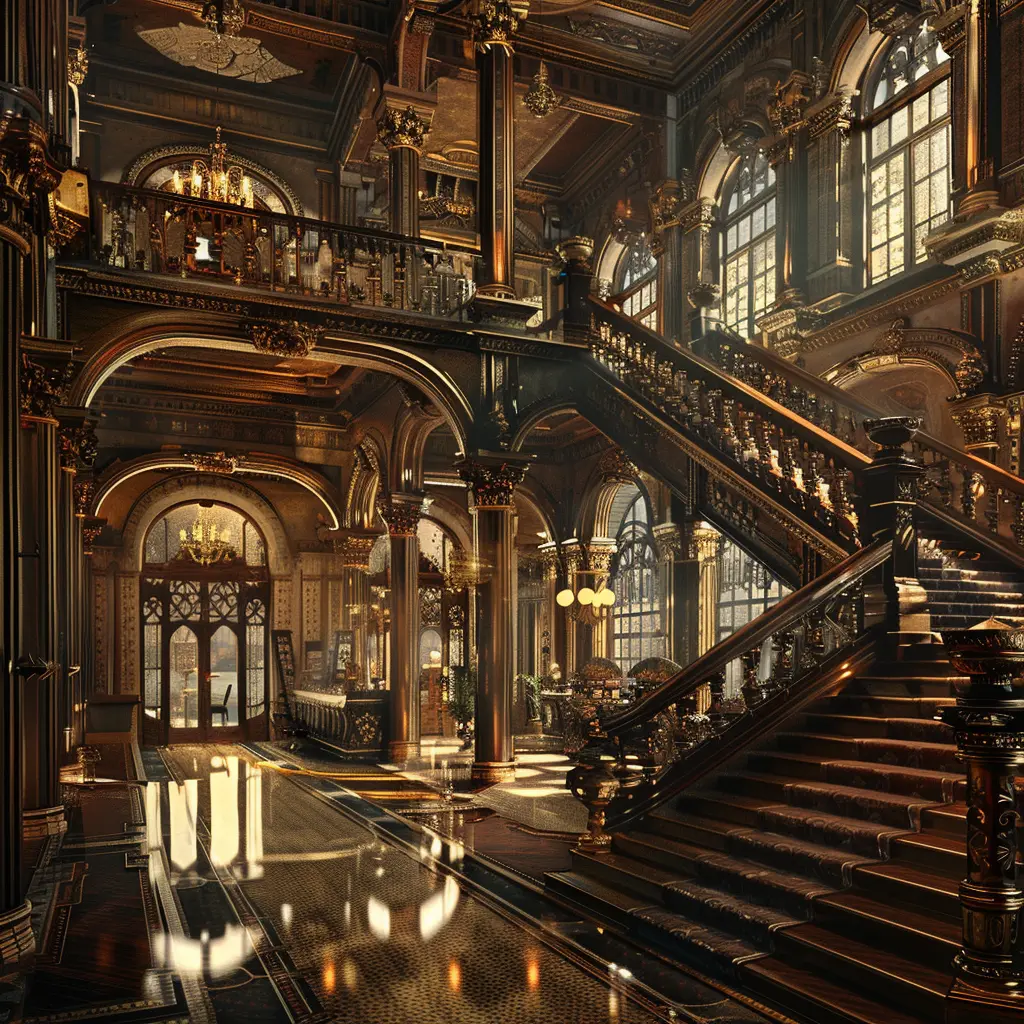
Andersen hired Italian architects Cardu & Rossi to design the 1887 building (the core of today’s Authors’ Wing). They delivered a grand, symmetrical, neoclassical palace featuring a sweeping staircase and a Victorian ballroom.
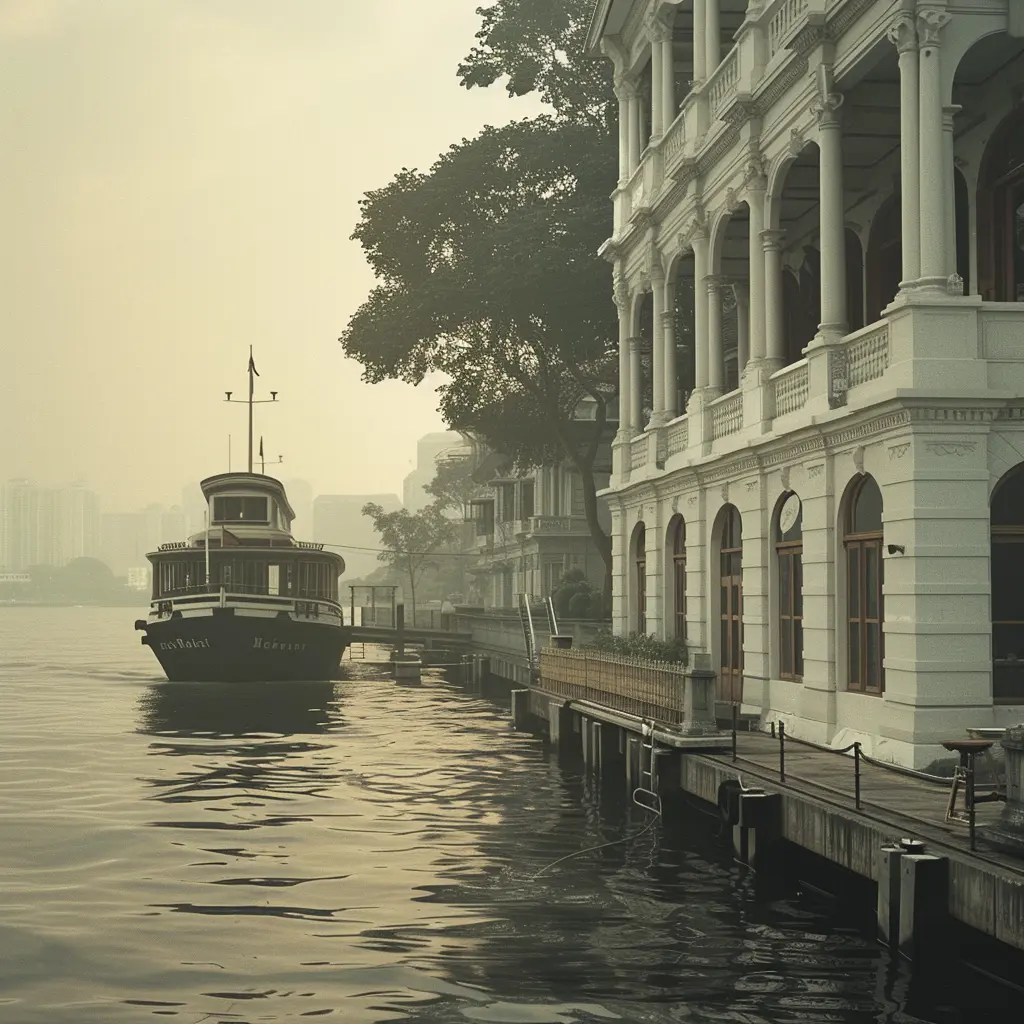
This architecture functioned as a profound translation device. When a Western diplomat stepped off a steamship onto the hotel’s private pier, they were not greeted by a chaotic, “backward” outpost. They walked into a structure that mirrored the grand hotels of London, Paris, or Vienna.
It was Siam’s spatial declaration of parity: We speak your architectural language. We understand your systems. We are already modern.
The 1891 Activation: The Tsar’s Suite
The ultimate test of this node occurred in 1891 during the grand Asian tour of Crown Prince Nicholas of Russia. The future Tsar Nicholas II was the royal guest of King Chulalongkorn. Rather than merely hosting him at the palace, the king effectively requisitioned The Oriental. He upgraded its interiors to imperial standards to house the entire Russian entourage.
This was an aggressive balance-of-power play. By forming a highly visible alliance with the Russian Empire on the neutral ground of The Oriental, Siam sent a clear message to the British and French fleets hovering in the Gulf: If you touch us, you answer to the Romanovs. The hotel was the literal backdrop for the diplomatic chess match that preserved Thai independence.
Phase II: The Narrative Machine (1910s–1930s)
As the existential threat of direct military colonisation stabilised into the 20th century, the node shifted its primary output from sovereignty protection to narrative production.
The Oriental ceased being just a diplomatic shield and became an exotic dream factory for the West, orchestrated by three literary figures: Joseph Conrad, Somerset Maugham, and Noël Coward.
In standard histories, these writers are celebrated with plush suites and framed portraits as romantic wanderers. In structural terms, they were the chief cartographers of Western Orientalism.
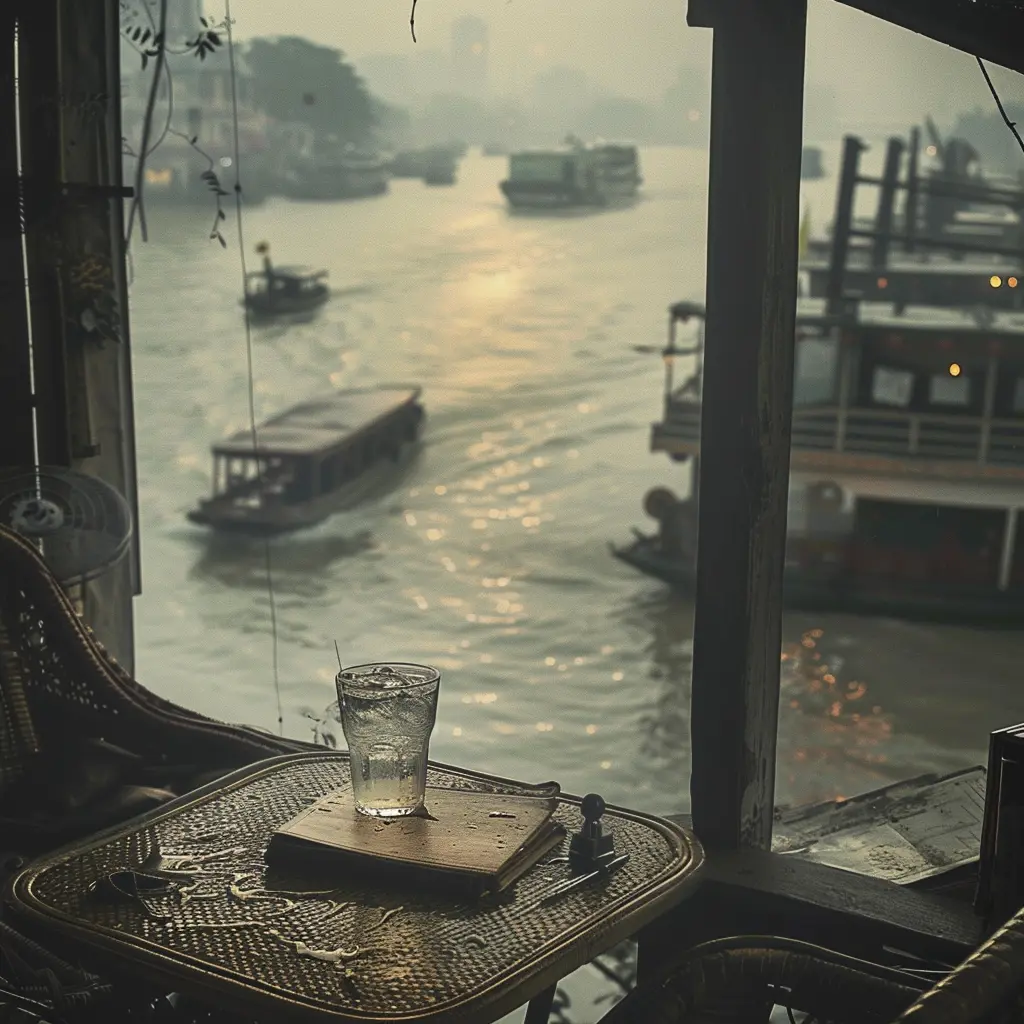
The spatial design of the hotel allowed these authors to sit in fan-cooled safety on the riverfront verandah, sipping gin and tonics while looking out at the muddy traffic of the Chao Phraya. They were physically in the East, but entirely insulated from it. From this precise vantage point, they manufactured the literary myths that defined the region for generations of Western consumers.
This literary era created the thematic scaffolding that would dictate the hotel’s next historical mutation. The writers created an infrastructure of desire; they ensured that future Western travellers did not want a sterile, modern hotel. They wanted to live inside a Somerset Maugham novel.
Phase III: The Intelligence Hub (1945–1960s)
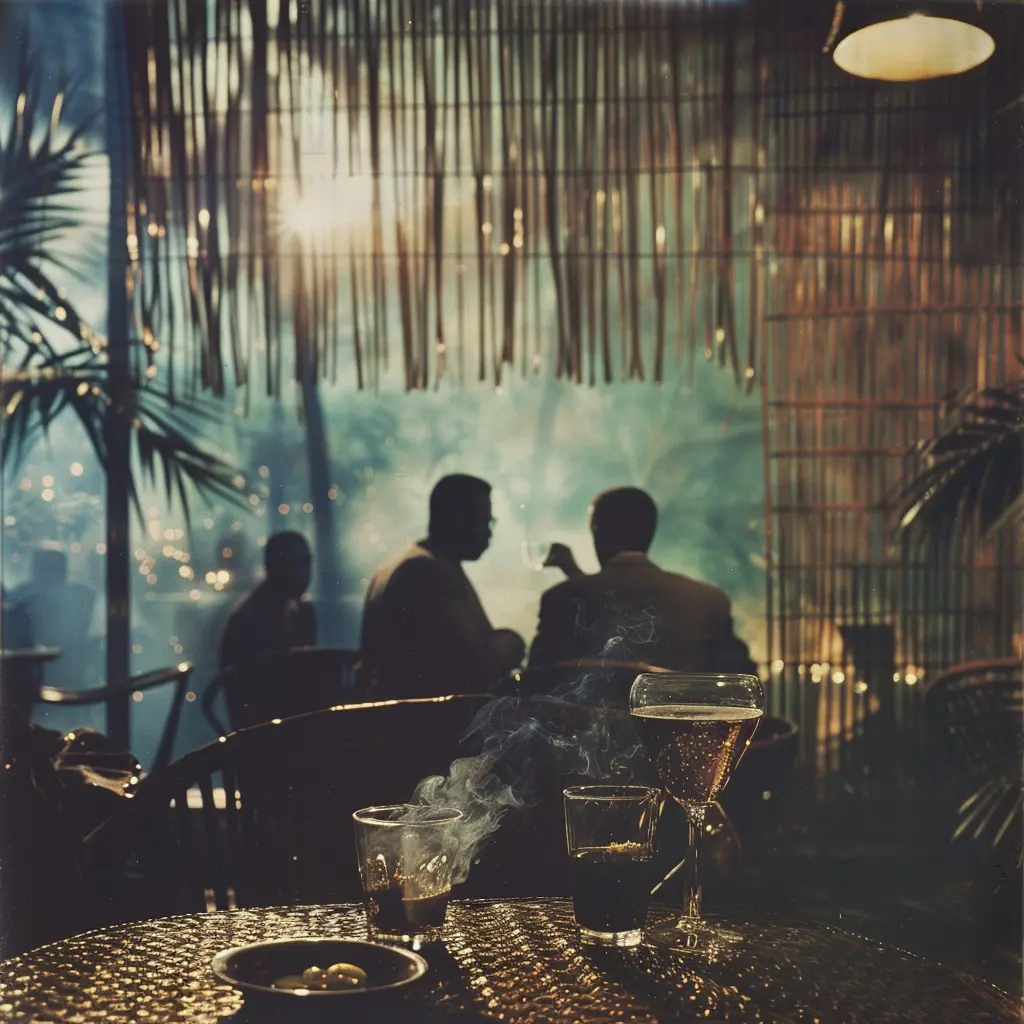
The post-WWII reconstruction of The Oriental is not a story of interior design. Instead, it is a story of Cold War containment. It documents the deliberate fabrication of an idealised Southeast Asian aesthetic.
In 1945, the hotel was a physical wreck. It had spent four years requisitioned by the Imperial Japanese Army, followed by a brief stint as a transit centre for liberated Allied prisoners of war. It was structurally compromised, financially bankrupt, and stripped of its pre-war European staff.
Then came the syndicate that bought it for a song – and at the absolute centre of that syndicate was Jim Thompson.
The $250 Syndicate
To understand why Thompson bought into a ruined Bangkok hotel, strip away the romantic myth of the “eccentric silk merchant.” In 1945, Jim Thompson was an operative for the Office of Strategic Services, the wartime precursor to the CIA.
Arriving in Bangkok on Japan’s surrender day to set up the OSS Siam desk, Thompson recognised a massive shift. Post-war Bangkok was about to become the primary geopolitical staging ground for American interests. This happened just as old European empires like British Malaya and French Indochina began to fracture.
In 1946, Thompson partnered with a highly specific, politically wired consortium to buy the hotel for a nominal fee. The group included:
Their true currency was leverage. Thompson and Krull understood that a destabilised region desperately needed a neutral zone of absolute Western psychological comfort. If American diplomats, regional power brokers, and foreign correspondents were going to navigate the chaotic decolonisation of Southeast Asia, they needed a secure, atmospheric base of operations.
Spatial Weaponry: The Bamboo Bar and The Normandie
Under Krull and Thompson, specific spaces within the hotel were re-engineered to serve as the mixing bowls for regional intelligence and media strategy.
The Bamboo Bar (Est. 1953)
Before it was a world-famous jazz institution, the Bamboo Bar was the high-stakes clearinghouse for the region’s secrets. Positioned directly on the riverfront, it became the default living room for the Foreign Correspondents Club of Thailand (FCCT), CIA assets, deep-cover operatives, and arms dealers.
Because Thailand remained a staunchly pro-Western, anti-communist anchor while Vietnam, Laos, and Cambodia descended into civil war, the Bamboo Bar was where stories were broken, coups were rumoured, and operational intelligence was traded over gin and tonics. It was an environment where the “bamboo curtain” felt safely contained by the steady rotation of a ceiling fan.
The Normandie Grill (Est. 1958)
Perched atop the newly constructed Garden Wing, this was Bangkok’s first fine-dining French restaurant. It was an audacious spatial statement: a piece of high-Parisian luxury overlooking the working-class highway of the Chao Phraya River.
It served a distinct geopolitical purpose, providing Western diplomats with a vantage point of total structural superiority from which to observe the city they were attempting to manage.
The Construction of Exotic Materiality
Perhaps Thompson’s most profound impact on the node was visual. As he built his Thai Silk Company, he used The Oriental as his primary showroom. He did not just sell fabric; he sold a curated, flattened version of “Siam” that was highly palatable to Western luxury consumers, lining the hotel’s interiors with heavy raw silks, local antiquities, and stylised Southeast Asian motifs.
The Geopolitical Subtext: By branding Thailand as an ancient, exquisite, and deeply artistic kingdom through textiles and design, Thompson built a soft-power shield. He changed the Western imagination. He framed Thailand not as a vulnerable third-world state ripe for communist subversion. Instead, he presented a sophisticated civilisation that the West had a moral duty to protect.
When Thompson famously vanished without a trace in the Malaysian Cameron Highlands in 1967, he left behind a transformed hotel. It successfully transitioned from a ruined post-war relic. Ultimately, it became the undisputed nerve centre of expatriate power in Southeast Asia.
Phase IV: The Corporate Sanctuary (1974–Present)
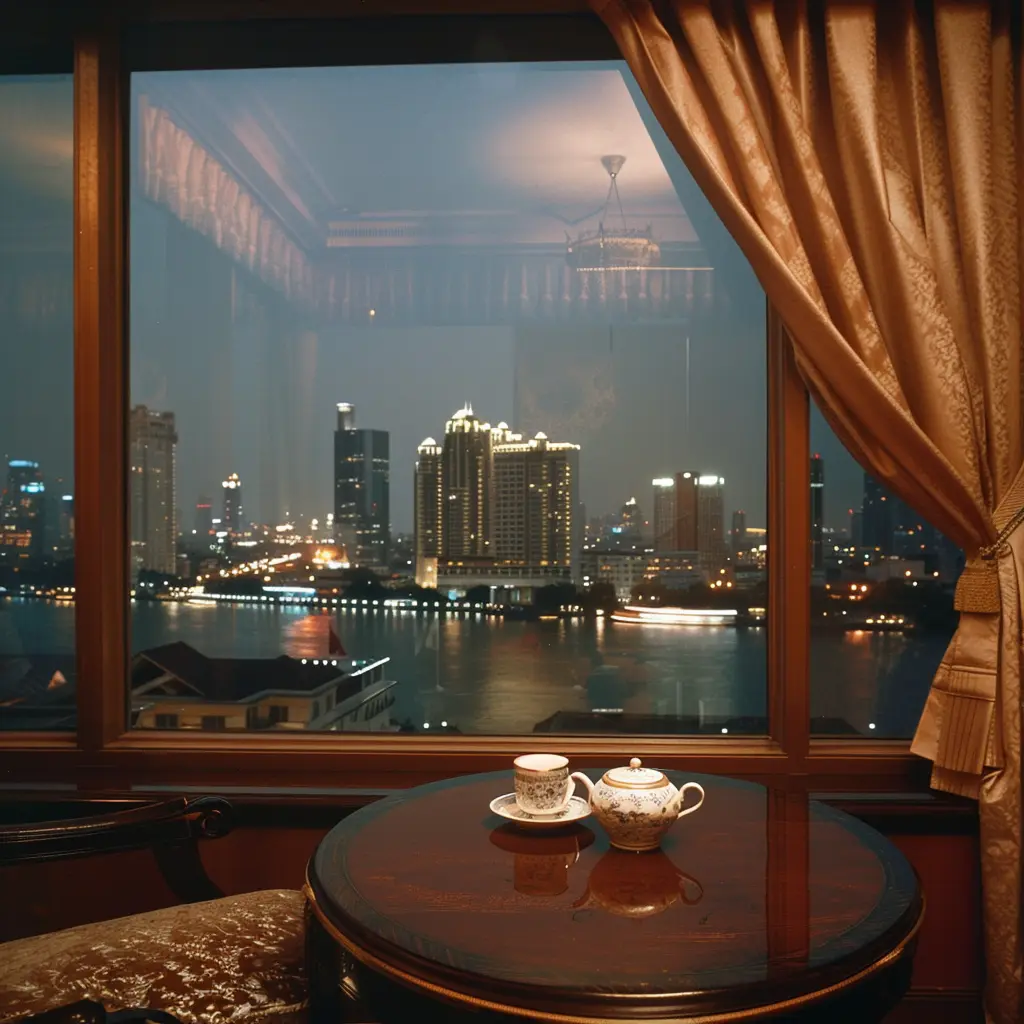
Every great story of a raw, dangerous destination node eventually ends the same way: with the arrival of institutional capital.
By the early 1970s, the raw, espionage-fueled energy of Bangkok was changing. The Vietnam War was drawing to a close, and the city was transitioning from a military staging ground into a financial and tourism powerhouse. The individual eccentrics – the Jim Thompsons and Germaine Krulls—could no longer manage the sheer scale of global capital.
In 1974, the hotel merged with Hong Kong’s Mandarin International Hotels, marking the birth of the modern Mandarin Oriental Hotel Group.
The Monetisation of Provenance
The corporate era executed a brilliant narrative pivot. It took the bloody, chaotic, spy-ridden, empire-clashing history of the hotel. After scrubbing away the geopolitical dirt, the corporate owners repackaged this raw history as “Heritage.”
Sovereignty Defence Buffer ──> “A timeless bastion of classic Siamese hospitality”
Insulated Literary Orientalism ──> “The historic inspiration for literary geniuses”
OSS/CIA Intelligence Gathering ──> “The historic home of the legendary Jim Thompson”
Deep, Localised Surveillance Networks ──> “Clairvoyant, intuitive butler service that anticipates every need”
The destination node had completed its evolution. It began as a logistics port and became a sovereignty shield. It transformed into an intelligence hub. Finally, it settled into its current form: an elite sanctuary of Intellectual Luxury. Here, the ghosts of empires past are gracefully included in the price of the room
Deconstructing the history of this iconic property requires moving past the glossy, vacuum-sealed marketing of modern luxury and placing it back into the volatile current of regional history.
The hotel’s evolution from a rough-hewn mariners’ lodge to a high-stakes diplomatic chessboard is part of a much larger, multi-layered narrative of local spatial agency.
This single riverfront vantage point offers a microscopic lens into a much wider phenomenon explored in our comprehensive guide to Bangkok’s architectural and cultural heritage a raw, unflattened look at how the city’s built environment consistently weaponised design, resisted colonial sanitisation, and preserved its autonomy at the hyper-kinetic crossroads of global empires.
Experience the Legend Firsthand
The Mandarin Oriental, Bangkok, is not just a destination; it is the ultimate anchor point of the city’s complex heritage. To immerse yourself in the unmatched elegance and storied past of this historic riverfront landmark, reservations can be made via Trip.com.