
Key Insights
Dim sum originated not in imperial palaces, but in the humble 19th-century Guangdong teahouses catering to dockworkers and labourers.
Along the mist-shrouded Pearl River in Guangzhou, workers gathered over cheap tea and warm pork buns—a simple daily ritual known as “one cup, two buns”—forging the vibrant, community-driven culinary tradition enjoyed around the world today.
Yum Cha: The Cantonese cultural ritual of drinking hot tea alongside an array of small, savoury dishes. Originally a morning ritual for labourers, it evolved into a prolonged social tradition enjoyed across generational dining tables.
Yi Taak Bou: Modest roadside resting booths established along Guangdong’s trade routes during the early 19th century. They served cheap tea and coarse steamed buns to weary coolies seeking basic physical sustenance.
Cha Lau: Multi-story, ornate urban teahouses designed to cater to wealthy merchants, scholars, and guild leaders. Intense commercial competition among these venues drove chefs to transform basic street snacks into refined dim sum.
Har Gow: A translucent wheat-starch dumpling filled with seasoned river shrimp and young bamboo shoots. Widely considered the ultimate benchmark of a dim sum chef’s technical prowess, its skin requires precise folding and steaming.
Siu Mai: An open-topped dumpling filled with hand-chopped pork shoulder, fresh shrimp, and rehydrated shiitake mushrooms. It is wrapped in a paper-thin lye-water egg dough and crowned with crab roe for a distinct textural snap.
Nanyang: The historical Chinese geopolitical term translating to “Southern Ocean,” referring to maritime Southeast Asia. This region became the primary destination for southern Chinese migrants who transplanted teahouse culture into Malaya and Siam.
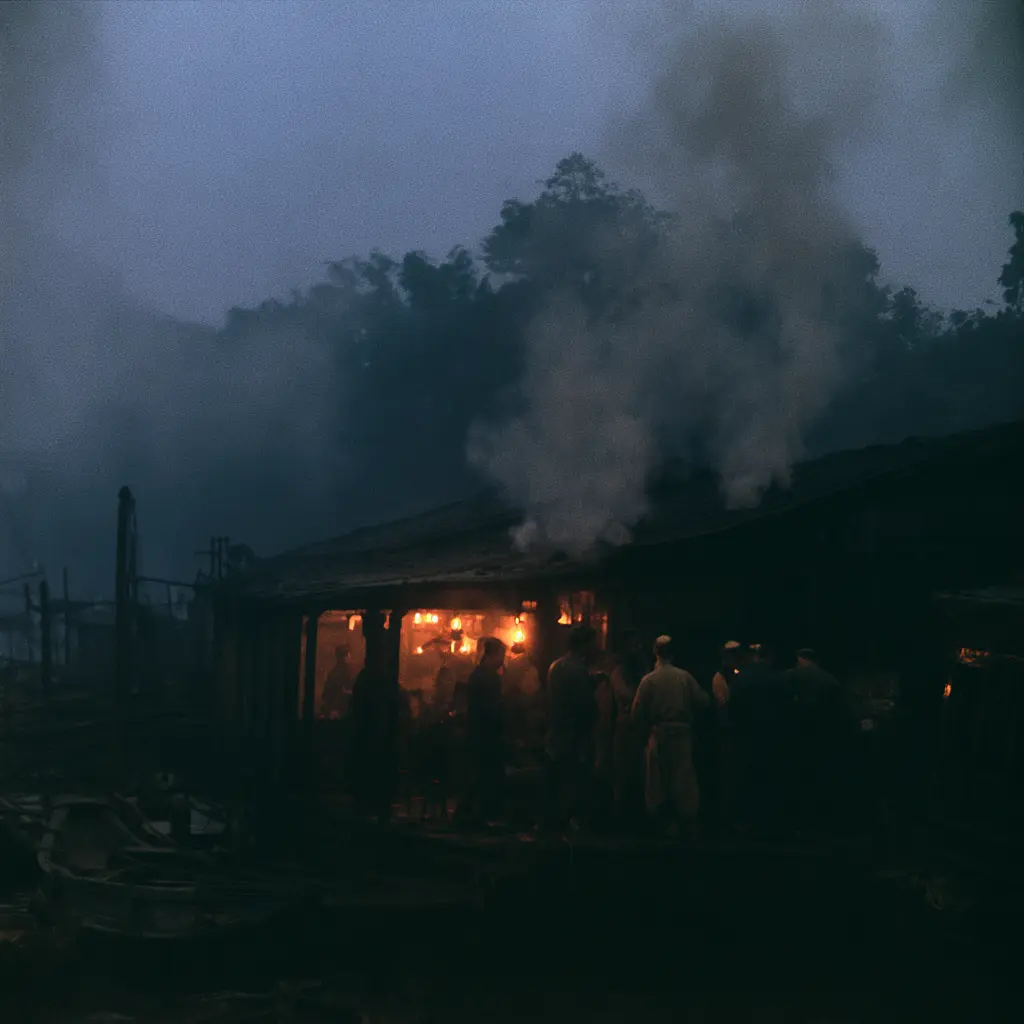
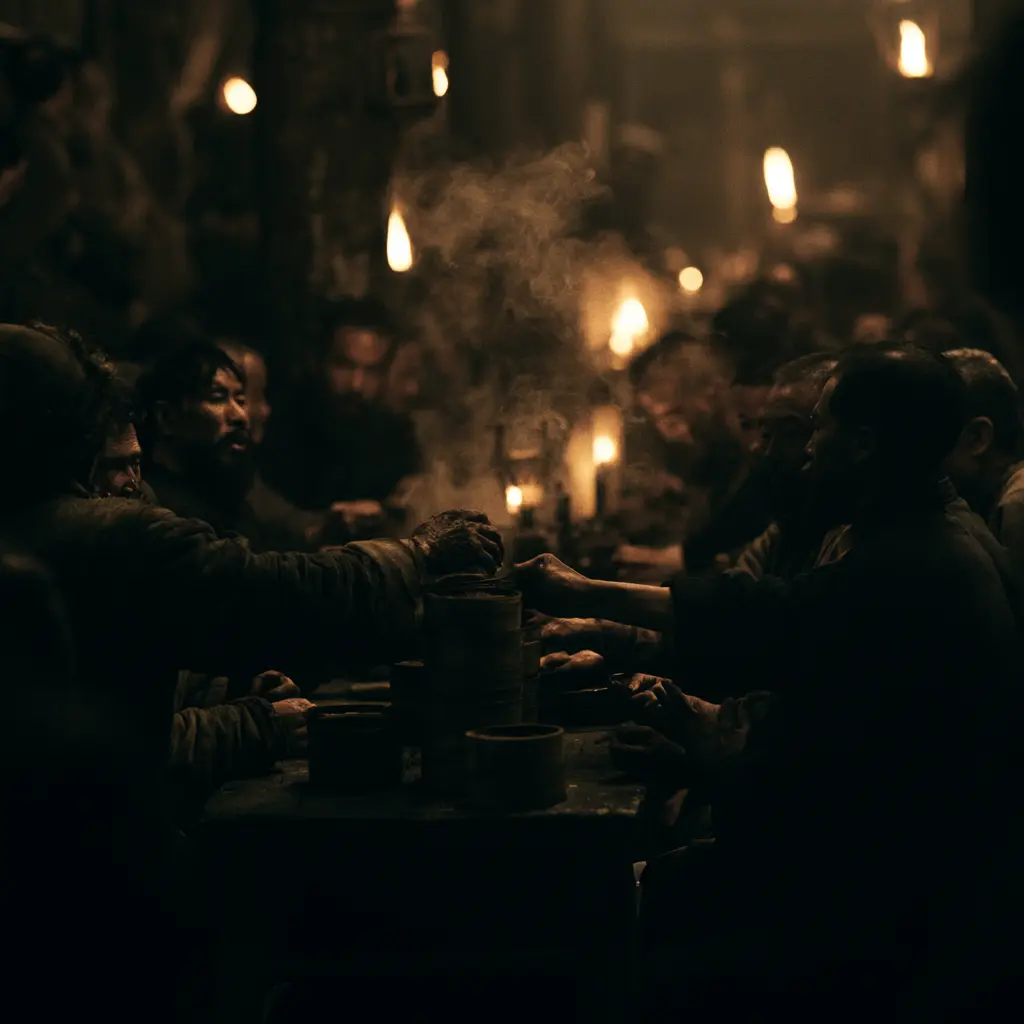
A sharp sizzle of lard hits a cast-iron wok as early morning mist rolls off the Pearl River. Before the sun breaks over the rooftops of Guangzhou, the air inside the lower-deck teahouses smells of roasted barley, boiled star anise, and damp bamboo.
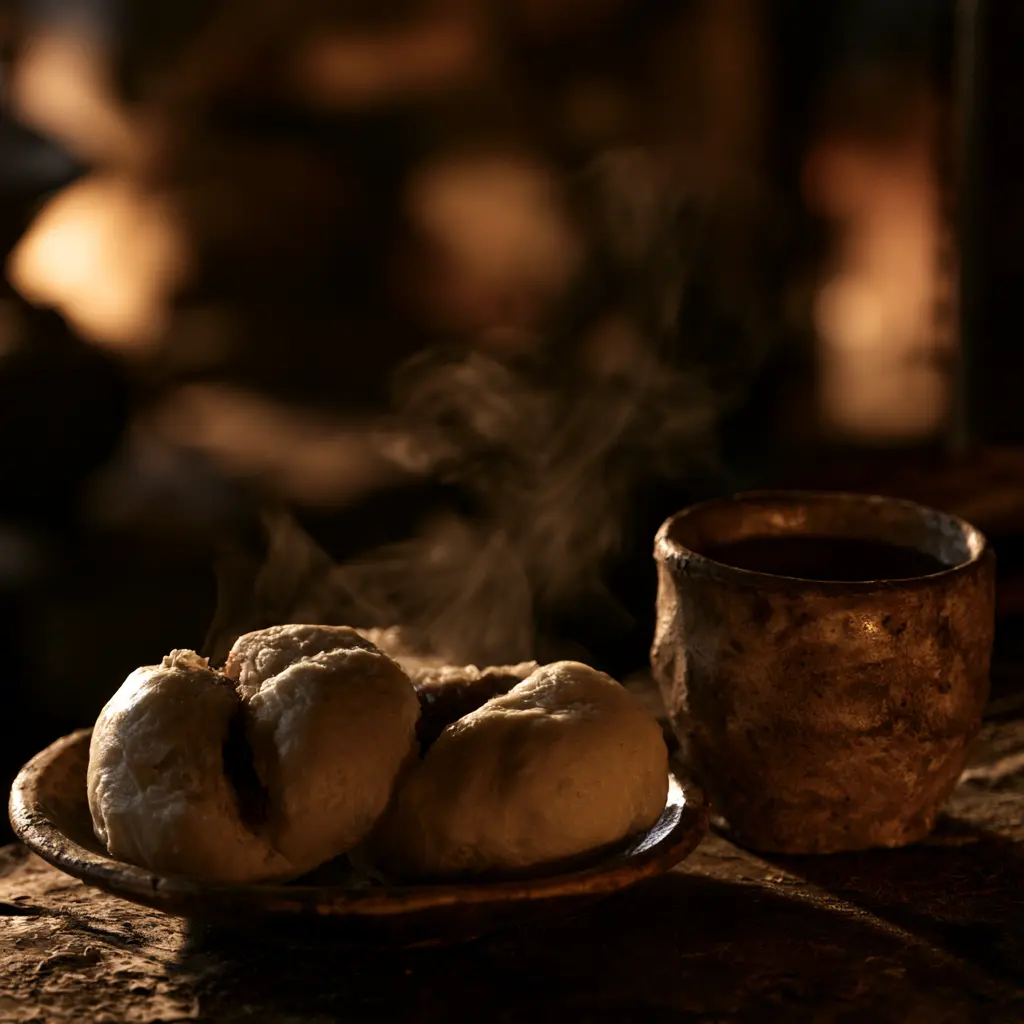
Porters shoulder heavy rattan crates, setting down their loads to take a low stool by the entrance. They call for a pot of cheap bo lay tea and two steaming pork buns – a ritual known simply as yat bun loong go bao (“one cup, two buns”).
This is the true crucible of dim sum. Despite romantic myths attributing the cuisine to imperial palace kitchens or Song Dynasty courts, the delicate, bite-sized craft enjoyed globally today did not descend from royalty. It was forged in the humid, noise-filled tea shacks catering to the dockworkers, traders, and labourers of 19th-century Guangdong.
The Myth of the Imperial Banquet
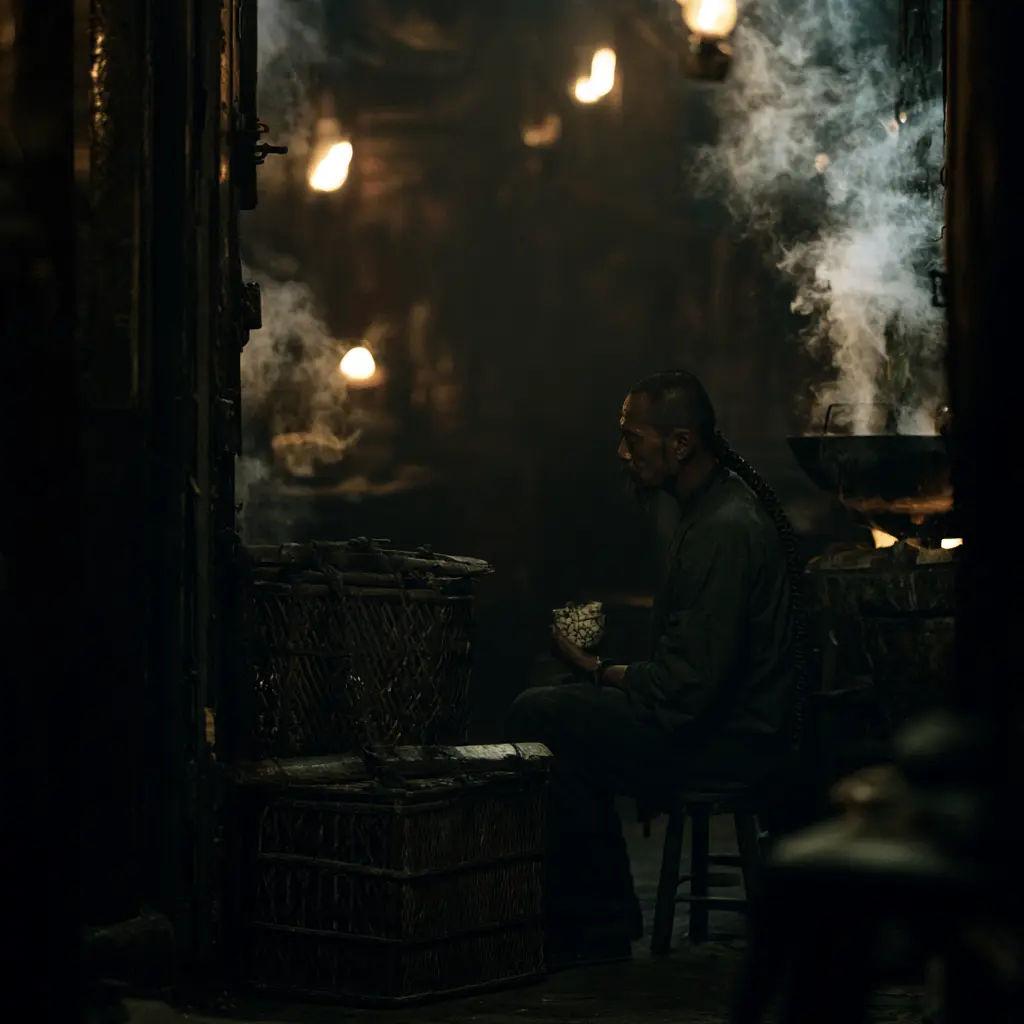
Popular culinary histories frequently flatten dim sum into a courtly fairytale. They claim Song Dynasty emperors feasted on complex morsels prepared by royal chefs. In reality, yum cha has firmly rooted itself in southern China’s working-class trade routes.
Small, wrapped doughs were found across northern China as basic sustenance for Silk Road travellers. However, dim sum as a distinct, highly technical culinary architecture was born along the Pearl River Delta.
During the Qing Dynasty, small roadside structures known as yi taak bou (resting booths) began operating along rural transit lines. These rustic sheds offered weary coolies a spot to rest. They served hot tea alongside coarse, oversized steam buns to stave off physical exhaustion.
The purpose was strictly utilitarian. Tea aided digestion and broke the bitter fatigue of physical labour, while the dense starch provided cheap calories. There was no fine porcelain, no translucent wheat starch, and no delicate pleating. The transformation from rustic sustenance to refined craftsmanship required a massive urban shift in Guangzhou’s economic landscape.
From Roadside Booths to Multi-Story Teahouses
As Guangzhou swelled into a global maritime port during the Canton System trade era, the modest yi taak bou evolved into two distinct urban institutions catering to separate social strata:
By the late Qing and early Republican periods, fierce commercial competition erupted among Guangzhou’s cha lau proprietors. Wealthy patrons sat for hours negotiating timber trades or silk shipments, requiring small, sophisticated savouries that complemented fine tea without dulling the palate.
To win over these lucrative customers, teahouses hired specialised pastry cooks. These artisans refined basic street snacks into works of visual and sensory art. The term dim sum – meaning “to touch the heart” – gradually evolved.
It shifted from a poetic phrase for light snacks into a formal culinary discipline. Chefs competed openly over the translucency of their doughs, the balance of seasonal fillings, and the elegance of their presentation.
The “Four Heavenly Kings” of Cantonese Culinary Engineering
The brilliance of dim sum lies in its absolute separation from the traditional wok kitchen (faan tong). Dim sum master chefs operate in an independent bakery department, mastering laminated doughs, fermented starters, and high-pressure steam management. The entire canon rests on four foundational dishes, known colloquially as the “Four Heavenly Kings”.
1. Har Gow (Crystal Shrimp Dumpling)
The benchmark of any Cantonese dim sum kitchen. Born in a small village teahouse on the outskirts of Guangzhou, its wrapper requires a precise blend of wheat starch and tapioca starch worked with boiling water.
The dough is flattened using the flat side of an oiled cleaver. It turns translucent when steamed while retaining an elastic bite. Master chefs aim for precisely 9 to 13 pleats. These pleats encase fresh river shrimp, hand-chopped pork fat, and young bamboo shoots.
2. Siu Mai ( Open-Topped Pork Dumpling)
Unlike northern variations, Cantonese siu mai uses a paper-thin lye-water egg dough. It wraps a hand-chopped filling of pork shoulder, fresh shrimp, and dried shiitake mushrooms. Rehydrated in rice wine, the filling stays rich and savoury. The open top features orange crab roe or diced carrot. This creates a firm, juicy texture that snaps when bitten.
3. Char Siu Bao (Barbecued Pork Bun)
A triumph of Cantonese fermentation. The bun uses a traditional starter culture (mian tao) combined with low-protein flour and lard. When exposed to the aggressive heat of a bamboo steamer, the top splits naturally into three distinct lobes (siu) without the use of chemical leaveners. Inside, diced roasted pork shoulder is suspended in a thick glaze of oyster sauce, dark soy, and toasted sesame oil.
4. Dan Tat (Egg Tart)
A clear physical record of early 20th-century cross-cultural trade. Adapted from British custard tarts and Portuguese pastéis de nata served in Guangzhou’s foreign concessions, Cantonese chefs adapted the recipe using lard-laminated puff pastry. The result is a flaky, multi-layered shell holding a silky, smooth egg custard that sets under gentle heat.
The Southern Migration: Dim Sum in Nanyang
When political upheaval, famine, and economic collapse shook southern China in the late 19th and early 20th centuries, millions of Cantonese, Teochew, and Hakka migrants moved across the South China Sea into Southeast Asia (Nanyang). They brought their teahouse traditions directly into the boomtowns of Malaya and Siam.
Malaya’s Tin Mines and the Cantonese stronghold
In British Malaya, massive tin discoveries in the Kinta Valley brought tens of thousands of Cantonese coolies to Ipoh, Penang, and Kuala Lumpur. In Ipoh, where subterranean hard-water mineral springs mimicked the water profile of Guangdong, Cantonese chefs found the perfect environment for making silky rice noodles and delicate dumpling skins.
Morning yum cha took hold as an essential social anchor. Working men met at early dawn before hitting the tin mines or rubber estates, while wealthy merchant guilds negotiated tin prices over pots of shoumei tea in multi-story shophouse teahouses. Over decades, Malaysian dim sum adapted to the tropical climate:
Siam’s Southern Spice and Royal Markets
In Thailand, Cantonese and Teochew migrants settled heavily in Bangkok’s Yaowarat district and southern coastal trading hubs like Phuket, Trang, and Hat Yai. In the Thai context, dim sum adapted dynamically to local palates:
The Pushcart Theatre and Modern Heritage
Mid-20th-century political instability in mainland China drove Guangzhou’s master craftsmen south. British Hong Kong quickly became the global epicentre for preserving Cantonese culinary arts.
In cavernous multi-story dining halls across Sheung Wan and Central, the modern ritual of yum cha solidified. Steam rose to high ceilings as women pushed heated aluminium carts through tight aisles, shouting their inventories—“Siu mai! Char siu bao!”
Customers flagged down carts, receiving red ink stamps on paper tallies to track their orders. The clatter of heavy porcelain tea bowls, the smell of damp bamboo baskets, and the hum of early morning news defined the social fabric of the city.
Today, under the whirring ceiling fans of a Penang shophouse or inside a southern Thailand morning market, dim sum endures. It remains a masterclass in restraint, balance, and communal rhythm. It is a living artifact of labour history, forged in steam and carried along Southeast Asia’s maritime trade routes.