
Key Insights
Baan Tawai is Northern Thailand’s premier woodcarving and handicraft village, renowned for transforming raw teak and monkey pod wood into intricate sculptures, sacred motifs, and fine furniture.
Born of ancestral Lanna traditions, local artisans combine time-honoured techniques – such as natural lacquering and gold-leaf gilding – with modern interior decor, establishing Chiang Mai’s Hang Dong district as a world-class centre for artisan heritage.
Lanna Woodworking: The traditional Northern Thai woodworking discipline rooted in the historic Lanna Kingdom, characterised by deep-relief carving, architectural timber joinery, and sacred Buddhist and animist iconography.
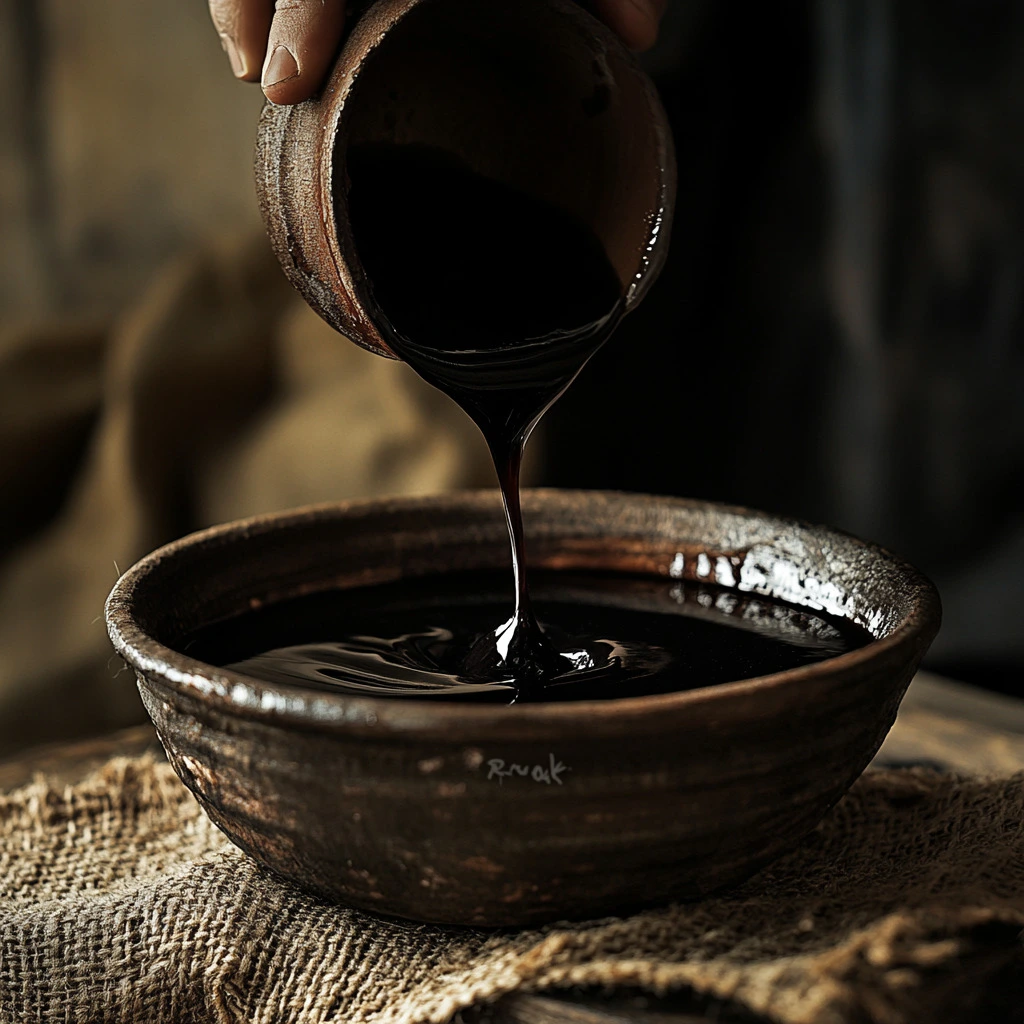
Rak (Lacquer): A natural, resinous sap tapped from the Gluta usitata tree (black lacquer tree), used by artisans as a durable, waterproof sealant, a deep-black adhesive base, and a primer for gilded embellishments.
Lai Rod Nam: A traditional Thai gold-leaf gilding technique literally meaning “patterns washed with water,” where gold foil is applied over a lacquer base and unmasked with a water rinse to reveal fine, contrast-rich decorative motifs.
Singha (Sing): A mythical guardian lion originating from Hindu-Buddhist mythology and widely sculpted in Lanna temple architecture and wooden statuary to symbolise strength, nobility, and spiritual protection.
OTOP (One Tambon One Product): A nationwide Thai government stimulus and certification program designed to support, standardise, and globally market high-value village-level handicrafts and indigenous micro-industries.
Pre-Industrial Cluster: An economic manufacturing ecosystem where decentralised, small-scale workshops and independent family artisans collaborate across specialised production phases without relying on heavy industrial assembly lines.
Baan Tawai is far more than a localised cultural attraction; it functions as Thailand’s largest pre-industrial manufacturing, wholesale, and export hub for artisan handicrafts and bespoke architectural furniture.
Located in the Hang Dong district of Chiang Mai, this commercial craft ecosystem serves as a strategic trade gateway recognised by the Tourism Authority of Thailand (TAT) and international supply networks, scaling indigenous Lanna craftsmanship into a globalised B2B and direct-to-consumer market.
Operating at the confluence of heritage manufacturing and global logistics, Baan Tawai powers three distinct economic channels:
The Three Pioneers of the Rice Fields
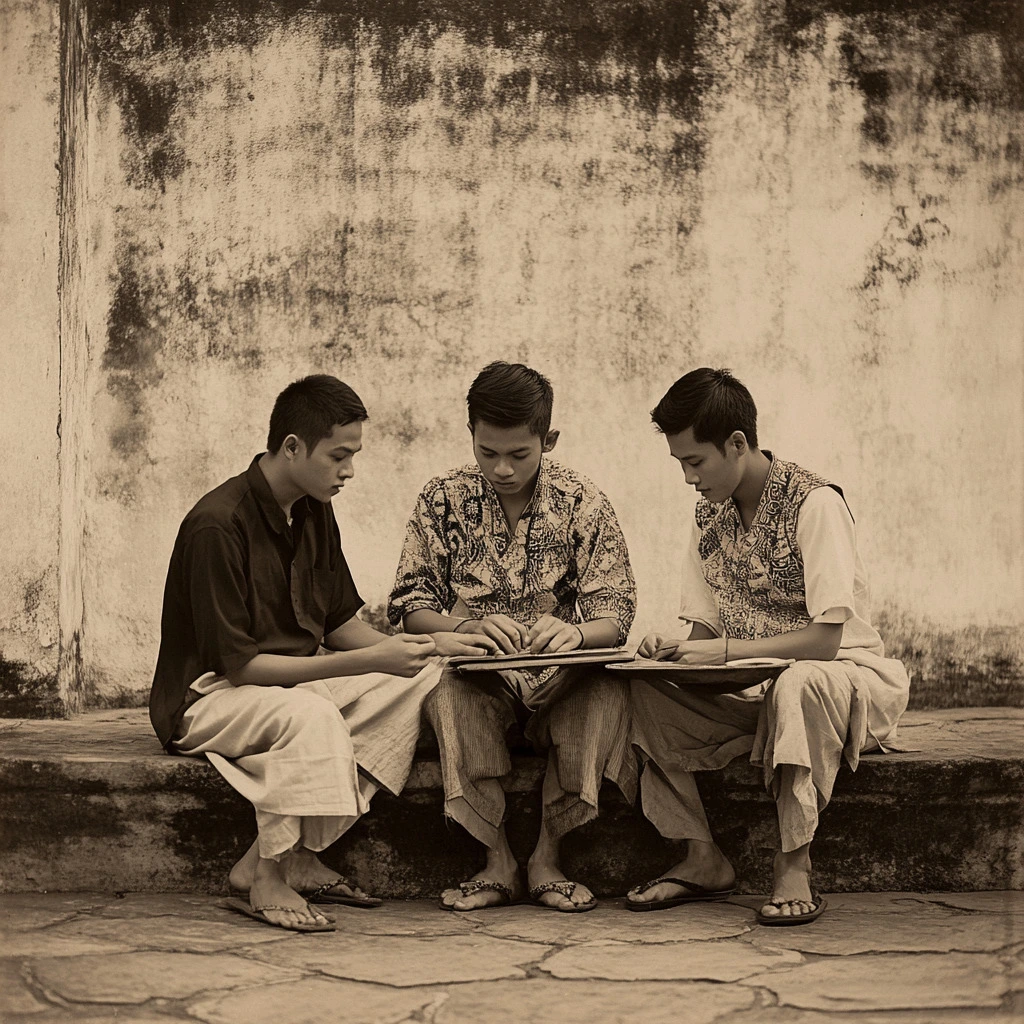
To understand the soul of this village, you must look back to the 1960s. At that time, Baan Tawai was a simple collection of rice farms. When the harvest ended, the villagers waited for the rain. There was no extra income. Life was dictated by the rhythm of the soil.
However, three young men – Pho Naan Daeng, Pho Jaima, and Pho Huen – refused to remain idle. They possessed a restless creative energy. So, packed their meagre belongings and walked to the city gates of Chiang Mai. They sought out the royal master carvers who lived near the ancient Chiang Mai Gate.
These masters were the guardians of the Lanna style. This style was a majestic fusion of Burmese floral flourishes and Thai spiritual geometry.
The three pioneers spent years as apprentices. They learned to “read” the grain of the wood. They learned how to make a chisel sing. When they returned to Baan Tawai, they didn’t just bring tools; they brought a revolution.
They taught their neighbours that wood was more than fuel or shelter. It was a canvas for the divine. Within a decade, the rice farmers had become philosophers of the chisel. They had turned their village into a global sanctuary for heritage craft.
The Alchemy of the Lacquer Tree
If carving is the body of Baan Tawai’s art, then Lai Rot Nam (gilded lacquerware) is its soul. The process is a masterpiece of ancient chemistry. It begins with the Ton Rak, the Burmese lacquer tree.
The resin from this tree is a mysterious substance. In its raw form, it is a toxic skin irritant. It demands respect. Yet, once it is refined and applied, it becomes the most durable finish on Earth.
Master carvers refer to this resin as “the black blood.” It is deep, obsidian, and utterly unforgiving. To dry this lacquer, the artisans must use a paradoxical method. They do not use heat. Instead, they use humidity. They build underground chambers or “dark rooms” lined with wet burlap. The lacquer only cures in 80% humidity. It is a birth in the damp dark.
Once the black surface is as smooth as polished stone, the “Solar” stage begins. This is Long Rak Pid Thong – applying the gold. The gold leaf used here is 24-karat purity. It is hammered so thin that it is lighter than air.
“You must hold your breath,” explains Lung Vit, a veteran of the guild. “If you breathe, you lose your profit.” The artist applies the gold over a stencil made of lime powder and water. Then comes the miracle. The artist splashes the piece with water.
The gold over the lime washes away. The gold over the lacquer remains. Suddenly, a shimmering celestial pattern appears against a midnight background. It is like watching a star being born in a bucket of water. This is why they call it Lai Rot Nam – ” designs washed with water.”
The Spiritual Language of the Grain
In Baan Tawai, a piece of wood is never just a dead plant. It is a living entity with a personality. The artisans choose their materials with the care of a doctor selecting a remedy.
The King of the Forest: Teak
Teak (Mai Sak) is the undisputed monarch here. It is rich in natural oils that repel termites and resist rot. It is stable and does not warp in the tropical heat. A teak carving has been an investment for centuries. “When I carve teak,” says one young artisan, “I am talking to my great-grandchildren. They are the ones who will see this wood turn silver with age.”
The Luck of the Jackfruit
Jackfruit wood (Mai Khanoon) is saved for the most sacred tasks. In the Thai language, Khanoon sounds like the word for “support” or “assistance.” Therefore, statues of the Buddha or family ancestors are almost always carved from Jackfruit. To own such a piece is to ensure that the spirits will always support your household.
The Flame of the Kranok
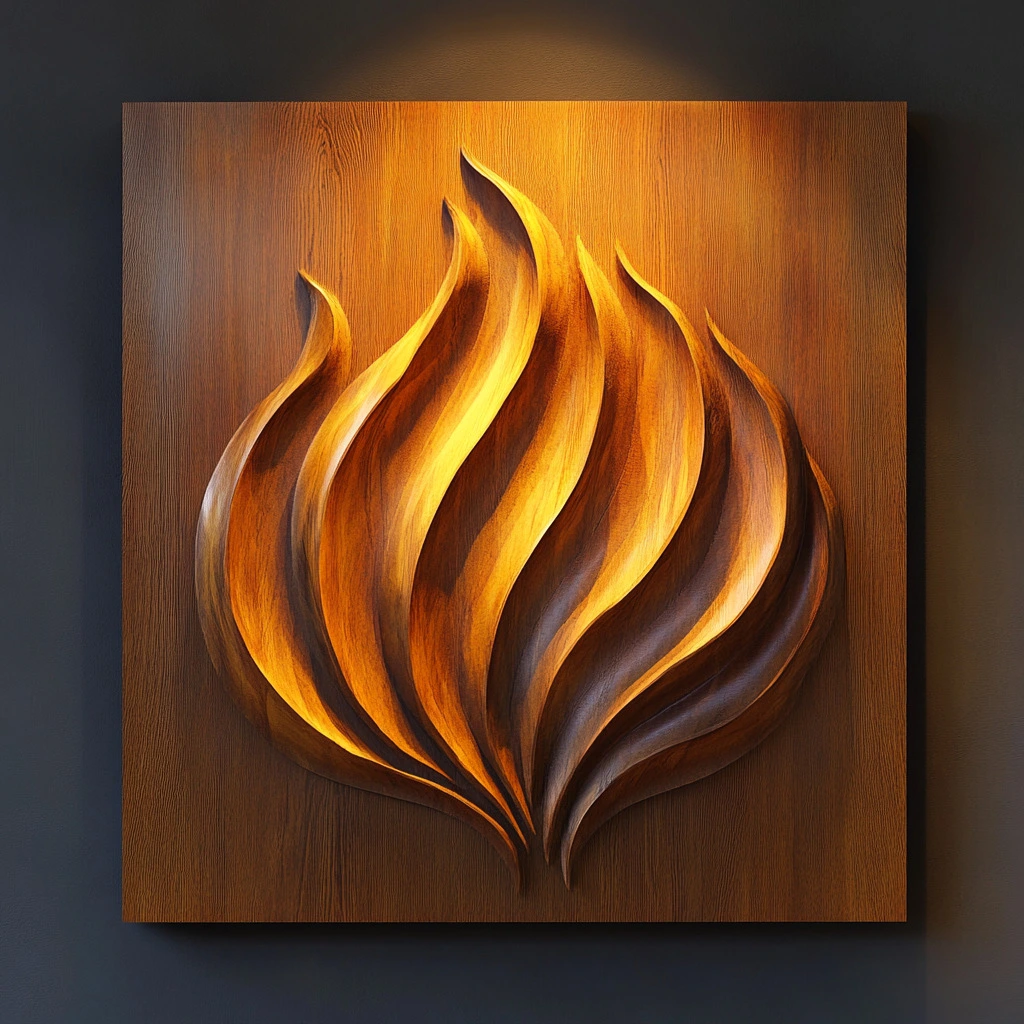
Look closely at any Baan Tawai carving. You will see a recurring motif: a flicking, flame-like curve. This is the Kranok. It’s the most fundamental pattern in Thai art. It represents the inner energy of nature.
It is the curve of a lotus petal, the flicker of a candle, and the tail of a mythical Naga. In Baan Tawai, the Kranok is used to create the “Geometry of the Gods.” It turns a flat board into a swirling, three-dimensional heaven.
The Tourist Experience: The High-Value Souvenir
The Thai Tourism Authority’s 2026 strategy focuses on “Legacy Tourism.” They want visitors to move away from cheap, plastic replicas. Baan Tawai is the perfect laboratory for this shift.
The Bespoke Commission
Today, high-end travellers come to Baan Tawai to commission “Life Pieces.” They don’t just pick a statue off a shelf and sit with a master carver and spend an afternoon sketching designs. They might want a grand entrance door for a home in London or a custom headboard for a villa in Sydney.
The village has developed a sophisticated global logistics network. They can ship a five-hundred-pound teak elephant to any port in the world. This is the “Value” TAT is looking for. It is a high-ticket transaction that supports an entire ecosystem of carvers, shippers, and polishers.
The Gold Leaf Challenge
For those who cannot afford a grand door, there are workshops. You can pay a small fee to sit on a wooden stool and learn the art of gilding. You are given a small box coated in black resin and a single sheet of gold.
Most tourists fail on their first three attempts. The gold leaf sticks to their sweaty palms. It wrinkles. It vanishes into the air. This failure is a vital part of the experience.
It humbles the traveller. It transforms the “product” into a “process.” When you finally succeed in placing a single straight line of gold, you understand the price of the art. You are no longer a consumer; you are a witness to a miracle.
The Guardian Spirits of the Workshop
Every workshop in Baan Tawai has a small altar. This is the Wai Khru. It is a place to honour the teachers who came before. Before a master makes the first cut into a massive trunk of teak, he makes an offering. He offers red Fanta, marigold garlands, and incense. He asks the spirit of the wood for permission to change its shape.
The Legend of the Waking Lion
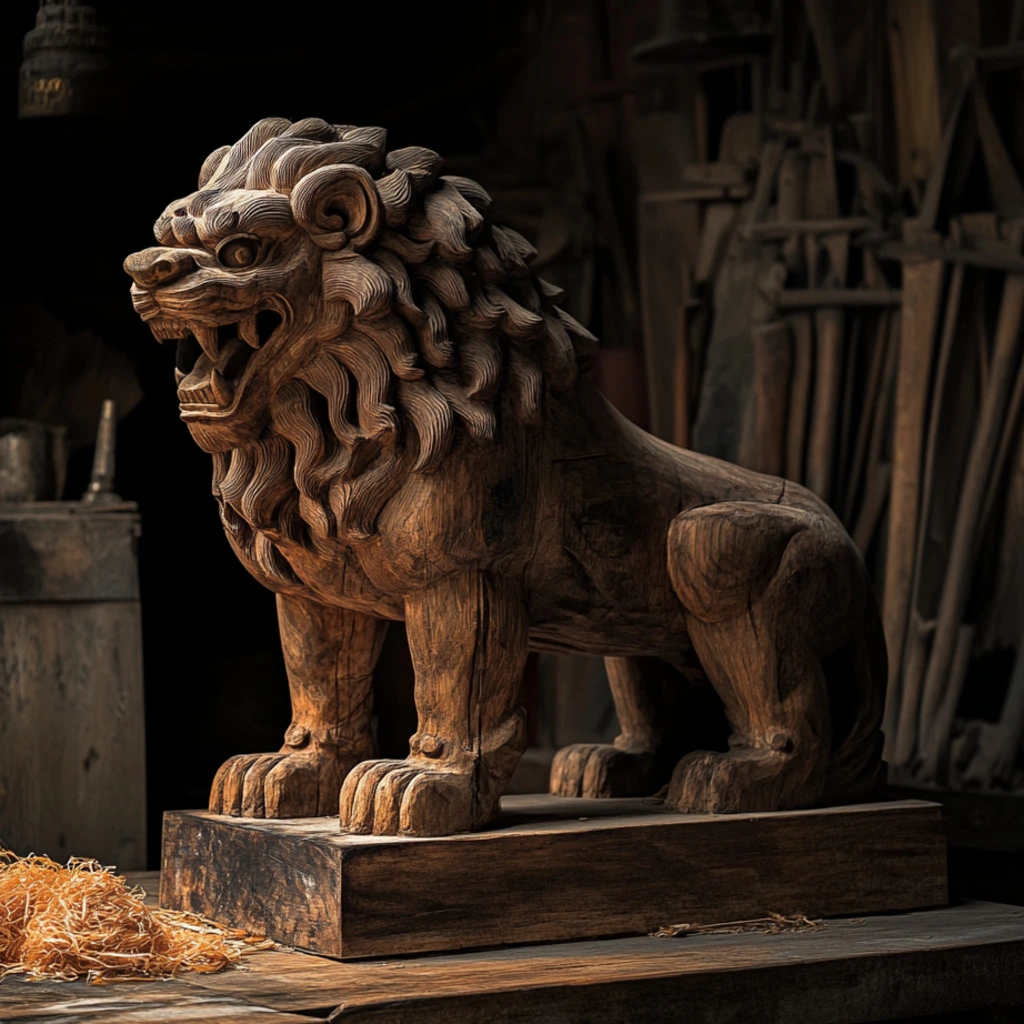
There is a famous anecdote in the village about a master carver who was commissioned to make a Singha (mythical lion). He worked on it for three months in total isolation and carved the muscles so realistically that they seemed to twitch. He carved the eyes with such intensity that they seemed to follow you.
The legend says that once the statue was finished, the village dogs refused to walk past that specific workshop. They would stand at the entrance and growl at the “beast” inside.
The carver eventually had to cover the lion’s head with a sacred red cloth. He kept it “blindfolded” until the day the truck arrived to take it away. This story is told to every apprentice. It serves as a reminder: if you put enough heart into the wood, the wood will wake up.
Survival in the Digital Age
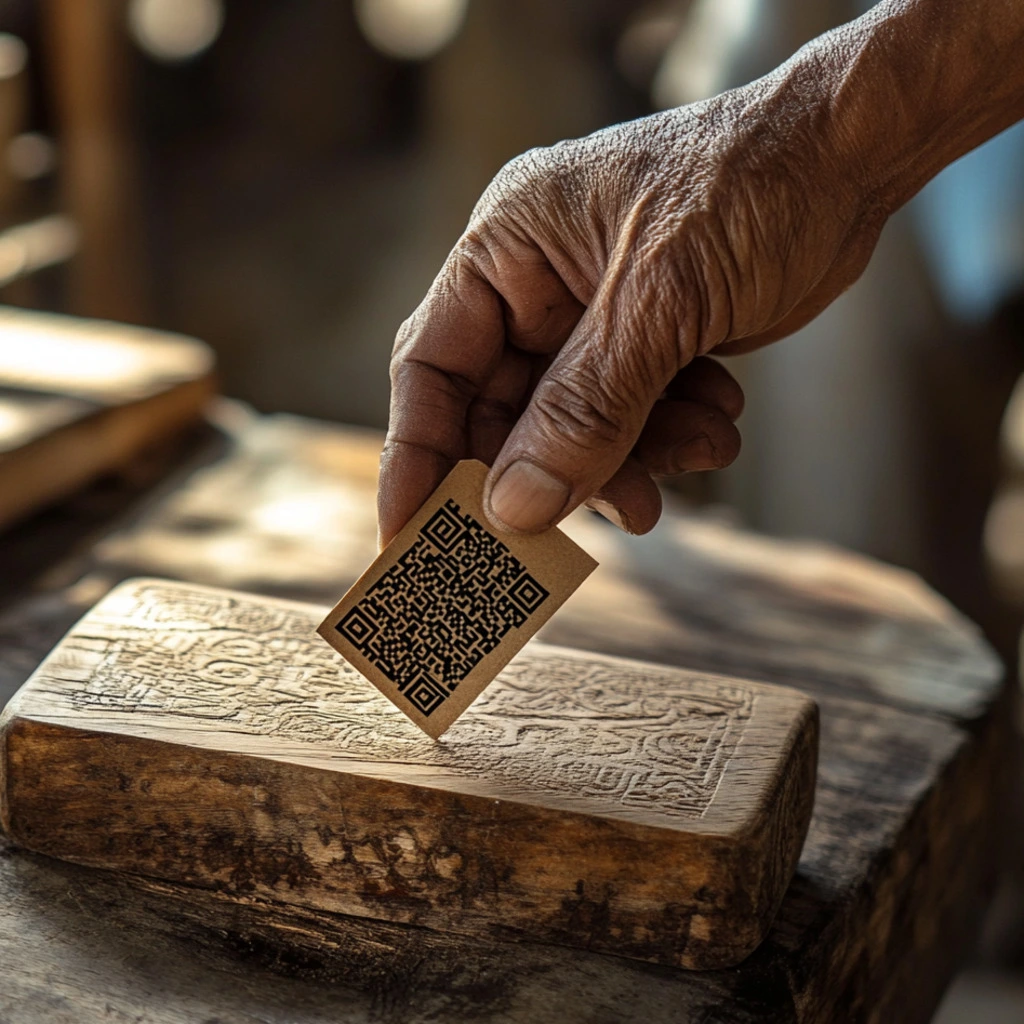
The artisans of Baan Tawai face a modern threat. “Fast wood” from massive factories in other countries often floods the market. These pieces are made by CNC machines. They are perfect, but they are hollow. They lack the “fingerprint of the soul.”
To combat this, Baan Tawai has leaned into its heritage. They are using technology to protect tradition. Many workshops now use QR codes. You can scan a code on a carving and watch a video of the exact man who carved it. You’ll see the sweat on his brow. You see the specific chisel he used.
This transparency is the ultimate marketing tool for 2026. It proves that the item is authentic and connects the buyer to the maker across thousands of miles. It turns a piece of furniture into a story.
The Ethical Wood Trail
Sustainability is the new gold standard. TAT and the Baan Tawai guild have strict rules for 2026. Every piece of teak must be certified. It must come from sustainable plantations or be reclaimed from old houses.
“We do not kill the forest to make art,” says Anan, a young carver. “We give the forest a second life.” He is currently working on a panel made from a hundred-year-old barn door. The wood is grey and weathered. But beneath the surface, the teak is still vibrant. By carving it, Anan is ensuring that the tree’s history is preserved for another century.
Conclusion: The Eternal Shine
Baan Tawai is a place of beautiful contradictions. It’s a place where toxic sap creates a heavenly finish. And where farmers became kings of the chisel. It is a place where water is used to find gold.
As you leave the village, the “tap-tap-tap” of the chisels follows you. It is the heartbeat of the Hang Dong district. You realise that you aren’t just leaving a market. You are leaving a sanctuary of patience. In a world that wants everything instantly, Baan Tawai is a reminder that the best things take time.
The gold on the Spirit Houses catches the final rays of the sun. The lacquer glows like a dark mirror. The Geometry of the Gods remains perfect, silent, and enduring. This is the true “Thai Charm.” It is a lustre that never fades because it was hammered into place with a human heartbeat.