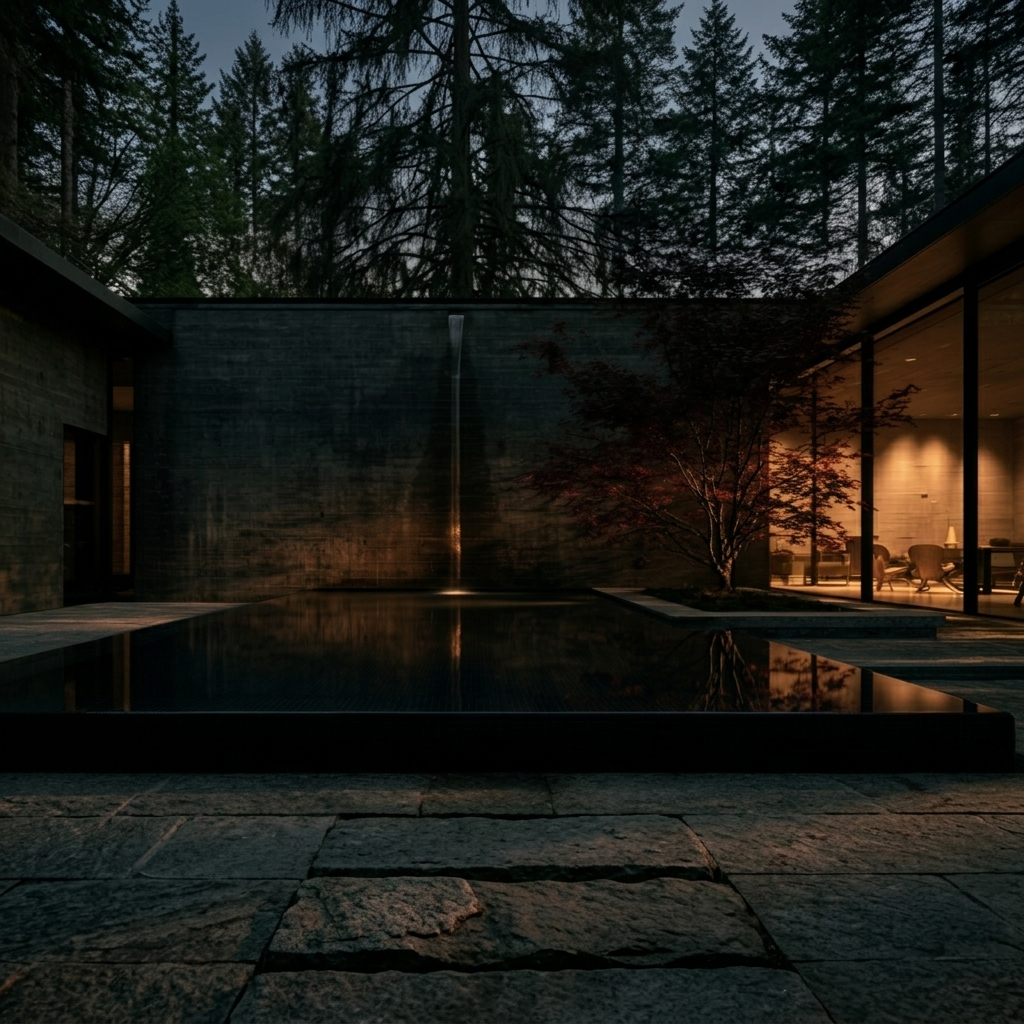

When a buyer commits tens of millions of dollars to a residential compound, an iconic flagship retail space, or an ultra-exclusive resort, they are rarely purchasing linear square footage or accounting for concrete replacement costs. They are paying for a visceral, physiological response—a quiet shift in their internal state the moment they step across the threshold.
In the upper echelons of real estate and architectural development, price tag justification is not a spreadsheets-and-margins exercise. It is a study in spatial psychology. To command nine-figure valuations, physical environments must do more than look impressive; they must manipulate neurobiology, alter human perception, and trigger intrinsic desire.
This is the core of the Architecture of Desire: the precise intersection where raw materiality, spatial psychology, and restorative principles converge to render extreme price points not merely acceptable, but self-evident.
The Subconscious Mechanics of Tangential Design
Traditional real estate development focuses almost entirely on direct utility. It asks whether a floor plan flows efficiently, whether the appliances are top-tier, and how effectively square footage has been maximised.
Tangential design operates on an entirely different plane. It focuses on micro-interactions and indirect spatial cues—the ambient architectural choices that bypass rational analysis and speak directly to evolutionary psychology.
Consider how the human brain responds to volumetric transitions. Navigating through a low, shadowed threshold before stepping into a light-filled, vaulted hall triggers a sharp hit of release and expansive awe. It is an ancient psychological reaction to moving from shelter into safety.
Similarly, the acoustic weight of a structure communicates luxury far faster than visual ornament. Ultra-high-end spaces do not merely look expensive; they sound solid. Deep masonry walls, hidden acoustic plaster, and isolated floors eliminate low-frequency environmental hums, inducing an immediate drop in baseline cortisol.
By interrupting predictable sightlines and using soft, rhythmic natural lighting, tangential design slows a visitor’s internal clock. The buyer’s physiological state transitions from a defensive, evaluative posture into one of quiet absorption.
Materiality, Mass, and the Neuroscience of Value
Standard price-per-square-foot metrics break down when applied to rare materials, not simply because those resources are scarce, but because of what authentic textures communicate to the human nervous system.
There is an undeniable sensory disconnect when interacting with synthetic or superficial finishes. No matter how convincingly a material imitates marble or aged wood visually, the hand recognises its lack of thermal mass, its synthetic uniformity, and its hollow resonance. The brain detects this incongruity instantly, registering a subtle signal of cheapness or pretence.
To justify an extraordinary price point, every physical touchpoint must reinforce mass, permanence, and narrative. Cold, high-mass materials like thick poured concrete, unpolished travertine, and heavy forged metals carry high thermal inertia. They feel immovable, carrying an unspoken promise that the structure will easily outlive market fluctuations and cultural trends.
Furthermore, discerning buyers rarely seek sterile perfection. They look for depth. Living finishes like unlacquered brass, reclaimed timber, and hand-troweled lime wash develop a rich patina over time, signalling that an environment matures gracefully rather than degrades.
The Veblen Effect and Restorative Spatial Design
At this height of the market, the asset class functions explicitly as a Veblen good: a phenomenon where demand increases alongside price, driven by the social signalling of extreme scarcity and uncompromised quality.
Yet, unlike traditional Veblen goods like hypercars or haute couture, spatial architecture offers an intangible yield that goes far beyond conspicuous consumption. It delivers covert psychological capital.
In an era defined by constant cognitive overload, hyper-connectivity, and artificial stimulation, the ultimate luxury is no longer ostentatious display—it is cognitive restoration. Extreme valuations are effortlessly sustained when an environment functions as a sanctuary for human performance and biological reset.
High-net-worth individuals are not merely buying a status symbol to show the world; they are acquiring an insulated sanctuary that shelters their nervous system from it.
Spatial designers achieve this by drawing on Jay Appleton’s prospect and refuge theory. Humans feel inherently secure when they enjoy an expansive view of their horizon while their immediate surroundings remain sheltered and protected from behind.
World-class residential architecture scales this tension seamlessly—pairing expansive glass walls with deep, grounded hearths and protective structural alcoves.
When layered with circadian lighting systems, hospital-grade air purification, and absolute acoustic isolation, the architecture begins to actively repair its inhabitant’s sleep cycles and mental clarity. It ceases to be passive real estate and becomes essential infrastructure for living, longevity, and sustained mental performance.
Spatial Temporal Engineering: The Ultimate Asset Class
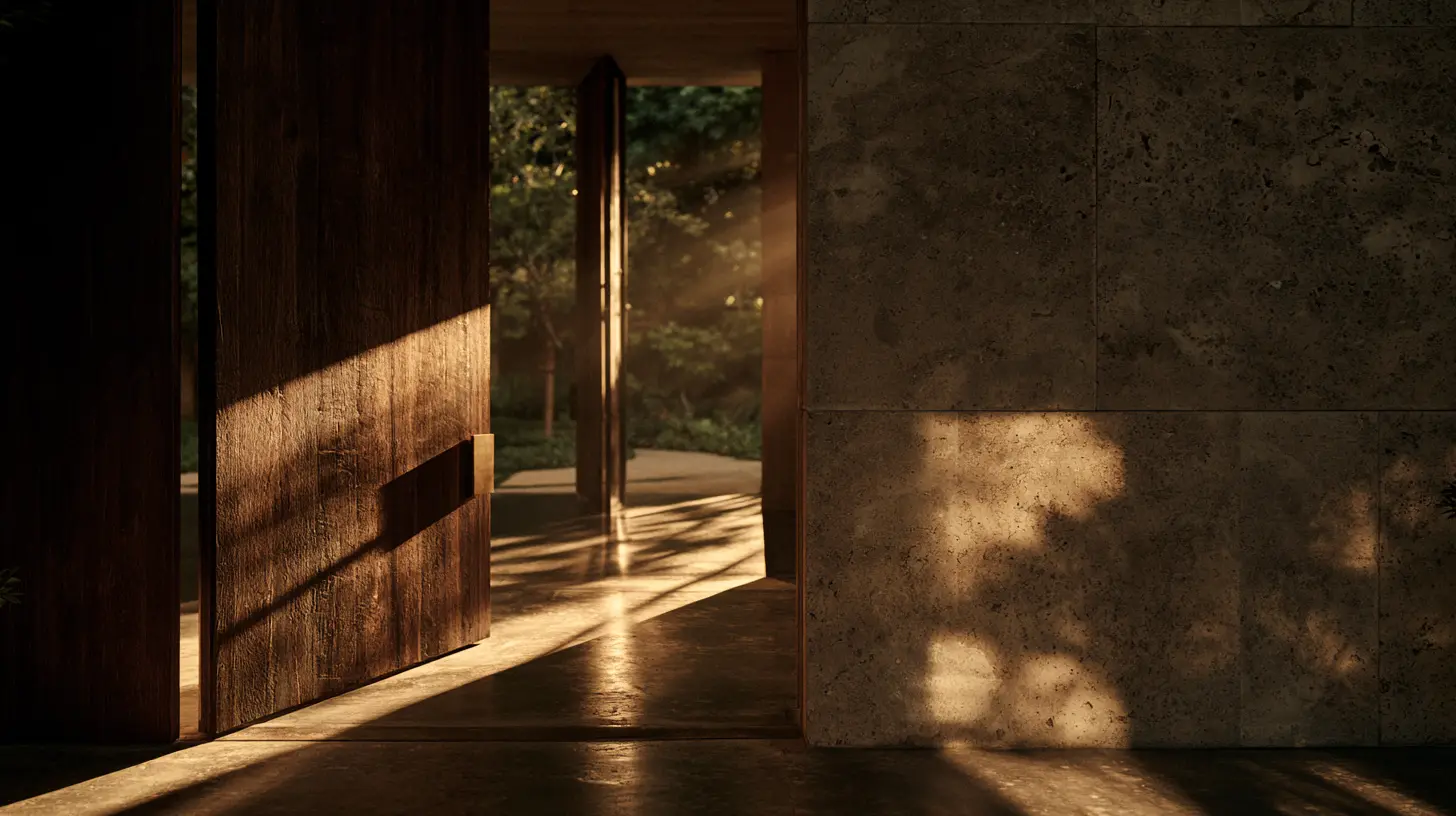
Beyond immediate biological comfort, ultra-luxury environments exercise control over the inhabitant’s most non-renewable resource: perceived time. This is spatial temporal engineering—the intentional curation of spatial sequences that slow cognitive processing and force presence.
When an individual moves through a space crafted with varying volumetric scales, intentional shadow play, and curated sightlines, the brain processes novel spatial data rather than running on autopilot.
This heightened sensory awareness expands internal perception, making a single hour spent within the property feel richer, longer, and fundamentally distinct from time spent in standard urban environments.
For the modern ultra-high-net-worth buyer, an environment that can alter the perception of time is priceless. The ability to step out of relentless digital acceleration into a physical space that enforces psychological stillness creates a moat that standard market comparables simply cannot measure.
Developers are no longer selling static physical assets; they are selling modified human experience.
The Emotional Surplus
When architectural decisions are guided by how spaces feel rather than just how they look, the financial dynamics of luxury development shift entirely.
Standard real estate pricing relies on cost-plus mechanics: building materials plus labour, capped by local market comparables. The Architecture of Desire creates an entirely different valuation structure—one where baseline construction costs are dwarfed by an emotional and restorative surplus.
High-net-worth buyers are not evaluating price per square foot. They are paying for a physical sanctuary that restores their energy, protects their wellbeing, and reflects their discernment without needing to shout. Ultra-luxury development succeeds when it moves past superficial opulence. Gilded fixtures and brand-name appliances are no longer enough to command extreme multiples.
Real desire is never manufactured by telling a buyer a property is valuable. It is built by designing an environment where their own biology confirms it.