
Key Insights
Chiang Mai’s Nimmanhemin district has transformed traditional Northern Thai indigo into a globalised, “New Lanna” luxury aesthetic. Blending ancient fermentation science with modern shibori and Mud-Yom resist architecture, local innovators are elevating this rural craft into sustainable slow fashion. For the discerning traveller, Nimman serves as a high-design gateway to Thailand’s living, unpredictable textile heritage.
Hom: The native Northern Thai plant (Baphicacanthus cusia) that gives this region’s indigo its unique, cool-toned blue.
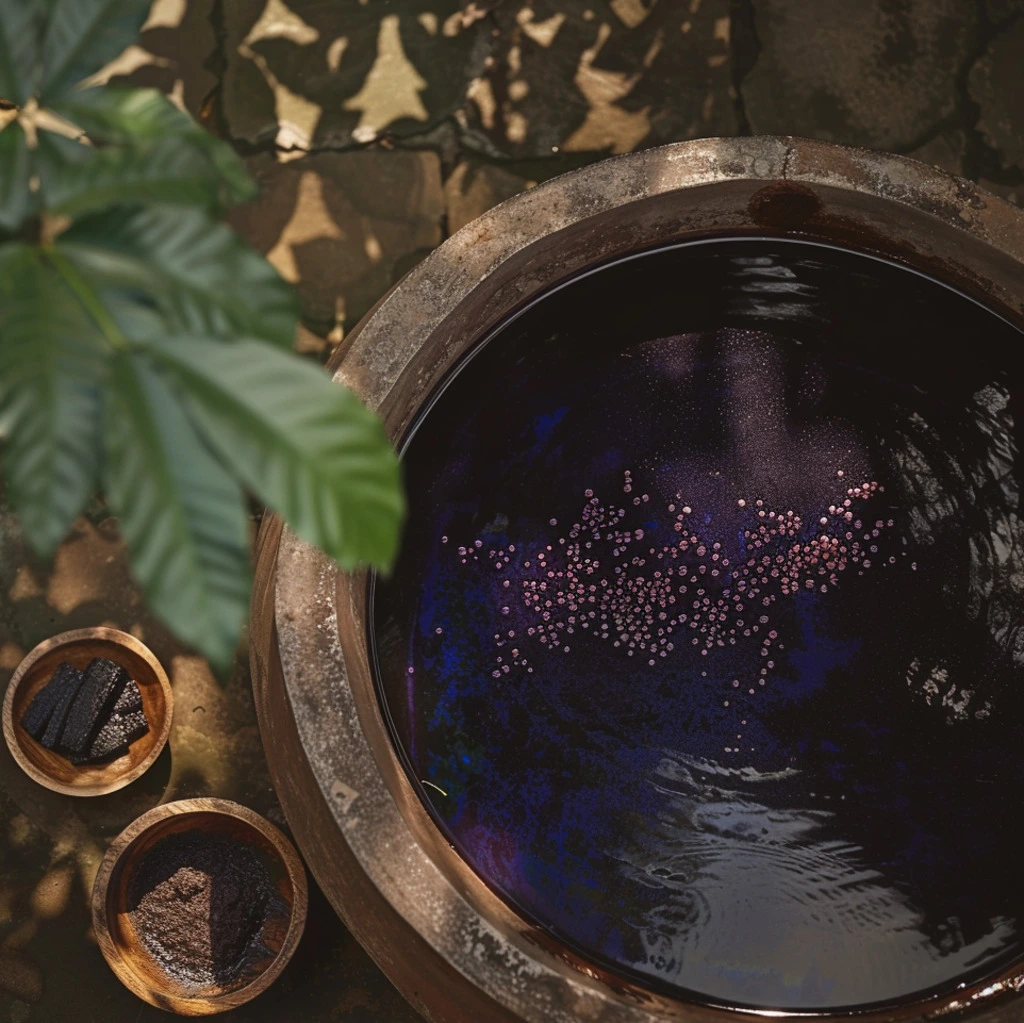
Mo Hom: Literally “blue pot.” It refers to the living, fermenting dye vat that artisans must “feed” daily with alkaline ash and sweet fruits.
Leuco-Indigo: The magic trick of chemistry. It’s the yellowish-green, oxygen-free state of the liquid before it hits the air and oxidises into brilliant blue.
Mud-Yom: The traditional Thai art of tie-dye and resist-dyeing, now being mixed with sharp, Japanese geometric folding (Shibori).
Resist Architecture: A modern design term for using industrial clamps and heavy twine to force fabric into sharp, high-fashion fractal patterns.
Crocking: The slight rub-off of blue pigment onto your skin. In mass production, it’s a flaw; in luxury heritage, it’s proof the dye is natural and alive.
Navigating the commercial textile output of Chiang Mai’s Nimmanhemin corridor requires rigorous curatorial discernment from a travel designer. The main thoroughfares are heavily saturated with mass-produced, chemically dip-dyed cottons marketed under the loose commercial umbrella of “natural indigo,” generating immediate friction for collectors and private clients who demand verifiable material integrity.
Leaving high-net-worth travellers to navigate the retail strip unassisted routes them into low-margin tourist shops stocked with synthetic sulphur dyes, bypassing the authentic master dyers and textile architects driving the contemporary Lanna creative renaissance.
An effective advisory strategy operates on strict access control. Advisors must bypass street-level retail entirely, structuring private engagements at closed-door ateliers and residential studio spaces. In these private workspaces, master dyers and structural tailors demonstrate raw paste preparation, verify anaerobic vat titration, test fermentation pH levels, and execute custom bespoke commissions.
Framed as an analytical field examination of regional supply chains, dye botany, and material provenance, this access converts standard retail transit into an incisive briefing on Southeast Asia’s modern craft economy.
The Blue Heart of the North: From Forest to Flagship
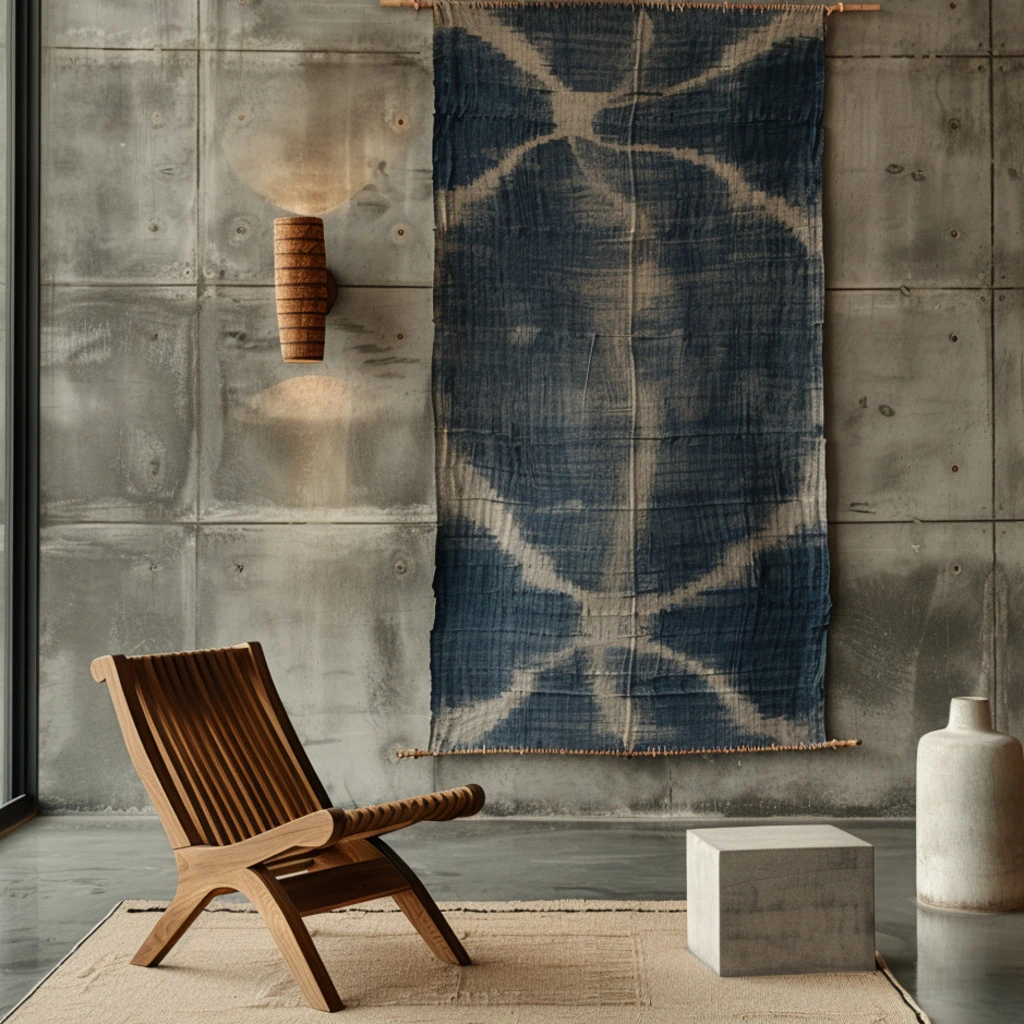
Material provenance begins with regional dye botany. While commercial global production and lowland South Asian systems rely on Indigofera tinctoria, the traditional vat culture of the northern highlands centres on Strobilanthes cusia (historically classified as Baphicacanthus cusia), known locally across upper Northern Thailand as Hom.
The plant thrives in the shaded limestone soils, higher elevations, and cool microclimates of the northern mountain ranges. It produces an indigotin compound yielding a distinct, cool-cast blue spectrum.
Agrarian communities traditionally utilised the extract as a functional textile treatment; saturated into heavy, hand-loomed cotton, the oxidised pigment provided an insect-repellent, antimicrobial barrier against soil-borne pathogens and sun exposure.
In contemporary Nimmanhemin ateliers, that utilitarian heritage has been adapted into structural design. Independent studios have shifted the pigment from folk garments into high-gauge linen tailoring, technical outerwear, architectural upholstery, and large-format installation panels commissioned for private collections and design-led hospitality spaces.
This movement represents a calculated transformation of rural biochemistry: an ancient, labour-intensive extraction process executed with the technical tolerances of a contemporary design house.
The Science of the “Living Vat”: A Heritage Chemistry
The structural value of natural indigo resides in its biological complexity. A traditional fermentation vat functions as an anaerobic bacterial ecosystem, requiring daily monitoring of nutrient levels, ambient temperature, and alkalinity.
The biochemistry of a Lanna vat relies on a precise microbial balance. The medium demands three core elements: wood-ash lye water as an alkaline base, slaked lime to maintain a stable pH between 10.5 and 11.5, and a fermentable carbohydrate source—traditionally ripe wild bananas, fermented rice liquor, or tamarind pulp—to sustain the active bacteria.
These anaerobic microbes consume dissolved oxygen in the aqueous solution, reducing insoluble indigotin pigment into a water-soluble, pale yellowish-green compound known as leuco-indigotin.
The critical phase occurs during the fabric’s removal from the vat. Submerged yarns emerge carrying this translucent yellow-green cast. Exposed to ambient atmospheric air, the reduced compound bonds with atmospheric oxygen, initiating immediate oxidation.
The colour oxidises in real time, shifting across the fibre from olive green to deep navy. This redox reaction captures an unrepeatable physical ledger of ambient humidity, barometric pressure, fabric porosity, and microbial vat potency at the precise moment of extraction—yielding a chromatic variance impossible to replicate with synthetic coal-tar substitutes.
The Architecture of Resist: Mechanical Barriers and Dynamic Tension
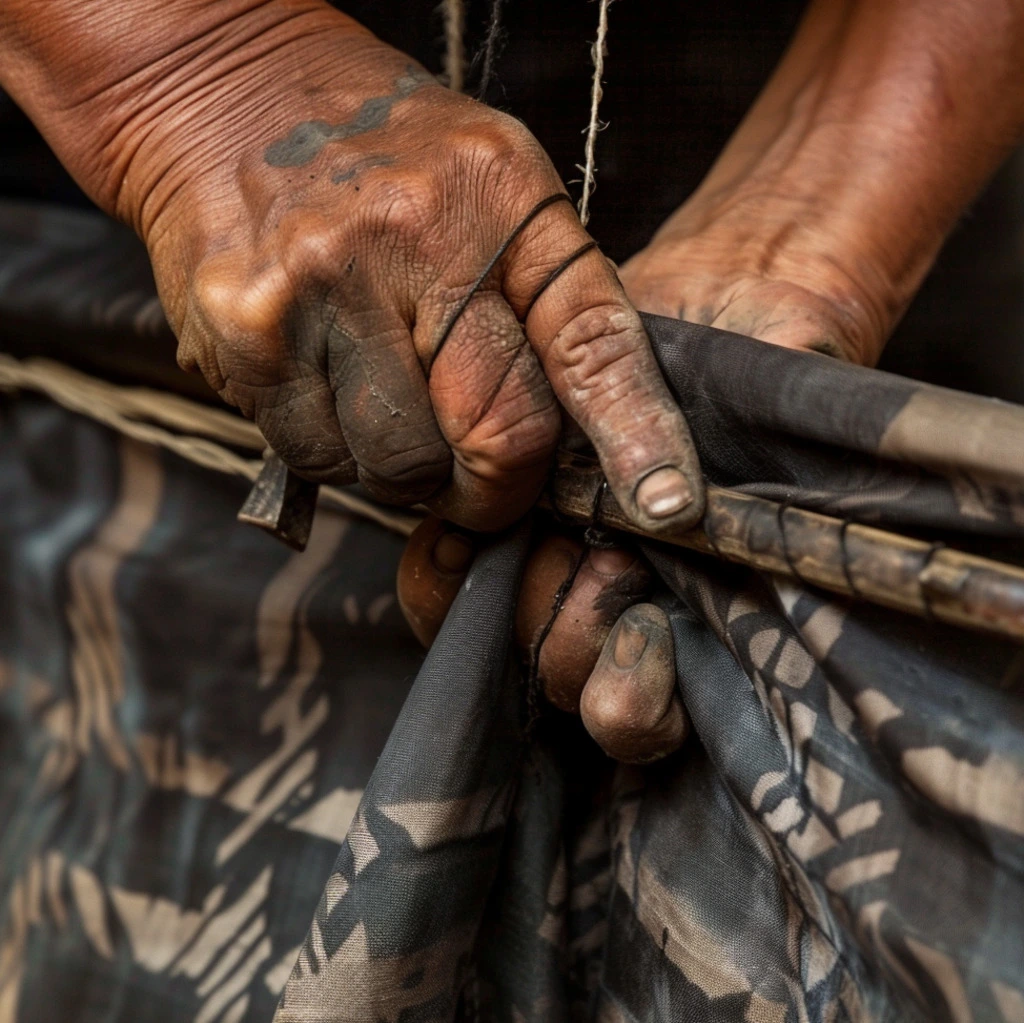
Northern Thailand’s vernacular resist-dyeing lineage—historically designated across the Lanna region as Mud-Yom—relies on mechanical barriers to control dye penetration at the yarn and weave level. Contemporary Chiang Mai studios integrate these domestic traditions with regional Asian resist disciplines, elevating basic tie-dye into structured textile engineering.
Artisans apply geometric folding, high-compression clamping, and axial cord wrapping to raw-loomed Thai silk, wild hemp, and low-twist hand-spun cotton (Fai). Techniques incorporate rotational folds, diagonal pleated wraps, and custom laser-cut hardwood or acrylic clamps bolted under vice tension.
By compressing the textile under industrial torque, the dyer creates an impermeable physical seal. When submerged in the fermentation vat, the leuco-indigo penetrates only the exposed perimeters and capillary folds of the textile.
The resulting visual motifs—angular striations, vein networks, and fractured geometric geometries—are governed entirely by fluid dynamics, fibre tension, and dye viscosity. Because microbial activity and vat saturation shift continuously throughout the working day, each dipping sequence registers minute tonal gradations across the weave, producing an unrepeatable mechanical footprint.
The Nimman Creative Collective: Ateliers and Innovators
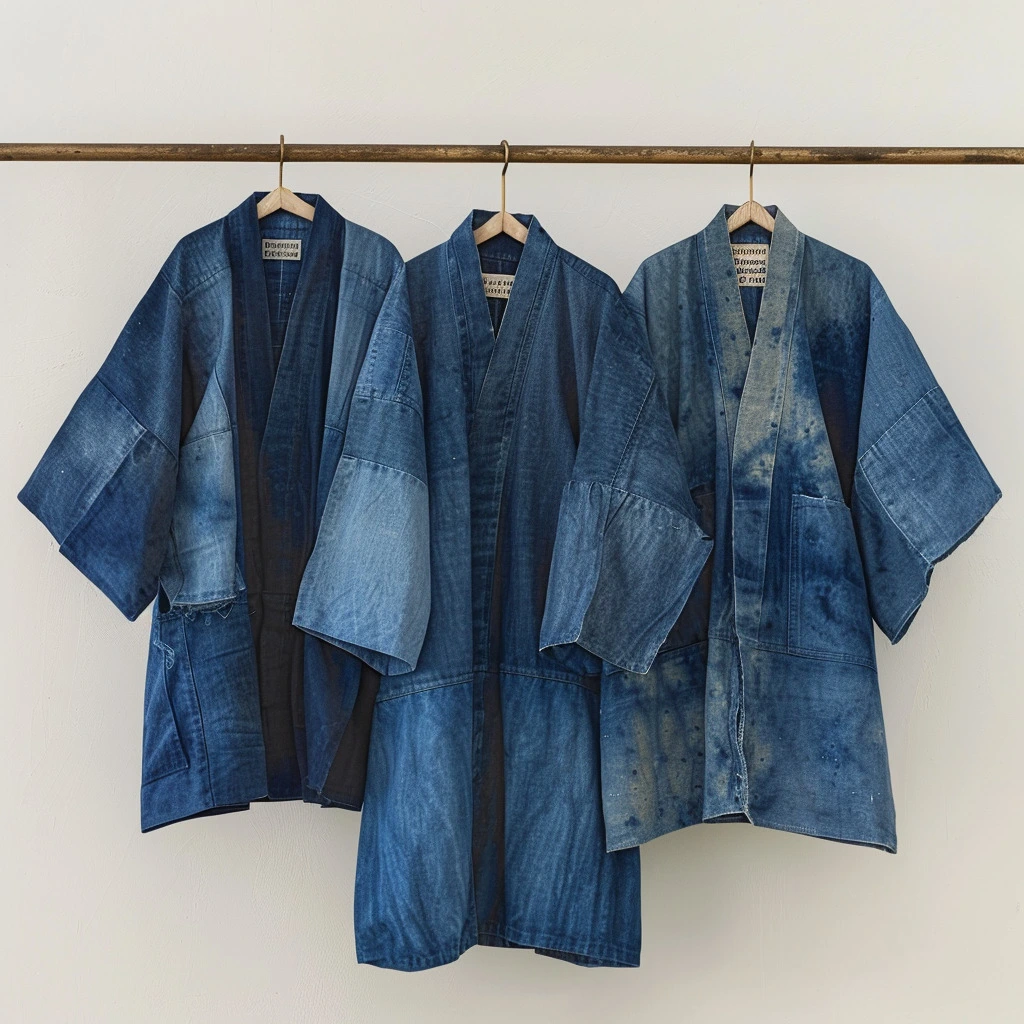
The secondary sois flanking Nimmanhemin have consolidated into an operational hub for this regional textile shift. Independent designers and studio operators have abandoned generic souvenir production, redirecting their output into disciplined, small-batch manufacturing: tailored kimonos, structured canvas travel goods, hand-bound stationery, and vegetable-tanned leather infused with natural indigo pigment.
These hybrid spaces integrate retail frontage directly with operational wet-labs. Behind the showroom floors, dyers maintain active battery vats to test fabric absorption, run small-batch immersions, and fulfil bespoke private commissions.
For high-retainer clients, these studios offer direct access to technical instruction. Closed-door workshops move beyond basic craft demonstrations, engaging clients in the mechanical realities of vat titration, wood-ash lye alkalinity, and complex clamping geometries. The resulting artifact functions as a bespoke commissioning record, verified by the client’s direct participation in the production chain.
At the same time, Chiang Mai’s master dyers have joined international design networks. Studios throughout the district now provide custom contract dyeing, pigment extraction, and hand-loomed textiles for Japanese streetwear labels, Scandinavian interior firms, and bespoke fashion houses.
This cross-border demand establishes the northern fermentation vat as a viable commercial engine for low-impact, high-margin textile production.
Migration and the Blue Patina
Regional dye methodologies reflect the historical migration routes of the Tai Yuan, Tai Lue, and Tai Khoen peoples, who carried highland cultivation practices and backstrap loom technologies from Sipsongpanna and the Shan hills into the river valleys of Northern Thailand.
The distinct tonal values and resist vocabularies preserved across the Lanna region directly encode these historical population movements.
While Chiang Mai functions as the primary retail showcase and design incubator, the upstream extraction networks centre in Phrae province. In highland enclaves such as Ban Pa Pao, smallholders harvest wild and cultivated Strobilanthes cusia along forested limestone streams, while the lowland workshops of Ban Thung Hong process the biomass into concentrated dye paste and maintain commercial-scale earthenware fermentation batteries.
For travel designers curating advanced cultural itineraries, Nimmanhemin represents merely the terminal retail point of this supply chain. Extending a client’s transit eastward into Phrae transforms a standard showroom introduction into a comprehensive geographic transect: tracing the commodity pipeline from upland soil chemistry and leaf fermentation at the source to final pattern drafting and garment construction in urban ateliers.
The Verification Protocol: Field Auditing Natural Indigo
Distinguishing authentic bio-fermented Hom from industrial petroleum derivatives requires systematic physical inspection. Advisors and private curators should apply a four-point verification protocol when auditing studio acquisitions:
Olfactory Analysis (Volatile Acids vs. Sulphites): Authentic vat-dyed textiles retain a subtle, earthy aroma derived from anaerobic bacterial metabolism—specifically low concentrations of acetic and butyric acids balanced by wood-ash lye. Chemically dyed textiles produced with synthetic indigotin utilize sodium hydrosulphite (hydros) as an industrial reducing agent, leaving a distinct, caustic sulfurous or petroleum odour that persists across multiple rinses.
Crystalline Strata and Refraction: Natural indigo does not chemically bond to the fibre core like modern synthetic direct dyes. Instead, microscopic indigotin crystals mechanically coat the outer exterior of each fibre (ring-dyeing) through successive dip-and-oxidation cycles. This cellular layering scatters ambient light irregularly, creating nuanced chromatic depth and subtle micro-variations across the weave that cannot be replicated by flat, uniform synthetic chemical baths.
Friction and Crocking Dynamics: High-grade natural indigo inherently exhibits crocking—the physical transfer of unbound surface pigment particles through dry and wet abrasion. Rather than indicating an adhesion defect, controlled crocking confirms that the textile was layered through genuine oxidation cycles rather than treated with chemical colour-fixing polymers (cationic fixatives) that seal industrial dyes.
Combustion and Ash Residue Testing: When inspecting raw textile swatches, field testing a loose warp thread provides definitive proof. A natural indigo yarn loomed from organic cotton burns cleanly into soft, pale grey wood-ash with a pure cellulose scent. Yarns soaked in synthetic sulphur formulations or blended with polyester carriers melt into dark, rigid chemical beads with a pungent synthetic odour.
Material Provenance & The Modern Lanna Ledger
Chiang Mai’s contemporary indigo studios demonstrate the commercial viability of closed-loop craft production within modern luxury design.
By translating an agrarian fermentation discipline into high-spec tailoring and architectural textile commissions, Northern Thai practitioners have detached the material from low-margin souvenir retail and positioned it within the international design economy.
For travel designers and private client curators, evaluating this supply chain requires looking past surface aesthetics to verify material inputs, from soil conditions in Phrae and reduction-vat stability to mechanical resist techniques and plant-dye chemistry.
Engaging clients directly with this supply chain transforms a regional craft into an analytical study of sustainable material provenance, securing access to an unrepeatable textile archive.
Further Archival Context: Documenting reduction-vat fermentation, Phrae agricultural inputs, and mechanical resist methods equips private programmes with verifiable textile provenance. Explore our complete collection of dossiers in the Lanna Creative Renaissance archive and subscribe to Heritasian Intelligence for our weekly trade brief.