
Key Insights
The 2026 UNESCO nomination defines Chiang Mai as a “Living Heritage City,” centring on its functional 700-year-old urban grid. Unlike static ruins, the Old City’s 1.6-km square moat and walls follow Tai geomancy (Chaiyaphum), acting as a cosmological microcosm.
Key heritage anchors include the Sao Inthakin (City Pillar), the five ritual gates, and royal temples like Wat Chiang Man and Wat Chedi Luang.
Outstanding Universal Value (OUV): The core criterion set by UNESCO defining a cultural asset’s significance as so exceptional that it transcends national boundaries and possesses absolute value for all humanity.
Living Heritage Site: A conservation designation applied to historic urban environments – like Chiang Mai – where ancient ritual practices, craft guilds, and communal traditions remain active components of modern daily life rather than static museum displays.
Nomination Dossier: The comprehensive, data-driven legal and historical text compiled by local scholars, municipal authorities, and stakeholders detailing the preservation strategies and boundaries required to secure UNESCO inscription.
Intangible Cultural Fabric: The non-physical heritage elements – including annual city pillar blessings (Inthakin), local dialects, and hereditary craft lineages – that provide the essential spiritual context for Chiang Mai’s physical monuments.
Urban Morphological Continuity: The preservation of an ancient city’s physical layout over centuries. In Chiang Mai, this is demonstrated by the enduring geometry of the 13th-century square moat, the fortified gates, and the orientation toward sacred peaks.
Inter-Sectoral Governance: The collaborative management framework pairing state administrative bodies, academic historians, and local civic communities to balance modern commercial development with strict heritage protection mandates.
In 1296, King Mangrai stood at the foot of Doi Suthep and made a bold decision. He abandoned his flood-prone capital, Wiang Kum Kam, to build a “New City.” He called it Chiang Mai. Today, this square-shaped heart of Northern Thailand isn’t a stagnant museum. It is a living landscape.
In early 2026, the Thai Cabinet officially sought UNESCO World Heritage status. This nomination isn’t just about old bricks. It is about a 700-year-old urban grid that still functions. While other ancient capitals fell into ruin, Chiang Mai adapted. It absorbed the shocks of war and modernisation without losing its shape.
The Mandate of Mengrai
Mangrai didn’t plan this city alone. He invited King Ramkhamhaeng of Sukhothai and King Ngam Muang of Phayao to help. These three kings represented the most powerful Tai polities of the era. They met at the city’s centre to scout the land.
Legend says they witnessed seven “good omens” on this patch of forest. The most famous involves a family of white mouse-deer. The kings watched a mother and her fawn fearlessly chase away a pack of hunting dogs. To the kings, this symbolised a city where the small could thrive. They also saw a white mouse with five offspring scurry into a massive banyan tree. Mangrai took this as a sign of fertility. He immediately ordered the city’s centre to be marked.
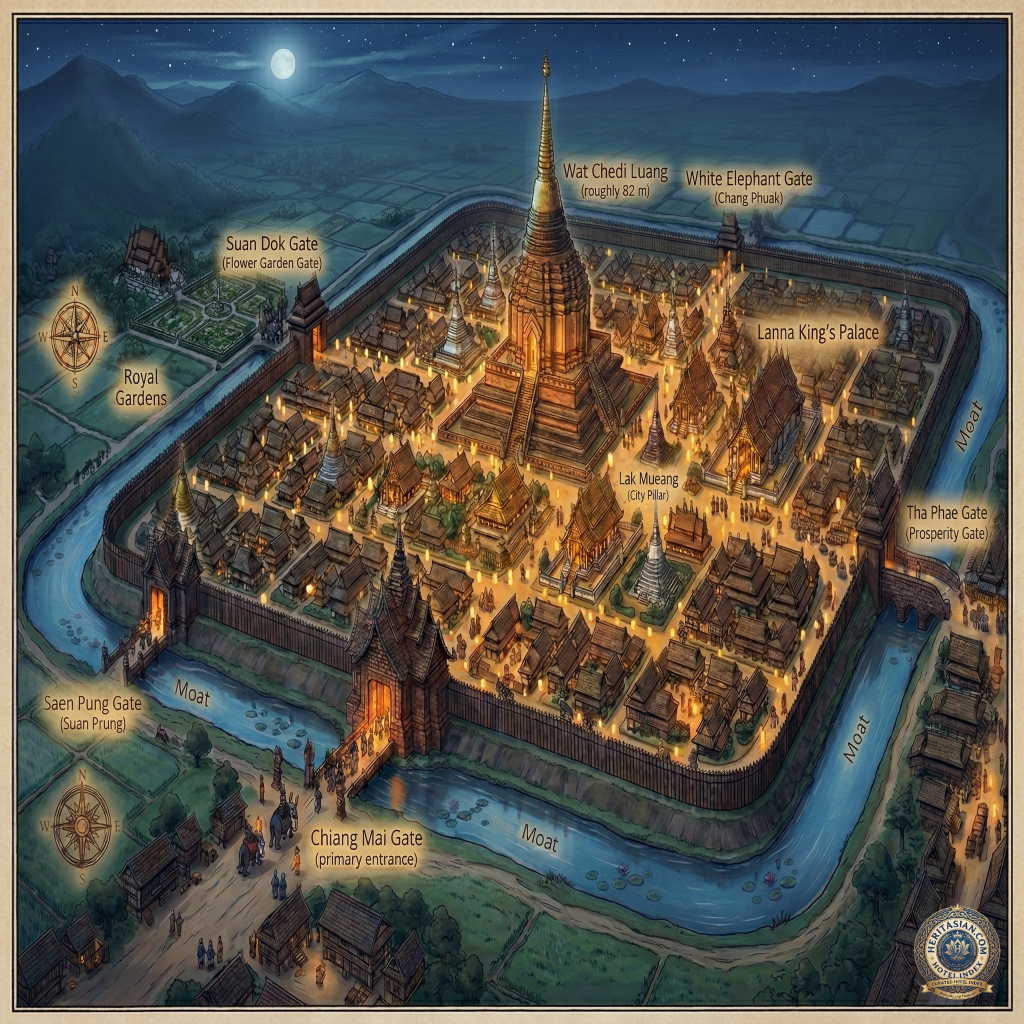
The kings laid the first stones of the city walls on a Thursday. This specific timing ensured the city’s long-term prosperity. UNESCO values this “Living Cultural Landscape” because the original plan survives. You can still trace these 13th-century lines today. The city layout follows the Chaiyaphum – the “victorious site” principles of ancient Tai geomancy.
The Cosmological Square
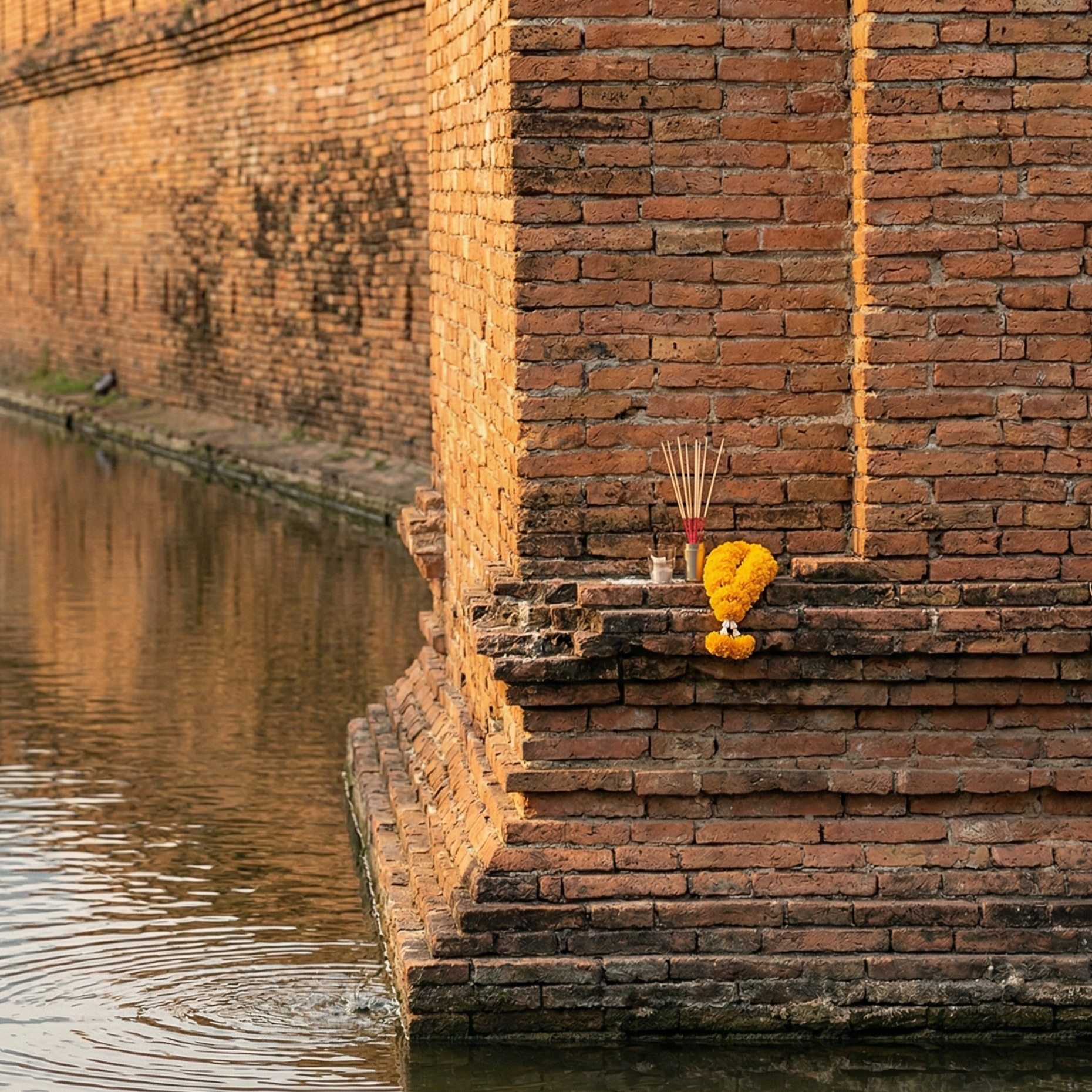
The city’s layout reflects a Buddhist microcosm. It’s a perfect square, 1.6 kilometres on each side. The moat serves as a cooling lung for the city. It also acted as a primary defence against Burmese invaders. Each corner features a brick bastion, or Chaeng. These bastions protect the city’s “auspices,” or spiritual health.
Chaeng Sri Phum in the northeast is the most vital corner. In Lanna tradition, this is the “head” of the city. During the annual city-blessing rituals, monks start their chants here. They move clockwise to follow the sun. This movement reinforces the city’s protective “spirit wall.”
The Ritual Anatomy of the Five Gates
To walk the perimeter of the moat is to move through the city’s spiritual “organs.” Mangrai did not place the gates at random. Each had a specific personality and a sacred function. They filtered the energy of the world before it reached the King.
The Head: Chang Phuak (The White Elephant Gate)
Located on the North wall, this is the city’s “Head.” The North is the most auspicious direction. This was the gate of Power and Royalty.
The Face: Tha Phae (The Raft Landing Gate)
Facing East toward the river, this was the “Face.” While some say the name means prosperity, it literally means “Raft Landing.”
The Hands: Suan Dok (The Flower Garden Gate)
On the West wall, facing the mountain, lies the gate of Nature.
The Heart: Chiang Mai Gate
The primary entrance is on the South wall. This was the gate of Community.
The Feet: Suan Prung (The Gate of Departure)
The “extra” gate on the Southwest wall. This was the gate of Release.
The Spiritual Anchors
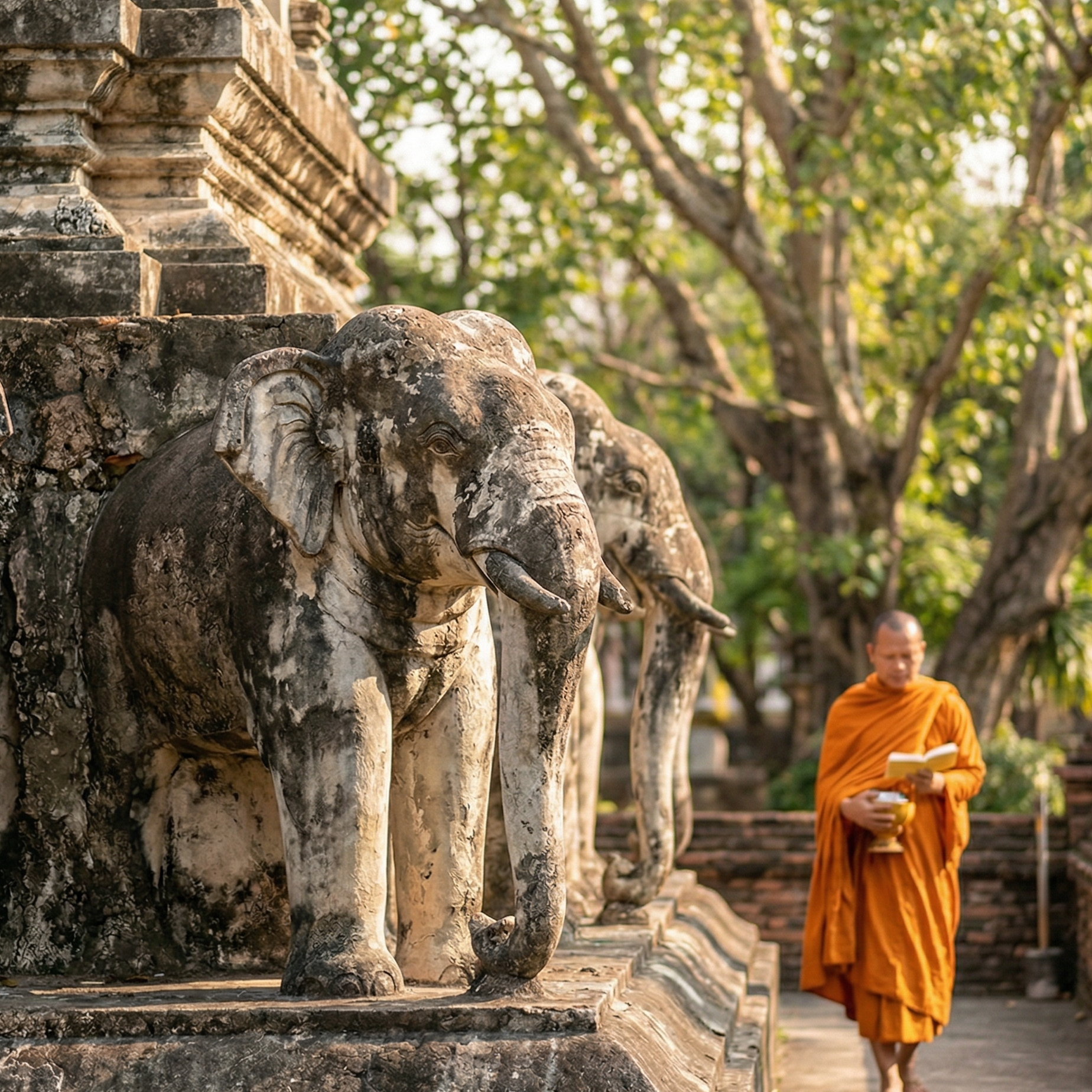
Three royal temples define the old city’s interior. Wat Chiang Man is the oldest. King Mangrai lived here while the city rose around him. Look for the Chedi Chang Lom. Fifteen life-sized elephant carvings support the stupa. These elephants symbolise the strength needed to uphold the faith.
Inside the small stone chapel, you find two tiny treasures. The Phra Sila is a stone Buddha from India. The Phra Sae Tang Khamani is carved from clear quartz. Locals believe these images protect the city from drought. During the Songkran festival, officials still bathe them in scented water. This ritual connects the modern government to 13th-century kings.
A few blocks away, Wat Chedi Luang dominates the skyline at what was 82 meters. It was the tallest structure in the Lanna Kingdom. A massive earthquake in 1545 sheared off the top. Despite the damage, the ruin feels monumental.
The temple once housed the Emerald Buddha, Thailand’s most sacred icon. In 1468, it sat in the eastern niche of the stupa. After the earthquake, a young prince took it to Laos “for safekeeping.” He never returned it. Today, a black jade replica sits in its place. It’s a silent reminder of the city’s greatest lost treasure.
The Masterpiece of the West
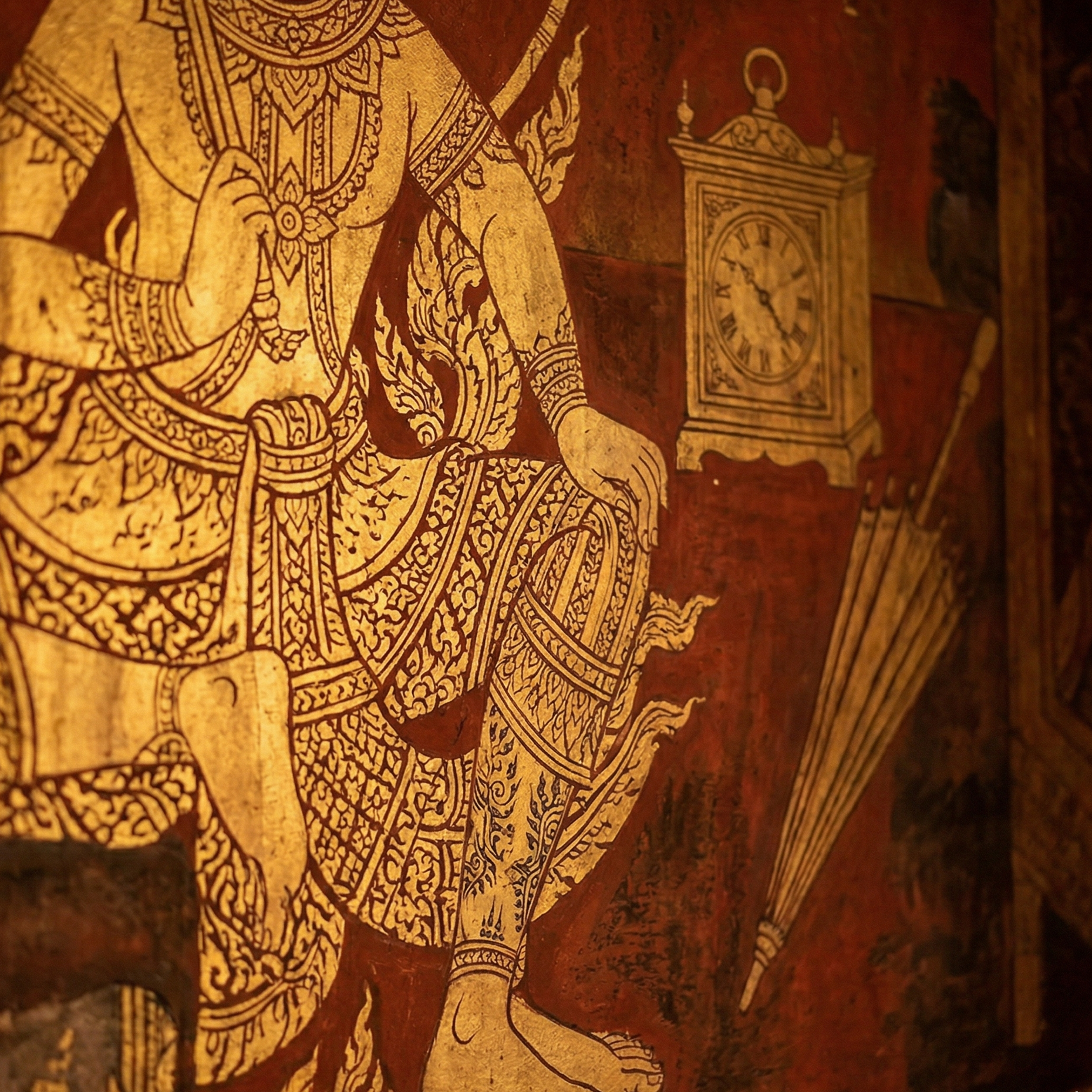
Wat Phra Singh represents the pinnacle of Lanna “Classic” style. The Lai Kham Chapel is a masterclass in gold-on-red stencil work. Examine the murals inside. They depict 19th-century life with surprising humour. You can see men with intricate leg tattoos. These tattoos were symbols of bravery and adulthood.
Look closer at the backgrounds of these murals. You spot early Western umbrellas and mechanical clocks. These details signal the arrival of the “Golden Age of Travel.” They show how the Suez Canal’s opening touched even landlocked Chiang Mai. The murals act as a visual diary of a changing kingdom. They capture the moment Lanna met the modern West.
The Teak Wallahs and the Colonial Shift
The old city hides a teak-timbered history. During the late 1800s, British timber companies arrived. Names like the Borneo Company and Louis Leonowens (137 Pillars House) became local legends. They brought “Lanna-Colonial” architecture to the city’s edge. You can still find houses with high-pitched gables and gingerbread fretwork.
These buildings highlight the era when teak was king. Teak paid for the elaborate carvings on temple eaves. It built the villas of the nobility. These “Teak Wallahs” changed the social fabric of the city.
They introduced Western furniture and social clubs. Today, these wooden structures are rare. Fire and termites are constant threats. Organisations like the Lanna Architecture Centre now work to map every remaining beam.
The “Inthakin” and the Resin Trees
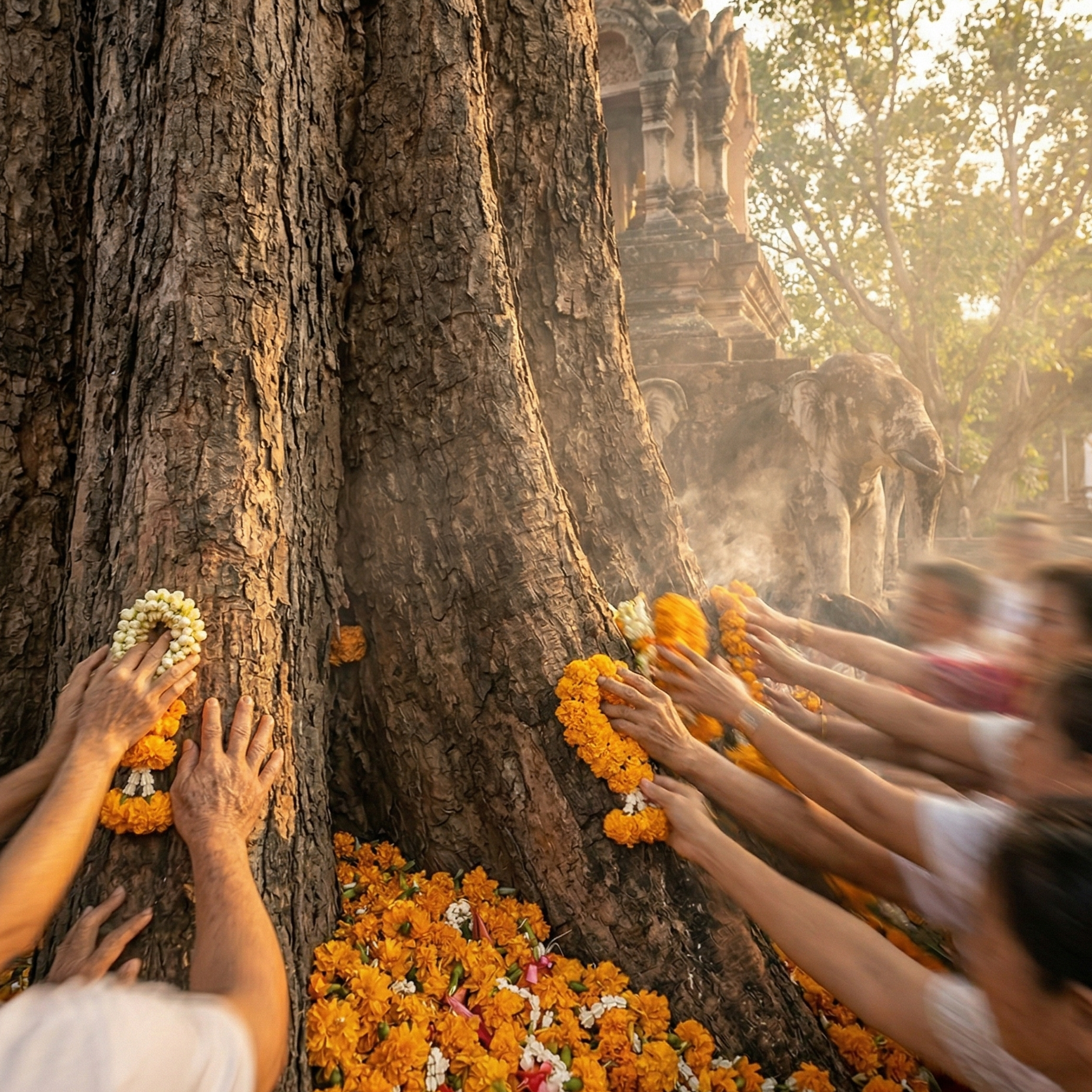
At the heart of Wat Chedi Luang stands the Sao Inthakin, or City Pillar. It is the city’s spiritual anchor. Legend says the god Indra gave the pillar to a hermit. He wanted to protect the valley from demons. When King Mangrai arrived, he found the pillar among the older ruins. He moved it to his new capital.
Next to the pillar’s shrine stand three massive Yang (Resin) trees. These aren’t just landscaping. Local folklore warns that if the tree closest to the pillar falls, a catastrophe strikes. During the Inthakin Festival in late May, thousands of locals bring flowers. They “bathe” the pillar and pray for rain. They also keep a nervous eye on those ancient branches.
The Commons and the Quiet Lanes
Inside the temple grounds, you find the Khuang. These are sandy, open courtyards. They aren’t just for show. The sand absorbs heat and provides space for festivals. During the northern Thai New Year, families build sand pagodas here. They decorate them with colourful paper flags.
In these quiet sois, or lanes, the city slows down. You might hear the rhythmic hammer of a silversmith. You might smell fermenting tea leaves, known as miang. This fermented tea is a Lanna staple. It provides a caffeine kick for manual workers. Many older residents still chew it daily. It’s a bitter, earthy taste of the past.
The Challenge of Tomorrow
Maintaining heritage is a constant struggle. Modern demands often clash with ancient structures. New boutique hotels must respect the “Buffer Zone.” This zone limits building heights to 12 meters. This rule protects the sightline to Doi Suthep Mountain. Without it, the “Sacred Mountain” would disappear behind concrete.
The UNESCO nomination aims to give the city legal teeth. It provides a framework to keep the local community, or Chumchon, in place. Gentrification is a real risk. When long-term residents leave, the “living” part of the heritage dies. The city then becomes a hollow shell for tourists. We must avoid turning Chiang Mai into a theme park.
The Continuity of the Sunday Market
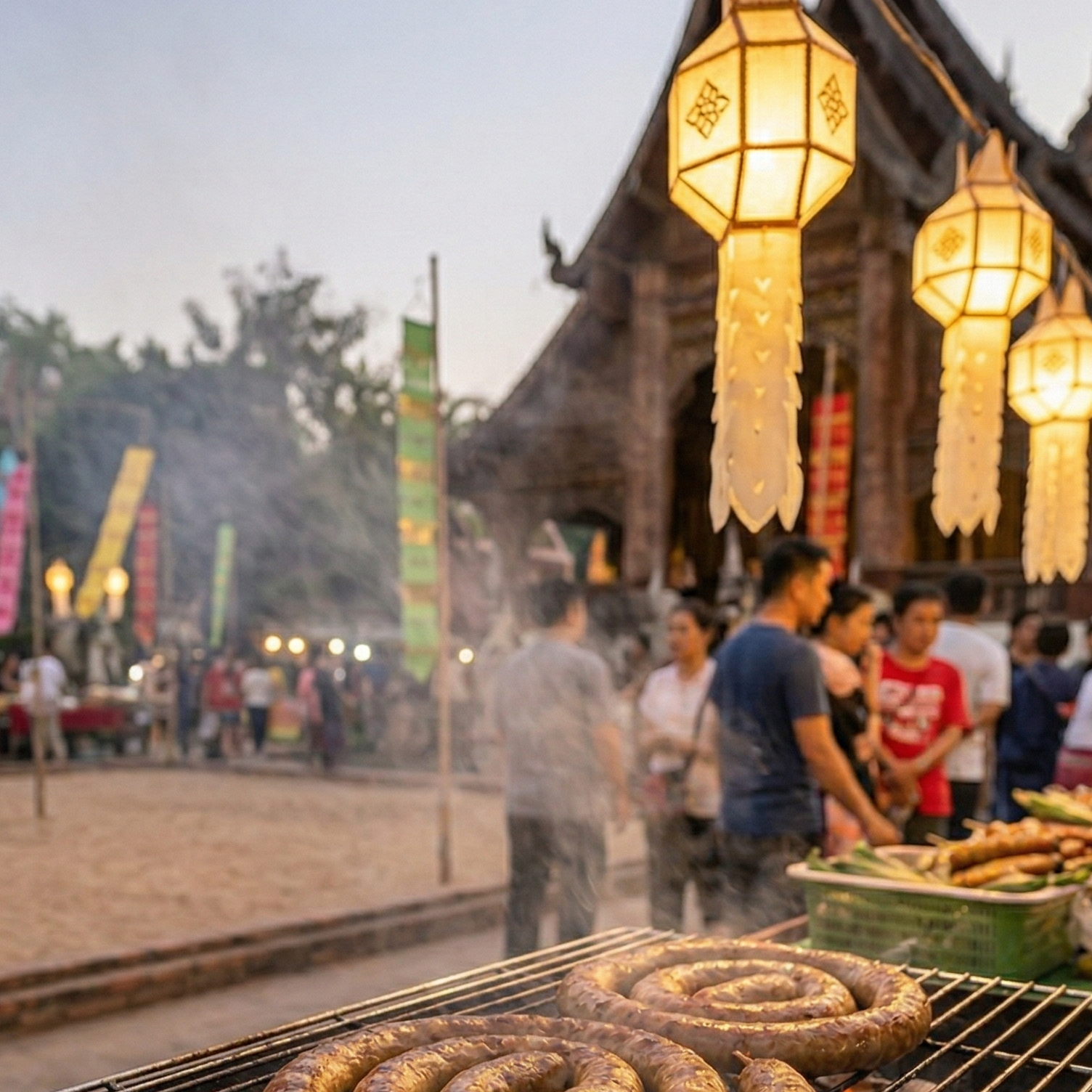
The Sunday Walking Street is a modern example of old habits. It follows the same trade routes Mangrai’s merchants used. People still gather to trade, eat, and talk. You can find traditional northern sausage, sai oua, grilling over charcoal. You see students playing the phin, a traditional three-stringed lute.
This market connects the past to the present. It proves that the old grid still serves the people. It isn’t just a place for selfies. It’s a place of commerce and culture. It mimics the ancient Kat, or markets, that sat near the city gates. The actors have changed, but the play remains the same.
Preserving the Spirit of Place
Heritage is more than a list of dates. It’s the smell of incense on a humid morning. It is the sound of temple bells competing with motorbikes. The 2026 UNESCO bid confirms what locals already know. This city has a soul. It is a resilient soul that survived Burmese occupation and Siamese integration.
By looking up at the carved eaves, we see seven centuries of skill. By walking the moat, we trace the steps of ancient guards. Chiang Mai reminds us that we can grow without forgetting our roots. The Old City isn’t a relic. It’s a masterpiece in progress.
We must listen to the bricks. They tell stories of kings, earthquakes, and timber traders. They tell the story of a “New City” that refused to grow old. As we look toward the UNESCO decision, we celebrate this continuity. Chiang Mai remains the heart of the Lanna world.