
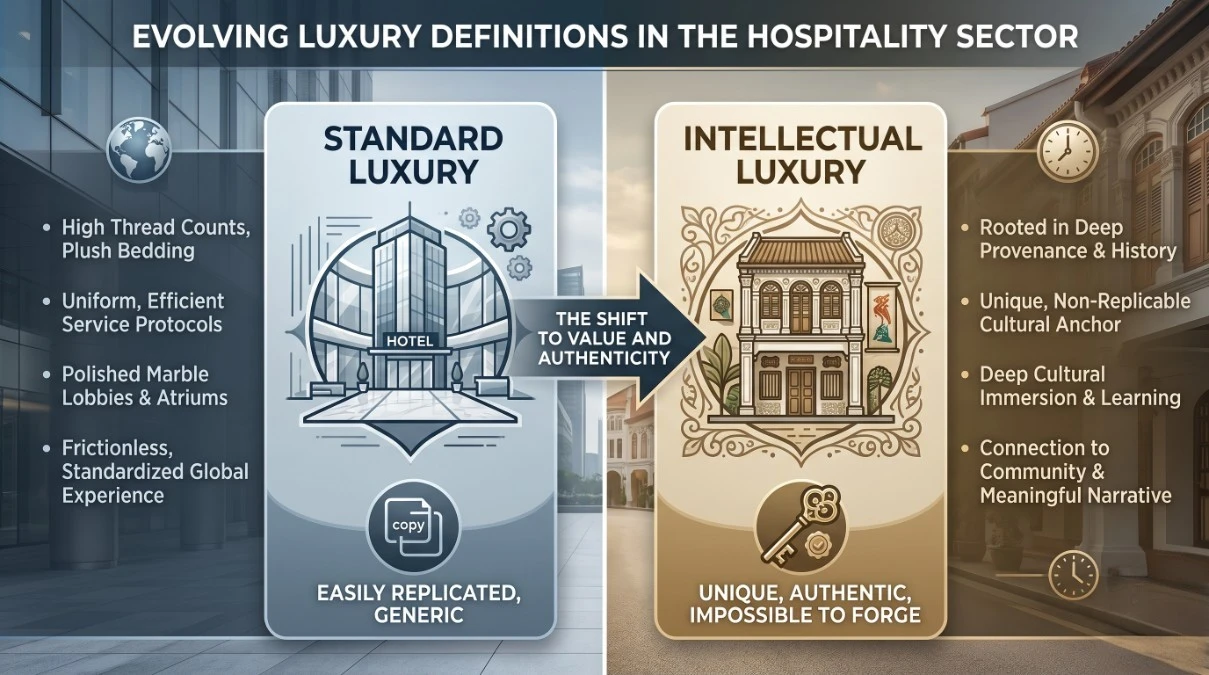
George Town, Penang, is currently a living masterclass in a global hospitality shift. For decades, the luxury travel sector relied on a standardised blueprint of high thread counts, marble lobbies, and uniform service.
In Penang, however, the modern affluent traveller increasingly rejects these generic, frictionless comforts in favour of something far rarer: intellectual luxury rooted in deep provenance.
This shift has transformed how we view historic destinations. When George Town secured its UNESCO World Heritage status, it did more than protect centuries – old timber, plaster, and shophouses. It established a globally recognised benchmark for cultural value, proving that true heritage is no longer just a preservation goal—it is a high-yield asset class.
For investors, developers, and destination marketers, Penang reveals a critical business reality: authenticity cannot be manufactured or replicated. Those stuck in the old mode of thinking view historic preservation as a costly constraint. Forward-thinking leaders view it as a defensive moat.
The Geopolitical Crucible: From Light to the Rise of Singapore
To understand why Penang’s architectural and cultural fabric holds such immense narrative value today, one must look at its origins as a high-stakes geopolitical experiment.
When Captain Francis Light negotiated the acquisition of the island on behalf of the British East India Company in 1786, he did so with an immediate strategic mandate: secure a naval base to counter French ambitions in the Bay of Bengal and insulate regional trade from the looming threat of attacks from the Siamese kingdom to the north.
Light’s masterstroke was declaring Penang a free port. This zero-tariff status triggered a massive, immediate migration wave, drawing merchants, labourers, and adventurers from across Asia and Europe.
Among the early administrators shaping this burgeoning trade hub was Stamford Raffles, who served as assistant secretary in Penang in the early 1800s. It was here that Raffles cut his teeth on the complexities of Malayan maritime commerce – lessons he would later use when he established Singapore in 1819.
As Singapore’s deep-water harbour and superior geographic position eventually caused Penang to lose the regional limelight, an unexpected economic pivot occurred. Penang transitioned from a raw transit port into a concentrated capital reserve for the region’s elite.
The merchants who made fortunes in the tin mines of Perak and the rubber plantations of Sumatra did not build their empires in Singapore; they built their family estates, clan associations, and legacy infrastructure in George Town.
Navigating a living heritage site built on this deep history requires a highly specialised approach. Operators cannot simply drop standard hospitality formulas into a sensitive historic zone. Success depends on understanding the strict frameworks and cultural layers outlined in this comprehensive Penang Heritage Guide.
True destination value relies entirely on this historical grounding. Without a firm grasp of how a vulnerable island outpost evolved into a wealthy colonial stronghold, modern destination storytelling risks becoming shallow marketing copy. For a deeper look into these founding eras, see the foundational History of Penang.
The Architecture of Intellectual Luxury: Babas, Straits Chinese, and the Sarkies
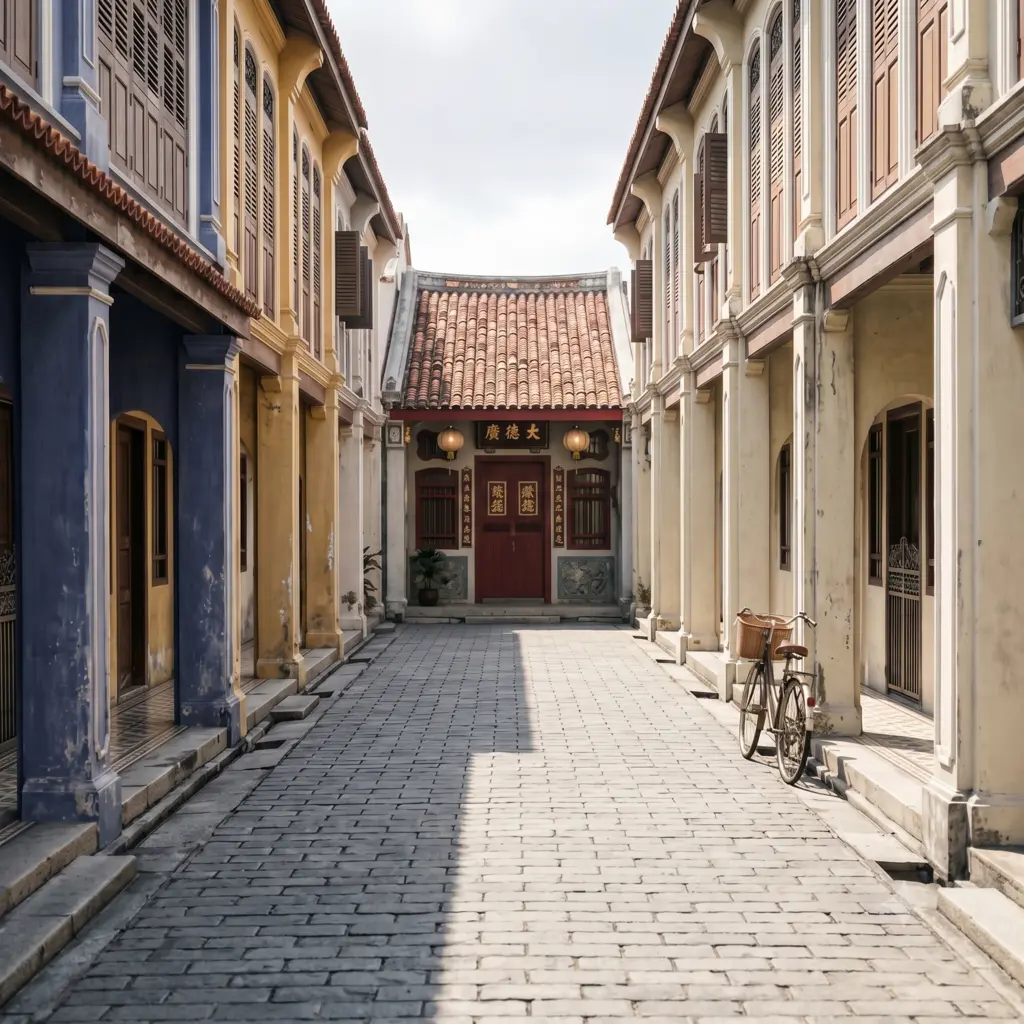
The capital accumulated during Penang’s golden age created a highly sophisticated, localised elite: the Straits Chinese, or Peranakan community. The Babas and Nyonyas of Penang fused Chinese heritage, Malay cultural nuances, and British colonial prestige into a unique lifestyle that manifested in the island’s famous Straits Eclectic architecture.
These row houses and mansions were designed not just for shelter, but as overt expressions of economic triumph and cultural synthesis. Intricate European floor tiles, Scottish cast-iron pillars, and Chinese gilded woodcarvings were synthesised into a single structure.
This is the birthplace of intellectual luxury – spaces where every pillar, courtyard, and airwell possesses documented provenance.
This environment birthed the grand dames of Asian hospitality. When the Sarkies Brothers—the legendary Armenian hoteliers—arrived in the late 19th century, they did not build a generic Western hotel.
They capitalised on Penang’s unique allure to establish the Eastern & Oriental Hotel, defining luxury for the era’s global elite, from Rudyard Kipling to Somerset Maugham. The Sarkies understood that the luxury asset wasn’t just the bed; it was the elite lifestyle and narrative prestige of the Straits Settlements.
Managing Living Cultural Assets
The hospitality industry often misinterprets heritage, treating culture as a static museum exhibit or a backdrop for a photo. In reality, Penang’s most valuable cultural assets are dynamic, living ecosystems.
Consider the waterfront settlements of George Town. The Clan Jetties of Penang are not mere tourist attractions. They represent centuries of continuous maritime community life, established by working-class Chinese immigrants who divided the wooden piers by clan surnames.
For hospitality strategists, these spaces offer a masterclass in how community identity and destination appeal intertwine.
It is no coincidence that major hospitality brands are repositioning their physical footprints to capitalise on this proximity. Properties like The Prestige Hotel and Royale Chulan Penang have strategically set up shop within immediate striking distance of these very jetties.
These brands recognise that their premium room rates are fundamentally anchored by the raw, unvarnished cultural value of the living community next door. The proximity to living history transforms a standard stay into an immersive cultural narrative.
Authentic architecture provides the physical anchor for this narrative luxury. The intricate craftsmanship of Leong San Tong Khoo Kongsi demonstrates an architectural mastery that modern construction cannot duplicate.
Built by the wealthy Khoo clan as a combination of an ancestral shrine, association headquarters, and theatre, it represents a standard of architectural permanence. This is not a decorative ornament; it is a physical provenance. It creates an emotional and intellectual resonance that no newly built luxury resort can buy.
Balancing Commercial Evolution
The ultimate test of cultural asset management is commercial evolution. Streets that once housed traditional goldbeaters, signboard carvers, and textile traders now face intense commercial pressure.
The transformation of the Armenian Street Heritage area shows the delicate balance between commercial viability and cultural degradation. When generic global brands and souvenir shops displace local craftsmen and Peranakan families, the very asset that drew visitors in the first place begins to erode.
In a world saturated with manufactured experiences, authenticity is the rarest commodity. Penang proves that true luxury cannot be built from scratch. When a destination loses its history, it loses its premium. True hospitality value must be inherited, documented, and fiercely protected.
At Heritasian.com, our mission extends beyond standard travel journalism to document and preserve the tangible and intangible cultural assets of Southeast Asia. We believe that true hospitality storytelling requires a rigorous, reportorial approach to regional heritage.
By championing provenance and architectural authenticity over superficial luxury, we provide destination strategists with the cultural depth needed to navigate an evolving luxury landscape.